
Snappit logo
Snappit
Get App
Generic illustration, not a photograph of this venueIllustration
ParkPaís Vasco, Spain

Pagoeta Natural Park

Pagoeta is close to the Gipuzkoa coast, but its wooded slopes, meadows and farmhouses give a different rhythm to the day.

About

Pagoeta is close to the Gipuzkoa coast, but its wooded slopes, meadows and farmhouses give a different rhythm to the day. For a first visit, start at Iturraran rather than aiming straight for a summit. The parketxe, or park visitor centre, helps put the landscape into context before you step outside.

The botanical garden wraps around the farmhouse. It is a living collection of plants from different parts of the world, threaded through patches of native vegetation. Give yourself permission to explore only part of it: choose a few labels, compare the plants beside them and leave time to notice the woodland between the collections. The Biodiversity Garden in zone 1 introduces threatened plants of the Basque Country.

If your group wants a longer walk, the signed Agorregi circuit links this garden setting with the forge and mills. Water did the heavy work here, turning machinery for ironworking and grinding grain. Seeing the machinery operate is a separate guided visit, so arrange it before building your walk around a demonstration.

Iturraran is one gateway into a larger park spanning Aia, Zarautz and Zestoa. Native woods, managed forest and grazing land all belong to that wider story. A planted tree from another continent is part of the garden collection; it is not evidence that the species grows wild throughout Pagoeta. Enhance your adventure: download the Snappit app to identify the local species you encounter.

Pagoeta became a natural park in 1998, building on land owned by the Provincial Council of Gipuzkoa. Its landscape tells a story of woodland management and rural work as well as conservation. Iturraran’s garden began with plantings in the winter of 1986–87 on former farmhouse meadows. What started as ornamental planting developed into a botanical collection. Agorregi reaches further back: the forge has medieval origins, while the restored hydraulic installation reflects eighteenth-century engineering. Its water storage at different levels allowed the same water to be used again.

What to do here

Visit the parketxe if it is open, choose a section of the botanical garden and return to the farmhouse using the garden map. Add the 3.7 km Agorregi circuit if everyone is comfortable with woodland paths and climbing. Book a forge demonstration or bee activity separately.

Seasonal info

Rain can leave grass and woodland paths muddy or slippery, and winter daylight is limited. In strong winds or severe weather, postpone the wooded walks. The garden, parketxe and guided activities have different schedules; winter closures and special-event arrangements need a fresh check.

Accessibility

The parketxe has a ramped entrance and a lift, and its accessibility listing describes an asphalt approach and accessible toilets near the recreation area. Most garden paths are grassy or mountain-style paths. Ask staff to choose a suitable short section with you; neither the full garden network nor the Agorregi circuit should be assumed wheelchair- or pushchair-accessible.

Don't miss

1

A botanical collection set among native woodland

2

Plant labels that turn a short walk into a comparison game

3

The farmhouse visitor centre and its account of rural life

4

A separately booked demonstration at Agorregi’s forge and mills

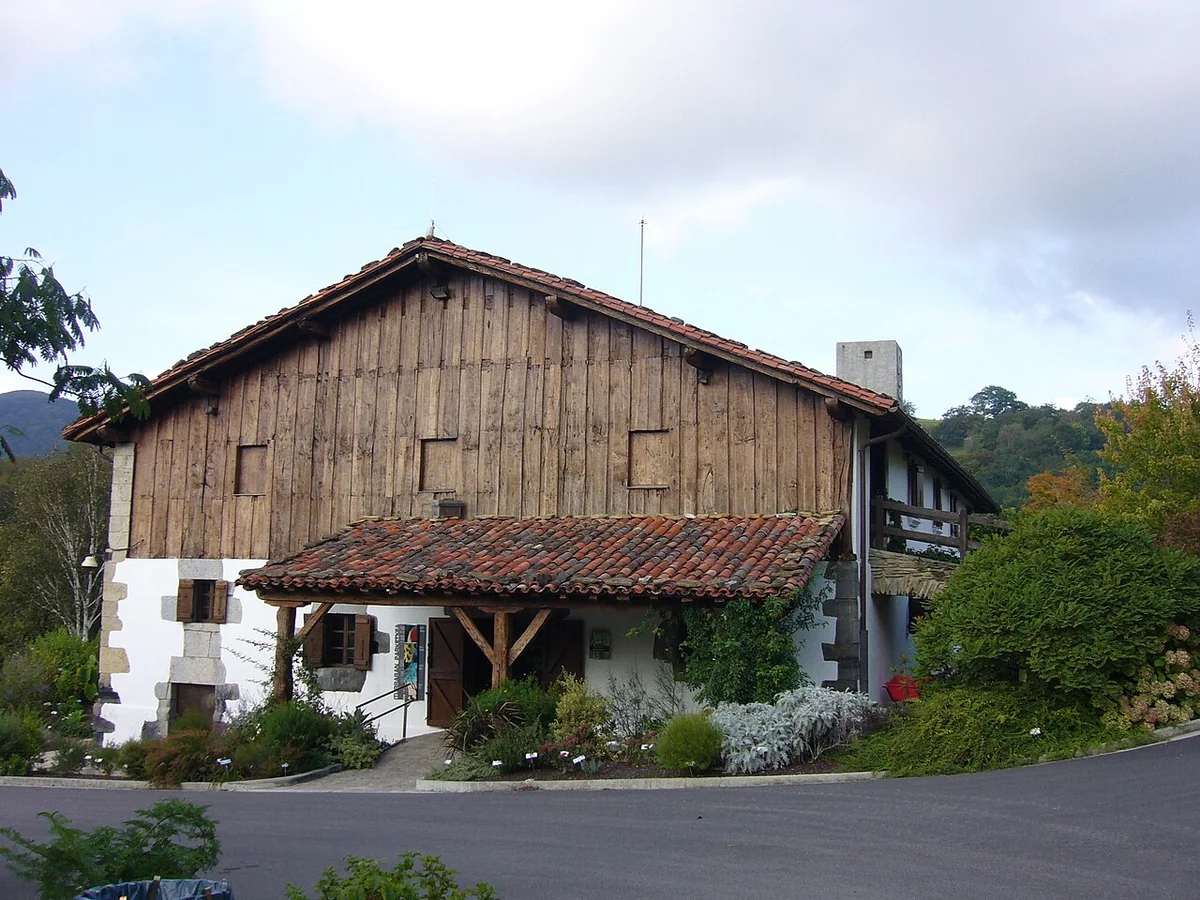
The white-walled Iturraran visitor centre has a timber gable, tiled roofs, a paved forecourt and planted borders.

Iturraran’s timber-fronted visitor centre and planted borders, in a photograph dated 2008.

Iturraran 1.jpg — Antxon gomez / Wikimedia Commons / CC BY-SA 3.0 · Creative Commons

Walks and routes

Choose a short walk in Iturraran’s garden

The garden has eight zones and about 3.5 km of paths in total. Pick a section on the garden map and return while everyone is still enjoying it. Start with the labelled plants nearest the parketxe, then decide whether to continue. Allow roughly 1–2 hours for this part of the visit.

Most paths are grassy or mountain-style. Keep your first choice short and ask staff which section suits your mobility, wheels and the day’s ground conditions.


Choose a short walk in Iturraran’s garden

SL-Gi 4001: Agorregi, iron and water

This signed 3.7 km circular walk starts and finishes at Iturraran and includes the forge-and-mill setting. The operator lists 1 hour 10 minutes; allow nearer 1½–2 hours with ordinary stops, plus any guided visit. It is a good extension when the group wants a proper walk after looking at plants.

Expect climbing and outdoor woodland surfaces. The official “easy” walking grade does not establish wheelchair access. Ask about the best approach if a mobility limitation makes the full circuit unsuitable.

SL-Gi 4001: Agorregi, iron and water

A relaxed first visit

Begin with the centre, spend an hour or two in selected garden zones, then take a snack break before deciding whether anyone wants more walking. If you have booked Agorregi, organise the day around the confirmed tour time and the ticket-collection stop. Leave a bee workshop for a separate session unless the timings comfortably fit.

Things to try

Follow the water at Agorregi

For a demonstration, reserve through Iturraran and collect tickets at the parketxe. The operator’s leaflet lists free visits, with tours at 11:15 in Basque and 12:00 in Spanish. Its seasonal pattern is Sundays and holidays in March–June and October–9 December, weekends and holidays in July and September, and Thursday–Sunday in August. Confirm your date, language and meeting instructions when booking.

Book an introduction to the bees

The educational apiary introduces managed local black bees and the organisation of a hive. Arrange a guided activity with Iturraran rather than entering on your own. Ask for the current price, minimum group, age guidance, protective equipment and weather arrangements; mention any concern about bee stings when checking suitability.

Try the family orienteering course

Ask at Iturraran for the current map and instructions. The yellow course is listed as 1.3 km with ten controls and is aimed at families and children. Choose it as a different way to explore, rather than adding every course to a garden day. Check any charge and whether materials need booking.

Make the farmhouse the main visit

If the centre is open, its displays give you a useful introduction to the relationship between the park and rural life. Add only an outdoor section that feels safe for the day. Do not treat the forge as an automatic indoor fallback: reaching it involves an outdoor approach and its visits must be arranged.

Wildlife and habitats

Pedunculate oak

The native oakwoods are part of the local landscape around the planted collection. Ask staff to point out a suitable tree, then compare its label, leaves and setting with a cultivated oak.

Common yew

Yews are an important part of Pagoeta’s woodland story. The dedicated yew route is a separate outing, so ask staff about it for another day rather than searching off-path during a garden visit.

Texas live oak

The garden’s published collection account includes this oak from Mexico and the United States. If staff can point you to the labelled specimen, compare it with the local pedunculate oak rather than assuming every oak belongs naturally to the Basque woodland.

Enjoy wildlife from the paths, without bait, playback or approaching nests. Keep the day relaxed: listening and watching the habitat can be rewarding even when animals stay out of sight.

Stories and discoveries

A garden is not a list of wild species

A label may name a plant from another continent that has been deliberately grown here. Look for its origin as well as its name. The native woodland within and around the collection offers a different kind of comparison: plants belonging to this local landscape.

When to visit

Keep the plan flexible

Use a dry spell for longer garden wandering. In wet weather, shorten the outdoor part and take time in the exhibition if open. The spring plant fair brings a different atmosphere and may change entry or parking arrangements. Winter visits need particular care with centre opening, daylight and slippery paths.

Getting there and practical advice

Centre opening and contact

Iturraran is at Laurgain Auzoa 12, Aia. Published usual opening is Tuesday–Sunday and holidays, 10:00–14:00, with January limited to weekends. Summer weekday afternoons may be added, and there is a winter closure. Confirm the calendar for your date on +34 943 835 389 or [email protected].

Garden access

The operator lists free garden entry and group guided visits by appointment. Aia’s tourism page gives daily hours of 09:00–19:00. Check event arrangements and plan to finish in daylight, even when the published closing time is later.

Parking, toilets and a picnic

The operator places the car park about 150 m from the parketxe, with separate bus parking by the access. The accessibility listing describes two accessible toilets near the recreation area. There are picnic areas in Pagoeta; bring your own food and water, and ask which nearby facilities are open.

Driving to Iturraran

From the N-634 between Zarautz and Orio, take the GI-2631 towards Aia–Villabona and follow the Iturraran Parketxea sign. Use designated parking and keep access clear. Enter the parketxe address rather than only “Pagoeta” in navigation, since the park has several approaches.

Using the UK08 bus

The operator identifies UK08 as the public-transport link; Euskotren lists it as Zarautz–Aia–Orio. Check the current Iturraran stop, outward and return times, and the last leg to the centre. On 16 October 2026, Lurraldebus was displaying a closure of the Araba kalea 20 (Polideportivo) stop in Zarautz in the Orio–Aia–Zarautz direction until further notice. Check the notice again when planning.

Centre access and garden access differ

The venue’s Gertu Kultura listing describes asphalt approaches from the parking areas, a ramped entrance, a lift to upper floors and accessible toilets near the recreation area. It also warns that most botanical-garden paths are grassy or mountain paths. Check the approach gradient, working lift, toilet opening and a suitable outdoor section with staff before making a special journey.

Sources and useful links

Wildlife you might spot

3

Each card links to a full Explore page with photos, traits, and fun facts.

Snap map for this place

Start with the big picture, then zoom in to explore individual wildlife observations around this place.

Loading map…

Good to know before you go

Before travelling, ask Iturraran about opening, path conditions and any closures: +34 943 835 389 or [email protected].

If Agorregi is the main reason for your trip, reserve first. Collect the tickets at Iturraran and ask how much walking time to allow before the tour.

Wear shoes with grip and bring a waterproof, drinking water and a snack. A short garden outing still involves outdoor paths.

Use the garden map and signed trails. Do not turn the advertised 3.5 km garden path network into an assumed single circular route.

Keep children close beside channels, water and working machinery at Agorregi. Follow the guide’s instructions during demonstrations.

Leave plants, seeds and fungi in place. Read labels or photograph them rather than collecting a sample to identify later.

Give livestock space and do not feed or approach it. Ask about current dog rules before bringing a dog, including access to booked activities.

For UK08 buses, check both journeys and stop notices before leaving. A timetable saved from an old visitor leaflet may be out of date.

Frequently asked questions

No. The visitor centre and botanical garden are within Pagoeta Natural Park. They make a focused visit without covering the whole protected landscape.
The operator lists free garden entry, with group guided visits by appointment. Aia’s tourism page lists daily access from 09:00 to 19:00. Confirm arrangements for your date, especially during the plant fair or other events, and finish before dark.
Do not count on it. Demonstrations are guided and require advance reservation. The published programme uses different opening days by season, with Basque and Spanish tours at separate times.
The educational apiary is a guided activity. Contact Iturraran for the next session, booking, price, group requirements and suitability for your party. It is separate from freely exploring the garden.
The centre has useful access features, but most garden paths are not equivalent to the asphalt approach. Describe your needs to staff and agree a route. The Agorregi walk includes climbing and uneven paths.
Plan around the trees, habitats and cultural sites, with any wildlife encounter a bonus. Betizu cattle and pottoka ponies mentioned in park information are local livestock breeds; the apiary contains managed bees.

Recent snaps at this place

Recent snaps will appear here as new observations are added.

View all ›

Take the discovery with you

Exploring Pagoeta Natural Park?

Identify the wildlife you spot, learn as you go, and keep a collection of the adventure.

  1. 1Spot it
  2. 2Snap it
  3. 3Keep the discovery




