
Snappit logo
Snappit
Get App
Generic illustration, not a photograph of this venueIllustration
ParkKanto, Japan

Izumi Nature Park

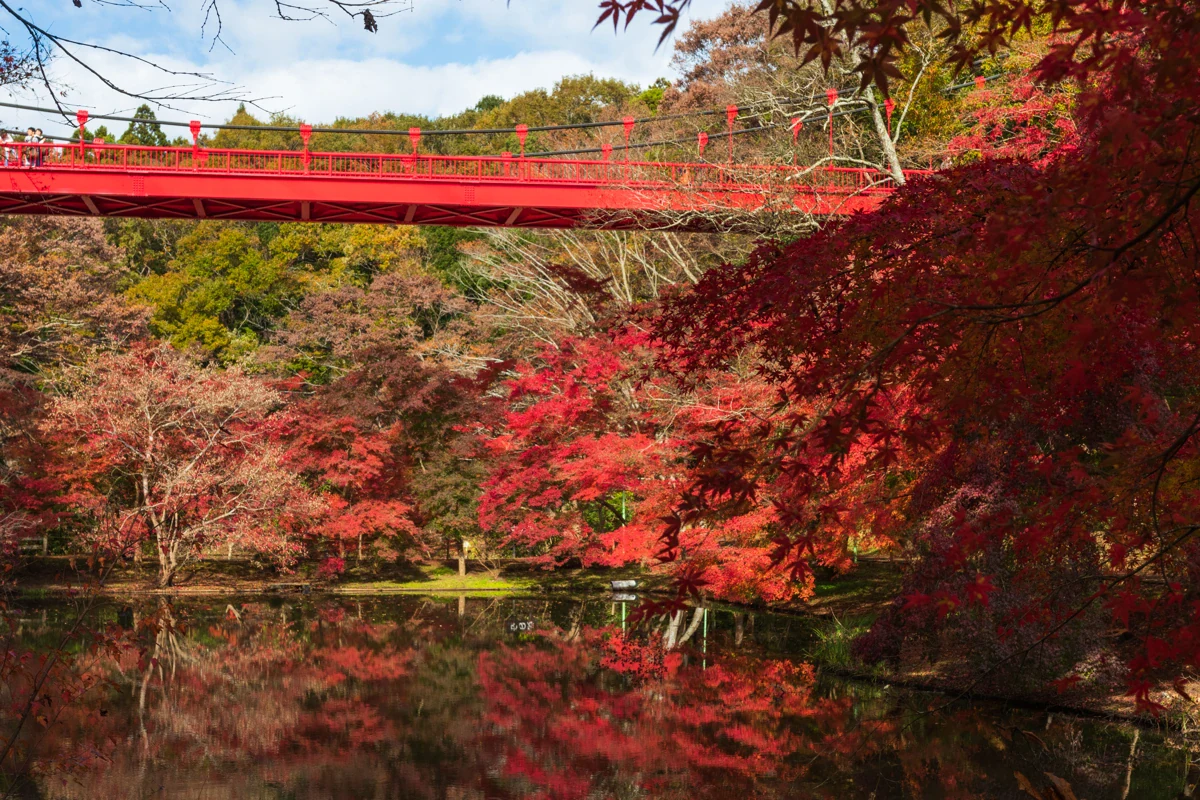
Start with the view from Izumi Bridge: water below, woodland around you and a different canopy in every season.

About

Start with the view from Izumi Bridge: water below, woodland around you and a different canopy in every season. This roughly 43-hectare park in Chiba’s Wakaba Ward follows the rolling land of the Hokuso Plateau, so it feels more like a patch of countryside than a formal city garden. Its five ponds, open lawns and small plant collections give you plenty to notice without needing a full-day hike.

The best visit is an unhurried one. Make the bridge and central Sōgen lawn your first stops, then decide whether to add the Flowering-tree Plaza and the wildflower garden opposite it. The garden brings plants native to the surrounding Izumi area together in one place. Spring’s katakuri flowers and cherry blossom attract attention, but the changing leaves and winter birds give the park a much longer season.

The ponds are an important part of the park’s character, although their waterside paths are affected by storm damage in autumn 2026. Treat this visit as a bridge-and-woodland outing, with any extra stops chosen after checking the signs. If your main aim is close-up pond birdwatching or a longer waterside ramble, wait until the city confirms those paths have reopened. Wondering what that bird or insect is? Find out on your visit using the Snappit nature app.

Izumi Nature Park opened in 1969 and was selected for Japan’s 100 notable cherry-blossom sites in 1990. Its wildflower garden was established at the end of fiscal 1979 to display plants from the local Izumi area. A volunteer partnership planned its renewal in 1999, with improvement work carried out from 2000 to 2005.

What to do here

Pause on Izumi Bridge, picnic on the Sōgen lawn, and explore the wildflower garden if its approach is open. Bring binoculars for any birds visible from permitted paths. For a more energetic outing, Forest Adventure Chiba offers separately booked treetop courses inside the park.

Seasonal info

Winter brings fragrant wintersweet and ume flowers, spring shifts from woodland flowers to fresh leaves, and summer has yamayuri lilies and orange kitsune-no-kamisori flowers. Bloom dates move with the weather. Summer heat and wet surfaces can make a short walk the better choice.

Accessibility

The park has hills, slopes and steps. A prefectural survey records designated parking, a step-free connection from the car park to the entrance, accessible toilets and loan wheelchairs, but this does not make every garden or pond path suitable. Call 043-306-0101 to discuss your route and wheelchair loan, especially during the current works and water outages.

Don't miss

1

Izumi Bridge’s elevated view over the pond valley

2

The Sōgen lawn, with cherry trees around its edges

3

A wildflower garden devoted to the surrounding Izumi area

4

Seasonal waterbirds, best enjoyed quietly from open paths

A red suspension bridge crosses above a wooded pond, with red autumn leaves reflected in the water.

Autumn foliage and the red suspension bridge above a pond at Izumi Nature Park, photographed in November 2018.

Izumi Nature Park - Flickr - t.kunikuni.jpg — t.kunikuni, CC BY-SA 2.0 (https://creativecommons.org/licenses/by-sa/2.0/). Source: https://commons.wikimedia.org/wiki/File:Izumi_Nature_Park_-_Flickr_-_t.kunikuni.jpg. Proportionally reduced to a 1200-pixel width without upscaling; recompressed to WebP quality 92, method 6. No crop, retouching, added text or colour correction. EXIF omitted. · Creative Commons

Walks and routes

Bridge, lawn and an optional garden stop

Begin at the main entrance by the first car park and read the closure notice. Use the main path signed toward Izumi Bridge and the central park, cross the bridge, then spend time at the Sōgen lawn. If the approach is open, add the Flowering-tree Plaza and the wildflower garden opposite it. Return along the same open main route rather than descending to make a pond loop. Allow 60–90 minutes for the shorter outing, or about two hours with the garden and lunch.

There are slopes and step alternatives in this part of the park. Ask staff which route suits your wheelchair or pushchair; do not assume the bridge approach and garden paths form a continuous step-free circuit.


Bridge, lawn and an optional garden stop

Things to try

Read the landscape from the bridge

Look at how the wooded slopes drop toward the ponds, then choose one detail to photograph: a reflection, a leaf silhouette or the red bridge against the canopy. Leave room for people to pass.

Make the wildflower garden a slow stop

Where access is open, choose two plants that look different and compare their leaves or flower shapes. Read the labels before naming them, and photograph from the path rather than stepping into a bed.

Add a treetop adventure

Forest Adventure Chiba has Adventure and Canopy courses with different participation rules. Reserve separately, check the current operating calendar and allow extra time to get from the entrance to its reception. A park visit alone does not include the course fee.

Add a treetop adventure

If the weather turns

Keep the outing short in light rain, with shoes that grip and a simple return route. In heavy rain or strong wind, postpone: storm-damaged slopes and falling branches are reasons to take the park’s restrictions seriously. Do not count on a full indoor alternative within this nature-focused visit.

Wildlife and habitats

Common Kingfisher

A quick blue-green flash over the water may be a Common Kingfisher. Look from an open path and let the bird come into view; keep binoculars on nearby perches rather than following it into a closed area.

Mandarin Duck

In winter, look for the male Mandarin Duck’s striking orange sail-like feathers. The Lower Pond is a familiar habitat, but keep this as an option for when its viewing paths reopen; use only currently permitted viewpoints.

Little Grebe

A small waterbird that disappears beneath the surface and pops up elsewhere may be a Little Grebe. Watch its diving pattern from a permitted viewpoint. Keep well away from nesting birds and water-edge vegetation.

The park records these birds, but what you see will depend on the season, conditions and open viewing areas. Watch quietly, keep your distance and never feed or disturb them. The current pond-side closures take priority over any older birdwatching map.

Stories and discoveries

A bridge that links two halves of a visit

Izumi Bridge is part of the main connection between the car park and the park’s central lawns and gardens. Its suspension span is 64.4 metres, which helps explain why the view feels so open after the wooded paths.

Flowers with a short spring window

Katakuri is a naturally occurring woodland flower here. Its usual late-March to early-April display tends to peak before the cherry blossom reaches its fullest show, so one spring visit may not catch both at their best.

A garden shaped by local volunteers

The wildflower garden was designed to bring local plants together for people to discover. Its renewal was developed with Chiba’s Shitashimu-kai nature group, whose members then continued its care.

When to visit

Winter: fragrance and a slower pace

Wintersweet is usually in flower in January–February, followed by ume in February–March. Winter is also a useful time to look for Mandarin Ducks wherever safe viewing access is available.

Spring: choose your flower moment

Aim for late March–early April for katakuri, checking the bloom report before travelling. Cherry trees around the lawn make a picnic attractive, while the fresh green canopy gives a later spring visit a different appeal.

Summer: a short woodland visit

The operator gives mid-to-late July for yamayuri lilies and around early August for kitsune-no-kamisori. Visit for a shorter spell in warm weather, carry water and keep to the paths around the flowers.

Autumn: color above the ponds

Late November–early December is the usual foliage window. In autumn 2026, use the bridge view and open main paths: the city expects the pond-side closures to continue through the season.

Getting there and practical advice

Hours, admission and parking

Admission is free. Plan around 8:30–17:00 in April–September and 8:30–16:30 in October–March. Ordinary-car parking is ¥400 per visit, with entry closing 30 minutes before the gate closes. The second car park opens only when announced for busy periods.

Toilets and drinking water

The city’s 9 October 2026 notice warns that the water supply can fail suddenly. When it does, flushing water is provided at the first-car-park and Central Plaza toilets. Ask about the day’s arrangements when you arrive and bring your own drinking water.

Picnics and food

The central lawn is a good place for a packed picnic. Check the operator’s announcements if you hope to buy from a food truck; BBQ service is currently closed.

By bus from Chiba Station

From JR Chiba Station’s east-side bus terminal, use stand 10 for a bus toward Narutō Station or Nakano Sōshajō and get off at Izumi Kōen Iriguchi (泉公園入口). The park advises roughly 45 minutes on the bus and a further 10-minute walk to the park. Check that your chosen service stops there and confirm the return timetable that day.

By car

The park is about 1 km from Takada Interchange on the Chiba–Togane Road. Use the official parking area, not neighbouring roads. Blossom and foliage weekends can be busy.

Choose a route before setting out

The prefectural access survey was carried out in July 2021 and records accessible toilets and designated parking. For a current visit, discuss slopes, steps, temporary works and functioning toilets with the park office on 043-306-0101. Ask where to collect a loan wheelchair rather than assuming it will be waiting at the entrance.

Visitor information

Before you go: checked 16 October 2026. Storm damage has closed pond-edge paths, and Chiba City expects those closures to continue through the 2026 autumn-color season. Enjoy the pond views from Izumi Bridge instead, following all barriers. Path and water-pipe work is scheduled from around 13 October to late December and may interrupt access. Water outages can affect toilets and drinking fountains; bring drinking water and check the latest city notice before leaving.

Sources and useful links

Wildlife you might spot

3

Each card links to a full Explore page with photos, traits, and fun facts.

Snap map for this place

Start with the big picture, then zoom in to explore individual wildlife observations around this place.

Loading map…

Good to know before you go

Read the current city closure notice before travelling; keep out of coned-off pond paths.

Bring drinking water while the supply system is unreliable, and check which toilets are usable on arrival.

Wear shoes with grip. Slopes, roots and wet leaves deserve more attention than the park’s city address might suggest.

Choose your return bus before starting the walk, and leave time for the walk back to the stop.

Bring a packed picnic. The BBQ service is not operating, and food trucks should not be your only lunch plan.

Watch wildlife without feeding it, and leave plants, animals and fallen natural material where they belong.

Keep dogs on a lead and take their waste home; the park is smoke-free.

For business photography or filming, ask the park office about permission in advance.

Frequently asked questions

Park entry is free, with no regular weekly closing day. The published visiting hours are 8:30–17:00 from April to September and 8:30–16:30 from October to March; weather, damage or works can cause extra restrictions. Car-park entry ends 30 minutes before closing.
Not during the current restrictions. On the city’s 9 October 2026 update, pond-side areas remained closed after storm damage and were expected to stay closed through the foliage season. Check for a newer reopening notice before planning a pond walk.
The operator’s 13 April 2026 notice says the BBQ service is not operating. Do not bring your own barbecue or stove: the city prohibits open-fire use. A ready-to-eat picnic is the straightforward option.
An ordinary park walk needs no reservation. Book Forest Adventure separately and check the chosen course’s height, age, weight and adult-supervision requirements. Volunteer nature walks depend on their published schedule and can be cancelled.

Recent snaps at this place

Recent snaps will appear here as new observations are added.

View all ›

Take the discovery with you

Exploring Izumi Nature Park?

Identify the wildlife you spot, learn as you go, and keep a collection of the adventure.

  1. 1Spot it
  2. 2Snap it
  3. 3Keep the discovery




