
Snappit logo
Snappit
Get App
Generic illustration, not a photograph of this venueIllustration
ParkKyushu, Japan

Kanoya Rose Garden

Kanoya Rose Garden is most enjoyable when you alternate between the large scene and the small detail.

About

Kanoya Rose Garden is most enjoyable when you alternate between the large scene and the small detail. Stand back to see bands of colour, then choose one flower and notice its opening petals, shape and scent. The official overview describes eight hectares planted with about 25,000 roses. That is enough space to choose a few satisfying areas rather than hurry through a checklist.

This is a horticultural landscape, not a wild-rose reserve. Gardeners select, train and prune the plants, and the display changes accordingly. The local story is particularly appealing: roses developed in Kanoya sit alongside internationally collected varieties, while named garden areas suggest different ways of looking. A colour comparison can become a scent comparison; an unfamiliar label can lead to a conversation about plant breeding.

Timing matters more than a headline plant count. Spring is the strongest choice for climbing roses, while the official autumn calendar runs unusually late, into November and December. As checked on October 20, 2026, the latest live municipal page carried an October 12 notice saying pruning had finished and forecasting the best display from late November to early December. That forecast can change. If flowers are your main reason for travelling, check a new report before setting out. A quieter maintenance-period visit can still be pleasant; go for a gentle garden walk rather than expecting full bloom. Eager to name that creature? Identify any animal you find during your visit using the Snappit app.

What to do here

Choose a handful of rose areas, compare flower shapes and scent without touching the plants, and ask whether the dedicated cut-flower greenhouse activity is available.

Seasonal info

The published calendar gives spring roses from late April to late June and autumn roses from late November through December. Weather and pruning alter the display.

Accessibility

Free wheelchair and stroller loans are listed, without reservations. Hilly grounds and older access-survey information make a specific route discussion advisable; a loan is not proof that every path is step-free.

Don't miss

1

Cultivated roses arranged for colour, fragrance and comparison

2

Spring climbing-rose structures

3

Locally developed roses such as Princess Kanoya and Southern Hope

4

A dedicated cut-flower greenhouse experience

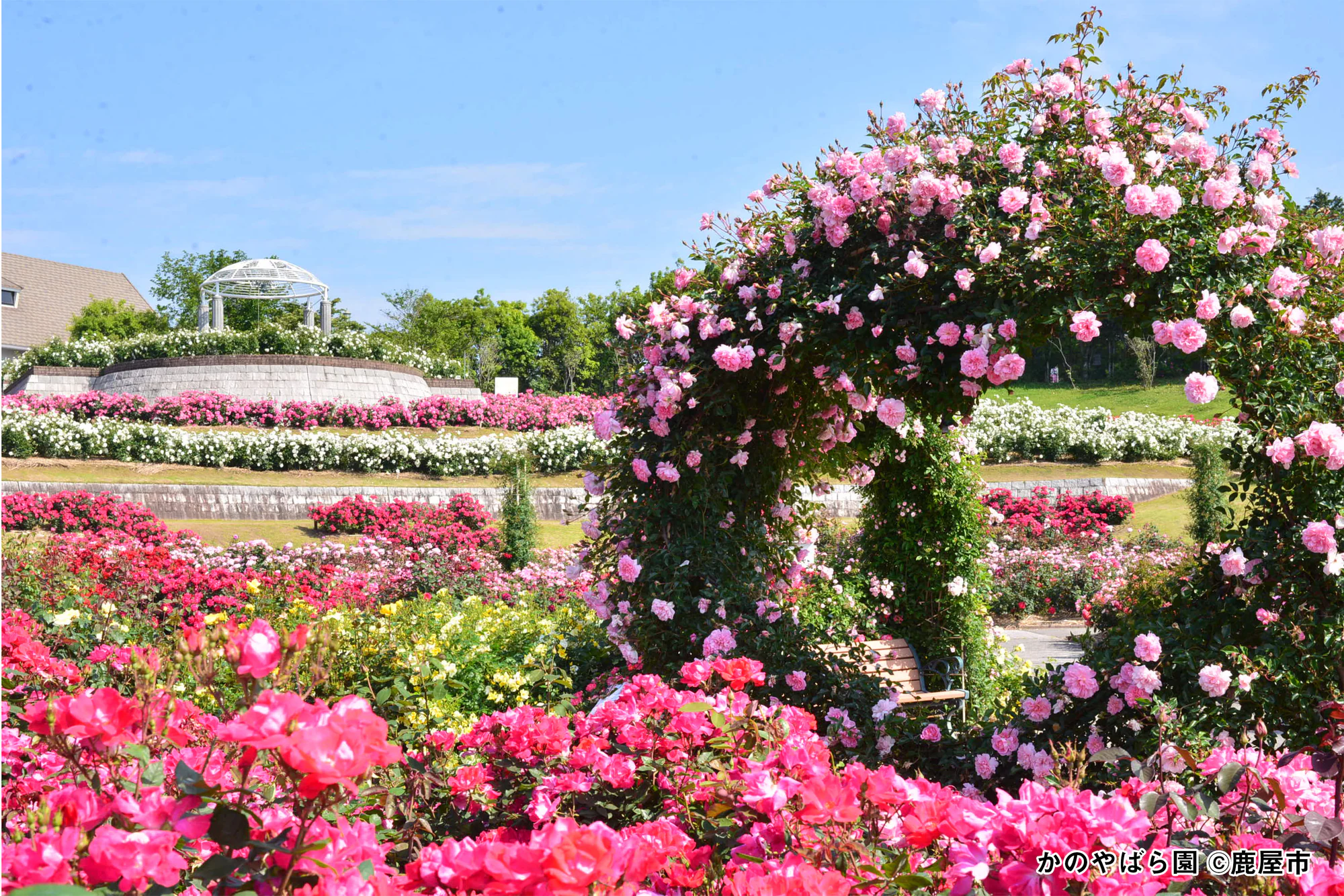
Pink and red roses fill terraced beds, with a flowering arch and a white gazebo beneath blue sky.

Cultivated rose beds and a flower-covered arch at Kanoya Rose Garden, in a municipal photograph published in 2020. Capture date unknown; not a current bloom report.

Photo: © Kanoya City / BODIK, CC BY 2.1 JP. Original published image unchanged. · Creative Commons

Walks and routes

A selective 45–60-minute visit

At reception, ask which beds are looking best and identify the route back to your entrance. Choose two or three areas from the current map rather than attempting the entire garden. Spend a few minutes on one broad view, then slow down for individual flowers and labels. Finish with a rest before returning. This is a flexible sequence, not a signed circuit or an assurance of a level route.

About 45–60 minutes, an editorial allowance
A slow rose outing

Begin with the day’s best flowering section, then follow a contrasting theme such as scent or local varieties. Pause before adding another area. In spring, ask where the climbers are at their best; in autumn, give individual blooms more time. If available, finish with the greenhouse or a refreshment break. Arrange any cut-flower activity around its earlier finishing time, and leave a comfortable margin for your return transport.

About 90 minutes to two hours, excluding meals or longer activities

Things to try

A family flower detective game

Give each person a different task: find a tightly closed bud, an open bloom, two shades of pink or a name that tells a story. Draw or photograph the discoveries from the path, then compare them at a rest stop. Make the aim noticing differences, not collecting petals or counting the most plants. Younger children may enjoy just one small area much more than a complete garden tour.

Choose a stem in the proper place

The municipal cut-flower activity supplies gloves and secateurs, with listed prices of JPY150 for a standard stem and JPY200 for a spray stem. Flower availability varies. The current page gives a 16:00 reception cutoff and 16:30 finish; gift wrapping is not offered. Ask staff to explain the procedure, keep children supervised around tools, and decide how to carry the stem home without damage.

Make a three-picture garden story

Try one wide scene, one plant-level view and one close detail. That small assignment prevents the visit becoming a blur of similar flower photographs. Keep labels in a separate reference picture; do not move flowers, cross bed edges or block access for a better angle. Ask first about tripods, commercial shoots or organized group sessions, whose permissions were not verified here.

Ask about learning opportunities

Rose Ring Kanoya organizes horticultural learning and other garden programs. These may be a better fit than an unstructured visit if you want practical growing advice. Check the current program, language, booking needs and fee with the organizer. Old class and festival announcements remain online, so do not treat a past event as a current drop-in session.

Stories and discoveries

Colour, scent and a change of pace

Use the Colour Garden as a starting idea: compare a broad patch of planting with a single bloom at the edge of the path. Then try the Scent Garden, keeping your face away from stems and insects. There is no need to agree on a perfume description. One person may notice a stronger scent than another, and comparing impressions is part of the pleasure.

Climbers and the view through flowers

The spring climbing roses invite you to look through a floral structure rather than only at it. Include some path or sky in a photograph so the viewer can understand the scale. Let people pass before stopping under an arch. The supplied municipal photographs are archival views, not evidence that the same flowers or structures look identical today.

Kanoya’s own roses

Look for labelled Princess Kanoya, with red petal fronts and pale white backs, and the softer pink Southern Hope. Both reward close attention to how a flower changes as it opens. The garden’s local-rose account also introduces Sakurajima and Osumi Hana Bara Kai. Ask where these are currently displayed; a named variety in the garden story is not a guarantee of a flowering specimen on every visit.

Garden rooms with different stories

The Fairy Garden groups story-related names, while the Royal Garden uses aristocratic and royal names. The World Rose Garden arranges plants by country. Choose one theme to follow instead of trying to memorize every label. Names can be an inviting starting point for children, but they are garden interpretations rather than a map of wild plant distribution.

A greenhouse pause

The ornamental greenhouse is described as a small rose garden with benches. Use it as a different setting for looking, not as a promise of cool air or refuge during severe weather. The cut-flower greenhouse is a separate working activity area. Ask staff which entrance and procedures apply before moving between them.

A garden of cultivated diversity

The operator’s present overview gives about 25,000 roses across eight hectares. That figure is a useful sense of scale, not a promise of 25,000 simultaneous flowers. A smaller selection seen attentively often tells you more than rushing past every bed.

A volunteer group behind a flower name

Osumi Hana Bara Kai takes its name from a volunteer circle working to fill Kanoya with roses. That makes a plant label a small piece of local civic history, not just a decorative name. Its flowers are described as purplish pink and becoming rosette-shaped as they open.

Not every attractive plant here is a rose

A September 2, 2026 municipal report recorded pampas grass beside the perennial area on the garden’s southern side. This cultivated ornamental grass provides a different texture from the rose beds. It is not evidence of a native Japanese grassland, and the old report does not guarantee fresh plumes during your visit.

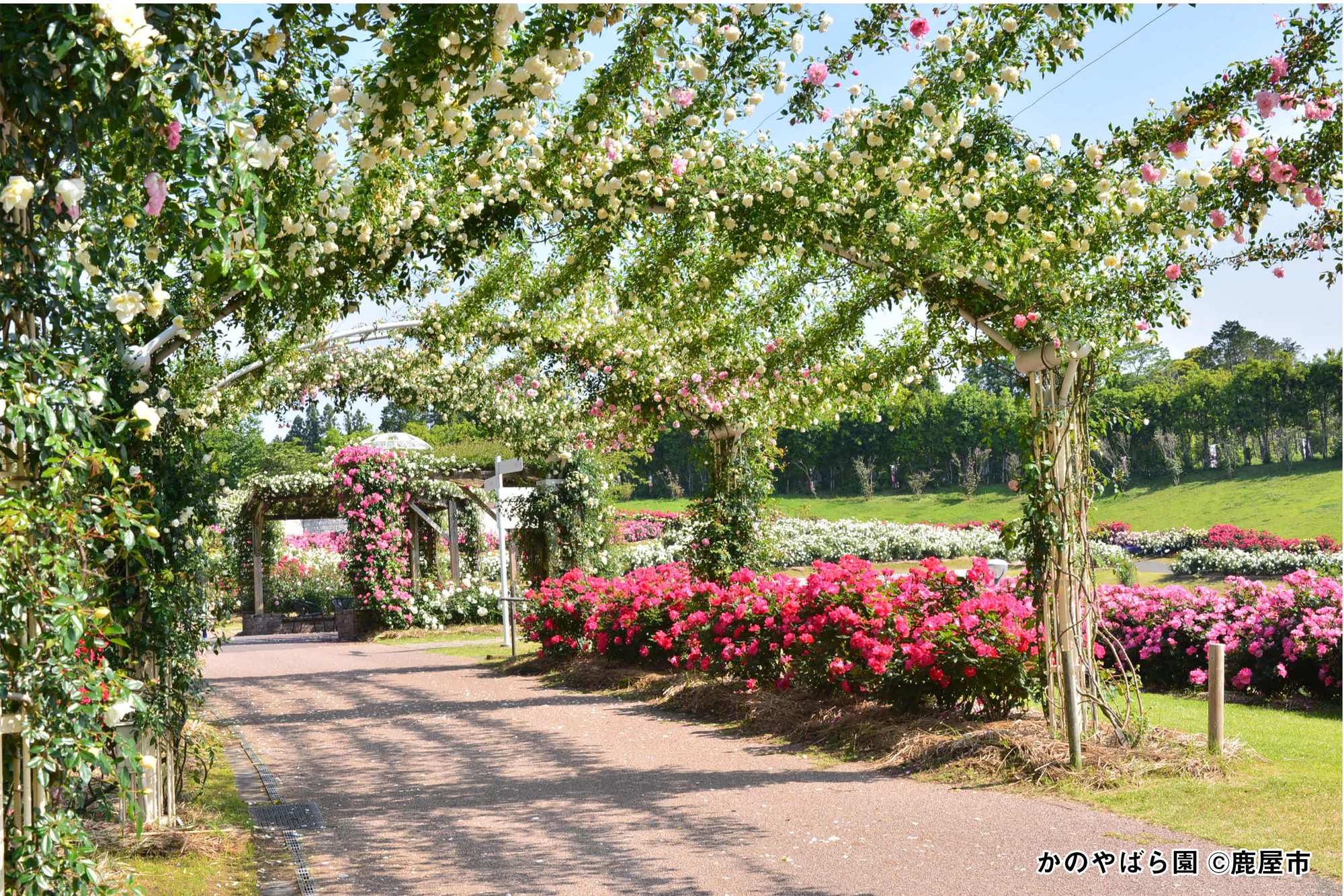
A paved path passes beneath supports covered with pale climbing roses, beside pink and red rose beds.

A rose-covered path at Kanoya Rose Garden, in a municipal photograph published in 2020. Capture date unknown; the climbing-rose display is seasonal.

Photo: © Kanoya City / BODIK, CC BY 2.1 JP. Original published image unchanged. · Creative Commons

When to visit

Late winter and early spring

January–March is a rose-maintenance period in the annual calendar. Choose a visit for the garden’s structure and whatever companion planting is actually reported, rather than expecting a full rose display. Ask which areas remain rewarding before committing to a long drive.

Late April through June

This is the published spring-rose window, including the climbers. The operator often highlights Golden Week, but the best day changes with weather. Hydrangeas may overlap later in spring and early summer in parts of the garden and wider park; check the named location rather than assuming every seasonal photograph is inside the rose garden.

Summer and early autumn

Plan a shorter, shaded-break-conscious visit in warm weather. The seasonal calendar includes companion flowers across the garden and surrounding park, while roses undergo active management. Ask what is open and attractive now. Do not substitute a generic “flowers all year” description for a same-season bloom report.

Late November and December

The operator’s autumn rose calendar extends from late November into December, consistent with the October 2026 pruning forecast. Give colour and scent individual attention. Check special-event dates separately, and do not assume evening entry or last year’s holiday closing dates will apply.

Getting there and practical advice

Arriving by road

Use 1250 Hamada-cho, Kanoya City as the destination. The official estimates are about 20 minutes from Kasanohara IC, 15 minutes from central Kanoya’s bus stop and 35 minutes from Tarumizu port by car. The listed 90 minutes from Kagoshima Airport is a driving estimate, not a bus itinerary. Free parking is advertised; allow extra time during major flower periods.

Arriving without a car

The garden’s transport page describes the Kanoya/Rina City connection as a Saturday, Sunday and public-holiday bus, with limited services. Confirm the actual timetable and return before travelling; the page has no verified effective date. Travellers from Kagoshima-Chuo must make an onward connection in Kanoya. On weekdays, investigate a taxi or other confirmed transfer rather than assuming the garden bus runs.

Hours, entry and facilities

The official garden map identifies a restaurant, shop, greenhouses and garden stage. Menus and opening days need separate checking. Bring drinking water and take rubbish home; an available cafe should be a bonus, not your only plan for a break.

Useful facilities, but check the route

The operator offers free wheelchairs and strollers at the management office, with limited numbers and no advance reservation. A specialist survey registered in 2015 records entrance steps with a ramp, a multipurpose toilet beside the restaurant with an 84cm doorway and ostomate equipment, and nursing and first-aid rooms. Those details are helpful questions to ask, not a fresh inspection. Confirm the usable entrance, gradients, rest points, toilet availability and the shortest suitable circuit. Do not depend on an electric chair or festival vehicle without checking its current availability and your boarding needs.

Keep the visit comfortable and the planting intact

Stay on visitor paths and outside flower beds. Rose stems can catch hands and clothing, so supervise children and avoid leaning through planting for a photograph. In hot weather, shorten the visit and take water breaks; in rain, slow down on sloping or slippery surfaces. Follow closures and staff directions rather than trying to complete a planned sequence. Keep pets close on an allowed short lead. Food and drinks should not inconvenience other visitors, and rubbish should leave with you. These are practical precautions, not a current hazard inspection.

Visitor information

October 2026: wait for the later rose display

Checked October 20, 2026: the live municipal flower page reports completed pruning on October 12 and predicts a late-November to early-December rose peak. It also reports October marigolds. These are dated observations and a forecast, not a promise for your arrival. Current notices, weather and staff instructions take priority over this guide.

Sources and useful links

Wildlife you might spot

2

Each card links to a full Explore page with photos, traits, and fun facts.

Snap map for this place

Start with the big picture, then zoom in to explore individual wildlife observations around this place.

Loading map…

Good to know before you go

Photograph a plant label after the flower if you want to remember its name. Do not identify a cultivar by colour alone.

Bring water and sun protection, and build in a seated break rather than trying to cover all eight hectares.

Check both the bloom report and your return transport before leaving central Kanoya.

Frequently asked questions

Do not plan on that. The operator identifies the climbing-rose display with spring. Autumn is better approached as a chance to appreciate individual flowers rather than a repeat of every spring scene.
No. Prices change with flowering. The official pages checked here list JPY110 from July 1, 2026, while retaining a standard adult rate of JPY630. Confirm the rate for your visit rather than treating either as permanent.
Only through the designated paid cut-flower activity and under staff instructions. Display beds are not picking areas. Ask what stems are available and whether the activity suits your child before starting.
The operator allows pets with a collar and leash, excludes long leads and requires owners to clean up. Keep your pet close and check any separate restrictions inside buildings.
No year-round service is established. It is described as a festival-period garden vehicle. Check operation and boarding suitability before relying on it for mobility.
Those belong to the broader Kirishimagaoka Park offering, outside this guide’s rose-garden scope. Check their location, hours and separate charges rather than assuming the garden ticket includes them.

Recent snaps at this place

Recent snaps will appear here as new observations are added.

View all ›

Take the discovery with you

Exploring Kanoya Rose Garden?

Identify the wildlife you spot, learn as you go, and keep a collection of the adventure.

  1. 1Spot it
  2. 2Snap it
  3. 3Keep the discovery





