Hairy Woodpecker
Leuconotopicus villosus
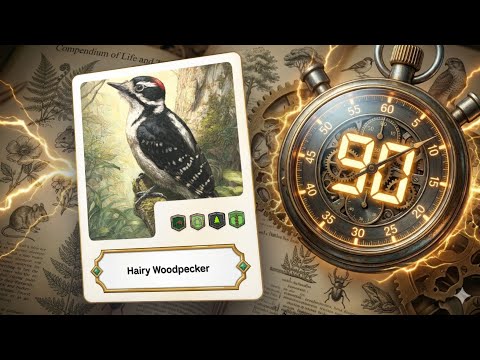
The Hairy Woodpecker is a black-and-white bird that loves to peck on trees! It has a long tongue to catch bugs hiding in the bark. You can often hear its loud tapping in the forest.
Habitat: Forests
The Hairy Woodpecker is a medium-sized bird, predominantly black and white. It has a prominent white stripe down its back and a white face with two black stripes. Males feature a small red patch on the back of their head, distinguishing them from the plain-headed females.
Category
BirdsRarity
Common
Danger
1/5 · Very low
Snaps
22
Hairy Woodpeckers often nest in dead trees, which they expertly carve into cozy homes!
Their drumming isn't just for finding food; it's also how they communicate with other woodpeckers!
These smart birds sometimes follow pileated woodpeckers to find fresh holes with insects!
Unlike many birds, both male and female Hairy Woodpeckers take turns incubating their eggs.
Hairy Woodpeckers have a thick, spongy skull that helps them absorb impacts, protecting their brain while pecking.
Hairy Woodpecker can extend its long, barbed tongue far into tree crevices to spear and extract hidden insects.
Hairy Woodpeckers have strong, stiff tail feathers and special two-forward, two-backward toes that help them cling to tree trunks.
Hairy Woodpecker has a powerful, chisel-like beak for drilling holes into dead or decaying wood to find beetle larvae.
These woodpeckers munch mostly on insects found in wood, but also enjoy seeds and berries!
Dendroctonus ponderosae
Feeds on larvae
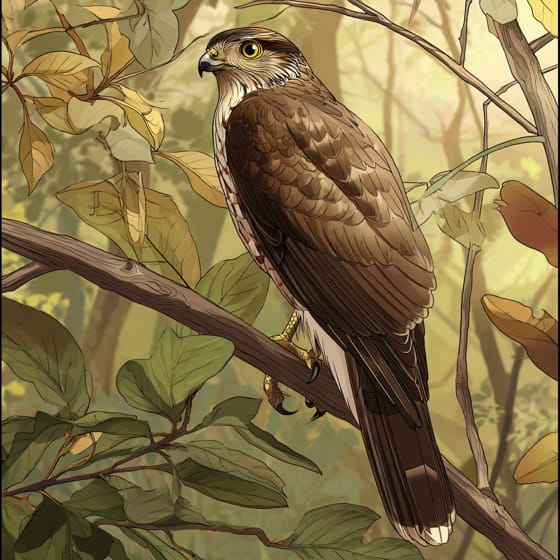
Accipiter cooperii
Predates on adults
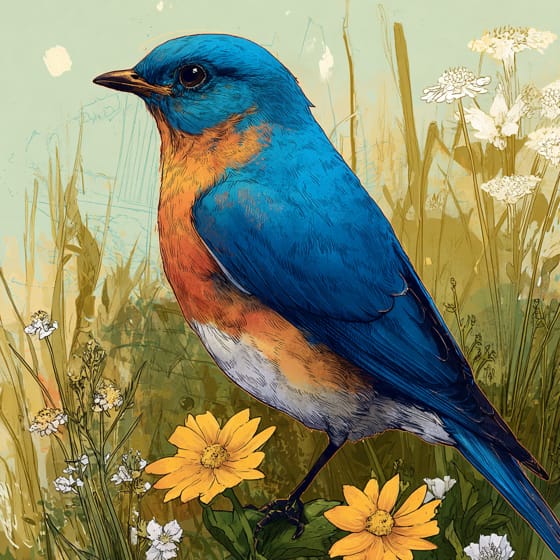
Sialia sialis
Uses abandoned cavities
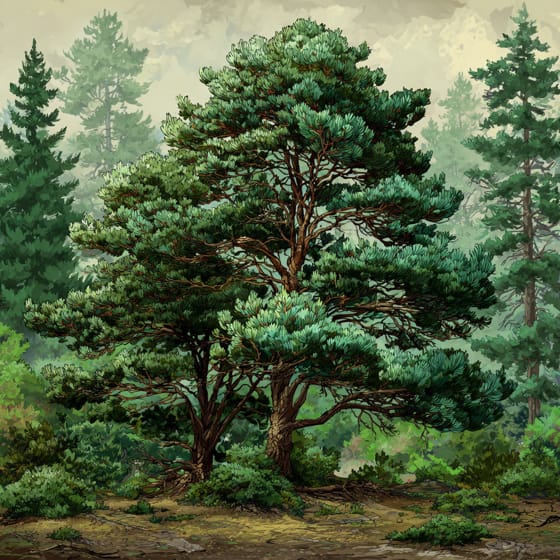
Pinus strobus
Provides habitat and food
Feathered describes animals, primarily birds, possessing a covering of feathers.
Social animals live in organized groups, cooperating for survival benefits such as foraging, defense, and raising offspring.
Arboreal animals live primarily in trees, utilizing them for shelter, food, and protection from predators.
This trait identifies organisms whose diet primarily consists of insects and other small invertebrates.

This trait describes organisms that manipulate external objects to achieve a specific goal.

Forest habitats are terrestrial environments dominated by dense tree cover, supporting a high diversity of plant and animal life.

This trait characterizes organisms with an exceptionally long lifespan compared to others of their kind.

Diurnal animals are primarily active during daylight hours, typically resting or sleeping at night.
Danger
1/5 · Very low
Enjoy watching birds from a distance and don't try to touch them.
18-26 cm
33-41 cm
0.04-0.095 kg
1-15 years
50 km/h
These woodpeckers munch mostly on insects found in wood, but also enjoy seeds and berries!
Forests
Foraging
Zoom in to split clusters and explore where this object has been snapped.

Connecticut, US
You might spot Aurelia Aurita and Whitespotted Bamboo Shark.
View guide →

Colorado, US
You might spot Western Lowland Gorilla, Varanus Macraei, and Bluetongues.
View guide →

Washington, US
You might spot Bigleaf Maple, Common Snowberry, and Osoberry.
View guide →

Quebec, CA
You might spot Eastern Gray Squirrel, Duck, and Groundhog.
View guide →
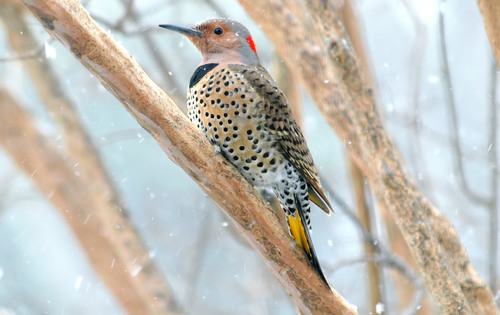
British Columbia, CA
You might spot Northern Flicker and Indian Peafowl.
View guide →
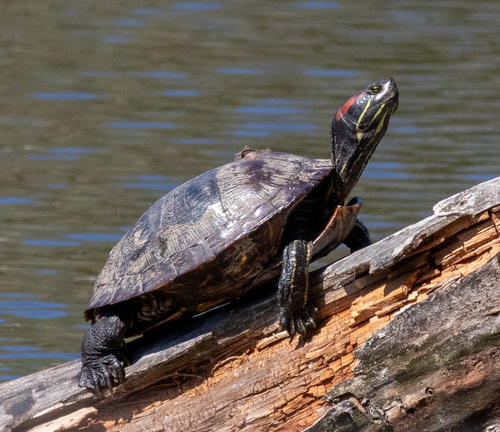
Illinois, US
You might spot Pond Slider and Great Blue Heron.
View guide →