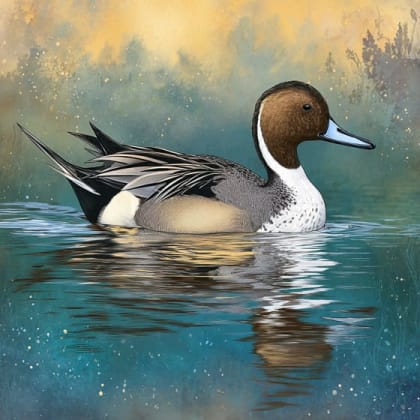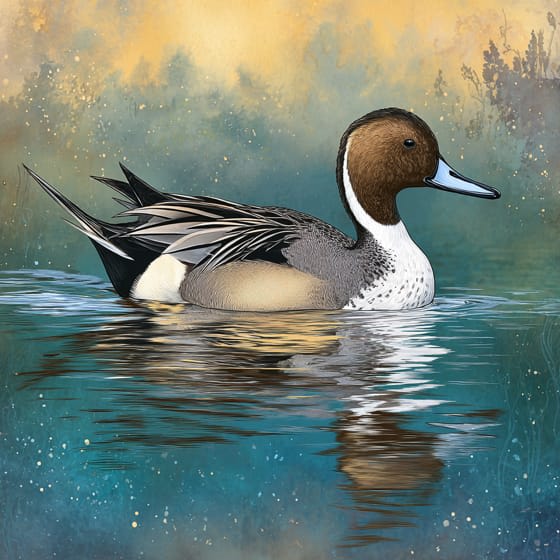





Northern Pintail
Anas acuta
The Northern Pintail is a graceful duck with a long neck and pointed tail! It loves to glide across water and is often seen in large groups.
Habitat: Marshes and wetlands
The Northern Pintail is an elegant duck known for the male's long, pointed tail feathers and slender neck. Males have a chocolate-brown head with a distinct white stripe extending up the neck from the breast. Females are mottled brown, sharing the same graceful, slender silhouette.
Category
BirdsRarity
Common
Danger
2/5 · Low
Snaps
54
Male pintails have a tail that can be as long as their body!
Pintails fly in V-formations, saving energy during migration.
Their 'pintail' name comes from the male's needle-like tail feather.
They often nest far from water, sometimes in dry grasslands.
Northern Pintail can migrate thousands of kilometers because its strong wings and efficient flight pattern help it cover vast distances quickly.
Northern Pintail can find hidden food in mud because its bill is highly sensitive to feel for submerged seeds and insects.
Northern Pintail has mottled brown feathers that help it hide from predators among reeds and muddy shores.
These ducks mostly eat seeds and plants they find in shallow water, sometimes grabbing insects too.
Age differences: Young ducklings eat more insects and invertebrates for growth.
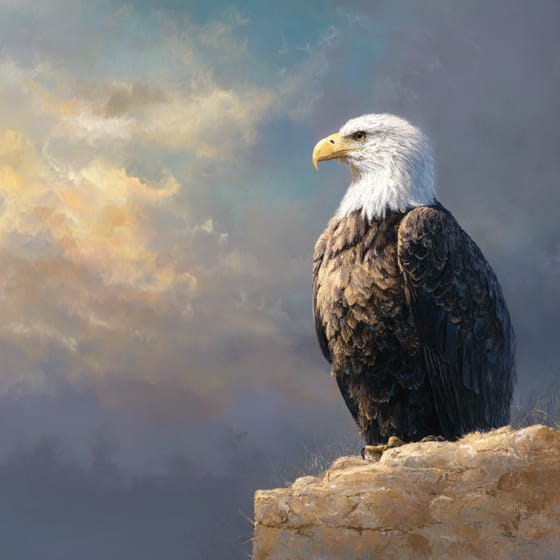
Haliaeetus leucocephalus
Adults and ducklings can be prey for this raptor.
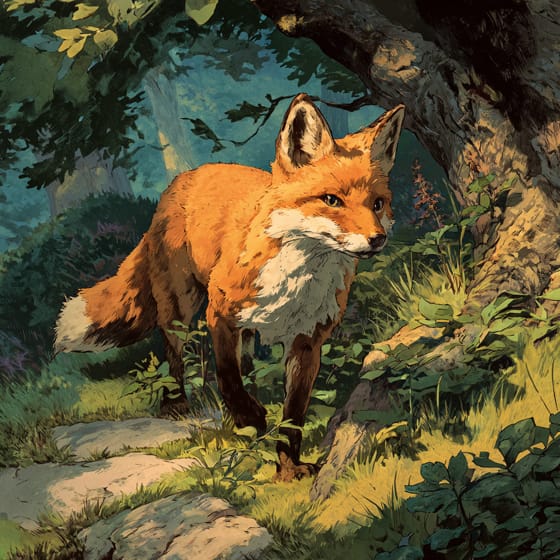
Vulpes vulpes
Foxes prey on eggs, ducklings, and sometimes adult ducks.
Scirpus acutus
Consumes seeds from this common wetland plant.
Wildlife encompasses all undomesticated animal and plant life existing in their natural habitats.
Feathered describes animals, primarily birds, possessing a covering of feathers.
Characterized by having toes connected by a membrane, typically aiding in swimming.
Social animals live in organized groups, cooperating for survival benefits such as foraging, defense, and raising offspring.

This trait identifies organisms whose diet includes both plant and animal matter.

This habitat trait identifies species found in wetlands, which are areas of land saturated with water, either permanently or seasonally, including marshes, swamps, and bogs.

Migratory animals undertake seasonal movements from one region to another, typically in response to changes in climate or food availability.
Danger
2/5 · Low
Watch quietly from a distance and never try to feed or chase wild animals.
56-74 cm
80-95 cm
0.7-1.2 kg
10-20 years
70 km/h
These ducks mostly eat seeds and plants they find in shallow water, sometimes grabbing insects too.
Marshes and wetlands
Foraging
Zoom in to split clusters and explore where this object has been snapped.

Illinois, US
You might spot Red Fox, Equus Africanus Asinus, and Western Barn Owl.
View guide →

Maryland, US
You might spot African Lion, Red Fox, and Common Ostrich.
View guide →
New York, US
You might spot African Lion, Tiger, and Snow Leopard.
View guide →
Oklahoma, US
You might spot African Lion, Komodo Dragon, and Giraffes.
View guide →

South Holland, NL
You might spot Grey Heron, Eurasian Jackdaw, and Common Moorhen.
View guide →
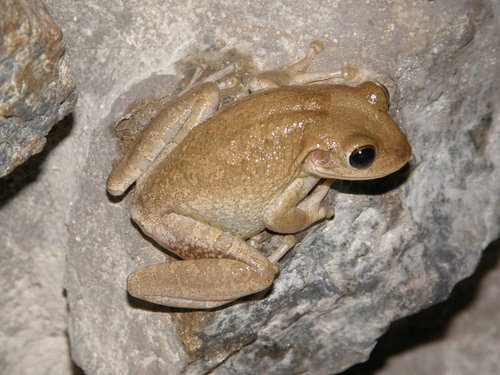
New York, US
You might spot Cuban Tree Frog and Armoracia.
View guide →