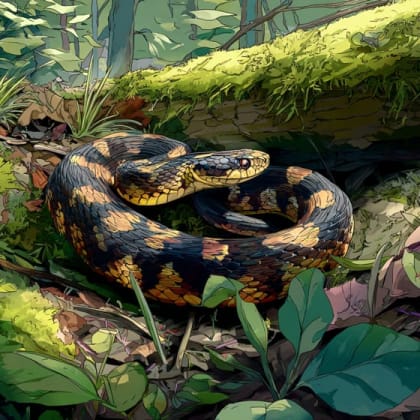
Boa Constrictors
Boa
Boa constrictors are large, beautiful snakes that can be found in warm places. They are known for their ability to squeeze their prey gently before eating it. They are not dangerous to people and are often kept as pets.
Habitat: Forests
The Boa Constrictor is a heavy-bodied snake adorned with striking patterns of tan, brown, or grey, often featuring dark saddle-shaped markings that become reddish towards its tail. These distinctive colors provide exceptional camouflage, allowing it to blend seamlessly with its tropical surroundings.
Category
ReptilesRarity
Common
Danger
2/5 · Low
Snaps
Be the first to snap!
A boa's jaws can stretch wide, swallowing prey bigger than its head!
Boa constrictors can sense the heartbeats of their prey after catching them!
These snakes have tiny vestigial 'legs' called spurs near their tail!
They give birth to live babies, not eggs!
Boa Constrictors have specialized heat-sensing pits that helps them accurately locate warm-blooded prey, even in complete darkness.
Boa Constrictors can remain perfectly motionless and hidden for hours because of their excellent camouflage that helps them surprise unsuspecting animals.
These powerful hunters eat warm-blooded animals like rodents, birds, and even some reptiles.
Age differences: Younger boas hunt smaller prey; adults can take on larger animals.
Dasyprocta leporina
Primary prey for many boas.
Ramphastos sulfuratus
Sometimes hunts tree-dwelling birds.
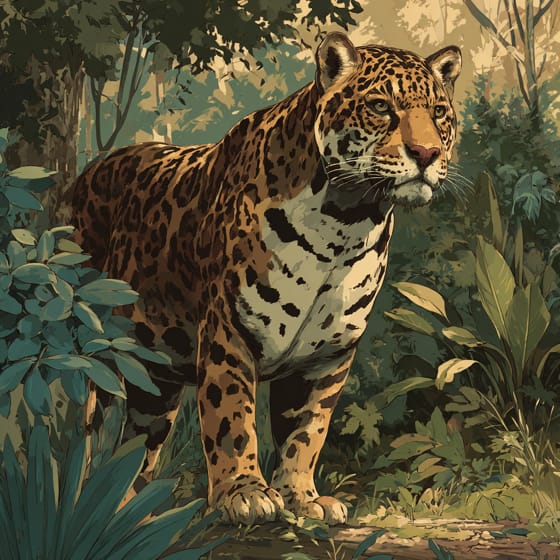
Panthera onca
Major predator of adult boas.
Solitary animals live alone for most of their lives, only interacting with others for mating or parental care.
Camouflaged describes organisms that possess coloring or patterns that allow them to blend into their environment.
Colorful describes organisms or objects displaying a wide range of bright and distinct colors.
An ambush predator hunts by patiently waiting and concealing itself, then launching a sudden attack when unsuspecting prey comes within range.

Forest habitats are terrestrial environments dominated by dense tree cover, supporting a high diversity of plant and animal life.

This trait characterizes organisms with an exceptionally long lifespan compared to others of their kind.

This trait identifies organisms whose diet consists entirely or primarily of animal tissue.

Giant describes organisms or objects of significantly larger size than average for their species or type.
Danger
2/5 · Low
Always watch from a distance and never try to touch a wild snake.
180-370 cm
6-27 kg
15-25 years
2 km/h
These powerful hunters eat warm-blooded animals like rodents, birds, and even some reptiles.
Forests
Ambush
10-60
Zoom in to split clusters and explore where this object has been snapped.
Recent snaps will appear here as new observations are added.

Maryland, US
You might spot African Lion, Red Fox, and Common Ostrich.
View guide →
Ohio, US
You might spot African Lion, Giraffes, and Gray Wolf.
View guide →
Texas, US
You might spot African Lion, Equus Africanus Asinus, and Tiger.
View guide →

Texas, US
You might spot Komodo Dragon and Domestic Bactrian Camel.
View guide →

Izmir, TR
You might spot African Lion, Camelus, and Psittacidae.
View guide →