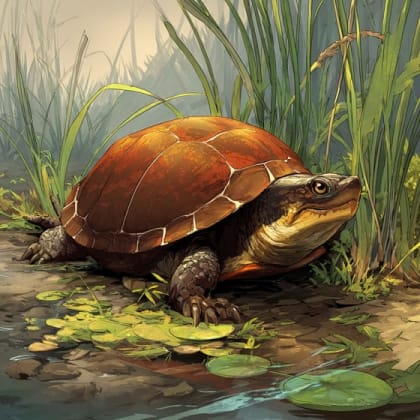
Red-eared Slider
Trachemys scripta elegans
The Red-eared Slider is a friendly turtle that loves to swim in ponds and lakes. It has a bright red mark behind its eyes and enjoys basking in the sun!
Habitat: Freshwater lakes, ponds, and rivers
The Red-eared Slider has a smooth, olive to brown shell, often with yellow streaking. Its head and limbs are green with fine yellow lines, and it is famously identified by a prominent red or orange patch on each side of its head, behind the eyes.
Category
ReptilesRarity
Common
Danger
2/5 · Low
Snaps
13
Baby sliders hatch with a special "egg tooth" to break their shell!
Female sliders dig their nests using only their strong back legs.
Red-eared Sliders spend most of their day either swimming or sunbathing.
These turtles can recognize individual people who feed them.
Red-eared Slider has a hard, bony shell that acts as a strong shield, protecting it from many potential dangers.
Red-eared Slider can bask in the sun to regulate its body temperature, which helps it stay warm and digest food efficiently.
Red-eared Slider can hold its breath for long periods underwater, allowing it to forage for food or hide from predators.
Young sliders eat bugs and fish, but adults enjoy more greens and aquatic plants!
Age differences: Young turtles are mostly carnivorous, eating insects and small aquatic life; as they mature, their diet shifts to become primarily herbivorous.
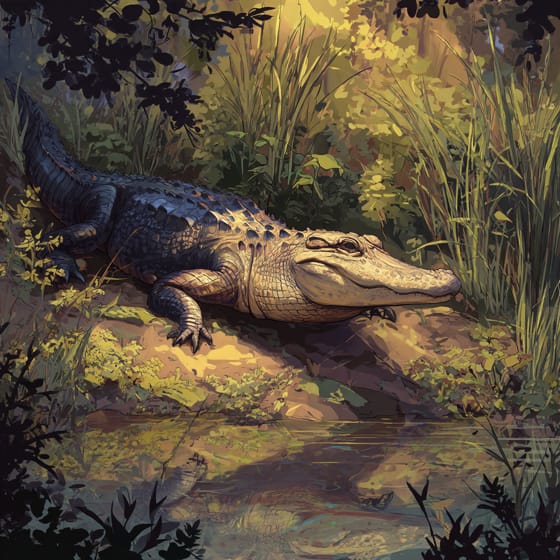
Alligator mississippiensis
Adult alligators often prey on juvenile and adult sliders.
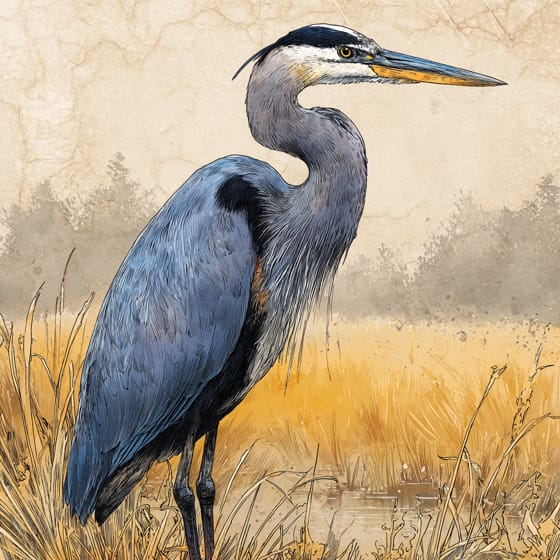
Ardea herodias
Large wading birds can snatch young sliders from the water.
Gambusia affinis
Young sliders frequently consume small fish like mosquitofish.
Lemna minor
Adult sliders commonly graze on various aquatic plants and algae.
Wildlife encompasses all undomesticated animal and plant life existing in their natural habitats.
Characterized by having toes connected by a membrane, typically aiding in swimming.
This trait identifies organisms whose diet includes both plant and animal matter.
This trait characterizes organisms with an exceptionally long lifespan compared to others of their kind.

Diurnal animals are primarily active during daylight hours, typically resting or sleeping at night.

Freshwater habitats include non-saline aquatic environments such as rivers, lakes, ponds, and wetlands, vital for numerous species.
Danger
2/5 · Low
Look but don’t touch. Keep a safe distance and wash hands after exploring.
12-30 cm
0.5-2.5 kg
20-30 years
0.5 km/h
Young sliders eat bugs and fish, but adults enjoy more greens and aquatic plants!
3 km/h
Freshwater lakes, ponds, and rivers
Foraging
Zoom in to split clusters and explore where this object has been snapped.

Ohio, US
You might spot African Lion, Komodo Dragon, and Tiger.
View guide →
Arkansas, US
You might spot African Lion, Red Fox, and Common Ostrich.
View guide →
North Carolina, US
You might spot African Lion, Giraffes, and Common Ostrich.
View guide →
Oklahoma, US
You might spot African Lion, Komodo Dragon, and Giraffes.
View guide →

California, US
You might spot Abyssinian Ground Hornbill and Chelonoidis Nigra Nigra.
View guide →
New Mexico, US
You might spot African Lion, Cheetahs, and Hippopotamus.
View guide →