

Wolverine
Gulo gulo
Wolverines are strong and furry animals that live in cold places. They are known for their bravery and can travel long distances to find food. They have sharp claws and a bushy tail!
Habitat: Mountain regions
The Wolverine has thick, dark brown fur, often with a broad, creamy-yellow stripe running along its sides. It possesses a stocky, muscular body, a wide head, and short, powerful legs, making it look incredibly robust.
Category
MammalsRarity
Rare
Danger
3/5 · Moderate
Snaps
Be the first to snap!
Its scientific name, Gulo gulo, means 'glutton' because it loves to eat!
They bravely defend their food, even from much larger animals like bears.
Wolverine fur resists frost, keeping them warm in super-cold, snowy places.
Wolverines can walk for miles each day, even through deep, difficult snow!
Wolverine has incredibly powerful jaws and teeth that help them crush bones and frozen meat, allowing them to eat almost an entire carcass.
Wolverine can travel easily through deep snow because of its large, wide paws that act like natural snowshoes.
Wolverine can bury and store leftover food in the snow or under rocks, helping them save meals for later in harsh conditions.
Wolverine has strong, semi-retractable claws that help them climb trees and scale rocky slopes to escape danger or find food.
A mighty hunter and scavenger that eats meat, from tiny rodents to huge animal leftovers!
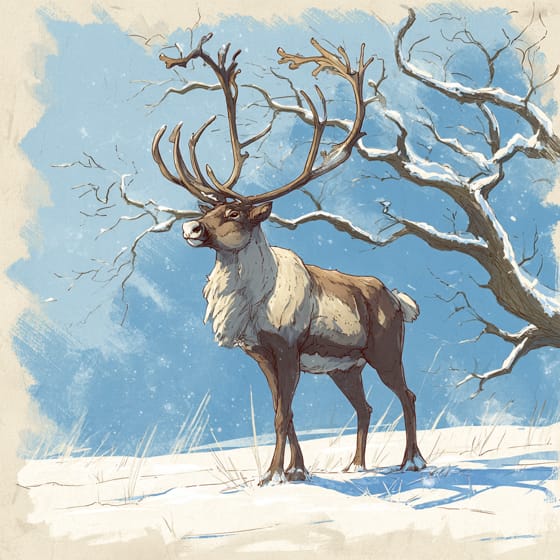
Rangifer tarandus
Preys on vulnerable calves and weaker adults, especially in winter.
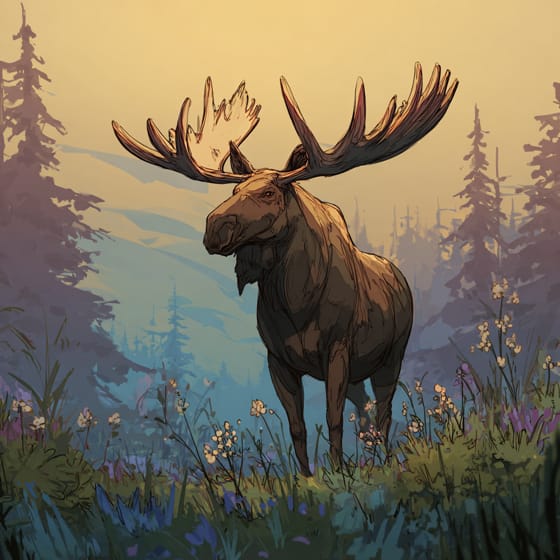
Alces alces
Targets young calves and weak adults, especially in snowy conditions.
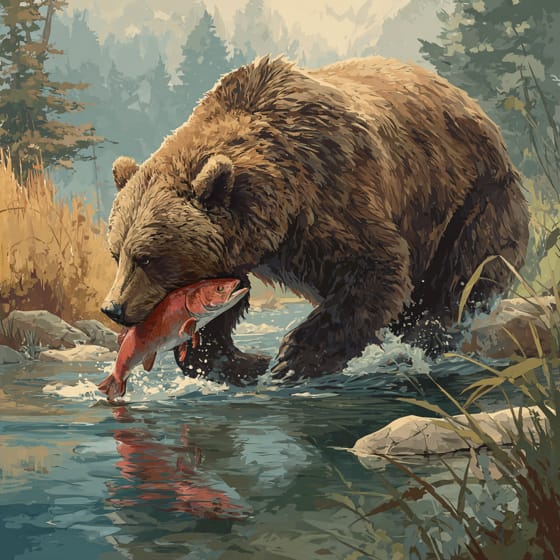
Ursus arctos
Scavenges kills left by bears, sometimes even chasing them off.
Marmota caligata
Actively hunts marmots and other burrowing rodents.
Furry describes animals possessing a dense covering of soft hair or fur.
Solitary animals live alone for most of their lives, only interacting with others for mating or parental care.
Scavengers consume dead organic matter, helping to decompose carcasses and other waste in the ecosystem.
This habitat trait identifies species found in mountainous regions, characterized by high elevation, steep slopes, and varying climate zones.

This trait identifies organisms whose diet consists entirely or primarily of animal tissue.

Describes a species whose presence and role have a disproportionately large effect on its environment.

This trait identifies organisms that exhibit exceptional swiftness in movement for hunting, escape, or travel.
Danger
3/5 · Moderate
Wolverines are wild animals and should be admired from a distance. Never try to touch or feed them.
82-133 cm
9-25 kg
7-13 years
48 km/h
A mighty hunter and scavenger that eats meat, from tiny rodents to huge animal leftovers!
Mountain regions
Pursuit
1-5
Zoom in to split clusters and explore where this object has been snapped.
Recent snaps will appear here as new observations are added.

Michigan, US
You might spot African Lion, Wolverine, and Giraffes.
View guide →

Alaska, US
You might spot Red Fox, Wolverine, and Gray Wolf.
View guide →

Bavaria, DE
You might spot African Lion, Arachnida, and Insect.
View guide →
Washington, US
You might spot Red Fox, Wolverine, and Gray Wolf.
View guide →