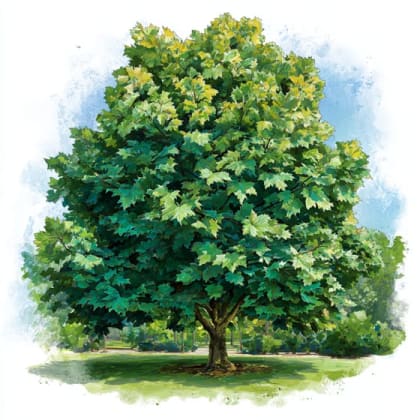

Black Cherry
Prunus serotina
The Black Cherry tree has dark, shiny berries that are loved by birds. It’s a pretty tree in spring when it blooms!
Habitat: Forests and fields
The Black Cherry has distinct dark, scaly bark that looks like burnt potato chips. Its shiny, elongated green leaves turn yellow-orange in fall, and it produces clusters of small white flowers followed by dark red to black cherries.
Category
TreesRarity
Common
Danger
1/5 · Very low
Snaps
68
Even its wilted leaves and seeds contain a tiny bit of cyanide, making them dangerous to eat.
Its beautiful reddish-brown wood is highly prized for making fancy furniture and musical instruments!
The bark on older Black Cherry trees looks amazingly like burnt cornflakes or potato chips!
Young Black Cherry leaves often have rusty hairs along the main vein on their undersides!
Black Cherry has thick, scaly bark that helps it resist damage from minor forest fires, aiding its survival.
Black Cherry leaves decompose quickly, adding rich nutrients to the soil that benefit other plants.
Black Cherry can grow quickly as a young tree, helping it reach for sunlight in crowded forest environments.
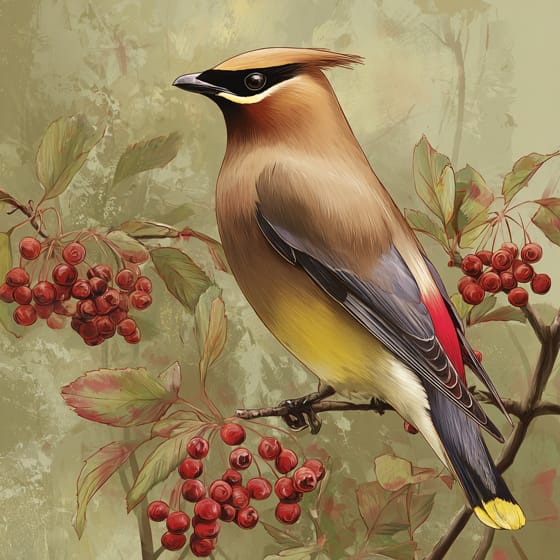
Bombycilla cedrorum
eats fruits, disperses seeds

Odocoileus virginianus
browses twigs and leaves
Apis mellifera
visits flowers for nectar
Didelphis virginiana
eats fallen ripe cherries
Deciduous plants periodically shed all their leaves, typically during autumn or dry seasons.
Spring blooming plants produce their flowers during the spring season, often signifying the end of winter and the start of new growth.
Fruit-bearing plants produce fruits, which are the mature ovaries of flowering plants containing seeds.
A fruit tree is a perennial tree that produces fruit, which is edible to humans or animals.

Edible plants are those parts of a plant that are considered safe for human consumption.

Rapid growing plants exhibit accelerated growth rates, quickly increasing in size and biomass within a short period.

Forest habitats are terrestrial environments dominated by dense tree cover, supporting a high diversity of plant and animal life.
Danger
1/5 · Very low
Do not pick or eat anything you find. Some plants and mushrooms can be harmful.
15-30 m
8-15 m
Yes
60-120 cm
60-100 years
Forests and fields
Drupe
Medium
Zoom in to split clusters and explore where this object has been snapped.
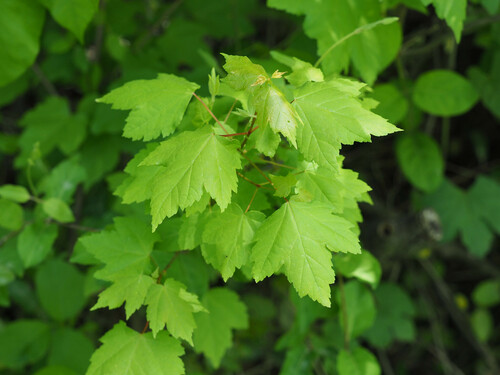
New York, US
You might spot Red Maple, Black Tupelo, and Sensitive Fern.
View guide →

Illinois, US
You might spot Red Fox, Equus Africanus Asinus, and Western Barn Owl.
View guide →

New York, US
You might spot African Lion, Tiger, and Snow Leopard.
View guide →
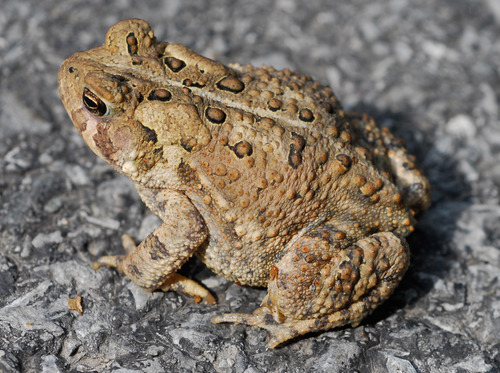
Virginia, US
You might spot American Toad, American Sweetgum, and Partridgeberry.
View guide →
Virginia, US
You might spot Rudbeckia, Pileated Woodpecker, and Monarch.
View guide →
_(16639600986).jpg)
New York, US
You might spot White Mulberry and Striped Greenhouse Slug.
View guide →