
Snappit logo
Snappit
Get App
Generic illustration, not a photograph of this venueIllustration
ParkKR

Bijarim Forest

The forest's main attraction is the living woodland itself.

About

The forest's main attraction is the living woodland itself. Korea Tourism Organization describes roughly 2,800 old bija trees, many estimated at 500–800 years, in this protected landscape. Treat those figures as the visitor description, rather than a count or age certificate for every tree. Large trunks share the woods with other vegetation, so it rewards looking beyond the best-known specimens. Pick one comfortable circuit, leave room for stops, and resist turning the visit into a race between photo points. Turn your visit into a safari! Use the Snappit app to scan and log wildlife sightings here.

The protected forest's formal name is Jeju Pyeongdae-ri Bija Tree Forest, designated a Natural Monument on 19 August 1993. Its story is also a human one. The Academy of Korean Studies describes the historical value of bija timber and seeds, and the protection of seed-producing groves with stone walls. This helps explain why conservation here involves looking after an inherited landscape rather than simply leaving every part untouched.

What to do here

Start with the entrance map and any notices, then follow the signed forest course that suits your group. The named Millennium Bija Tree and joined tree are useful points of interest, but you needn't collect every landmark to enjoy the visit. If someone is tiring, ask staff about the appropriate return route rather than following an apparent shortcut through the vegetation.

Seasonal info

The evergreen bija canopy makes this a woodland visit beyond the usual autumn-colour season. Choose the day's weather over a fixed calendar promise: bring sun protection for the approach, a light layer when it is cool, and shoes with grip whenever surfaces are damp.

Accessibility

Course choice matters more than the forest's reputation for easy walking. Check the A-course details below if you use a wheelchair or stroller, and ask about the exact route before paying. A relatively level forest path is not the same as a continuously smooth, independently accessible route.

Don't miss

1

Old trees with wide crowns and varied trunk shapes

2

A compact forest outing that leaves time for another eastern-Jeju stop

3

Named trees reached through the signed visitor-path network

4

A protected woodland with a long history of human care

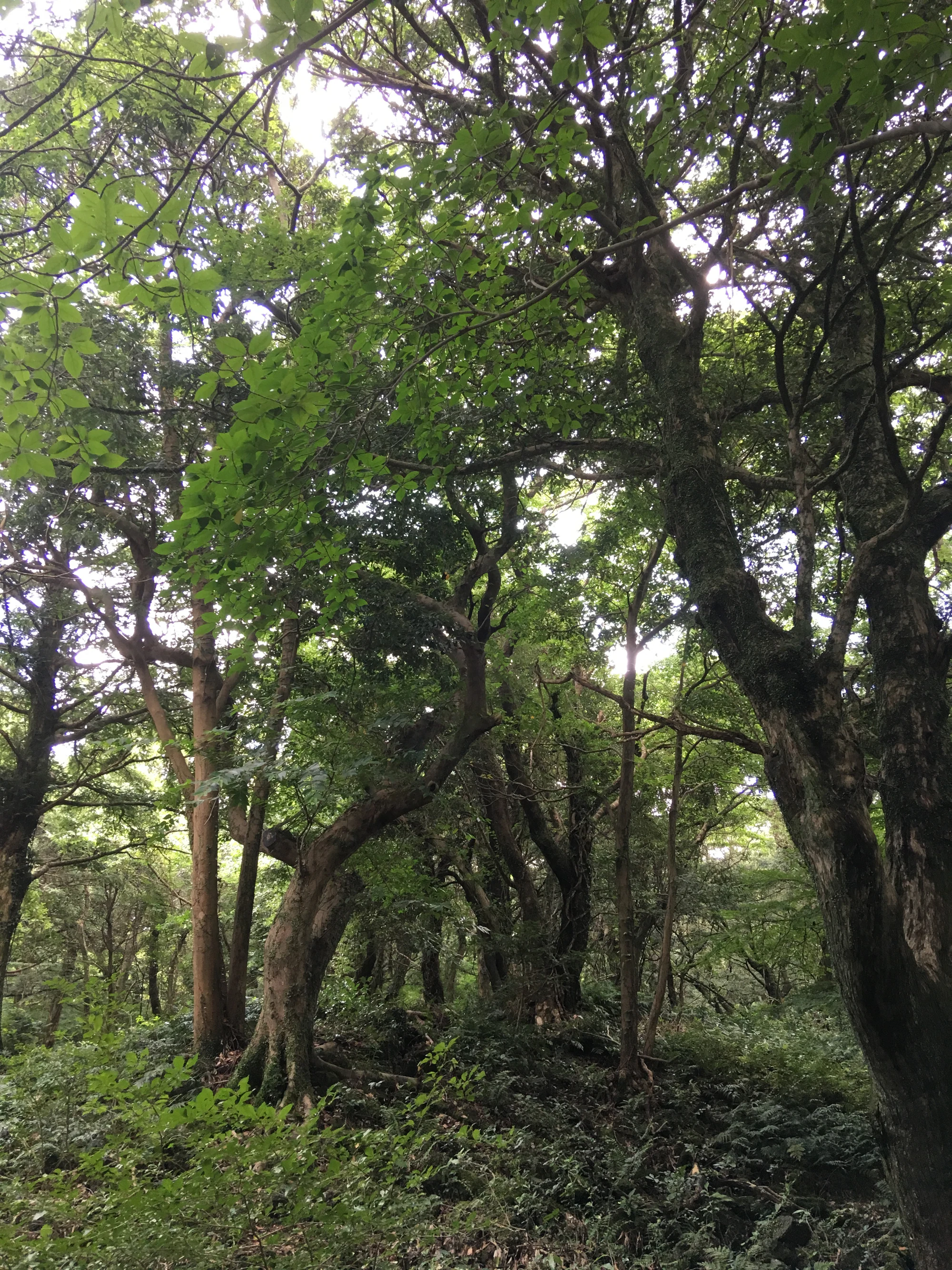
A vertical woodland view with thick branching trunks, dense green leaves and low plants across a dark, rocky forest floor.

Woodland at Bijarim, photographed on 13 August 2019. The individual trees and exact location within the forest are not identified; this historical image does not show current access or path conditions. “Bijarim Forest, Jeju” by mia!, CC BY-SA 2.0. Original image unchanged.

“Bijarim Forest, Jeju” by mia!, Flickr, CC BY-SA 2.0. Original image unchanged. · Creative Commons 1 · Creative Commons 2

Walks and routes

Course A: the practical first choice

Visit Jeju gives Course A as approximately 2.2 km, usually taking 40–60 minutes. Much of it has a relatively level volcanic-scoria surface, although slopes can require assistance. A and B divide at an internal crossroads, and both connect with the Millennium Bija Tree and joined tree. Use the entrance map to understand the day's arrangement; the published figure is not a promise about your own pace. Official course guidance.


Course A: the practical first choice

Course B: choose it for the footing, not the label

B includes rougher, stony sections. Choose it only if everyone in your group is comfortable with that surface, and favour A when pushing a stroller or using a wheelchair. You can make the decision at the signed junction after checking current notices. If distance is critical for your group, ask staff before committing to this option.

Course B: choose it for the footing, not the label

A specific route check before your visit

Deck and fence work between the Millennium Tree and joined tree was reported in May 2026, with July as the planned finish. That target does not confirm completion. Ask whether this connection is fully available, and obey any barriers or temporary routing in place on your visit.

A relaxed first visit

For an approximately 90-minute stop, use the first few minutes to visit the toilet, read the map and check notices. Choose a course, then keep the middle of the visit flexible for photographs and pauses. Leave enough time at the end to meet your ride or find the correct bus stop. With children, explain the food rule before entering so that the walk does not become an unexpectedly long wait for a snack.

Things to try

Ask about forest interpretation

Visit Jeju lists an interpretive walking programme. Ask at the entrance about the next session, its language, length and any booking requirements before rearranging your day around it. A guide can add context to the named trees and the less obvious plants; if no session fits, a self-guided walk still makes a complete visit.

Photograph without leaving the path

Try a portrait composition for a tall trunk, or a tighter frame that leaves bright gaps in the canopy out of the picture. Keep your footing in mind while looking through the camera, and step aside only where the visitor path has room. Do not cross a fence, climb a tree or stand in the vegetation to recreate an older photograph.

When the weather changes

For light rain, decide at the entrance whether the surface and conditions suit your group. For thunder, strong winds or heavy rain, postpone the forest walk and use an indoor part of your Jeju itinerary instead. Do not shelter beneath a large tree during a thunderstorm or treat a quieter, fenced-off path as a way around a closure.

Wildlife and habitats

Bija: the tree behind the name

Bija is Torreya nucifera, a conifer in the yew family. Jeju's biodiversity institute specifically identifies the Pyeongdae-ri grove as a natural stand. Enjoy it as a tree, rather than treating familiar references to its seeds or historic uses as advice to eat anything. Leave seeds, leaves and fallen material where you find them.

Japanese maple among the other trees

The local visitor description names Japanese maple among the forest's other trees. It adds variety to a visit centred on the evergreen canopy. Look from the path, using a labelled specimen or an interpreter when you want a reliable identification. This is a reported woodland occurrence, not a promise of a particular tree beside the route or of peak autumn colour.

Stories and discoveries

An old forest can still be actively managed

A 2013 vegetation study describes several woodland layers and signs of regrowth after earlier thinning. It argues for continued monitoring and careful management. That gives the forest a more interesting story than an untouched-wilderness label: the old trees and the younger growth around them both need attention.

Why the ground deserves attention too

The Academy of Korean Studies describes exposed basalt and stony volcanic soils here. Beneath the larger trees, the 2013 study recorded a substantial ground layer of plants. Keeping to paths protects that lower level as well as the roots of the trees people come to see.

When to visit

Spring and autumn

These are good seasons to consider if your priority is a comfortable walking day. Still check the actual forecast: pack a layer and choose footwear for the surface you will walk on. Do not build the trip around an exact flowering or leaf-colour date.

Summer

Keep the schedule loose enough for a slower pace and water stops. A shaded-looking photograph is not a measure of the heat on your visit. If rain or strong wind is forecast, have an indoor option ready rather than committing to a forest walk regardless of conditions.

Winter

The evergreen trees remain a reason to visit, but plan your transport and walking time for a shorter day. If snow, ice or strong wind affects the area, ask about access before making the journey; year-round opening is not a guarantee during hazardous weather.

Getting there and practical advice

Admission and basic facilities

The published hours are 09:00–18:00, with last admission at 17:00 and year-round opening. Individual admission is KRW 3,000 for adults and KRW 1,500 for children and teenagers. Parking and toilets are listed by Korea Tourism Organization. Check applicable concessions and required documents before relying on a reduced or free ticket. Contact the forest on +82-64-710-7912 for current arrangements.

Pack for the walk, not a picnic

Carry bottled water and arrange food outside the forest. If you are leaving bags in a vehicle, take essentials with you and do not leave valuables visible. Use the facilities before starting; do not assume you will find another toilet or a place to buy supplies at the point where someone needs one.

By car or taxi

Set the destination to Bijarim Forest, 55 Bijasup-gil, Gujwa-eup. Confirm the named attraction rather than accepting a similarly named road result. If you arrive by taxi, arrange how you will leave before heading into the forest; a short walk can still become an awkward stop if your onward transport is uncertain.

By public bus

Jeju's official bus system lists the 810-1 and 810-2 tourist loops between Daecheon Transfer Stop and attractions including Bijarim. They travel around the loop in different directions, so check which works for both arrival and departure. Use the official route and timetable page to plan a dated journey, and check your return before entering. Do not assume a loop service is an express trip back to your starting point.

Check the whole journey

Before travelling, describe your wheelchair, stroller or walking-aid needs to staff and ask about the current entrance-to-course connection, slopes, surface firmness, accessible toilet and any diversion around works. Published A-course guidance allows stroller and wheelchair entry but notes that help may be needed on slopes. If independent access is essential, get a specific answer rather than relying on the word 'easy'. Leave room in the plan to turn back if the surface does not suit you.

Sources and useful links

Wildlife you might spot

1

Each card links to a full Explore page with photos, traits, and fun facts.

Snap map for this place

Start with the big picture, then zoom in to explore individual wildlife observations around this place.

Loading map…

Good to know before you go

Eat before entry and keep the forest visit separate from your picnic plans.

Photograph the entrance map so you can consult it without guessing at junctions.

Wear closed walking shoes, especially if you are considering the rockier option.

Stay on the visitor paths and respect fences; stepping into the undergrowth for a photograph is not worth damaging it.

Take photographs from a stopping place that leaves enough room for wheelchairs, strollers and other walkers to pass.

Frequently asked questions

Pets are not permitted. The published rule also prohibits food and beverages other than bottled water, so finish coffee, juice and snacks before entry. If you have an assistance animal or an essential dietary need, ask the operator about your situation in advance rather than assuming an exception.
No. Choose the one that fits your footing, energy and available time. A longer or rougher walk is not automatically a better visit; you can use spare time for a pause or interpretation instead. Follow the day's signed routing even if an older online map shows something different.
No. Use Bijarim Forest at 55 Bijasup-gil as your destination. A search for Bijarim-ro can take you to the separate road corridor, so check the destination before you start driving or book a ride.
For a self-guided visit, it can simply mean taking a leisurely walk in the woods. You do not need to turn it into a treatment or a performance. Check separately if you want a staffed interpretive session; its availability is not guaranteed by ordinary admission.

Recent snaps at this place

Recent snaps will appear here as new observations are added.

View all ›

Take the discovery with you

Exploring Bijarim Forest?

Identify the wildlife you spot, learn as you go, and keep a collection of the adventure.

  1. 1Spot it
  2. 2Snap it
  3. 3Keep the discovery




