
Snappit logo
Snappit
Get App
Generic illustration, not a photograph of this venueIllustration
ParkCorse, FR

Bouches de Bonifacio Nature Reserve

The first decision here is whether to land.

About

The first decision here is whether to land. A boat trip around the Lavezzi archipelago lets you enjoy its extraordinary shapes without putting feet ashore; a visit to Lavezzu adds a short, exposed island walk that needs more preparation. Neither choice requires a swim. For a first family outing, choose one of these experiences and leave plenty of time around the sailing.

The reserve protects a much larger world than the island pictured on the postcards: roughly 80,000 hectares, predominantly at sea, along southern Corsica. Its shoreline habitats, rocky islands and underwater meadows belong to the same living system. What looks like an empty stretch between two rocks may be important feeding habitat; an apparently unused patch of land may be space deliberately left for breeding wildlife.

Lavezzu rewards attention at walking pace. Pale boulders crowd around narrow passages, the low plants make a subtle contrast with the stone, and the sea appears from changing angles. The island’s cemeteries add another layer to the outing. Give those places a quiet moment, then return to the path and the wider view of the strait. The day works best when it stays simple: a manageable walk, a picnic carried from town, and a return boat agreed before you disembark. Eager to name that creature? Identify any animal you find during your visit using the Snappit app.

The sea around Lavezzu has carried trade, travellers and military ships for centuries. Its best-known memorials recall the wreck of La Sémillante on 15 February 1855, while the frigate was carrying men towards the Crimean War. There were no survivors. Two cemeteries on the island hold those whose bodies were recovered. Older traces, including the ruins of the Santa-Maria chapel, show that this apparently remote place also had a long human presence. The wider nature reserve was created in 1999 and is managed by the Office de l’Environnement de la Corse. Today, protecting the island means allowing some places to become quieter again, including by concentrating visitors on a smaller path network.

What to do here

Start at Bonifacio marina and choose a no-landing cruise or the passenger shuttle to Lavezzu. On the island, follow the marked paths and the directions displayed at the landing. Enjoy the granite scenery, look for distant seabirds and visit the accessible memorials without making a full circuit compulsory. Keep the afternoon flexible enough for an earlier return.

Seasonal info

July and August bring strong visitor pressure and often intense heat on the island. Outside summer, plan around the actual service available rather than a timetable remembered from a previous trip. If the crew changes or cancels a sailing, reshape the day on land.

Accessibility

A boat that welcomes passengers with reduced mobility does not make the island walk step-free. Check the specific vessel, boarding arrangements and any landing transfer before buying a ticket. Lavezzu’s paths can be stony, and its lack of toilets and shade may be as important as the walking surface.

Don't miss

1

The contrast between Bonifacio’s limestone coast and the Lavezzi granite

2

A choice between a no-landing cruise and Lavezzu’s marked island paths

3

The Sémillante memorial landscape and its two cemeteries

4

Seabird conservation and the underwater meadows of Neptune grass

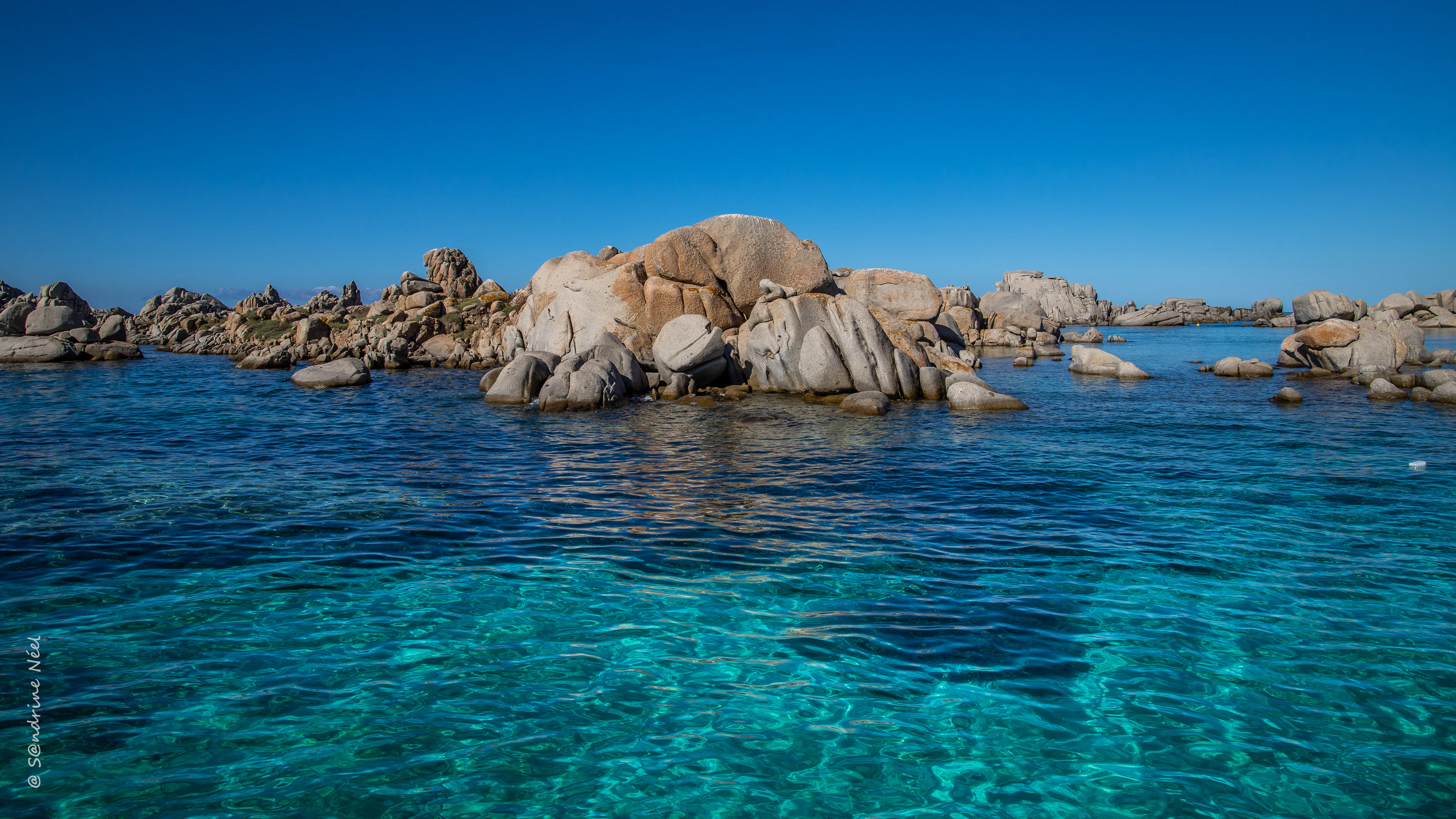
Rounded pale granite islets rise above blue and turquoise sea under a clear sky; a vertical photographer’s signature remains at lower left and a small white object floats at right.

Granite islets in the Lavezzi archipelago, photographed on 12 September 2022. The exact islet is not identified; the view conveys no permission to land, swim or anchor.

“Les îles Lavezzi” — Sandrine Néel (Flickr @ S@ndrine), CC BY 2.0. https://www.flickr.com/photos/neelsandrine/52443843539/ . https://creativecommons.org/licenses/by/2.0/ . Original unchanged, embedded credit retained. · Creative Commons

Walks and routes

Lavezzu: the currently marked island paths

After an authorized passenger-boat landing, read the island information and choose a walk on the marked network. The official description allows about 1½ hours for a relaxed circuit. Use that as an indication, not a target to finish before the boat: a shorter out-and-back is a good choice when it is hot or someone is tired. Look for the paths leading towards the maritime memorials and enjoy the granite from ground level. The live signs and barriers take precedence over an old route trace.

Mostly flat does not mean smooth: some stretches are stony. Closed footwear is advisable. This is not a verified wheelchair or pushchair route.

Lavezzu: the currently marked island paths

Lavezzi and Cavallo from a passenger boat

SPMB’s circuit 3 is a no-landing trip advertised at about two hours. It is a useful alternative if your main interest is the landscape, or if you would rather avoid an exposed walk ashore. Some boats have viewing wells through the hull; ask what the actual sailing offers. Treat an underwater view as a bonus, because clarity and visible wildlife vary.

Confirm boarding assistance, space for any mobility aid, toilet provision and access to the viewing area on the specific vessel.

Lavezzi and Cavallo from a passenger boat

A half-day with a short island walk

Arrive at the marina with supplies already packed. Confirm the sailing, the permitted landing and the return arrangements. Once ashore, choose the walk that suits the slowest person rather than attempting to visit every feature. Have a picnic in a permitted area, take your waste back, and return with a comfortable margin. Keep any onward bus, dinner booking or long drive flexible.

An easier-paced day based in Bonifacio

If you choose the no-landing cruise, leave time before and afterwards to sit, eat and use facilities in town. Discuss boarding needs with the company first. If the sea trip is unsuitable for your group that day, abandon that part of the plan rather than trying to reproduce it with a different small craft.

Things to try

Photograph the shapes, keep the distance

The granite islands are a satisfying subject even without a close-up of wildlife. Try a wide view from the passenger area of the boat, then a second composition from a permitted path ashore. Keep your feet on the route rather than climbing for a higher angle. A photograph that includes the surrounding sea often says more about this place than a tightly cropped rock.

Give the memorials time

At the cemeteries, put the picnic away and take a quiet look at the inscriptions and setting. For children, a gentle discussion about sea travel and how people are remembered can be more appropriate than a dramatic retelling of the shipwreck. There is no need to seek out the wreck site or leave the visitor paths.

Stay in town: Bastion de l’Étendard

If sea conditions rule out the outing, the Bastion de l’Étendard in Bonifacio offers an exhibition about the town’s fortifications and a film, with outdoor viewpoints as a separate part of the visit. The tourism office suggests 30–45 minutes. Check opening, ticketing and access first; this is a town heritage alternative, not an indoor reserve visitor centre. Skip exposed outdoor sections in bad weather.

Wildlife and habitats

Neptune grass

This protected Mediterranean plant forms underwater meadows in the reserve. Its ribbon-shaped leaves provide habitat for other animals. If a boat’s viewing well gives a clear view, ask the crew to help distinguish the meadow from rock or shadow. You do not need to enter the water to appreciate why the seabed needs protection.

European shag

The reserve supports the Mediterranean form of the European shag, known locally as the cormoran huppé de Desmarest. OEC monitors its breeding population. Use binoculars from a permitted path or the passenger area of the boat and let the birds choose their distance. Watching a bird remain undisturbed is a better outcome than finding a nest or making it fly.

Stories and discoveries

Protection has several layers

The reserve has a general perimeter, reinforced-protection sectors and no-take zones. Those categories help explain why an activity seen in one bay may not be allowed in the next. The current OEC maps are the right starting point for understanding the differences; this guide is not a navigation chart.

A living meadow under the water

Neptune grass is a flowering plant. Its leaves and rhizomes create a habitat for other marine life, while the meadow also stores carbon. Looking at the seascape as a mixture of habitats makes the reserve more interesting than treating every dark patch as simply deep water.

When to visit

Mild-weather walking days

Choose your day after checking the marine forecast and the operator’s plan. Mild weather is the more comfortable option for the marked paths; wind can still decide whether the visit happens. Bring a layer for the crossing even if you expect a warm walk.

High summer

Avoid building the plan around a long midday walk. The island is exposed, visitor numbers are high and the paths have deliberately been concentrated to reduce pressure on wildlife. If there is a queue or a restriction, give the outing more space in your schedule rather than seeking another landing.

Outside the main season

Ask which circuits are actually running and when the last return is. A general business opening calendar is not a promise of an island service. Keep a land-based option ready and do not travel to the quay with an old summer timetable as your only plan.

Getting there and practical advice

Prepare before leaving the marina

Lavezzu has no drinking-water supply, public toilets, restaurant or rubbish bins for your visit. Bring what you need and take it all back. Do not assume the presence of historic buildings means that refreshments or an indoor refuge will be available.

Tickets and information

Buy the boat service that matches the visit you want. SPMB advertises the regular circuits without reservation, but ask about the date, capacity, price and return arrangements directly. The company’s current circuit page is more useful than a price copied from another listing. Other operators may have different arrangements.

Reach Bonifacio marina

Passenger departures for the featured operator are at Quai Noël Beretti. Leave time to get from the parking area to the quay, particularly in the busy season; do not assume you can drive up to the boat. Follow the town’s current parking and traffic arrangements.

Bus connections need their own return plan

Bonifacio’s main bus stopping area is on the marina, between the tourist information office and parking P1. The tourism office provides seasonal timetables, including the Porto-Vecchio connection. Its current advice for Figari Airport is to travel via Porto-Vecchio, rather than expect a direct airport–Bonifacio bus. Check both legs and the last practical connection before committing to an island day.

Decide around the whole journey

Ask about the slope and width of the gangway, any steps, whether assistance is available, and whether a mobility aid can stay with its user. For a landing trip, ask separately about getting from the boat to the island path. A general reduced-mobility welcome on an activity listing does not answer those questions.

Match the island to your group

For anyone who needs frequent rest, a cool indoor space or dependable toilet access, time ashore may be uncomfortable. Children also need an adult able to manage the paths and the return timetable. Choose a shorter experience while everyone is still enjoying it; the boat trip itself can be the day’s main event.

Sources and useful links

Wildlife you might spot

2

Each card links to a full Explore page with photos, traits, and fun facts.

We are still adding species preview cards for this place.

Snap map for this place

Start with the big picture, then zoom in to explore individual wildlife observations around this place.

Loading map…

Good to know before you go

Ask for the return boarding point and usable return sailings before leaving the boat. Aim for an earlier suitable return rather than relying on the final departure.

Carry enough drinking water for everyone, a cold picnic, sun protection and a bag for every piece of rubbish. Make a toilet stop before embarkation.

Wear closed shoes for the stony paths. With a small child, consider a carrier only if the accompanying adult is comfortable carrying them in the heat.

Stay on the open marked paths and beaches. Do not climb the boulders, cross protective barriers or follow an older path that has been closed.

Leave pets and drones behind for the Lavezzu visit. Do not smoke, light fires, fish from the island or collect plants, shells or stones.

Keep binoculars and a camera handy, but watch wildlife from the permitted path or boat. Never approach a resting bird to improve a photograph.

Frequently asked questions

Check the exact circuit. SPMB distinguishes its no-landing Lavezzi/Cavallo cruise from its Lavezzi shuttle. Names and brochures can sound similar, so ask explicitly whether you will go ashore, how long you can stay and how the return works.
No. Public access is controlled by protection zone and place. Lavezzu is the visitor focus described here, with movement confined to the areas currently open. Nearby islets are not an invitation to improvise a landing. Use the manager’s current maps and follow the crew and reserve staff.
The island is a poor fit for those needs. Consider a no-landing boat trip only after checking the vessel’s actual facilities, seating and access, or keep the day in Bonifacio. A shorter outing can be the better experience.
No. This guide’s outings work entirely from a passenger boat and permitted land paths. If you want water-based activities, obtain separate, current advice on the permitted area, conditions and supervision; clear water alone tells you none of those things.

Recent snaps at this place

Recent snaps will appear here as new observations are added.

View all ›

Take the discovery with you

Exploring Bouches de Bonifacio Nature Reserve?

Identify the wildlife you spot, learn as you go, and keep a collection of the adventure.

  1. 1Spot it
  2. 2Snap it
  3. 3Keep the discovery
