
Snappit logo
Snappit
Get App
Generic illustration, not a photograph of this venueIllustration
ParkCastilla-La Mancha, Spain

Cabañeros National Park

Cabañeros rewards a slower kind of park day.

About

Cabañeros rewards a slower kind of park day. Its wooded hills meet open rañas: stony foothill plains where scattered trees break up the grassland. Red deer and soaring vultures help tell the story, but the changing light, oak woodland and textures of bark and rock are reason enough to come. The park spans Ciudad Real and Toledo in Castilla-La Mancha.

For a first visit, use the main visitor centre near Horcajo de los Montes to get your bearings. Then make one deliberate choice: the nearby Plaza de los Moros walking circuit for woodland and ridge views, or a reserved 4×4 outing for a wider look at the interior. The centre, walking trailhead and distant raña viewpoints are different places; leave time to move between them rather than treating the park as one walk-through attraction. Planning to visit? Download the Snappit app to identify the wildlife you spot in real-time.

The name Cabañeros recalls the cabañas, temporary huts used by shepherds and charcoal burners. This is a worked landscape, shaped by grazing, woodland use, cork harvesting and farming as well as natural processes. For centuries the land was connected to the city of Toledo, whose rules governed its resources. A proposal for a military firing range brought Cabañeros into the national spotlight in the 1980s. Public opposition helped secure natural-park protection in 1988; national-park status followed on 20 November 1995. The visitor centre’s cultural displays are a useful reminder that the woods have a human history as well as an ecological one.

What to do here

Explore the seasons and local traditions at the Horcajo visitor centre, walk Plaza de los Moros if your group is comfortable on rocky ground, and pause for quiet birdwatching. A guided vehicle tour is an optional alternative for seeing more of the interior.

Seasonal info

Summer is hot and dry, while winter can be cold and wet. The autumn deer rut is a seasonal attraction whose timing varies with conditions. Shorter days, rain, fire-risk restrictions and works can change what is sensible or accessible.

Accessibility

Plaza de los Moros is a mountain footpath with rocky sections and a climb, so it is not a pushchair or wheelchair circuit. For a lower-effort visit, ask Horcajo staff about current step-free access, toilets and suitable outdoor options before travelling.

Don't miss

1

A first introduction to the park’s four seasons at Horcajo

2

Oak woodland and Montes de Toledo views on Plaza de los Moros

3

The contrast between sheltered sierras and open rañas

4

Patient, distant watching for deer and large soaring birds

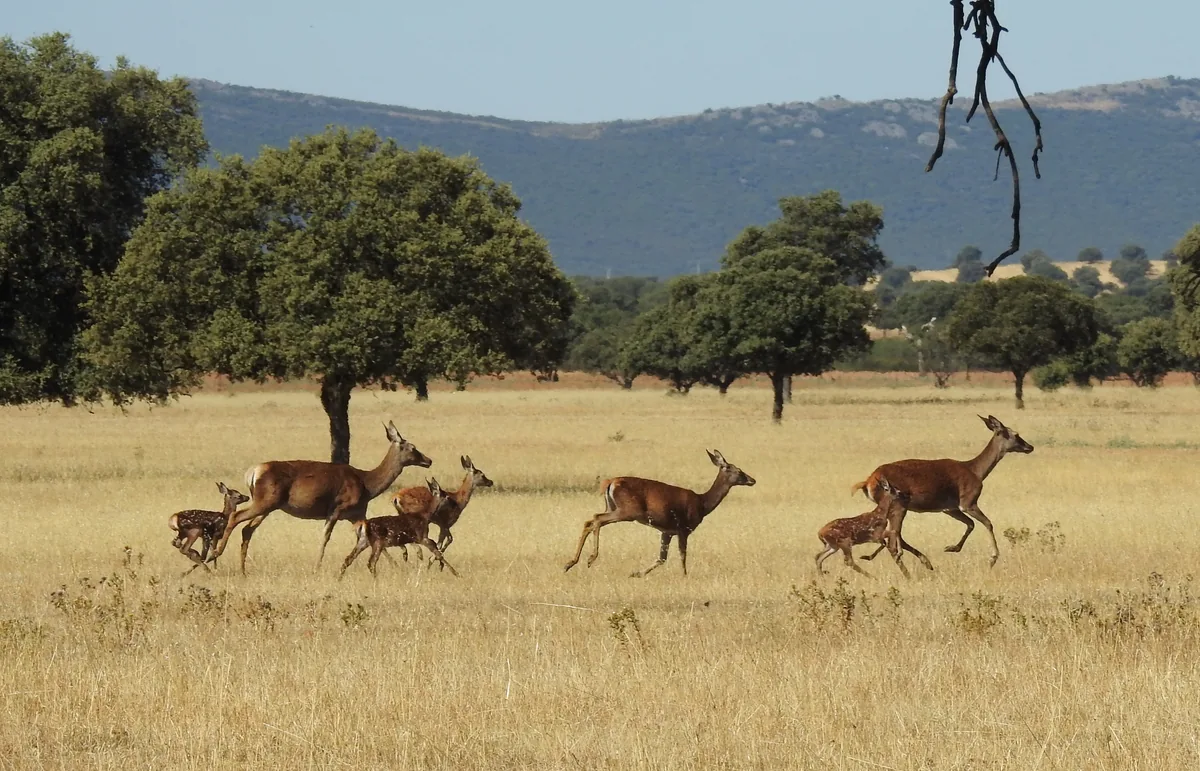
Adult deer and young run across dry grassland dotted with broad-crowned trees.

Deer in the raña landscape of Cabañeros in July 2017. This wider-park scene is separate from the Horcajo visitor-centre introduction.

Ciervos en la raña de Cabañeros.jpg — Virginia Torralba / Wikimedia Commons / CC BY-SA 4.0 · Creative Commons

Walks and routes

Plaza de los Moros woodland circuit

From the signed Plaza de los Moros car park, follow the waymarked circuit through Mediterranean woodland to the ridge and back. Holm oaks, cork oaks and strawberry trees make the shaded sections interesting; the higher ground opens the view towards the surrounding sierras. The return follows an old cork-extraction route. Look without moving the stones associated with the former Bronze Age settlement.

A foot-only route with uneven, sometimes stony ground. Avoid it with a pushchair or wheelchair; choose another outing if your balance, stamina or the weather makes the climb unsuitable.


Plaza de los Moros woodland circuit

A relaxed half-day from Horcajo

Begin with about an hour in the visitor centre, including time to ask about the trail. Take a snack or picnic break, then travel separately to the Plaza de los Moros parking area. Allow around two hours or more for the circuit with pauses, and return before you are rushed by closing gates or fading light. Swap the order in warm weather if the walk is safely accessible early; in severe heat, shorten the day instead.

A gentler centre-led visit

Make the displays your main activity and leave room for a picnic if the weather suits. Ask staff which short outdoor option is currently suitable for your group rather than committing to the ridge walk. If you book a vehicle tour, confirm boarding and the walking element before treating it as an accessible substitute.

Things to try

Make a woodland detective game

Give children three things to find without collecting them: two different leaf shapes, a patch of rough bark and a bird heard before it is seen. Stop on safe, wider parts of the path. Looking closely keeps the walk rewarding even on a quiet wildlife day.

Consider a reserved 4×4 outing

The concessionaire advertises a three-hour trip from Horcajo, including a short walk, into otherwise restricted areas. Reserve ahead and confirm the meeting point, walking requirements and vehicle access. For children, ask which restraint you must bring; ISOFIX availability is not guaranteed. This is a paid alternative, not a self-drive route.

Watch from a comfortable stopping place

Settle somewhere safe beside the permitted path and scan the skyline with binoculars. A large bird may circle into view while the rest of the group looks at the woodland. Keep voices low and let animals choose their distance.

Let the exhibition carry the day

If rain or wind makes the ridge unappealing, spend longer with Horcajo’s habitat and cultural displays, provided the centre is open. Save the walk for another day. Casa Palillos is not a dependable indoor substitute while its exhibition closure remains in force.

Wildlife and habitats

Watch the wider landscape

Scan open ground from permitted viewpoints or on a booked outing. The autumn rut adds sound to the landscape, but leave plenty of space around deer.

Look up from the woodland

The official Plaza de los Moros description lists this large vulture among possible birds overhead. Scan from a safe stopping place; do not search for nests.

Give a distant bird time

Follow a circling bird through binoculars from the path and compare it with your field guide. The park lists griffon vultures alongside cinereous vultures, so do not assume every large silhouette is the same species.

Notice the woodland itself

Holm oak is part of the walk’s woodland. Look at leaves where you can see them from the path, and compare the changing shade with the more open sections.

Find the madroño

The strawberry tree is one of the plants named for this route. Use a field guide or ask staff to help identify it; enjoy leaves and any fruit in place rather than picking them.

Appreciate the unseen residents

Wild boar share the park’s grassland and woodland. Treat an unexpected encounter as a reason to give the animal room, especially if young are present; never offer food.

Stories and discoveries

The open plain has a geological story

A raña is a foothill accumulation of material washed down from the mountains. Its broad, open appearance contrasts with the harder quartzite ridges. Later land use helped shape the landscape visitors see today.

The hills remember a sea

The park’s quartzites and slates preserve evidence of an ancient marine world. Fossils and traces of ancient organisms are part of its protected heritage: enjoy interpretation and leave every rock in place.

Food and shelter are neighbours

The rañas and wooded hills work together. Open grassland offers grazing, while woodland provides cover. That relationship helps explain why a view across a plain and a walk among trees reveal different sides of Cabañeros.

When to visit

Spring

Use a mild day for a woodland walk and unhurried stops. Carry a waterproof layer; do not let a bright start disguise a changing forecast.

Summer

Put walking in the coolest safe part of the day and carry all the water your group needs. Choose a shorter centre-focused visit when heat or fire-risk advice makes a hike a poor choice.

Autumn

The deer rut is a reason to consider a guided wildlife outing, especially around the first autumn rains. Book a suitable departure and keep your expectations flexible: the animals set the timetable.

Winter

Plan around shorter daylight, cold starts and wet footing. Check the centre’s seasonal opening days; rocky paths are a less forgiving choice when slippery.

Getting there and practical advice

Main visitor centre at Horcajo

The Centro de Visitantes del Parque Nacional de Cabañeros introduces habitats through the four seasons and includes a quintería display about local life. Parking and a picnic area are listed. Bring your own water and food rather than relying on an unconfirmed café.

Opening times and closing gates

The park’s 2026 timetable, updated in May and checked on 16 October, lists Horcajo in October at 10:00–19:00 Monday–Friday and 10:00–20:00 Saturday–Sunday. It warns that hours can change, including around the clock change; confirm your date on +34 926 783 297 or +34 926 783 456. Remove your car before the centre closes: its gate is locked.

Casa Palillos: check the works notice

MITECO still listed the exhibition and model as closed for remodelling on 16 October 2026. Check access to outdoor facilities and any booked departure separately. Keep Horcajo as the planned introduction rather than depending on the indoor exhibition here.

Budgeting for the optional tour

For the Horcajo 4×4 outing, published 2026 standard rates are €29 per adult and €23 for ages 0–10; high-season rates are €32.50 and €26, including VAT. High season includes 11 September–25 October, Easter and holiday weekends. Check the current fare and cancellation terms before booking; special-category rates have a separate request process.

Arrive at the right gateway

Use the official directions for the Horcajo visitor centre, then ask for the Plaza de los Moros trailhead. Do not follow an interior track merely because a navigation app suggests it. The park is spread out, so choose one gateway rather than building a day around long transfers.

If you are travelling without a car

The park’s access page lists bus connections to Horcajo and other surrounding towns, but a town service does not take you around the park. Confirm the operator’s current timetable, your return journey and the last leg to the centre or trailhead before committing. Do not assume there is a park shuttle.

Match the plan to the person

For a wheelchair user or someone who needs step-free access, ask the centre about the entrance, accessible toilet, parking-to-door surface and any short path currently open. The park-wide label “accessible” is not enough to judge the rocky Plaza de los Moros circuit. For a tour, discuss vehicle boarding, seating and the short walk directly with the operator.

Sources and useful links

Wildlife you might spot

6

Each card links to a full Explore page with photos, traits, and fun facts.

Snap map for this place

Start with the big picture, then zoom in to explore individual wildlife observations around this place.

Loading map…

Good to know before you go

Check opening times and route notices before setting off; call the park on +34 926 783 297 if anything is unclear.

Wear grippy walking shoes for Plaza de los Moros. Bring water, sun protection and a layer even for a short outing.

Use the signed trailhead parking for the short circuit. Starting on foot in Horcajo makes the outing substantially longer.

Stay on marked paths and respect closures. Do not follow a deer or a promising bird into restricted ground.

Keep children close on rocky sections. Turn back if heat, slippery stone or tired legs make the walk uncomfortable.

Bring binoculars and keep your distance. Do not feed, call, chase or approach wildlife or nests.

Leave plants, stones and archaeological remains where they are. Take litter home; fires and river bathing are prohibited.

Keep dogs on a lead on permitted walking routes and check centre restrictions. Pets are not accepted in the concessionaire’s tour vehicles.

Frequently asked questions

The official route-specific description says no permit or advance reservation is needed for the self-guided walk. Still check restrictions for your date. Book guided activities separately.
Start with the centre and judge the walk against your children’s stamina. Plaza de los Moros has a climb and rocky ground; a short distance does not make it a pushchair walk. Choose a centre-focused visit if the trail is too much.
These are wild animals in a large park. Binoculars, patience and suitable light help, but sightings are never guaranteed. The woodland walk is worthwhile even when wildlife stays out of view.
Do not treat interior tracks as public roads. Use permitted access roads and parking; the concessionaire’s reserved tours provide access to restricted areas.
Not at present: on 16 October 2026, MITECO still listed its exhibition and model as closed for remodelling. Ask the park separately about the grounds, information service and any tour departure.
Treat it as a separate outing and check reopening first. The vehicle-tour concessionaire reports the Chorro, Chorrera Chica and Rocigalgo route closed for works from 21 September 2026. Do not travel there assuming that an older route description means it is open.

Recent snaps at this place

Recent snaps will appear here as new observations are added.

View all ›

Take the discovery with you

Exploring Cabañeros National Park?

Identify the wildlife you spot, learn as you go, and keep a collection of the adventure.

  1. 1Spot it
  2. 2Snap it
  3. 3Keep the discovery






