Snappit logo
Snappit
Get App
Generic illustration, not a photograph of this venueIllustration
ParkCastilla y León, Spain

Campo Grande Park

Campo Grande works beautifully as a pause in a city day.

About

Campo Grande works beautifully as a pause in a city day. You can make a satisfying visit from a few simple ingredients: a tree-lined walk, a look across the pond and a quiet seat. Let the paths set the pace rather than trying to see every monument.

This is a designed historic garden. Its water, planted trees and changing views belong to a landscape shaped for strolling. At the pond, look at the reflections as well as the birds; around the Fuente de la Fama, notice how sculpture and tree canopies share the space. The attraction is in those combinations, not in covering a large distance.

Listening adds another layer. The council’s Paseo Sonoro invites you to compare the sounds of water, birds, people and the surrounding streets. Try a minute of stillness before moving on. A short visit can become surprisingly absorbing when you notice what changes between an open promenade and a quieter garden corner.

Keep the nature story clear: the trees are cultivated, and the familiar peafowl are ornamental park animals. The park also supports free-living birds. This visit centres on the planting, pond and ordinary garden paths; the captive-bird displays are outside its focus. Eager to name that creature? Identify any animal you find during your visit using the Snappit app.

Campo Grande was an open space long before it became a garden. Its earlier uses included public gatherings and military displays, and the area was once known as Campo de la Verdad and Campo de Marte. Planting in 1787–1788 began a major change in its character. The decisive nineteenth-century transformation followed Miguel Íscar’s arrival as mayor in 1877. Ramón Oliva and Francisco Sabadell developed the romantic garden, combining planted walks with water and ornamental features. The Fuente de la Fama honours Íscar, giving a useful connection between the garden you see and the people who shaped it.

What to do here

Choose a tree-lined promenade and the pond for a first visit. Add the Fuente de la Fama or use the council’s listening-walk leaflet to make a slower outing. Stop to compare leaves, watch reflections and listen for birds without leaving the paths.

Seasonal info

The mix of evergreen and deciduous trees makes a return visit worthwhile: winter reveals branches, spring brings new growth, and autumn changes the ground as well as the canopy. Wet leaves, mud or frost can make surfaces awkward. In strong wind or storms, choose an indoor plan and follow any park closure.

Accessibility

The council describes the Paseo Sonoro as accessible. Valladolid para Todos reports barrier-free entrances from Paseo de Filipinos, Paseo de Zorrilla and Acera de Recoletos, with compacted-earth and stone paths. The cascade’s raised access is by stairs. For a step-free visit, stay on the garden paths and check their current condition; confirm an open adapted toilet before setting out.

Don't miss

1

The pond and its changing reflections

2

Mature planted trees along the garden walks

3

The Fuente de la Fama, dedicated to Miguel Íscar

4

A free self-guided listening walk through the park

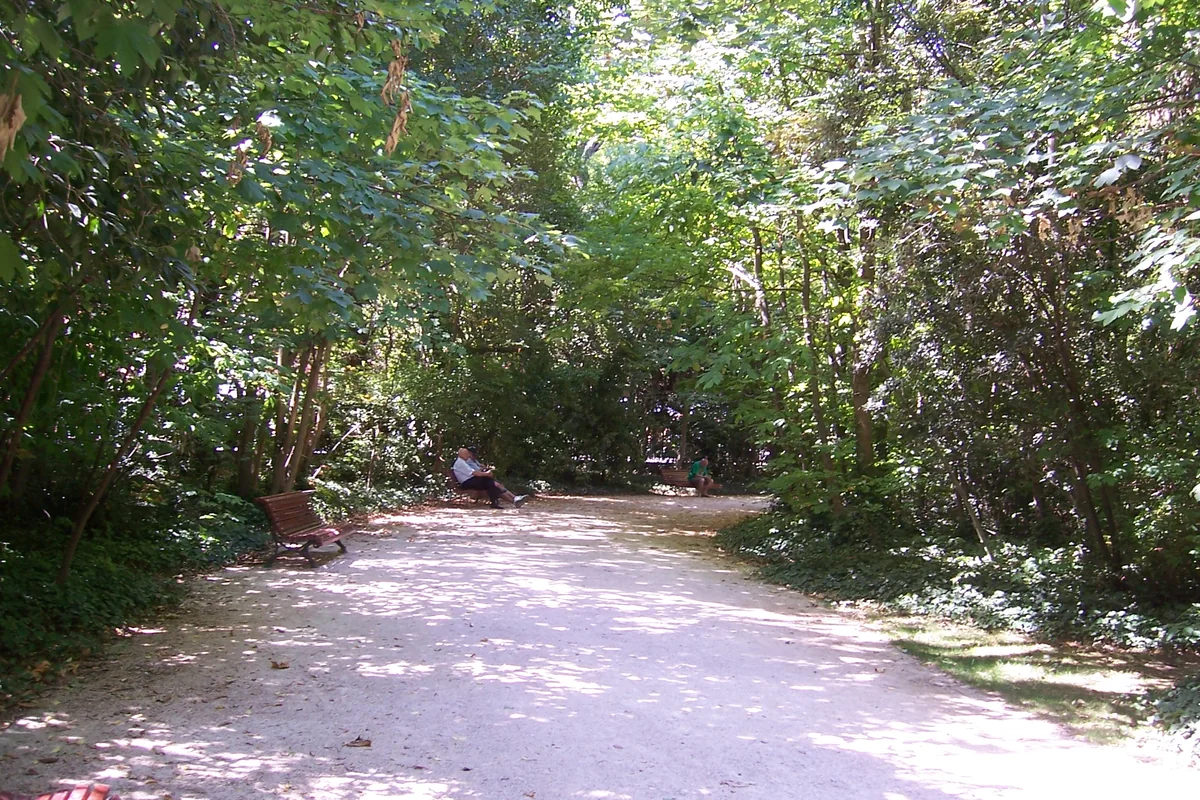
A broad pale path curves through dense green trees, with wooden benches and a few distant seated visitors in dappled shade.

Sendero de los Olmos in Campo Grande, Valladolid, photographed in August 2011. Leafy shade and benches illustrate the park’s slower-paced side.

Campo Grande sendero de los olmos lou 2011.jpg — Lourdes Cardenal / Wikimedia Commons / CC BY-SA 4.0 International · Creative Commons

Walks and routes

Paseo Sonoro: the council’s listening walk

Use the municipal leaflet to follow the published listening walk. Its stops bring together the promenade, inner garden, pond, fountain and other park spaces. The full official itinerary also passes the bird collections; for this nature visit, give your attention to the trees, water and free-living birds rather than the displays. There is no need to complete every stop.

The leaflet calls the route accessible. Keep to the ordinary garden paths, check their condition and avoid the cascade stairway if you need a step-free visit. Confirm an open adapted toilet separately if you need one.


Paseo Sonoro: the council’s listening walk

A flexible 45–90-minute garden visit

Pick an open entrance that suits your arrival. Spend some time on a tree-lined walk, then make the pond your main stop. If everyone is comfortable, add the Fuente de la Fama or a few listening pauses from the official leaflet. Return by familiar open paths when the group has had enough; there is no circuit to complete.

Things to try

Try a one-minute listening pause

Stop somewhere safe without blocking the path. Notice the nearest sound, then the furthest one. Repeat near the pond or a tree-lined walk and compare the mix of water, birds, voices and traffic. Keep the phone silent while you listen.

Choose two very different trees

Compare a broadleaf with a conifer: leaf shape, bark pattern, branching and shade. Sketch what you see rather than removing a leaf. If you cannot identify a tree, recording its features is still a good result.

Look at the pond twice

First look across the water at the whole scene. Then choose one small detail: a reflection, a ripple or a leaf on the surface. This is an easy observation game for children and a good reason for adults to slow down too.

Connect a monument with the garden

At the Fuente de la Fama, look for the winged figure and its trumpet. The fountain commemorates Miguel Íscar, whose mayoralty helped transform Campo Grande. It links the park’s planted landscape with Valladolid’s civic history.

Shorten the walk or leave it for another day

For light rain, use the paths that remain comfortable and skip slippery steps. In strong wind, thunderstorms or a closure, do not use the trees or grotto as shelter. Choose an indoor city activity and return when the garden is safe to visit.

Wildlife and habitats

Horse chestnut

Look for leaves divided into spreading leaflets, like fingers around a palm. Later in the year, shiny conkers and their prickly cases offer another clue. This is a planted tree in the park’s inventory; enjoy the details without collecting or tasting them.

Cedar of Lebanon

The council’s tree plan records a cedar of Lebanon at Campo Grande. Its clustered needles and spreading, layered branches make a useful contrast with broadleaved trees. Several cedar species grow here, so use a label or a reliable guide before giving an individual tree a name.

Common blackbird

The park inventory includes common blackbird among its wild resident birds. Adult males are black with a yellow-orange bill; females are browner. Watch quietly from the path and look for movement at ground level without pushing into planted beds.

Great tit

Look for a small bird with a dark head, pale cheeks and yellow underparts. Great tit is recorded in the park’s wild resident-bird list. A patient pause can make small movements among branches much easier to notice than they are while walking.

Stories and discoveries

A garden can also be wildlife habitat

Planted trees and wild birds tell different parts of the same story. The park inventory separates its vegetation, ornamental animals and wild fauna. That distinction makes a visit more interesting than treating every animal as either a pet or a wild sighting.

A new way to explore an old park

The city presented its soundscape study and Paseo Sonoro initiative on 29 April 2026. It invites visitors to consider how a place sounds, alongside how it looks.

When to visit

Spring: notice new growth

Compare emerging leaves and flowers from the paths. Keep away from nests and young birds, and let a quiet observation stop replace searching for a particular species.

Summer: make shade part of the plan

Choose a cooler part of the day, carry drinking water and use rest stops. The park hosts cultural activity as well as ordinary walks, so check the city programme if you want a quiet visit.

Autumn: look up and down

Compare changing broadleaves with the evergreen trees. Fallen leaves can hide slippery or uneven ground, so take care near water and on stone surfaces. Confirm closing time as the seasonal timetable changes.

Winter: keep the visit short and flexible

Bare branches make tree structure easier to compare. Dress warmly, watch for frost and avoid the garden during strong-wind warnings; a sunny, calm spell is a better choice for lingering.

Getting there and practical advice

Benches and shade

Benches and shaded areas are documented in the accessibility assessment. Use them to break up the walk, but keep enough flexibility to find another seat if a favourite spot is busy.

Plan the toilet stop outside the garden

Valladolid para Todos records an adapted public toilet on Acera de Recoletos, beside the park, and does not identify one inside the garden. Check its opening hours, current access and suitability before relying on it.

Tourist information on Acera de Recoletos

The Pabellón de Cristal tourist office is a useful place to ask about entrances, current events and nearby services. The published contact number is +34 983 219 310. Check its hours before relying on a visit.

A nearby play option

The council’s listening route includes a park play area. The accessibility assessment separately identifies inclusive play equipment on adjoining Acera de Recoletos, outside the garden. Check the equipment and the approach on the day rather than assuming every play feature suits every child.

Boating, refreshments and seasonal extras

Treat any boat ride, café stop or seasonal activity as an optional extra. The garden can fill a pleasant short visit without them. Confirm the current operator, hours, prices and access arrangements locally if one matters to your plans.

Arriving from the city centre

Use Plaza de Zorrilla and the streets around the park to orient yourself. The garden lies between Paseo de Zorrilla, Paseo de Filipinos and Acera de Recoletos. Choose an open gate and use the marked road crossings.

Arriving by train during station works

Valladolid-Campo Grande station is nearby, but its construction works change the approach. Adif’s notice of 9 September 2026 directs passengers through Calle Recondo from 14 September and temporarily suspends the Plaza de Colón access. Allow extra time, follow station signs and check Adif for changes before travelling.

Driving or using an accessible parking space

Use current signed public parking rather than expecting a space at a park gate. If you need a reserved bay, ask about its present location and route to your chosen entrance; station works and events can change access around this central area.

Choose the surface as well as the entrance

The accessibility assessment describes compacted earth and stone paving. On arrival, check for loose material, puddles, roots or temporary obstructions along the path you want to use. A short out-and-back on a suitable surface is a sensible option.

Cascade steps

The raised cascade access has stairs. Enjoy the water and garden from an ordinary path if steps are unsuitable; do not assume the route’s general accessibility description applies to climbing this feature.

Adapt the listening activity

You can sit for the listening pauses or make the same stops a visual observation exercise. Move on if a crowd or loud sound is uncomfortable. Keep clear of through-routes while stopping, and plan the return before anyone becomes tired.

Sources and useful links

Wildlife you might spot

4

Each card links to a full Explore page with photos, traits, and fun facts.

Snap map for this place

Start with the big picture, then zoom in to explore individual wildlife observations around this place.

Loading map…

Good to know before you go

Check the opening notice at your chosen gate and any municipal weather warning. The park can close during strong winds or storms.

If arriving by train, check Adif’s station-works notice. Since 14 September 2026, its published temporary arrangement uses Calle Recondo rather than the usual Plaza de Colón approach.

Keep children close beside the pond and fountains. Use the paths and view the cascade without climbing wet steps if footing is uncertain.

Bring water and shoes with grip. Shaded paths help in warm weather, but they do not remove the need for sun protection or rest.

Watch animals without feeding, chasing or playing recorded calls. Give them space, and leave nests and tree holes alone; sightings will vary.

Leave plants, bark and seeds in place. Conkers are for looking at, not eating, and an identification game should not involve picking or tasting anything.

Check the outside adapted toilet on Acera de Recoletos if your visit depends on it. Ask the tourist office about current access and opening.

Keep your plan flexible around maintenance barriers, performances or busy gatherings. A shorter walk and a comfortable pause are enough.

Frequently asked questions

The park is free to enter during its opening hours, and the council’s Paseo Sonoro is a free self-guided activity. Organised tours, refreshments, events and any boat service have separate arrangements; check the operator if you want to add one.
The municipal-linked park guide publishes 08:00–22:00 from 1 October to 31 March and 07:00–00:00 from 1 April to 30 September. Treat these as the usual published hours and check the gate notice before an early or late visit. Weather closures can override them.
It is in central Valladolid, between Acera de Recoletos, Paseo de Filipinos and Paseo de Zorrilla. Plaza de Zorrilla is a useful city-centre landmark; the tourism office is at the Pabellón de Cristal on Acera de Recoletos.
There are barrier-free entrances and ordinary paths suitable for planning a short visit, but check the surface after rain. The council labels its listening walk accessible; the cascade itself has stairs. Confirm the precise approach and an available adapted toilet for your needs.
No. The park has ornamental birds as well as wild visitors and residents. Peafowl roaming outside an enclosure still belong to the ornamental collection, and the inventory separates ornamental pond birds from wild birds. Watch without assuming that a loose animal is wild.
Boating is part of the pond’s history and visitor tradition, but do not make a ride essential to your plan. Ask locally whether a service is operating and check its hours, price and boarding arrangements. A walk beside the pond is worthwhile on its own.
The council’s leaflet provides the route, while QR codes support its optional visitor survey. You can still enjoy the listening idea without submitting anything: stop safely, listen for a minute and compare what you hear at the next place.
Postpone a tree-lined walk during strong winds or thunderstorms and respect closed gates. On a merely wet day, keep the visit short, avoid slippery steps and turn back if the ground does not suit your footwear or mobility equipment.

Recent snaps at this place

Recent snaps will appear here as new observations are added.

View all ›

Take the discovery with you

Exploring Campo Grande Park?

Identify the wildlife you spot, learn as you go, and keep a collection of the adventure.

  1. 1Spot it
  2. 2Snap it
  3. 3Keep the discovery