Snappit logo
Snappit
Get App
Generic illustration, not a photograph of this venueIllustration
ParkKanto / Chubu, Japan

Fuji-Hakone-Izu National Park

Fuji-Hakone-Izu is a national park with several very different journeys inside its name: Mount Fuji and its surrounding lakes, the Hakone mountains, the Izu Peninsula and the offshore Izu Islands.

About

Fuji-Hakone-Izu is a national park with several very different journeys inside its name: Mount Fuji and its surrounding lakes, the Hakone mountains, the Izu Peninsula and the offshore Izu Islands. For a manageable first taste, make Hakone Visitor Center at Kojiri your base. This outing stays around the northern end of Lake Ashinoko, with time for woodland, birds and the lakeshore. Climbing Mount Fuji or reaching an Izu island calls for a separate trip.

Start indoors with the landscape itself. The center’s large map and topographic diorama help turn a ring of unfamiliar peaks into somewhere you can understand. Seasonal displays offer a reason to look closely outside, and the staff can help you choose a walk that fits the weather and your group. Leave some time for the lounge: the lake and surrounding mountains are worth enjoying without rushing straight back out.

The Ministry of the Environment’s recommended loop is only 2 kilometers, with 50 minutes of walking before stops. It links the Children’s Plaza, Wild Bird Sanctuary Forest, Shirayuridai grounds, the lakeside campground area, lakeshore recreation grounds and Flower Plaza before returning to the center. The pleasure is in the changes: shade and small movements in the trees, a quieter pause at the bird-observation hut, then open space and water. With children, give yourselves permission to spend longer at one good spot rather than treating the route as a checklist.

Birdwatching works well here even when you cannot put a name to every call. Pause, listen, and watch where branches move. The local park guide records long-tailed tits, willow tits and white-backed woodpeckers in the bird sanctuary, while fruiting trees help explain why this patch of woodland attracts birds. These are wild animals, so a visit may bring a brief glimpse, a sound from the canopy or no sighting at all. The forest and lake remain the point of the day.

The water also tells a volcanic story. Around 3,000 years ago, a collapse of Mount Kamiyama associated with volcanic activity helped dam the drainage and give Lake Ashinoko its present form. Look from the water back toward the surrounding slopes and then revisit the center’s model: the two views make more sense together. A clear view of Mount Fuji is a bonus on a wider Hakone trip, never a promise of this short loop.

Allow the visit to stay simple: a little learning, a gentle walk and a picnic if conditions suit. There is one important planning wrinkle for 2026–27. Renovation is scheduled to continue until 12 February 2027; the center remains open, but some exhibits or rooms may be unavailable, parking is reduced and temperature control may be affected. The theater is separately listed as out of service. Check the center’s current notice before making the indoor facilities the main reason for your journey. Take the ultimate field guide with you: use the Snappit app to identify birds, plants, and animals on your trip.

The national park was established on 1 February 1936. Its volcanic landscapes now extend across the Fuji, Hakone, Izu Peninsula and Izu Islands sectors. In Hakone, Lake Ashinoko’s present shape is linked to a major slope collapse and damming event around 3,000 years ago. The lake also has a long religious association with Hakone Shrine and the legend of a nine-headed dragon; the shrine itself lies away from this northern-lakeshore walk.


What to do here

Begin at the visitor center, ask about the paths that are open, then follow the signed 2 km nature loop if conditions suit. Take a patient birdwatching pause, stop at the northern lakeshore and use the Flower Plaza for a rest or picnic. For a shorter visit, explore the available exhibits and ask staff for the most suitable nearby section of path. A guided nature walk can add detail, but its date, language and availability need checking.

Seasonal info

Spring brings birdsong and changing woodland growth; summer rewards slow looking at leaves and insects but calls for water and rain protection. Autumn suits a walk among changing leaves and fruiting trees, without a guaranteed peak-color date. In winter, check for snow or ice before using the paths and bring warm layers for the exposed lakeshore. Heavy rain, strong wind and storms are reasons to shorten or postpone the outing. Boat and ropeway services are optional extras and may stop in bad weather or for maintenance.

Accessibility

The visitor center lists wheelchair loan and a multipurpose toilet. Official tourism information describes a 3 km wheelchair-accessible walkway, while this guide follows a separate 2 km nature loop. Ask staff to help choose the sections that suit your wheelchair, stroller or walking needs, including the crossing toward the bird sanctuary. During renovation, confirm the entrance, toilet and parking arrangements before travelling.

Don't miss

1

Hakone’s mountain-and-lake landscape explained by the visitor center’s map and diorama

2

A short official loop combining woodland, a bird-observation hut and open lakeside space

3

Quiet birdwatching in the Wild Bird Sanctuary Forest, especially with bare winter branches

4

Lake Ashinoko’s volcanic backstory, visible in the slopes surrounding the water

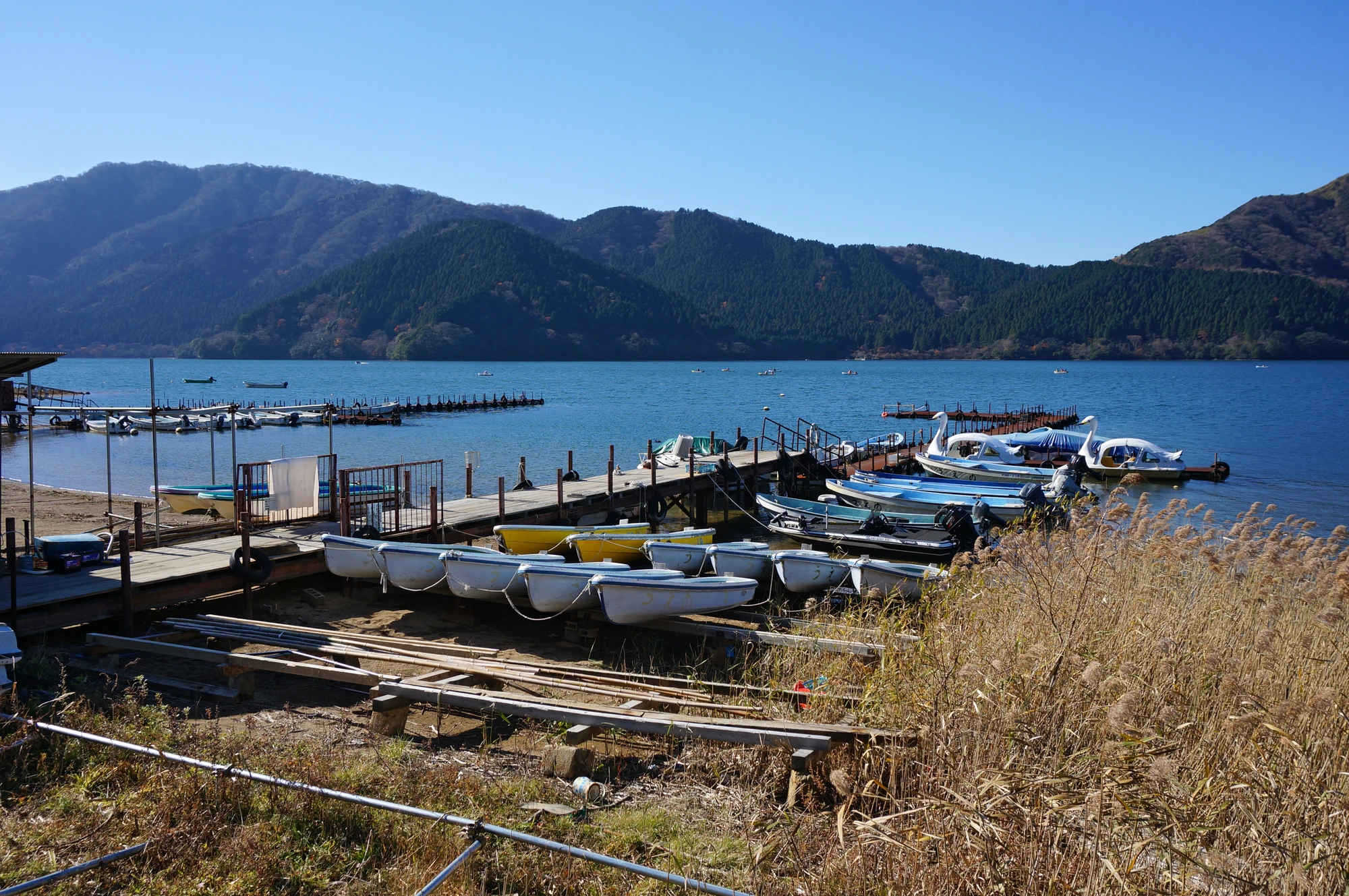
Small boats and swan-shaped pedal boats beside wooden jetties, with blue lake water and wooded hills beyond.

Boats and wooded hills at Kojiri on the northern shore of Lake Ashinoko, photographed on 26 November 2021. This lakeshore view gives context for the Hakone Visitor Center area.

211126 Kojiri Hakone Japan01s3.jpg — 663highland, CC BY-SA 4.0 (https://creativecommons.org/licenses/by-sa/4.0/). Source: https://commons.wikimedia.org/wiki/File:211126_Kojiri_Hakone_Japan01s3.jpg. Resized and recompressed as WebP; no crop or retouching. · Creative Commons

Walks and routes

Hakone Visitor Center nature loop

Start at the visitor center and follow the current signed paths through the Children’s Plaza and bird sanctuary, then continue via Shirayuridai grounds and the campground area toward the lakeshore. Return through the lakeshore recreation grounds and Flower Plaza. Pick up the center’s current map before setting off.

The route includes a road crossing toward the bird sanctuary. Ask the center about surfaces, slopes, steps and any construction diversions, and choose a shorter route if that better suits your group.

Hakone Visitor Center nature loop

Spend roughly 30–45 minutes with the available displays and ask about conditions.

Allow about 90–120 minutes outdoors for the official loop, birdwatching and a rest; shorten it if needed.

Return to the center or your chosen bus connection with time in hand. Add any boat or hot-spring outing only after checking its separate logistics.

See the displays and lounge that are open.

Ask staff for a short section appropriate to the day’s conditions and your group, then return the same way before anyone is tired.

Things to try

Read the landscape before walking

Use the diorama to find the lake and surrounding ridges, then choose one shape to recognize outdoors. Ask which displays and rooms are available during renovation.

Give the birds time

At the observation hut or a suitable path-side stopping place, settle for a few minutes and watch before moving on. Children can compare a bird heard with a bird seen; neither needs to become a competition or a guaranteed tally.

Look from the lake back to the hills

At the northern lakeshore, notice the difference between open water and wooded slopes. The volcanic-damming story is easier to picture after the center’s model. Stay on the visitor paths and supervise children beside the water.

Leave room for a picnic

The Flower Plaza provides an open-space break in the official route. Bring a simple snack, choose a suitable spot without blocking paths and carry all food scraps and packaging out.

Join a nature walk if the timing fits

The current operator listing has free Sunday walks at 11:00–12:00 and 13:30–14:30, plus mini-walks on the second and fourth Friday at 10:00–12:00. These meet and finish at the center and do not accept reservations. Confirm the day’s running and language; the listing warns of cancellations.

Keep the center as a flexible fallback

A short indoor visit can still explain the landscape, but confirm which exhibits and rooms are open. The theater is suspended and renovation may limit the fallback. Do not replace a wet short walk with a more exposed mountain route.

Wildlife and habitats

Wild woodland bird.

A tiny bird with a long tail can be easier to follow than its moving companions. Watch from a comfortable distance and use the center’s identification material; do not assume the white-headed Hokkaido form.

A small black-capped tit recorded in the local woodland. Similar birds can be hard to separate, so keep uncertain identifications tentative and ask staff for help.

Listen for activity in the trees and look carefully before moving closer. The species has dark streaking on its flanks; a brief view may be insufficient to distinguish it from another woodpecker.

A planted fruiting tree in the bird sanctuary.

The showy pale parts around the small flower head are bracts. Its fruit is another reminder that the planting serves wildlife; leave fruit and flowers on the tree.

Stories and discoveries

One name, four different landscapes

Fuji-Hakone-Izu joins a famous mountain, Hakone’s lake-and-mountain country, the Izu Peninsula and offshore islands. A visit to one sector cannot stand in for all four.

A lake reshaped by a collapsing mountain

The present Lake Ashinoko is linked to a Mount Kamiyama collapse around 3,000 years ago that blocked the drainage. Its basin sits within Hakone’s older volcanic landscape.

A woodland partly arranged for birds

The local park guide describes fruiting trees, including kousa dogwood, planted in the bird sanctuary to support birds. Its value comes from habitat as well as from the observation hut.

The name Hakone belongs to a volcanic system

The warning name Hakoneyama refers to Hakone’s volcano. Its alert level and the access rules for particular paths are different kinds of information; a low alert level does not override a closed gate.

When to visit

spring

Watch and listen for woodland birds, keeping away from nests. Choose a dry day and check the center’s seasonal display for what is actually happening.

summer

Take water and rain protection, stop for small details in the vegetation, and shorten the outing if weather becomes uncomfortable. Do not rely on full indoor cooling during the works.

autumn

Look for changing foliage and fruiting trees without fixing the trip around an assumed peak date. Take particular care with food and waste and check the town’s wildlife notices.

winter

Bare branches can make birdwatching easier. Check the day’s snow, ice and transport conditions, bring warm layers and finish the outdoor portion in daylight.

Getting there and practical advice

Hakone Visitor Center

Admission is free. Some separately organized activities may charge.

Map, diorama, seasonal interpretation and lounge. Wheelchair loan, a multipurpose toilet and a communication support board are listed by the prefectural tourism association; confirm availability during works.

The center identifies Shirayuridai as its nearest bus stop. From Hakone-Yumoto take a Hakone Tozan bus bound for Togendai; the operator’s center guide gives about 40 minutes, before traffic delays. Check Hakone Navi for the actual date and make sure the destination serves the northern lake rather than assuming every Lake Ashinoko bus goes to this area.

Shirayuridai’s published return-direction timetable was revised on 1 April 2026 and distinguishes weekday, Saturday and Sunday/holiday service. Some departures terminate at Hakone-Yumoto rather than continuing to Odawara. Check the destination and the final practical return before beginning the walk.

The operator lists free visitor parking, but renovation has reduced usable spaces. Do not rely on the normal 40-space capacity; its current notice also warns that large buses cannot enter or park. Confirm arrangements if arriving in a large vehicle.

Togendai is a nearby connection for boats and the Hakone Ropeway. These are separate paid outings, not transport required for the short nature loop. Check live service notices, last departures and accessibility with the operator; weather and maintenance can interrupt service.

Visitor center

The center lists wheelchair loan and a multipurpose toilet. During renovation, confirm the route into the building, toilet access and parking arrangements before travelling.

Outdoor paths

Ask staff to show you the 3 km accessible walkway described in tourism information. Treat the 2 km nature loop as a separate option, and check its slopes, steps and surfaces before deciding how much to walk.

Strollers and young children

Ask staff which nearby paths are suitable rather than assuming the woodland loop is stroller-friendly. The road crossing and lakeshore require supervision; turn back or choose the center-only option when conditions do not suit your group.

Sources and useful links

Wildlife you might spot

4

Each card links to a full Explore page with photos, traits, and fun facts.

Snap map for this place

Start with the big picture, then zoom in to explore individual wildlife observations around this place.

Loading map…

Good to know before you go

The center currently lists 09

00–17:00 opening, last entry 16:30, free admission, and closure on Mondays or the following day if Monday is a public holiday, plus 29 December–3 January. Check again before travelling.

Renovation is scheduled through 12 February 2027. Parking and indoor access may be restricted; the theater is currently suspended, so keep your plans flexible.

From Hakone-Yumoto, use a bus bound for Togendai and get off at Shirayuridai for the visitor center. Check the current timetable and your return connection; road congestion can change the journey considerably.

Wear shoes with grip, bring a rain layer, water and a snack, and allow more time than the official 50-minute walking estimate. Keep children close at the road crossing and lakeshore.

Check JMA’s Hakone volcano information and local closures before heading out. Level 1 still means an active volcano; the Owakudani–Togendai hiking route remains closed and is not part of this walk.

Bring binoculars if you have them and watch from the path or observation hut. Avoid approaching nests, feeding birds or collecting plants, and take every bit of picnic waste home.

Check Hakone Town’s bear advice and ask staff about recent local warnings. Avoid areas with warnings or fresh signs, and never leave food out; a quiet birdwatching visit should still follow local wildlife precautions.

Keep a boat cruise, hot-spring visit or longer mountain walk as a separate decision. Verify its operating status, costs and return route rather than squeezing several distant sectors into this outing.

Frequently asked questions

No. The recommended visit is the Hakone Visitor Center and nearby northern Lake Ashinoko paths. Mount Fuji belongs to another sector of the same national park and requires its own transport, season, booking and mountain-safety planning.
Do not plan on it. Fuji views in Hakone depend on the viewpoint and clear weather, and this loop is chosen for woodland and lake scenery. A cloud-covered day can still be a good nature day if the walking conditions are suitable.
The official route includes a Children’s Plaza and is a manageable 2 km outing for children who are comfortable walking that distance. Add time for stops, supervise the road crossing and water’s edge, and shorten the visit if the paths are slippery or your group is tired. If bringing a stroller, ask the center which paths suit the day’s conditions.
Ask the center to recommend a route for your needs. Tourism information describes a 3 km accessible walkway; do not assume the separate 2 km nature loop is fully step-free. Have staff show you the suitable paths and confirm entrance, toilet and parking access during construction.
Its current notice says it remains open, with works scheduled until 12 February 2027. Some displays or rooms may be restricted, parking capacity is reduced and heating or cooling may be affected. The theater is currently listed as unavailable. Check for changes before travelling.
No. On 16 October 2026, JMA listed Hakone at Level 1, with active-volcano precautions. Local gas-related restrictions still apply near Owakudani, and the Owakudani–Togendai hiking route is listed as closed. Follow current local signs and notices rather than older suggested itineraries.
The center currently lists free Sunday walks and second- and fourth-Friday mini-walks that do not accept reservations. They can be cancelled, and English guiding is not promised. Check the current schedule, language and meeting details directly; other specialist activities may have different booking and fee rules.
Use the exhibits and lounge that are available, then decide whether a brief nearby walk is worthwhile. Renovation can limit the indoor options, and the theater is suspended, so check first. In heavy rain, strong wind or unsafe path conditions, postpone the outdoor portion.

Recent snaps at this place

Recent snaps will appear here as new observations are added.

View all ›

Take the discovery with you

Exploring Fuji-Hakone-Izu National Park?

Identify the wildlife you spot, learn as you go, and keep a collection of the adventure.

  1. 1Spot it
  2. 2Snap it
  3. 3Keep the discovery