
Snappit logo
Snappit
Get App
Generic illustration, not a photograph of this venueIllustration
ParkKanto, Japan

Kasai Rinkai Park

The big pleasures at Kasai Rinkai Park are easy to miss if you rush straight to an attraction: a bird vanishing beneath a pond, wind moving through the reeds, and the sudden breadth of the bay.

About

The big pleasures at Kasai Rinkai Park are easy to miss if you rush straight to an attraction: a bird vanishing beneath a pond, wind moving through the reeds, and the sudden breadth of the bay. The railway brings you to the park entrance, so you can spend your energy looking rather than travelling between sights.

For a first nature visit, make the eastern Bird Sanctuary your main destination. Its freshwater and brackish-water ponds were created as habitat, with woodland around them and viewing windows and hides that let people watch from the edges. Start at the Watching Center to get your bearings, then linger at a few public viewpoints. A quiet ten minutes at one window can be more satisfying than trying to visit every corner.

The birds here live wild. Little grebes, grey herons and kingfishers are among the birds documented here, while winter brings ducks such as common pochard. What you see will depend on the season, water conditions and a little luck. Even without a long species list, comparing a diving bird with one waiting in the shallows gives children something concrete to discover.

If everyone still wants to walk, add the bay-facing lawns and the free Crystal View lookout. The beaches beyond belong to neighboring Kasai Marine Park: West Nagisa has public access during its opening hours, while East Nagisa is protected and off limits to ordinary visitors. The aquarium and Ferris wheel are separate, paid choices. Pick one extra if it appeals, rather than turning a gentle birdwatching visit into a race around the whole waterfront. Planning to visit? Download the Snappit app to identify the wildlife you spot in real-time.

Kasai Rinkai Park opened on June 1, 1989, after work began in 1985 as part of the Kasai coastal development project. The Bird Sanctuary followed in April 1994, Crystal View in July 1995, and the Ferris wheel in spring 2001. The sanctuary’s ponds and woodland are deliberately created habitats, intended to recover some of the ecological richness associated with the former Kasai shore.

What to do here

Walk from the station to the Bird Sanctuary, stop at the Watching Center, and choose a few open observation windows or hides. Watch how birds move and feed without approaching them. Finish with a rest, or extend the walk to the bay-facing lawns and Crystal View if time and weather suit.

Seasonal info

Spring pairs bird migration with cherry blossom; summer has leafy paths but also exposed, hot stretches. Autumn brings another migration period, and winter is a good time to compare ducks and look for flowering narcissus elsewhere in the park. Flowering and bird arrivals vary from year to year. Swimming at neighboring West Nagisa is restricted to the authorized summer program; the 2026 program has ended.

Accessibility

Use the park’s June 2026 barrier-free map to choose paths by width and gradient. It marks accessible toilets around the park, including the Bird Sanctuary, and an elevator at Crystal View. Some bird-area paths are narrower than the main avenues. Ask the service center which observation points and Watching Center level suit your needs rather than assuming every hide is step-free.

Don't miss

1

Freshwater and brackish-water habitats within one birdwatching outing

2

Public hides, viewing windows and the free Watching Center

3

Open Tokyo Bay views from the lawns and Crystal View

4

Seasonal ducks, migrating birds and changing park flowers

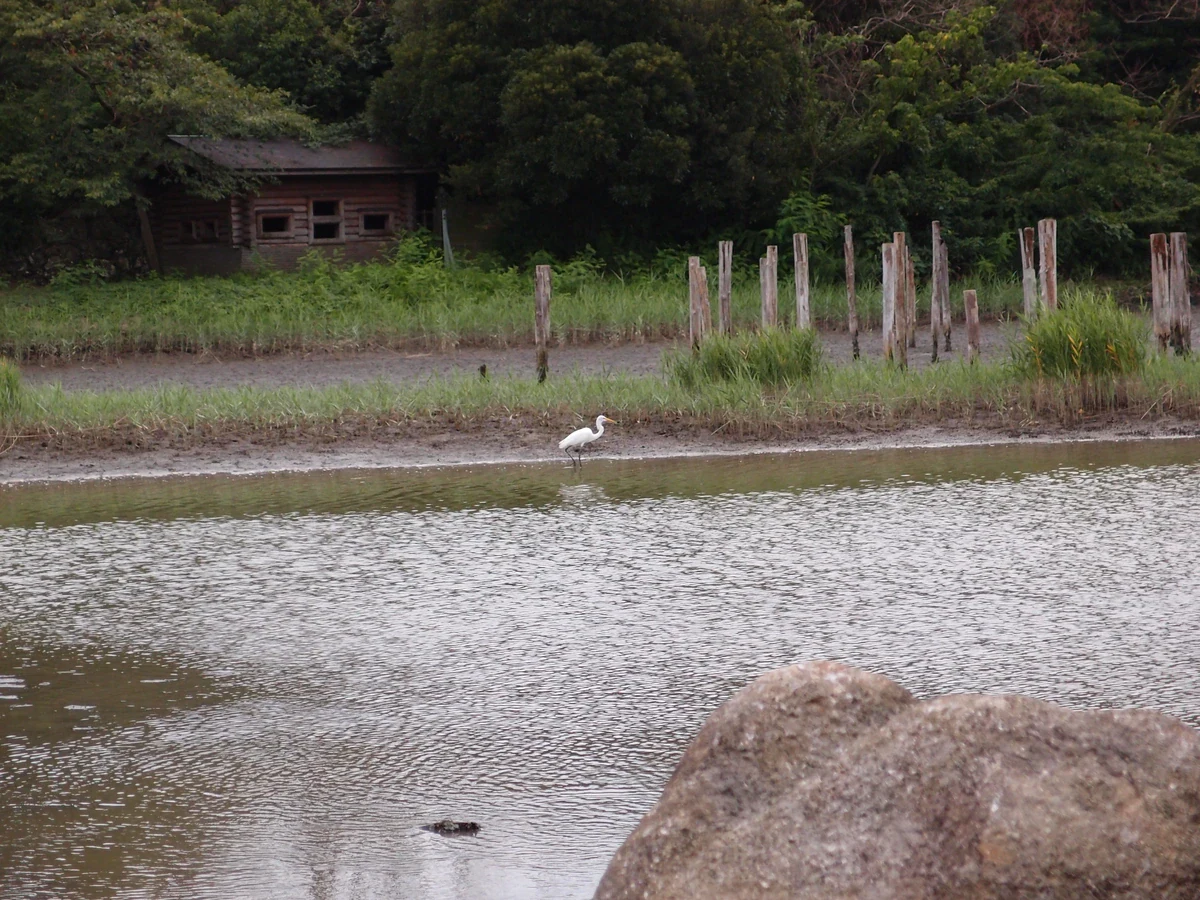
A white wading bird at the water’s edge, with reeds, wooden posts and an observation hide behind it.

A white wading bird beside a pond and observation hide at Kasai Rinkai Park, photographed in August 2013.

Bird Watching @ Kasai Rinkai Park @ Edogawa City (9556753572).jpg — Guilhem Vellut, CC BY 2.0 (https://creativecommons.org/licenses/by/2.0/). Source: https://commons.wikimedia.org/wiki/File:Bird_Watching_@_Kasai_Rinkai_Park_@_Edogawa_City_(9556753572).jpg. Proportionally reduced to a 1200-pixel long edge without upscaling; recompressed to WebP quality 92, method 6. No crop, retouching, added text or colour correction. EXIF omitted. · Creative Commons

Walks and routes

A slow walk to the Bird Sanctuary

Begin at Kasai-Rinkai Park Station and follow the park signs toward the Bird Sanctuary on the eastern side. Make the Watching Center your first main stop, then choose a few open viewing windows or hides along the sanctuary’s public paths. Return by the same open approach whenever you are ready. Allow 2–3 hours including the walk, quiet observation and a break; there is no need to complete a circuit of both ponds.

Before setting out, compare your approach with the barrier-free map. Some sanctuary paths are shown as 1.2–under 1.8 m wide. Ask which viewing windows, toilet and center entrance work for you; a shorter visit is a good option if paths or viewing heights are awkward.


A slow walk to the Bird Sanctuary

A shorter walk toward the bay

For a simpler outing, follow the central park promenade toward Crystal View, enjoy the bay outlook and return when it suits your group. Allow 1–1½ hours with a pause. This gives you a waterfront visit without needing to reach the Bird Sanctuary or cross the bridge to the beach.

Crystal View has an elevator marked on the official barrier-free map. Follow mapped paths rather than taking a shortcut across the sloping lawns, and check the building’s opening before relying on its facilities.

A shorter walk toward the bay

A bird-focused half-day

Aim to reach the park after the Watching Center has opened, spend the first part of the visit getting oriented, then slow down at a few public viewpoints. Finish with a rest and the return to the station. If you still have energy, add 45–60 minutes for the bay-facing lawns and Crystal View rather than automatically adding another attraction.

Nature plus one paid attraction

Give the park walk 2–3 hours, then choose the aquarium or Ferris wheel according to the day’s opening calendar. Allow about 1½–2 hours for the aquarium. The Ferris wheel ride itself is around 17 minutes, but reaching it and queuing take extra time. Keep the aquarium’s 16:00 last-entry time in mind.

Things to try

Compare two ways of finding food

At one viewing window, choose a bird on the water and another along the margin. Does it dive, swim, stand still or pick at the shallows? A sketch or a few notes can be more useful than a rushed name. Keep the same comfortable distance even if a bird moves out of sight.

Join a beginner-friendly guided visit

The current schedule offers a free Bird Sanctuary tour on the second Sunday, 14:00–15:00, and a nature tour on the fourth Saturday, 14:00–15:30. Both meet on the Watching Center’s second floor, with binocular loans listed. Check the current dated notice for changes, and ask ahead if you need a different meeting arrangement.

Add a little open space

After quiet birdwatching, choose a break on an open lawn or a stroll beside the bay. For families with younger children, the park also lists Wakuwaku Hiroba as a play area for children under seven who have not yet started school. It is an optional detour, so check the map before promising a quick stop.

A light-rain visit or a different plan

For light rain, shorten the walk around the Watching Center or choose Crystal View during its opening hours. The aquarium can be a longer indoor-focused alternative if its calendar and admission cost suit you, but reaching it still involves an outdoor walk. In strong wind, lightning or severe-weather warnings, postpone the waterfront outing.

Wildlife and habitats

Little grebe: watch for a sudden dive

A small, compact waterbird can disappear so neatly that the first clue is a ripple. Little grebes are documented here throughout the year. Watch from a public viewing point and see whether you can follow one through a dive and its return to the surface.

Grey heron: patience at the water’s edge

Look for a large grey bird with a long neck and a deliberate, unhurried stance. In flight, herons fold the neck back rather than extending it straight ahead. Grey herons are documented in the sanctuary; keep watching from a distance instead of trying to make one move.

Common pochard: a winter duck to compare

In winter, a male common pochard’s reddish-brown head and dark breast make a useful starting point among the ducks. Females are less boldly marked, so use the center’s identification information before deciding. Scan from the public pond viewpoints and compare several birds.

Common kingfisher: notice the flash, then wait

A small blue-and-orange bird moving over the water may be easier to notice than to photograph. The park leaflet lists common kingfisher throughout the year. If one appears, stay where you are and let it settle; do not follow it into vegetation or search for a nest.

These are wild birds recorded in the park, not a checklist you are expected to complete. Watch quietly from public paths and viewing facilities, and enjoy whatever is active during your visit.

Stories and discoveries

Two ponds, two kinds of water

The sanctuary pairs a freshwater pond with a brackish-water pond, where fresh and salt water mix. That variety is part of the habitat design. You can compare the surroundings from public viewing facilities without entering the water or reed beds.

A created landscape with an ecological purpose

The land park opened in 1989 and the Bird Sanctuary in 1994. The ponds and woodland were created to support wildlife in a coastline that had changed dramatically. The contrast between engineered parkland and self-directed wild birds is part of what makes this place interesting.

When to visit

Spring and autumn

Use migration seasons to compare the birds using freshwater, brackish water and the wider bay. Spring also has planted cherries. Take a windproof layer, and let the available birds determine where you linger rather than searching for a particular rare visitor.

Summer

Keep the outing shorter in heat, carry water and take regular breaks. If the neighboring beach is part of your plan, check its current opening and swimming authorization. The 2026 swimming program and changing rooms had closed by the August 30 announcement; ordinary beach access continued.

Winter

Winter ducks make the sanctuary a good choice for a slow binocular session. A separate detour toward the park’s narcissus displays can add flowers when they are blooming. Dress for the wind and finish well before daylight fades; confirm building openings during the year-end/New Year period.

Getting there and practical advice

Free park buildings

The Watching Center opens 09:15–16:30 and offers bird information and observation facilities. Crystal View opens 09:00–17:00, with last entry at 16:30. Both are free. The park warns that facilities close over the year-end/New Year period; check the particular building before relying on it.

Toilets and a practical pause

The barrier-free map marks accessible toilets near the station-side facilities, in the Bird Sanctuary and at Crystal View. The Watching Center toilet is marked for 09:15–16:30 access. Use the map to choose a convenient stop before a longer walk. Cafés and shops have their own schedules, so bring drinking water rather than relying on every outlet being open.

Tokyo Sea Life Park aquarium

This is an optional paid visit with managed exhibits. Normal hours are 09:30–17:00, last entry 16:00; it generally closes Wednesdays, or the next day after a Wednesday public holiday, and December 29–January 1. Check the calendar because some Wednesdays open. Individual admission is ¥700 for high-school age and older, ¥250 for junior-high students and ¥350 for ages 65+. Elementary-school age and younger, and junior-high students living or studying in Tokyo, enter free; bring relevant proof. Listed disability certificates also qualify for free entry for the holder and usually one companion.

Aquarium changes to check before visiting

As checked on October 16, 2026, the aquarium is preparing for a planned 2028 renewal. The Freshwater Life area ended its exhibition on May 19, 2024; the Caribbean tank is scheduled to close October 15–29, 2026, and other exhibits may change. These are exhibit changes, not a notice that the whole aquarium is closed. Use the latest closure notice when choosing your visit.

Diamond and Flowers Ferris Wheel

The standard ticket is ¥800 from age three; ages 70+ pay ¥400 with proof of age. Normal hours are 10:00–19:00 weekdays and 10:00–20:00 weekends and holidays. Regular closures are the third Wednesday in March–December except August, the fourth and fifth Wednesdays in January, and every Wednesday in February; a holiday closure moves to the next day. Busy periods can bring an earlier ticket or boarding cutoff. The operator lists two wheelchair-compatible gondolas; ask about boarding and fit before joining the queue.

Arrive by rail

Take the JR Keiyō Line to Kasai-Rinkai Park Station. The park entrance is about one minute away on foot. That is the entrance-to-station relationship, not the time needed to reach the Bird Sanctuary; leave room for the walk through the park.

Bus or car

The park lists Toei buses from Kasai and Nishi-Kasai stations on the Tokyo Metro Tōzai Line, taking about 20 minutes; check the current timetable. For cars, use the Kasai exit on the Shuto Expressway Bayshore Route. The published ordinary-car parking rate is ¥400 for the first hour, then ¥200 per 30 minutes; the Monday–Friday 12-hour maximum is ¥1,600 and does not apply on weekends or public holidays. Busy holiday parking can involve long waits.

Use the map’s route information

The June 2026 barrier-free map distinguishes path widths and gradients rather than describing the entire park as equally accessible. Some bird-area paths are marked 1.2–under 1.8 m wide, while main routes are wider. Ask the service center about your intended approach, viewing-window height and any temporary obstructions; the map does not tell you whether every hide will suit your chair.

Choose facilities before adding distance

Crystal View has a mapped elevator and an accessible toilet. The Watching Center’s listed toilet hours match its 09:15–16:30 opening. Guided tours meet upstairs, so confirm suitable access in advance if stairs or changes of level are difficult. Treat sand at West Nagisa and the sloping lawns as separate choices rather than necessary parts of the walk.

Sources and useful links

Wildlife you might spot

4

Each card links to a full Explore page with photos, traits, and fun facts.

Snap map for this place

Start with the big picture, then zoom in to explore individual wildlife observations around this place.

Loading map…

Good to know before you go

Bring binoculars if you have them, plus water and a windproof layer. For summer, add sun protection and shorten the exposed sections.

The free Watching Center opens 09

15–16:30 and closes over the year-end/New Year period. Allow time to reach it before closing; the station is at the park entrance, not beside the center.

Stay on open paths and behind viewing screens. Keep voices low, share the windows, and never feed, chase or lure birds with recorded calls. Leave nests and resting birds alone.

Keep the aquarium, Ferris wheel and Marine Park opening calendars separate. The land park’s unrestricted opening does not extend to every building or beach.

West Nagisa is reached over Kasai Nagisa Bridge and normally closes at 17:00, with seasonal extensions. East Nagisa requires permission to enter and is not an alternative walking route.

Check aquarium exhibit notices before paying, especially during preparations for its planned 2028 renewal. Some displays are already closed or changing.

The park has paid parking, but the operator warns of long waits on busy holiday dates. The JR Keiyō Line station is usually the simpler starting point.

Keep ordinary photographs considerate and paths clear. For an organized or commercial shoot, ask the service center first; its filming rules exclude the Bird Sanctuary and impose separate permissions at several attractions.

Frequently asked questions

The land park, Bird Watching Center and Crystal View are free. Tokyo Sea Life Park aquarium and the Diamond and Flowers Ferris Wheel charge separately; parking is also paid.
Kasai Rinkai Park is the land-side park with the Bird Sanctuary, lawns and attractions. Kasai Marine Park covers the adjacent artificial beaches and waters. Its West Nagisa has opening hours; East Nagisa is protected and closed to visitors without permission.
Yes. The Bird Sanctuary is a separate free area of the park. Stay on its public paths and use the viewing facilities; the ponds, reeds and other restricted habitat are for wildlife.
Only during the authorized summer swimming program, in its designated area and when the operator allows it. The operator announced the end of the 2026 program on August 30, including closure of the swimming area and changing rooms. The park remains open for other visits.
Specialist staff support observation on weekends and holidays. The October 15, 2026 notice lists a free Bird Sanctuary tour on the second Sunday of each month, 14:00–15:00, and a nature tour on the fourth Saturday, 14:00–15:30, meeting on the Watching Center’s second floor. Check the current calendar; binocular loans are listed for these tours.
Call the park service center on 03-5696-1331 and describe the paths, toilet facilities and viewing height you need. For aquarium access, contact 03-3869-5152; for Ferris wheel boarding, 03-3686-6911. Confirm the actual date and any equipment requirements.

Recent snaps at this place

Recent snaps will appear here as new observations are added.

View all ›

Take the discovery with you

Exploring Kasai Rinkai Park?

Identify the wildlife you spot, learn as you go, and keep a collection of the adventure.

  1. 1Spot it
  2. 2Snap it
  3. 3Keep the discovery




