
Snappit logo
Snappit
Get App
Generic illustration, not a photograph of this venueIllustration
ParkKansai, Japan

Kibogaoka Cultural Park

Kibogaoka is a park for spreading out.

About

Kibogaoka is a park for spreading out. Children can spend a happy morning between the lawn and play area, walkers can follow the changing woodland, and a group with plans can add a campsite, sports session or hands-on programme.

The park opened in 1972 and covers about 416 hectares across Yasu, Konan and Ryuo. Its sports, outdoor-activity and cultural zones belong to one park. The sports facilities and broad Shibafu Land lawn are at the western end; the camping area sits among the central woods; Seinen no Shiro, the Youth Castle lodging and learning centre, anchors the east. An arrival at the wrong gate can add a substantial walk.

Nature is more than a backdrop here. The park publishes seasonal plant sheets, a bird calendar and walking maps, while its woodland-management project explores how people can care for a living satoyama landscape. A visit can be as modest as noticing different leaf shapes, listening quietly beside a path or watching a small bird work through the branches.

Think of this as a large outdoor place with several possible days inside it. Pick the west for an easy play-and-picnic plan, the outdoor centre for a reserved camping activity, or the east for a programme based at Youth Castle. Longer walks deserve proper shoes, a map and a clear return plan. The detailed map also covers neighbouring hills, so a line on it is not a promise that every trail lies within this park or suits a casual stroll. Planning to visit? Download the Snappit app to identify the wildlife you spot in real-time.

The 1972 park was created around recreation, education and nature. Today its three-zone layout still makes those aims easy to see: sports grounds, outdoor learning and a residential training centre share the same wooded landscape.

What to do here

Choose one zone first. Add a nature pause between the day’s main activities rather than trying to cross the entire park with tired children.

Seasonal info

Take drinking water and sun protection in warm weather, waterproof layers when rain is possible, and warm clothing for a winter stop. Woodland shade does not remove heat or storm risk.

Accessibility

The Sports Hall plan marks a wheelchair-accessible multipurpose toilet and an information desk. Ask staff about the best entrance, surfaces and toilet access for your needs. The hillside walking network is not certified here as step-free.

Don't miss

1

The broad Shibafu Land lawn and free children’s plaza

2

The woodland field-athletics course

3

Seasonal trees, winter buds and wild birds

4

Camping and outdoor cooking with advance planning

Walks and routes

A relaxed west-side half day

Begin at the west gate and orient yourself at the Sports Hall. Spend time on Shibafu Land, then choose the children’s plaza or a short walk along an open path. Stop for lunch before energy runs out. Allow 2–3 hours as an editorial estimate. This is a suggested set of stops, not a measured loop; keep bicycles off the grass.
Follow the park’s wooded spine

The official map shows the central road linking the western sports area with Kaede no Mori, the maple woodland, and the eastern cultural zone. Choose an out-and-back section that suits your group rather than committing to both gates. Allow 60–90 minutes for a shorter exploratory outing as an editorial suggestion; the full east–west connection is separately listed by the park as about 4 km one way. Follow closures and give other path users plenty of room.

Build a day around the outdoor centre

For a booked camp or outdoor-cooking session, start from the east-side approach specified in your reservation. Fit a short, staff-recommended woodland walk around the activity rather than carrying supplies across the park. Leave time for washing up and packing out rubbish. This is a planning idea, not a signed course; choose the distance and finish time with the centre.

Things to try

A woodland obstacle adventure

Field athletics gives energetic visitors a different way to meet the woods. The main Tawara Tota centipede-defeating course has 45 stations and an official approximate duration of 80 minutes; the park also lists an 11-station young-child course. Small children need an accompanying adult. Wear suitable shoes, use only open equipment and skip challenges that do not suit you. Individual entry is ¥700 for adults, ¥350 for elementary and junior-high pupils, and ¥250 for preschool children aged 3 and over.

Try a gentler game

Ground golf is an alternative to a demanding walk. The standard adult charge is ¥700 for a 32-hole round, with other age and discount categories on the official page. Current turf work changes the available layout, so ask at reception before starting. Build in a break and enjoy the time together rather than treating every hole as a competition.

Choose the right barbecue area

There are two distinct options. The campground, approached from the east, offers equipment rental and advance food ordering. Picnic Land, near the western play areas, requires you to bring all food and equipment; it has no roof and cannot be used in rain. Check the separate fuel and equipment rules carefully. A picnic on the lawn does not authorize lighting a barbecue there.

Make something or learn outdoors

The programme list includes nature observation, orienteering, leaf crafts, woodwork, fire-making and night activities. These are organised experiences with their own arrangements, not a menu guaranteed to run on arrival. Ask the relevant office what suits your group and date. The nature-observation series also changes its theme: birds, rocks and waterside life each offer a different reason to look closely.

A small nature challenge for children

Try finding three leaf shapes without picking them, listening for two different bird calls, or drawing a seed case where it lies. Compare what you notice in sun and shade. End with one question to investigate later. This is an editorial activity idea; leave plants, insects, stones and other natural materials in place.

Wildlife and habitats

Black kite

A large brown bird circling above may be a black kite. Look for the shallowly notched tail and listen for its carrying call. The park records it in its bird calendar and warns about food-snatching, so watch from a distance and keep your lunch secure.

Long-tailed tit

Look for a tiny, pale-bodied bird with a noticeably long tail moving among the branches. Long-tailed tits appear throughout the year in the park’s reference calendar. Pause and let the birds come into view rather than following them into the undergrowth.

Common kingfisher and little grebe

The bird list includes both water-associated species. A kingfisher has a blue back and orange underparts; a little grebe is a small diving bird. Observe from an existing path without approaching banks or nests. Their inclusion is an invitation to look carefully, not a promise of a sighting.

Stories and discoveries

A park with a 100-year horizon

The park’s woodland project considers how thinning and continued care can support a contemporary satoyama, a landscape shaped by people and nature together.

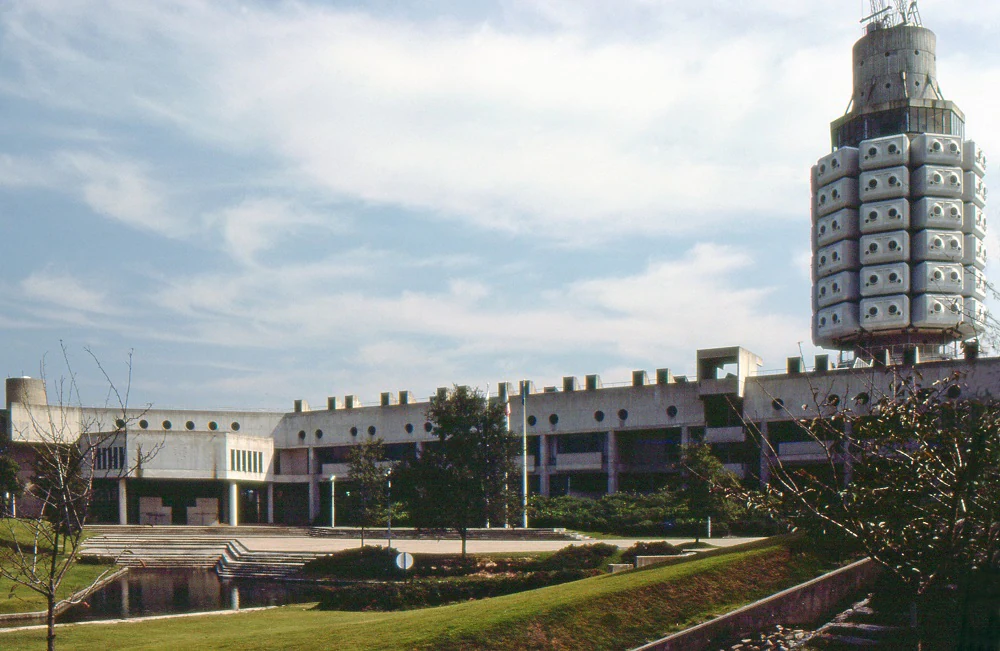
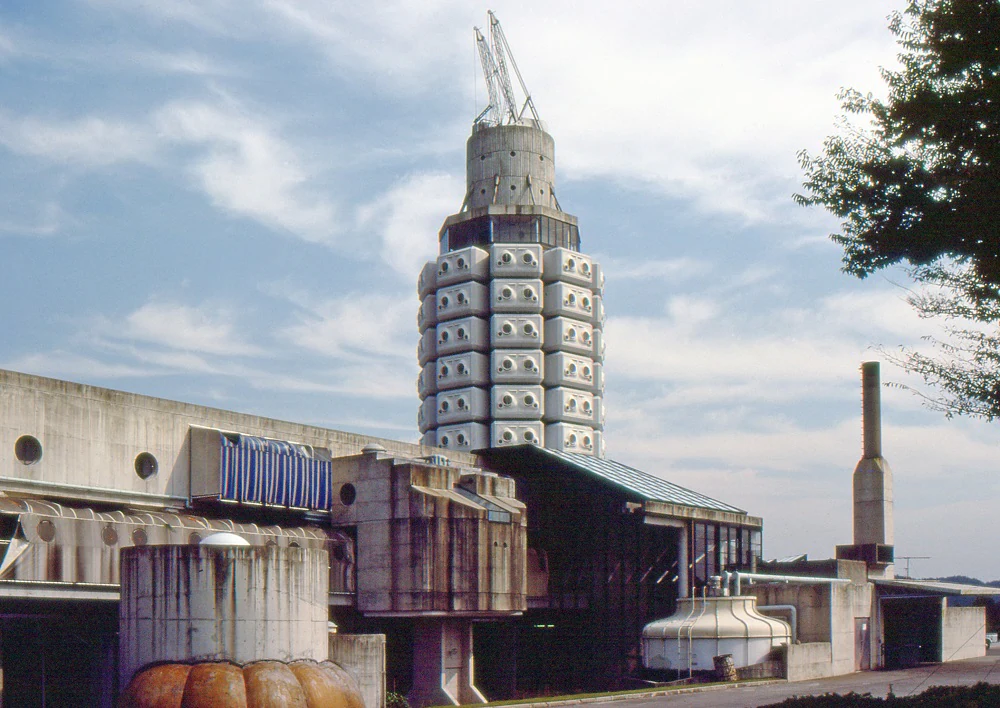
A modern Youth Castle

Seinen no Shiro combines accommodation and learning rooms rather than castle exhibits. Its distinctive tower and concrete forms make an interesting contrast with the surrounding greenery. The photographs accompanying this guide are archival views published in 2018, with the capture date unknown.

A low concrete building stands behind a shallow water feature and lawn, with a tall pod-like tower at the right.

Youth Castle and its landscaped forecourt, in an archival photograph published in 2018. The capture date is unknown; this is not a current-condition image.

Photo: Javier Vives Rego / Arquitectura de Japón, CC BY-SA 4.0. Original published image unchanged. · Creative Commons

A tower of stacked rounded modules rises above angular concrete buildings and a sloping roof, with a tree at the right edge.

The tower and concrete forms of Youth Castle, in an archival photograph published in 2018. The capture date is unknown; present access and appearance may differ.

Photo: Javier Vives Rego / Arquitectura de Japón, CC BY-SA 4.0. Original published image unchanged. · Creative Commons

When to visit

Spring: flowers and fresh attention

The park’s spring sheet includes magnolia, several cherries and azaleas. Look at the differences in flower shape as well as colour. Timing moves with the weather, and the list mixes park trees without establishing whether every specimen is wild or planted.

Summer: shorten the active part

Plan strenuous play for a manageable part of the day, carry water and take frequent rests. Treat a hot or stormy forecast as a reason to shorten the outing. A booked indoor craft session may offer variety, but confirm that it is actually available.

Autumn: look beyond red leaves

Maple colour is only one part of the autumn picture. The park’s sheet also highlights fruits and acorns, which make good subjects for observation and drawing. Keep everything where it grows or falls; collecting plants and wildlife is prohibited.

Winter: buds and birds

The winter plant sheet draws attention to buds as well as camellias. Bare branches can make it easier to follow a bird’s movement. Keep a warm layer handy when stopping, and remember that a bird calendar describes possibilities rather than guaranteed encounters.

Getting there and practical advice

Admission, parking and bicycles

Park entry is free. Ordinary-car parking is ¥500 per visit/day, and motorcycle or moped parking ¥200. Keep the receipt if returning the same day. Bicycle hire is listed at ¥500 for up to two hours for junior-high age and above, or ¥250 for younger children; extra time costs more. Ask about suitable sizes and current availability. Bring cash for parking and activity booths, which are excluded from the office credit-card service. Eligible disability-related parking exemptions have conditions; check them with staff.

Food, toilets and help

Restaurant Eleven in the Sports Hall has a short lunch service, listed as 11:30–13:00 weekdays and 11:30–13:30 weekends/holidays. Carry food and water if your plan falls outside it. The walking map marks toilets across the park, and the Sports Hall floor plan identifies its office, accessible multipurpose toilet, first-aid room and AED. Ask staff to direct you to the facilities currently available.

Contact the right office

Sports, recreation and west-side questions: Sports Hall, 077-588-3251. Camping and outdoor activities: Outdoor Activity Center, 077-586-1100. Lodging, training and culture-zone programmes: Youth Castle, 077-586-2111. Explain your intended activity and entrance when asking for advice.

Stay on open paths, respect barriers and take rubbish home. Do not collect plants or animals, feed wildlife or fly drones. Woodland paths can be uneven or slippery, so choose a route within everyone’s ability. Use fire only where authorized: a forest-fire warning can restrict cooking and campfires even at an otherwise suitable facility. Check with staff before lighting anything. Keep children close around water and active sports areas.

Opening and arrival

The current Japanese page lists 09:00–17:00 year-round. September–June closures are Mondays, or the following day when Monday is a holiday; the year-end closure is 29 December–3 January. Field athletics and ground-golf reception normally ends at 15:00, sometimes earlier. From JR Yasu Station’s south exit, buses take about 10 minutes toward the western side. Weekdays use Kibogaoka Nishi Gate-guchi; weekends and holidays use Kibogaoka Nishi Gate. The weekday stop has no nearby pedestrian crossing, so take particular care. For the east, the published public-transport approach is a roughly 30-minute bus from Omihachiman to Mitsui Outlet Park, then about 45 minutes on foot. Check the current access page and return timetable.

Plan access around your own needs

Ask the Sports Hall which approach works best for a wheelchair or pushchair and where the nearest usable toilet is. Its official floor plan marks a multipurpose accessible toilet, but does not verify every connecting path. For camping or lodging, discuss specific access needs directly before booking. A short visit near the facilities may be more comfortable than a hill walk.

Visitor information

1 November 2026: plan around the race

The central road is scheduled to close completely from 10:00 to 13:30 for the high-school ekiden. Field athletics and ground golf are unavailable from 09:00 to 13:30; reception is planned for 13:30–15:00 after the road reopens. Check the dated notices before travelling.

Ground-golf course changes

Checked 20 October 2026: turf care has reduced the available ground-golf layout to courses A, B and C, with 24 physical holes. The operator says a 32-hole round remains available; ask staff how to play it. No end date is stated.

A future management change

The foundation plans to hand park management to a successor from fiscal 2028, after operating through fiscal 2027. Its dissolution notice does not announce a present-day park closure. Longer-range bookings should be checked directly.

Sources and useful links

Wildlife you might spot

4

Each card links to a full Explore page with photos, traits, and fun facts.

Snap map for this place

Start with the big picture, then zoom in to explore individual wildlife observations around this place.

Loading map…

Good to know before you go

Use the [official walking map](https

//www.kiboupark-shiga.or.jp/stroll) with current signs. Trail numbers help orientation, but no mapped line guarantees today’s access.

Keep lunch covered and belongings attended: the park warns that kites take food and crows raid unattended bags. Never offer wildlife food.

Choose an achievable outing and turn back early enough for your return transport. The nicest discovery may be a quiet ten minutes beside the path.

Frequently asked questions

Use the west gate for the lawn, play area and sports facilities. The east gate is the approach for Youth Castle and the Outdoor Activity Center. General cars cannot drive through the park; follow any specific vehicle instructions attached to a camping booking.
No. That is a separately managed neighbouring park, shown beyond the western side on the walking map. This guide covers Kibogaoka’s three internal zones, not the whole Mikami–Tagami–Shigaraki Prefectural Natural Park around them.
It is better to choose a focus. The park gives about 4 km and 60 minutes for walking between its east and west gates, before stops or the journey back. That is a one-way connection, not a short circular stroll.
A simple walk or visit to the free lawn does not require a paid activity booking. Reserve camping, lodging, sports facilities and organised programmes through the relevant office, and check individual rules before travelling.
Dogs may enter permitted areas on a lead, with waste taken away. Pets are excluded from facilities including the campsite, Picnic Land, field athletics and ground golf, so a dog-friendly lawn visit cannot automatically include those activities.
It is a modern lodging and training facility. Enjoy the architecture where public access is permitted, but arrange any use of its indoor rooms rather than assuming they are open for sightseeing.

Recent snaps at this place

Recent snaps will appear here as new observations are added.

View all ›

Take the discovery with you

Exploring Kibogaoka Cultural Park?

Identify the wildlife you spot, learn as you go, and keep a collection of the adventure.

  1. 1Spot it
  2. 2Snap it
  3. 3Keep the discovery





