
Snappit logo
Snappit
Get App
Generic illustration, not a photograph of this venueIllustration
ParkHokkaido, Japan

Moerenuma Park

Moerenuma is a park you experience by moving through it.

About

Moerenuma is a park you experience by moving through it. A grassy slope becomes a lookout, a broad avenue frames the sky, and a bright play structure invites children to work out what it can do. Sculptor Isamu Noguchi conceived the whole landscape as one work, so the spaces between its landmarks matter as much as the landmarks themselves. There is no need to see every corner to enjoy the idea.

Begin at the Glass Pyramid, known as HIDAMARI. Its light-filled atrium makes a useful first pause, with the park landscape visible through the glass. Spend a little time in the Isamu Noguchi Gallery, then head outside with one extra destination in mind: a hill for the view, the Sakura Forest for play, or the Sea Fountain when a show is scheduled. The park’s short official walking course is a good starting point if you want an unhurried introduction.

The hills give the design a different scale. Mt. Moere rises 52 m above its base, enough to open up a wide view over the park and Sapporo. Play Mountain offers a different shape, with a long granite stairway and a sloping path on its other side. Both are optional climbs. You can enjoy their outlines from the paths below while keeping your energy for the rest of the day.

Around the planted lawns and trees lies Moerenuma, a remnant of the area’s river landscape. Waterbirds give this carefully designed setting a life of its own, while the former waste-disposal ground beneath the park adds a striking reclamation story. A relaxed visit can move between art, play and nature without treating any of them as a separate excursion. Check the current works and facility notices before setting out, especially if accessible toilets or a particular playground are essential to your day. Eager to name that creature? Identify any animal you find during your visit using the Snappit app.

The site received waste from 1979 to 1990, while park construction began on completed sections in 1982. Noguchi joined the project in 1988 and produced its master plan before his death that December. The people who continued the work developed his model and ideas under the Noguchi Foundation’s supervision. The park’s grand opening came in 2005, with the Sea Fountain as its final major facility.

What to do here

Start with the Glass Pyramid and the short official course, then choose one addition: Mt. Moere, the Sakura Forest’s open play areas, or a Sea Fountain performance. Bring a picnic if you want to stretch the outing into an afternoon. Pause by the surrounding water from permitted paths if birds catch your attention.

Seasonal info

Spring brings cherry blossom; summer adds water features; autumn changes the colours of the planted trees. In winter, snow covers the landscape, playgrounds and water features close, and the park offers snow activities when conditions allow. Do not expect the summer walking plan to work unchanged on snow.

Accessibility

The operator marks its short course as wheelchair-friendly and provides an elevator to the Glass Pyramid roof. Use this lower-level option rather than the hill climbs, and ask staff about construction detours and snow. Toilet works continue through December 31, 2026; the first-floor north-side accessible toilet is listed as available during the works, subject to separate closures.

Don't miss

1

The Glass Pyramid’s bright atrium and Isamu Noguchi Gallery

2

Mt. Moere and Play Mountain viewed from below or climbed in suitable weather

3

Cherry trees and sculptural play areas in the Sakura Forest

4

Seasonal water at the Sea Fountain and Moere Beach

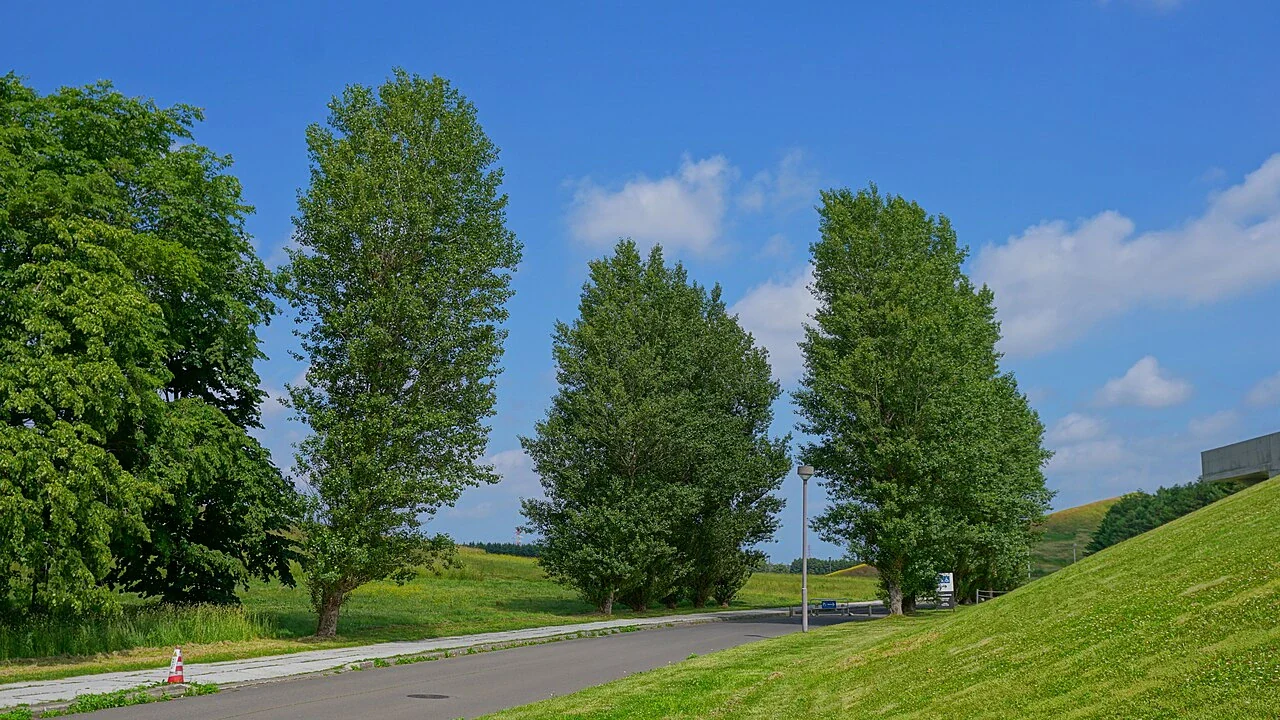
Tall leafy trees line a paved avenue between mown green slopes under a blue sky.

A tree-lined avenue and grassy slopes at Moerenuma Park, photographed in July 2026.

Avenue in Moerenuma Park.jpg — 掬茶, CC BY-SA 4.0 (https://creativecommons.org/licenses/by-sa/4.0/). Source: https://commons.wikimedia.org/wiki/File:Avenue_in_Moerenuma_Park.jpg. Proportionally resized to a maximum 2000-pixel long edge without upscaling; recompressed as WebP quality 92, method 6. No crop, retouching, added text or colour changes. EXIF omitted. · Creative Commons

Walks and routes

The Glass Pyramid and short official course

Follow the park’s short-course map from the east side, taking in the Glass Pyramid and the Sea Fountain area before returning. Use the official map with the day’s detour signs rather than trying to complete a rigid circuit. Leave extra time for a show, a snack or simply sitting outside.

The official map labels this course wheelchair-friendly. Confirm the usable path through current works with staff, and allow more time for your own pace. Snow and ice can change access substantially.

The Glass Pyramid and short official course

An optional climb up Mt. Moere

In calm, dry conditions, add an ascent of Mt. Moere by an open signed route. Stop whenever the view is enough for you, then return to the lower paths. Allow about 30–45 minutes from the foot with a summit pause; children or tired legs may need longer.

The summit approaches involve climbing, with steps on some routes. Keep this optional and choose the lower-level visit if steps or slopes are a barrier.

An optional climb up Mt. Moere

A relaxed first afternoon

Allow 2–3 hours on site, plus transport. Start with the Glass Pyramid, take the short course at your own pace, and add either a fountain performance or a hill climb. Keep time for a break and the walk back to the bus.

A play-led half day

Let the open Sakura Forest playgrounds be the main event. Add a picnic and the Glass Pyramid when everyone needs a rest. During the water-play season, replace another stop with Moere Beach rather than trying to squeeze in everything.

Things to try

A family shape hunt

Let each person choose a favourite triangle, curve or circle in the landscape. Compare the hills with the Glass Pyramid, then see which open play structures invite crawling, climbing or sliding. You can enjoy the design without knowing any art-history vocabulary.

Make time for moving water

In season, arrive at the Sea Fountain a little before a listed performance and watch the water change shape. For children wanting to splash, use Moere Beach during its opening hours; bring swimwear and a towel, and swim nappies for children who need them.

Swap a longer walk for a bicycle

Hire is at P1 near the East Entrance, not inside the Glass Pyramid. Standard bicycles are listed at ¥100 for one hour or ¥200 for two; bring identification. From October 16 to November 3, 2026, opening is 09:30–16:00, with last hire at 15:00. Check later seasons afresh.

A shorter indoor-led visit

If the Glass Pyramid is open, its atrium and Noguchi Gallery can anchor a shorter visit, with a brief outdoor walk only if conditions suit. The exposed hills are easy to skip. During flood warnings, follow official evacuation instructions: the park can serve as a temporary water-storage area and is not a designated wide-area evacuation site.

Wildlife and habitats

Whooper Swan

A large white swan with a long neck and a yellow-and-black bill. The yellow extends forward to a point. The park describes migrating Whooper Swans on Moerenuma, and the April 2026 field trip recorded them there. Spring passage is worth watching, without expecting a resident flock.

Tufted Duck

Through binoculars, an adult male’s dark head and back contrast with white flanks; a little tuft hangs behind the head. Females are browner. Tufted Ducks were included in the April 2026 Moerenuma field-trip list. Look across the water without leaving the path.

Grey Heron

Look for a large, long-legged bird with grey upperparts and a pale neck near the water. Adult birds have dark head plumes. Grey Heron appears in the April 2026 Moerenuma record; a quiet scan of the shoreline is more useful than hurrying after a bird.

Look between the big shapes

The Sakura Forest is planted woodland, with several kinds of cherry rather than a single uniform blossom display. Outside flowering time, compare the shade under the trees with the bright open lawns, and notice how the same view changes as clouds move over it. Leave flowers and branches in place.

Watch the water quietly

Bring binoculars if waterbirds interest you. Pause on permitted paths with a clear view of Moerenuma, keeping away from steep or muddy water edges. The birds below are recorded locally, but weather, migration and disturbance affect what you will see. Give them space rather than trying to draw them closer with food.

Stories and discoveries

Snow helps cool the summer atrium

The Glass Pyramid’s cooling system uses snow stored from winter. It is a neat reason to think about the snowy landscape even while visiting on a warm day.

A hill made as part of the landscape

Mt. Moere was built from non-combustible waste and construction spoil. Its 52 m height above the base is different from its 62.4 m elevation above sea level. Looking back from the summit helps you see the park’s separate shapes as a whole.

When to visit

Spring

Watch the park’s blossom updates from late April onward; flowering varies with the year and tree. The 2026 posts already described some trees passing their peak at the end of April. Spring waterbird migration can add interest along the surrounding water.

Summer

Moere Beach’s 2026 opening period was June 15–September 2, 10:00–16:00, except Thursdays. Treat these as that season’s dates and check the next schedule before planning water play. Stay close to small children even in shallow water.

Autumn

Enjoy the changing trees and broad views, but allow for cooling weather and facilities finishing their seasons. In 2026 the fountain is scheduled to finish on October 20 and bicycle hire on November 3.

Winter

Check snow conditions and current equipment-hire arrangements before coming for sledding or cross-country skiing. There are no lifts. Use the designated sledding area, avoid starting near the summit, and stay away in poor visibility or severe weather.

Getting there and practical advice

Glass Pyramid opening

The building normally opens 09:00–18:00 from April 29 to November 3, closing on the first Monday of each month. From November 4 to April 28 it opens 09:00–17:00 and closes every Monday. Holiday closures move to the next non-holiday day; it also closes December 29–January 3. The gallery closes at 17:00.

Food and a place to pause

The Glass Pyramid contains the restaurant L’enfant qui rêve and the takeaway shop panier. The restaurant requires reservations and closes for winter; takeaway days also vary. Check separately from the building’s hours, or bring a picnic and drinking water.

Information and essentials

The park office is in the Glass Pyramid; telephone 011-790-1231. Use the park map to locate toilets before a longer walk. Outdoor facilities have seasonal and temporary closures, so check the ones you need rather than relying on the nearest symbol on the map.

Park opening

The grounds open throughout the year. The East Gate is normally open 07:00–22:00, with entry until 21:00; other gates close earlier and the West Gate is seasonal. Aim to finish your first visit in daylight, and check special-event or construction restrictions before travelling.

By subway and bus

From central Sapporo, take the Toho subway to Kanjo-dori-higashi and check Chuo Bus East 69 or East 79 for Moerenuma Koen Higashiguchi (モエレ沼公園東口). The operator gives about 15 minutes on foot from that stop to the Glass Pyramid. Seasonal services use a different, closer stop; verify the date and direction before boarding.

By car or taxi

For the Glass Pyramid, approach through the East Gate and use P2 beside the building. Ask a taxi driver to use this entrance; P1 is the useful drop-off if hiring a bicycle. West-side access is seasonal, so avoid choosing an entrance solely because a map makes it look closer.

Plan around the lower course

P2 has designated accessible parking and is open year-round. Limited wheelchairs and strollers can be borrowed free at the Glass Pyramid; they cannot be reserved. Ask staff to help choose a route that fits your equipment, especially during works or snowy weather.

Toilets during the renovation

The first-floor south-side accessible toilet and third-floor toilets are included in works scheduled through December 31, 2026. The first-floor north side, beside the restaurant, is listed as having an available accessible toilet. Confirm with staff before setting out; the separate November power cut affects all toilets.

Visitor information

Works may change your walk

Electrical upgrades are scheduled through February 15, 2028, with sections restricted in phases on weekdays, including public holidays. Follow the day’s signs and ask at the Glass Pyramid which paths are open. The athletics track is also under renovation; it is not part of this visit.

A date to avoid if you need toilets

All park toilets and telephone services are scheduled to be unavailable on November 9, 2026, about 09:00–15:00, with November 16 as the backup. Choose another day if these facilities are essential. The Glass Pyramid is normally closed on that Monday.

Check play and water before promising them

The playground’s current equipment list marks several pieces out of use. Moere Beach has finished its 2026 season. The Sea Fountain’s current schedule ends October 20, and maintenance can cancel a performance at short notice.

Sources and useful links

Wildlife you might spot

3

Each card links to a full Explore page with photos, traits, and fun facts.

We are still adding species preview cards for this place.

Snap map for this place

Start with the big picture, then zoom in to explore individual wildlife observations around this place.

Loading map…

Good to know before you go

Check the latest works notice before travelling. On November 9, 2026, a planned power cut closes all park toilets from about 09:00 to 15:00; November 16 is the backup date.

Choose one main addition to the Glass Pyramid rather than marching children around every landmark. Distances between attractions can feel long after playtime.

Pack water, sun protection and a windproof layer. Wear shoes with grip for hill steps, wet surfaces or frost.

Look up your return bus before you arrive. The regular East Entrance stop is about 15 minutes’ walk from the Glass Pyramid, so leave time to get back.

Use only playground equipment that is open. Several pieces remain fenced off for repair; a photograph of a play area does not show what is usable today.

Carry tissues or toilet paper for outdoor toilets. Bring snacks if you are visiting on a day when the food outlets are closed.

Keep food packed away when you are not eating, take litter home, and never feed or touch foxes or other wildlife.

Open flames, barbecues, kites and drones are prohibited. Keep dogs on the permitted paths on a lead no longer than 2 m, away from restricted lawns and indoor facilities.

Frequently asked questions

Park admission and parking are free. Bicycle hire, food, sports facilities and some events or activities have separate charges.
Yes. Take the Toho subway line to Kanjo-dori-higashi, then a suitable Chuo Bus to Moerenuma Koen Higashiguchi, the East Entrance stop. Check the route and return timetable for your date; the bus does not leave you beside the Glass Pyramid.
No. Moere Beach is a designed shallow water-play area within the park. Use it only during its published opening season and supervise children closely. The 2026 season ended on September 2.
Yes. The Glass Pyramid, open lawns and lower paths make a worthwhile outing. Follow the operator’s short course and ask about current detours; neither hill summit is necessary.
No. It runs at scheduled times during its season and may stop because of weather or maintenance. The 2026 season is scheduled through October 20, with reduced weekday programmes and no evening shows in the current timetable.
No. It is a separate neighbouring attraction. Give it its own time allowance rather than treating it as another stop on this walk.

Recent snaps at this place

Recent snaps will appear here as new observations are added.

View all ›

Take the discovery with you

Exploring Moerenuma Park?

Identify the wildlife you spot, learn as you go, and keep a collection of the adventure.

  1. 1Spot it
  2. 2Snap it
  3. 3Keep the discovery
