Snappit logo
Snappit
Get App
Generic illustration, not a photograph of this venueIllustration
ParkKansai, Japan

Nara Park

Nara Park is most rewarding when you give the deer time to be deer.

About

Nara Park is most rewarding when you give the deer time to be deer. Watch one crop the grass, settle down to chew or turn its ears towards a sound, rather than trying to make it pose. These are wild sika deer, accustomed to people but capable of biting, kicking and charging. A family visit works well without buying any crackers, especially when children are small or nervous.

For a manageable first outing, concentrate on Ukigumo and Kasugano, two central park lawns. Ukigumo has a strolling path through the park’s busy middle; Kasugano opens out towards Mount Wakakusa, with Tōdai-ji’s buildings in the surrounding view. Pause at the edge of the open space and let the scene unfold. You can enjoy the landscape without entering a temple building or setting off into the hills.

The lawns are part of a living food web. Deer browse the vegetation, and the open space below some tree canopies reveals how high they can reach. Look for this browse line as you walk, then compare the close-cropped grass with taller growth beyond it. Dung beetles help return deer droppings to the soil, linking animals, insects and the next crop of grass. It is a useful small lesson in ecology, even if no beetle appears.

Nara’s famous park district includes religious precincts and museums as well as the prefectural park itself. Keep those visits separate in your plan: the Great Buddha Hall and Kasuga Taisha’s special inner visit have their own admissions and opening arrangements. Beyond the lawns, Kasugayama’s protected forest belongs to a much larger walking day. For a first visit, a slow hour or two outside and one chosen extra is more enjoyable than trying to cover every landmark. Don't forget to bring the Snappit nature identification app along to scan local species.

Nara Park formally opened on 14 February 1880, but its landscape had long been shaped by temples, shrines and their visitors. The prefectural history records a ban on hunting and tree cutting on sacred Mount Kasuga in 841. Later planting, park expansion and changes to religious precinct boundaries helped create the mix of lawns, trees and heritage sites seen today. Kasugayama Primeval Forest became part of the cultural World Heritage property Historic Monuments of Ancient Nara in 1998.

What to do here

Spend time on the Ukigumo and Kasugano paths, watch grazing deer from a comfortable distance and compare the lawn with the tree canopy. If you want an indoor explanation of the landscape, add the deer and forest displays at Nara Park Bus Terminal.

Seasonal info

Cherry varieties bloom at different times, broadly from late March into early May. Japanese maple colour is often best from late November into early December, with substantial yearly variation. During the autumn rut, give male deer extra room. Mothers protecting fawns also need space in late spring and early summer.

Accessibility

Plan a short visit around the central paths and check the route with the information staff if you use a wheelchair or stroller. Avoid relying on shortcuts over grass. Nara Park Bus Terminal has elevators, multipurpose toilets and nursing rooms; wheelchair loans are available from staff, but stroller loans are not.

Don't miss

1

Wild deer going about their day, observed without feeding or touching.

2

Kasugano’s broad lawn and views towards Mount Wakakusa and Tōdai-ji.

3

The browse line beneath trees, a visible clue to the deer’s effect on vegetation.

4

Indoor deer-and-forest displays at Nara Park Bus Terminal.

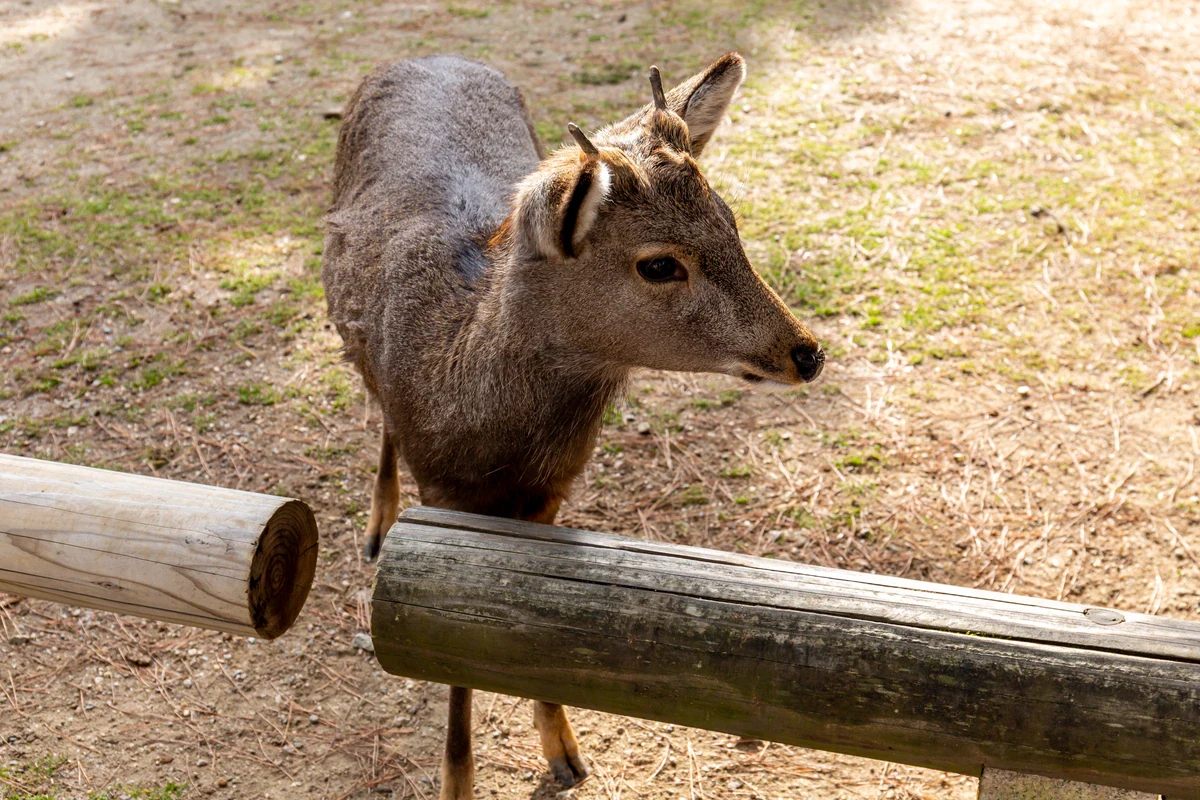
A brown deer with a dense winter coat stands behind a low wooden rail on lightly grassed ground in Nara Park.

A deer in Nara Park in January 2019, with its winter coat visible. Watch deer quietly and give them space.

Balon Greyjoy, CC0 1.0. 20190121 Nara deer-1.jpg. Source: https://commons.wikimedia.org/wiki/File:20190121_Nara_deer-1.jpg. License: https://creativecommons.org/publicdomain/zero/1.0/. Proportional downsampling to fit 1200 × 1200 pixels, without enlargement; WebP quality 92, method 6. No crop, retouch, recoloring or text added. EXIF omitted. Source EXIF records Adobe Photoshop Lightroom Classic 11.1 (Windows), modified 2022-01-06. No specific prior edit declared; source rendering retained. · Creative Commons

Walks and routes

Ukigumo and Kasugano: an unhurried lawn visit

Start at Ukigumo, pause along its park path, then use the public park paths to reach Kasugano for the wider lawn views. Make one quiet observation stop and one rest stop; return when your group has had enough. On a short or tiring day, visit just one lawn.

Choose paths that suit your group and ask at the information counter about surfaces and steps before committing to a longer circuit. The lawn visit does not include Mount Wakakusa or the forest trail.


A lighter plan for young children

Choose Ukigumo alone, keep food packed away and let the child decide whether to watch from farther back. Add a short rest, then leave while the outing is still enjoyable. The second lawn and any paid attraction can wait for another visit.

Things to try

Read the shape of the trees

From a public path, look beneath a canopy for the open band left by browsing. Ask children what might change if animals could reach higher branches. Keep the activity observational; do not break twigs or collect leaves.

Make a three-layer sketch

At Kasugano, choose a view and draw only three things: the foreground lawn, a distant building and the hill behind. It is a simple way to notice how nature and architecture share the landscape.

Put the park in perspective

At Nara Park Bus Terminal, use the diorama to pick out the places you have visited, then look at the displays about deer and the protected forest. This also makes a useful first stop before going outside.

Keep learning indoors

For a shower, use a designated roofed rest space. For persistent rain, make the bus terminal’s diorama and nature displays the main stop, checking its opening notice first. In strong wind or severe weather, postpone the park and forest walk.

Wildlife and habitats

Sika deer

Notice the contrast between the white-spotted summer coat and the denser winter coat shown in the photograph. Use a zoom lens or binoculars rather than stepping closer.

Japanese maple

Look for hand-shaped, deeply divided leaves, and compare green foliage with autumn colour. The park’s seasonal guidance names iroha-kaede, also called iroha-momiji. A red leaf alone is not enough to identify a tree.

Noshiba lawn grass

The deer’s everyday food can be right under your feet: noshiba grass grows in the park and supports their grazing. Watch the connection between animal and lawn without pulling up grass to feed them.

Deer move freely, so where you find them changes. Stay well back and give them more room if they approach. Do not search vegetation for hidden fawns.

Stories and discoveries

A forest on the cultural World Heritage list

Kasugayama’s long protection is bound up with worship at Kasuga Taisha. That relationship between people, belief and landscape explains why the forest is part of a cultural World Heritage property.

When to visit

Spring: choose the trees, leave fawns alone

Different cherry varieties spread the blossom season, so check current flower reports rather than relying on a single peak date. If you come later in spring or in early summer, keep clear of mothers and fawns.

Summer: shorten the exposed part

Bring water, choose a cooler part of the day and take regular shaded breaks. The wisteria-covered rest space at Ukigumo is one option when in leaf; the terminal is a useful indoor alternative.

Autumn: foliage with extra distance

Enjoy the trees while keeping well away from male deer in the rut. Antler cutting does not make close contact safe. Avoid putting a child beside a deer for a photograph.

Winter: coats and open views

Look for the deer’s winter coats from a distance, then keep the visit short enough for everyone to stay warm. Do not assume Mount Wakakusa is open just because the central park is accessible; its hillside visit has a seasonal closure.

Getting there and practical advice

Rest stops and toilets

The official park guide lists shelters at Ukigumo and Sansha Pond, and a public toilet at Kasugano. Find your next toilet on the park map before children urgently need it.

Nara Park Bus Terminal

The visitor facilities are free. The operator currently lists exhibition facilities as open 07:30–20:00, subject to changes. Shops and individual services may keep different hours.

Arriving by train and bus

Kintetsu-Nara is the convenient walking start for the central lawns. From either Nara station, check services to Tōdai-ji Daibutsuden–Kasuga Taisha-mae; Kasugano is about five minutes on foot from the stop. Confirm your return stop separately.

If you drive

Expect busy roads and full car parks in the main sightseeing seasons. Use a designated paid car park and check its current tariff; public transport is the prefecture’s recommended option on busy days.

Make the terminal your planning stop

Ask staff about wheelchair loans and a suitable onward path. The terminal’s east and west buildings have multipurpose toilets on the first and second floors; nursing rooms are in the east building on both floors. Confirm any equipment or assistance you need in advance: 0742-81-3151.

Sources and useful links

Wildlife you might spot

3

Each card links to a full Explore page with photos, traits, and fun facts.

Snap map for this place

Start with the big picture, then zoom in to explore individual wildlife observations around this place.

Loading map…

Good to know before you go

The ordinary park grounds are free and open throughout the year. Visit in daylight, and check separate hours and tickets for buildings, gardens and Mount Wakakusa.

Keep children beside an adult. Do not touch, chase or surround deer, and stay away from fawns even if they appear to be alone.

Only deer crackers sold for the purpose may be fed. If you choose to offer them, hand them over promptly: do not tease a deer, hold food back for a photo or pretend to have more.

Keep snacks, plastic bags, maps and other loose belongings out of reach. Take all rubbish home; the park has no rubbish bins.

From Kintetsu-Nara Station, the official walking estimates are about 15 minutes to Ukigumo and 20 minutes to Kasugano. Bus access is available from both Kintetsu-Nara and JR Nara stations.

Use Nara Kotsu’s current journey information for the outward and return bus stops. Several park-area routes changed from 1 October 2026, and traffic can delay services.

Leave plants and wildlife undisturbed. Ball games are prohibited, and bicycles should be parked in designated spaces before walking through the park.

Check park notices and the weather before setting out. Events may occupy the lawns; follow temporary barriers and save forest hiking for a suitable day.

Frequently asked questions

The ordinary park grounds and the two lawns in this visit are free. Tōdai-ji’s Great Buddha Hall, Kasuga Taisha’s special inner visit and other attractions have separate fees. General worship at Kasuga Taisha’s main worship area is free; special visits follow a separate calendar.
No. They find their own plant food, and deer crackers are a snack. Quiet observation is a complete visit. Feeding is optional and can bring animals close to you.
Treat the full forest circuit as a separate hike. The prefecture describes a 9.4 km course taking about 210 minutes before extra rests and access walking. Some sections share the Kasuga Okuyama road with vehicles. Use authorised paths and check current conditions.
Do not try to handle it. Contact the Nara Deer Preservation Foundation on 0742-22-2388. For advice about injuries caused by deer, the park’s deer consultation office is 0742-26-7755.
Dogs must be on a lead and kept away from deer, which may panic or defend themselves. Check each adjoining attraction’s rules: Kasuga Taisha prohibits pets, and the bus terminal admits assistance dogs but not other pets.

Recent snaps at this place

Recent snaps will appear here as new observations are added.

View all ›

Take the discovery with you

Exploring Nara Park?

Identify the wildlife you spot, learn as you go, and keep a collection of the adventure.

  1. 1Spot it
  2. 2Snap it
  3. 3Keep the discovery