
Snappit logo
Snappit
Get App
Generic illustration, not a photograph of this venueIllustration
ParkKanagawa, Japan

Sagamihara Park

Sagamihara Park is a good place to give the day a little breathing room.

About

Sagamihara Park is a good place to give the day a little breathing room. Its formal garden supplies the grand view, with water, flower beds and rows of trees drawing your gaze toward the greenhouse. Elsewhere, the scale becomes more intimate: an iris bed worth studying closely, a shady bench, or a patch of lawn where lunch can last as long as everyone wants. You can enjoy the park without trying to see every corner.

Choose an anchor for your visit. Plant lovers can make the Sakata Seed Greenhouse the main event; families can begin with Tomoiki Plaza and leave room for a picnic. In iris season, start at Minazuki Garden before adding anything else. The formal garden and greenhouse occupy the eastern side, while the central lawn, western iris garden and separate Seseragi area offer different kinds of outing. A quick look at the official map saves unnecessary backtracking.

This is a carefully tended urban landscape. The dawn redwoods are planted avenues, the irises are cultivated garden varieties, and the tropical plants live under glass. Wild birds may add their own soundtrack, but a visit is not a promise of particular wildlife. Look at the shapes and arrangements as well as the names: a repeated tree line, a flower’s colour against its leaves, or the way a fountain changes a familiar view. Those small discoveries work in any season. Wondering what that bird or insect is? Find out on your visit using the Snappit nature app.

What to do here

Pair the formal garden with the greenhouse, or choose a relaxed lawn picnic and Tomoiki play session. In June, let the iris garden set the pace.

Seasonal info

Flower beds are renewed and bloom varies. Fountains normally run 09:00–16:00 but stop in rain and for maintenance. Check current notices rather than assuming every facility operates whenever the grounds are accessible.

Accessibility

There are accessible toilets, wheelchair loans and inclusive play features, but approaches and individual equipment need checking. The walk from Hara-Taima Station includes a steep slope.

Don't miss

1

Formal garden and dawn-redwood avenues

2

Minazuki Garden’s cultivated Japanese irises

3

Sakata Seed Greenhouse

4

Tomoiki Plaza’s varied play spaces

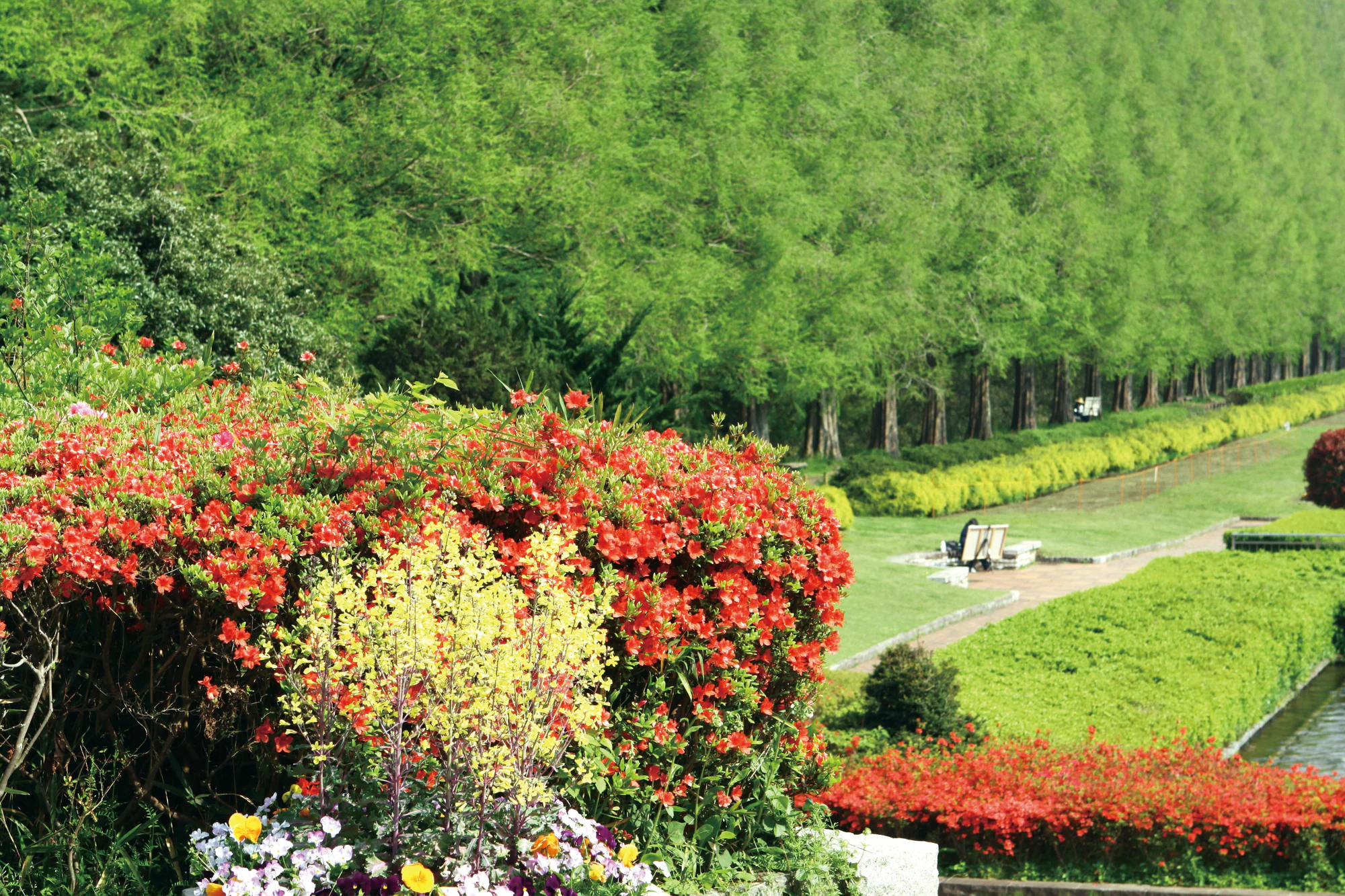
Red and yellow flowers fill the foreground, with clipped hedges, a bench and a row of tall green trees behind.

Cultivated flowers and tree avenues in Sagamihara Park, from Sagamihara City’s archive. The photograph is undated and does not show current planting or path conditions.

Photo: Sagamihara City Digital Archive, Public Relations Division. CC0 1.0; source image unchanged. · Creative Commons

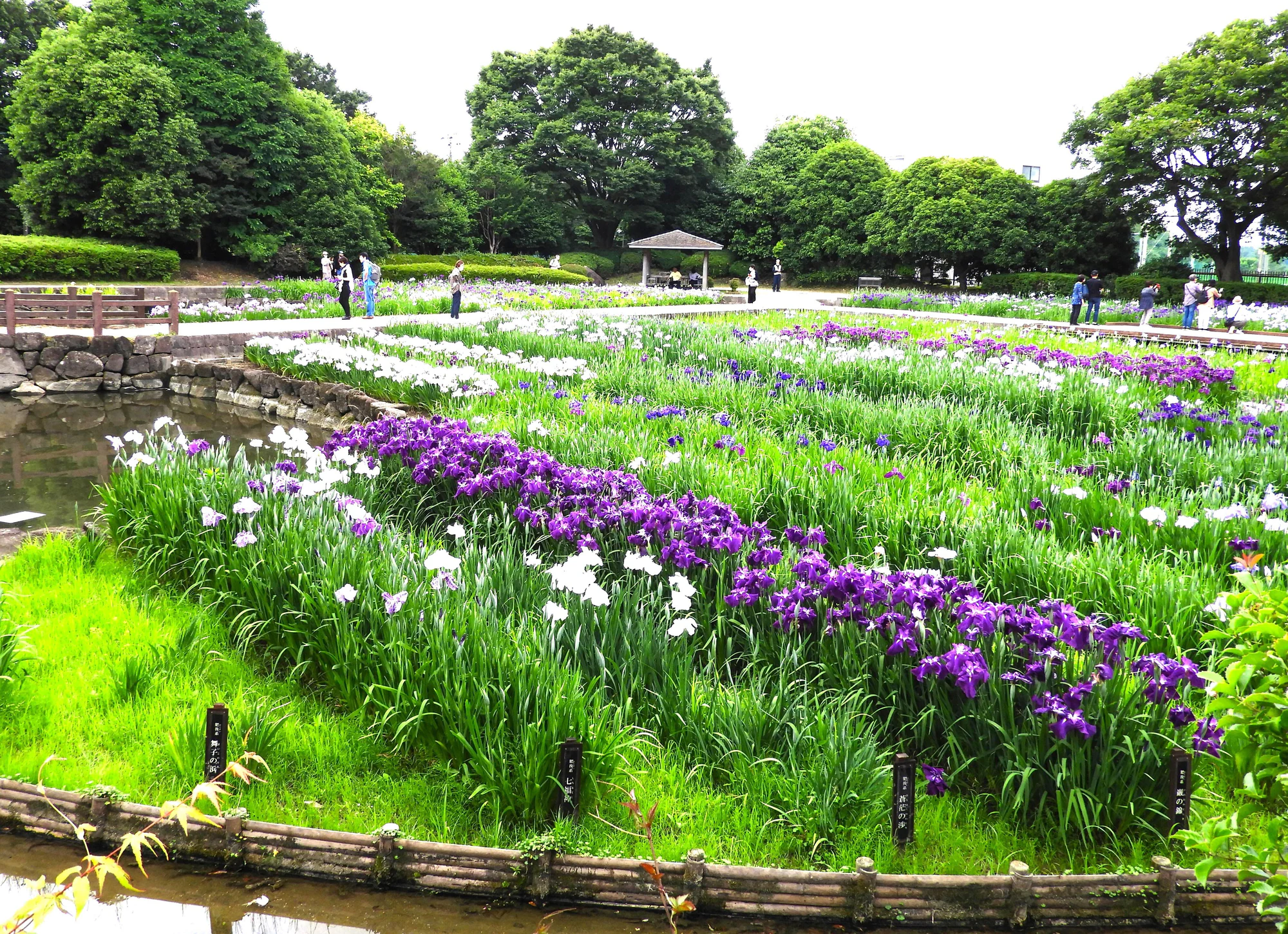
Beds of purple and white irises surround water and raised paths, with visitors, a shelter and leafy trees in the background.

Purple and white cultivated irises at Minazuki Garden. Sagamihara City’s archive places this photograph in the Reiwa era but gives no exact date; it is not a current bloom report.

Photo: Sagamihara City Digital Archive, Public Relations Division. CC0 1.0; source image unchanged. · Creative Commons

Walks and routes

A first visit built around the gardens

If arriving on the Joshibijutsu Daigaku side, start with the greenhouse while it is open, then follow permitted paths into the formal garden. Pause at a comfortable viewpoint, choose a flower bed to examine, and decide whether to continue toward the lawn. Return by the most suitable open path. This is a flexible sequence of stops, not an official loop or a guarantee of a step-free connection.

About 90 minutes–2 hours with stops; editorial allowance.

A family morning with an easy finish

From the central parking or management-office side, check toilets and current play notices before heading toward Tomoiki Plaza. Allow plenty of time for just one or two favourite activities, then find a permitted picnic spot by the lawn. Finish while everyone still has energy for the journey home. Add the greenhouse only if its hours and your group’s mood fit.

About 2–3 hours including play and lunch; editorial allowance.

A short iris-season outing

Make Minazuki Garden your destination, using the current map to choose the approach from your arrival point. Move slowly between public viewing positions and let other visitors pass when you stop for photographs. A shaded rest can be the final stop rather than the start of a long circuit. Wet weather calls for extra care near water and on damp surfaces.

About 45–75 minutes at the garden and nearby rest stops; editorial allowance.

Things to try

Make a three-colour garden sketch

Choose three colours you can see from one public viewpoint and make a tiny sketch using only those colours. Then add a line showing where the paths or tree rows lead your eye. This works for children and adults, requires no plant knowledge, and leaves the garden undisturbed. Keep bags and drawing materials out of the walking space.

Compare a garden plant with its label

Choose one iris outdoors or one labelled plant in the greenhouse. Notice its leaf shape before looking at the flowers, then photograph the label for your notes. Ask the greenhouse’s green-information corner about unfamiliar plants when staffed. Do not taste fruit, pick flowers or touch spines merely because the display is close enough to reach.

Try a listening minute

Find a safe, permitted place to stop away from busy play equipment. Listen for one minute and count different sounds: water, wind in leaves, footsteps or a bird. Compare notes without needing to name every bird. If a woodland path is fenced off, do the activity from an open garden path instead; quiet observation does not require entering restricted habitat.

Wildlife and habitats

The two easiest plant stories are cultivated Japanese irises at Minazuki and planted dawn redwoods beside the formal garden. Compare them with labels and seasonal reports rather than counting them as wild finds. The greenhouse adds cultivated tropical plants, including jade vine, but flowering varies. Birdsong can enrich a woodland-edge pause; this guide makes no species-specific bird-sighting promise. The animals in neighbouring Asamizo Park belong to a separate captive collection and are outside this guide’s wildlife scope.

Stories and discoveries

The formal garden: look along the axis

Stand on a permitted path and take in the long arrangement of pools, clipped planting and tree avenues before moving closer to the flowers. The scene rewards both a wide view and a small detail. Try revisiting the same viewpoint after the light changes. If the fountains are resting, reflections and the repeated shapes of the garden still give you plenty to look at.

Minazuki Garden: slow down among the irises

The iris garden sits toward the southwest of the main grounds. Its paths and viewing areas let you compare cultivated flowers without stepping into their beds. June is the obvious time to come, but bloom does not follow an exact appointment. Pick a few varieties to study rather than photographing every label; look for differences in colour, markings and petal shape.

Sakata Seed Greenhouse: a closer plant encounter

Give the greenhouse enough time to feel like a visit in its own right. Tropical planting and the cactus collection offer contrasting forms, while the upper viewing room looks back over the formal garden. The published plant guide includes jade vine, whose blue-green flowers are especially memorable when present. Follow labels and staff advice: these are cultivated displays, and not every listed plant will be flowering.

Tomoiki Plaza: let children choose their challenge

Opened in April 2026, this inclusive play space has four areas and 18 types of equipment. Some activities emphasise movement, others sound, shapes or playing together. Walk around first, read the equipment-specific instructions and let children decide what feels inviting. Inclusive design offers more choices, but it does not mean every piece is suitable for every person or that supervision is unnecessary.

The lawn and Seseragi: two different pauses

The main lawn is an easy setting for a picnic, people-watching or simply lying back and looking at the sky. Seseragi is a distinct western area, across the road from the main grounds, with ponds and a designated splash zone. Use the mapped approaches and proper crossings. Its listed opening hours are 09:00–17:00; the other ponds remain off-limits to entry.

A park shaped by a national garden fair

The park first opened to the public on 27 April 1979. The 1992 national urban greenery fair brought major redevelopment together with neighbouring Asamizo Park. That shared history helps explain why the two green spaces feel connected, even though their management boundaries and facilities remain distinct.

A greenhouse with a practical energy story

The greenhouse’s published explanation describes using heat recovered from the neighbouring municipal waste-incineration plant for its heating and cooling system. It is an interesting reminder that an apparently self-contained garden can depend on infrastructure beyond its walls. Treat the explanation as the operator’s account, rather than a live measurement of energy use.

Play planned with the people who use it

Tomoiki’s design process included disabled people’s organisations, special-needs schools and supporters. The completed space combines different play styles with rest areas, retained shade trees and surfaces chosen for cushioning and wheelchair movement. Its value is in giving families more ways to spend time together.

When to visit

Spring

Look for cultivated cherries and changing flower beds, then check the greenhouse’s jade-vine reports if that flower interests you. A calendar window is only a starting point: temperature and maintenance affect the display.

Early summer and summer

June is the main reason to plan around Minazuki’s irises. Later, favour a shorter morning visit, shade and water breaks. Verify Seseragi splash-play conditions separately; a pond on the map is not permission to enter it.

Autumn

Dawn-redwood colour is usually advertised for late November to early December. Earlier in autumn, take interest in the changing beds and leaves rather than expecting the avenues already to be at their peak. Dated flower reports are more useful than old photographs.

Winter

On a clear day, take a short garden walk and use the greenhouse as the main indoor stop if open. Build the plan around its winter holiday closure and last admission. Bare branches and the garden’s structure can be as satisfying as a mass of flowers.

Getting there and practical advice

The operator lists buses from Sagami-Ono Station to Sagamihara-koen-mae, about 20 minutes, or to Joshibijutsu Daigaku; Hara-Taima Station has buses to Sagamihara-koen-mae, about 5 minutes. Kobuchi Station also has a Joshibijutsu Daigaku service, about 20 minutes. These are indicative bus journey times, not frequencies. Check the current timetable and return stop. Walking from Hara-Taima takes about 20 minutes in the prefecture’s account and includes a steep slope. Choose arrival points around your intended first stop rather than treating the park as one entrance.

The greenhouse normally opens 09:30–16:30, with last admission at 16:00. It closes on Mondays except public holidays, on the day after public holidays, and from 28 December to 4 January. The tropical and cactus gardens cost ¥100 for adults; junior-high-school pupils and younger enter free. Other greenhouse areas are free. Eligible disability-document holders and one accompanying person have admission concessions. Confirm holiday-calendar details before setting out.

The management office can help with orientation; its published contact is 042-778-1653. Toilets and rest points are marked on the map. Blossom’s Cafe is listed as 10:00–16:00, closed Tuesdays, so bring essentials if you depend on them. The family-support chart identifies changing and nursing spaces at Crocus and the greenhouse, hot water for formula at the cafe, and diaper sales at the office. Confirm availability and stock with staff rather than relying on emergency supplies.

The operator lists free wheelchair loans, two at the management office and two at the greenhouse, accessible toilets and written communication at the office and Navi Station. Availability is not reserved by this guide. Ask staff about the best current approach, gradients, toilet equipment and the greenhouse lift if these matter to your visit. Tomoiki includes some equipment usable while seated in a wheelchair, along with rubber-chip surfacing and rest areas. Check each activity’s instructions and your own support needs. Avoid assuming that woodland paths, pond edges or the station walk have the same conditions as the main garden paths.

Watch children near water, roads and moving play equipment. Stay on open paths and do not pass barriers: the operator’s notice index still references woodland and older play-area restrictions, and not all linked details were available to verify. Tomoiki’s confirmed opening does not prove every other path has reopened. Keep out of ornamental water, respect dog-exclusion areas, take rubbish home and allow space for other visitors. In heat, shorten the outing and take frequent breaks. Check notices for works, spraying and facility changes before departure.

Sources and useful links

Wildlife you might spot

2

Each card links to a full Explore page with photos, traits, and fun facts.

We are still adding species preview cards for this place.

Snap map for this place

Start with the big picture, then zoom in to explore individual wildlife observations around this place.

Loading map…

Good to know before you go

Save 県立相模原公園 for navigation; similarly named parks are elsewhere in the city.

Bring water, a hat and a picnic mat, even when planning to use the cafe.

Plan the greenhouse before its 16

00 last admission.

Take a photograph of a plant label if you want to identify it later; leave plants where they grow.

Frequently asked questions

The general grounds are free. The greenhouse’s tropical and cactus gardens have a separate adult admission charge, and the central car park is paid. Events may have their own fees or booking requirements.
Those are in adjacent municipal Sagamihara Asamizo Park. The parks can be combined, but the tower and animal facilities have separate operators and opening arrangements. They are not facilities of prefectural Sagamihara Park.
No. Seseragi has a designated splash-play zone; entry into its other ponds is prohibited. Fountains and ornamental pools are scenery. Confirm splash-zone availability before promising water play.
Dogs must be on a short, controlled lead, and several areas exclude them. Follow the red-marked restrictions on the official map and local signs. The dog run requires membership registration; it is not a drop-in off-lead area.
The park asks visitors not to ride bicycles, motorbikes, skateboards, roller skates, scooters or children’s pedal-free balance bikes inside. Leave wheeled play equipment at home and use the marked bicycle-parking locations.
Kanagawa Prefecture confirms it opened on 25 April 2026. Older construction notices may still be linked online. Check fresh notices and on-site signs for any later equipment or path restrictions.

Recent snaps at this place

Recent snaps will appear here as new observations are added.

View all ›

Take the discovery with you

Exploring Sagamihara Park?

Identify the wildlife you spot, learn as you go, and keep a collection of the adventure.

  1. 1Spot it
  2. 2Snap it
  3. 3Keep the discovery
