Senshu Park makes a good break from a day in central Akita: water beside the street, a climb into the trees, then space to slow down. Start at the moat if you have only a little time. If everyone is happy with hills and steps, continue to the former castle enclosures, where the reconstructed gate helps you imagine the change from town to guarded stronghold. You can enjoy this as a garden walk without buying a museum or tower ticket.
The park occupies the grounds of Kubota Castle, built for the Satake clan on a natural rise. Its defences relied on earthworks and moats rather than a great stone-walled keep. That makes the shape of the land worth noticing: an uphill approach, a gateway, a terrace, another change in level. The surviving landscape is as much a part of the castle story as the buildings you can photograph.
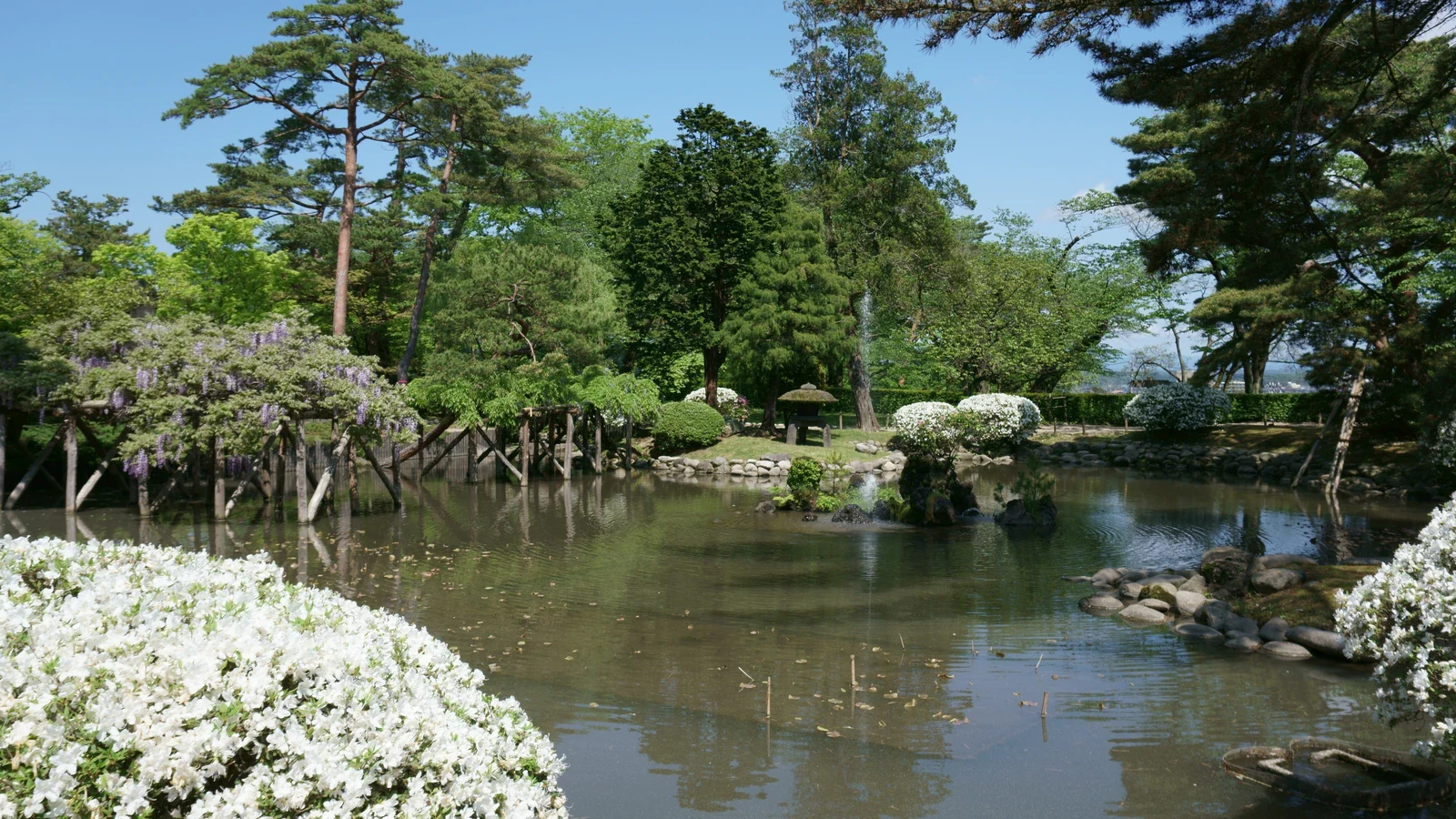
Kogetsu Pond is a lovely place to pause between the larger open spaces. Look across the water before moving on, then choose a tree or a patch of planting to examine more closely. The city’s tree guide includes Japanese maple and dawn redwood, two very different ways of making autumn colour. The planted trees and flowers give each season its character.
Summer gives the water a special role. The outer Ōtemon moat grows Gyozan-kōren lotus, while Kogetsu Pond has separately cultivated Ōga lotus. They are different plantings, with different stories. The floating moat walkway, opened in July 2024, lets you look across the leaves from close to water level. In flower season, make this an unhurried stop rather than a shortcut to the hill.
The two main indoor additions suit different interests. The reconstructed Osumiyagura turret has historical displays and an upper viewing space. Satake Historical Museum, rebuilt and reopened in 2025, puts the clan and the Akita domain into context through its collections. Choose one if time is short. A good visit can be a sequence of a few attentive stops, not an attempt to see every corner. Be ready to snap and learn! Get the Snappit app to identify any nature species you find here.
Satake Yoshinobu began building Kubota Castle here in 1603 after the clan’s move to Akita. Landscape architect Nagaoka Yasuhei shaped the site into a public park in 1896. The present turret is a 1989 reconstruction, and the main gate was rebuilt through a project begun in 1999. Their appearance helps explain the castle, but neither should be mistaken for an untouched Edo-period structure.