
Snappit logo
Snappit
Get App
Generic illustration, not a photograph of this venueIllustration
ParkKR

Seonyudo Park

Come for the meeting of landscape and industrial history.

About

Come for the meeting of landscape and industrial history. Instead of hiding the old infrastructure, the park lets you walk beside basins, look down into planted compartments and pause among columns that have lost their roof. The compact scale suits a relaxed outing, especially if you enjoy architecture, garden photography or a walk with something to discover along the way. Cross Seonyugyo from the south bank for the river approach, then give the inner gardens as much attention as the skyline. Wondering what that bird or insect is? Find out on your visit using the Snappit nature app.

Seonyudo once had a small peak, Seonyubong, whose original form was lost during the Japanese colonial period. The island then supplied treated water to southwestern Seoul from 1978 to 2000. In April 2002 it reopened as an ecological park. Architect Cho Sung-ryong and landscape architect Jung Young-sun helped turn the redundant waterworks into a landscape where old concrete, open space and plants remain in conversation. The surviving structures are the main exhibit, even when you never step indoors.

What to do here

Explore the Time Garden, Garden of Green Columns and Aquatic Botanical Garden, then look across the Han River from Seonyugyo Observatory. Add the Story Hall if it is open. Think of the visit as a series of short garden stops rather than a distance challenge: the changes in level, material and planting are the point.

Seasonal info

The feel changes substantially through the year: spring gives you fresh growth, summer dense greenery, autumn foliage, and winter a clearer view of the structure beneath the planting. Water displays and flower beds need not look like a summer photograph in every season.

Accessibility

The Korea Tourism Organization lists a step-free main entrance, accessible toilets and disabled parking. That does not establish a step-free route through every garden: the official map marks stairs and the reused basins sit at different levels. Contact the management office before visiting if a continuous step-free route is essential.

Don't miss

1

The Time Garden’s planted rooms within old waterworks structures

2

The roofless Garden of Green Columns

3

Aquatic plants growing in reused treatment basins

4

The river crossing and Seonyugyo Observatory

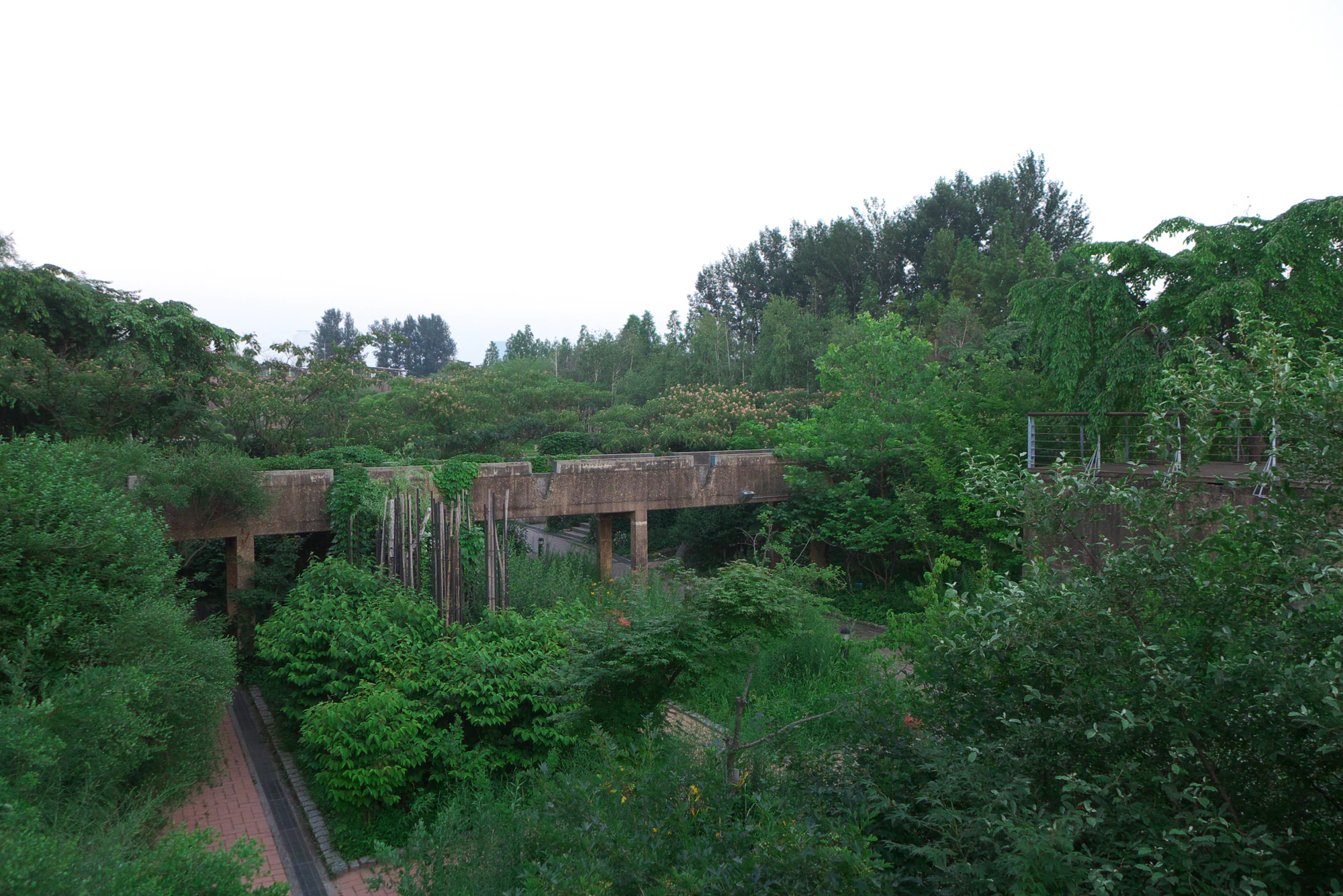
Weathered concrete beams and columns cross above dense green planting and narrow brick paths in Seonyudo Park.

Reused concrete waterworks structures among Seonyudo’s gardens, photographed in July 2013. The historical view shows the park’s design character, not today’s access or planting conditions.

“Seonyudo Park” by [travel oriented](https://www.flickr.com/photos/traveloriented/) / [Flickr](https://www.flickr.com/photos/traveloriented/9461693157), [CC BY-SA 2.0](https://creativecommons.org/licenses/by-sa/2.0/deed.en). Unchanged original. · Creative Commons 1 · Creative Commons 2

Walks and routes

A first-visit garden circuit

Arriving across Seonyugyo, pause at the observatory, then head towards the Four Circular Spaces. Continue into the Time Garden and Aquatic Botanical Garden, keeping the official map handy where paths change level. The Garden of Green Columns and Story Hall make a good next stop before the Water Purification Basin near the Yanghwa Bridge end. For a return to Seonyugyo, use the mapped paths by the Metasequoia Path and circular spaces, following open-path signs on the day. This suggested sequence brings the island’s contrasting spaces together without treating every small side path as compulsory. If you enter from Yanghwa Bridge, begin at the purification garden and work in the opposite direction.

A first-visit garden circuit

A shorter visit from the main entrance

From the Yanghwa Bridge main entrance, concentrate on the Water Purification Basin, Garden of Green Columns and Aquatic Botanical Garden. Take one slow pass through these spaces and return to the same entrance, instead of crossing the whole island simply to tick off the observatory. This is a useful plan when time or energy is limited, and it avoids having to end your walk at a different bridge. Allow about 45–60 minutes, plus the approach. It is not a certified accessible route: ask staff which links avoid steps and which garden levels are currently open.

A shorter visit from the main entrance

An easy half-day

Give the island the first part of your outing, then leave time for lunch near your return station. If you arrived from the south bank, returning across Seonyugyo keeps the journey simple. If you prefer to continue towards Hapjeong, decide that before leaving the gardens and use the designated Yanghwa Bridge pedestrian approach. It extends the outing and changes where you finish; it is not a shortcut back to a car left at Yanghwa lot 3.

Things to try

Read the old waterworks through the gardens

At the Garden of Green Columns, imagine the removed concrete roof above the surviving supports. At the Aquatic Botanical Garden, the rectangular filter basins give the plants their unusual frame. The Time Garden offers another relationship between paths and planting, with views into the old compartments. Start with a broad view, then notice where a wall, channel or column has become part of a garden. You do not need technical knowledge to enjoy the transformation.

Take photographs that explain the place

A wide shot can show the contrast between hard concrete lines and greenery; a second, closer photograph can show a joint, channel or climbing stem. In the Time Garden, try an available higher viewpoint before deciding whether you want to explore a lower path. Keep paths and stairs clear, and avoid stepping into planted areas for a cleaner angle. For commercial shoots or organised sessions, check the city’s temporary-use guidance with the park rather than assuming casual visitor access covers the activity.

Make the river pause part of the visit

Seonyugyo Observatory and Seonyujeong Pavilion give the outing a different scale after the enclosed garden spaces. Use the open view to orient yourself to the Han River and bridges, then choose whether to linger or continue. On a windy day, a shorter stop may be more comfortable than waiting for a perfect sunset photograph. A river view is still worthwhile without clear visibility of every distant mountain.

When the weather changes

Light rain can make the concrete and greenery visually interesting, but wet steps and decks deserve care. Shorten your walk to the safer open paths and use the Story Hall only if its opening schedule suits. During heavy rain, flood warnings or strong wind, postpone the island approach and follow closure barriers. The south-bank parking and approach lie beside the river; a building on the island is not a reason to continue through a closed access route.

Wildlife and habitats

Dawn redwood

The mapped Metasequoia Path is a useful place to meet this planted tree. Its soft, feather-like leaves are arranged in opposite rows, and it sheds its foliage rather than staying green all winter. Enjoy the line of trees as part of the design, then use a nearby label to confirm individual specimens. This is garden planting, not evidence of a wild redwood population.

Japanese creeper, also called Boston ivy

The city’s Seonyudo reporting names this climbing plant on the reused structures, including the Garden of Green Columns. It is one reason the concrete can look so different between leafy and bare seasons. Other climbers occur here too, so do not identify every covered pillar as the same species. Look without pulling at stems or climbing the supports.

Stories and discoveries

What the circular spaces used to do

The round spaces near the Seonyugyo end reuse former thickening and adjustment tanks. Their present functions include an amphitheatre, an environmental classroom, an experience yard and toilets. Once you notice the circular walls, these otherwise ordinary visitor facilities become another part of the waterworks story.

When to visit

Spring and summer

In spring, concentrate on the transition from bare structure to new leaves; an early visit can have sparse aquatic planting even when other parts of the park are flowering. Summer makes the enclosed gardens feel much greener. Choose a cooler part of the day, allow shaded pauses and watch the forecast. Do not plan a visit around a guaranteed lotus display or a particular water feature running.

Autumn and winter

Autumn brings extra colour to the climbing plants and tree-lined paths, and is a good time to give the garden interiors a longer look. Peak colour varies with the year. In winter, look for the bones of the landscape rather than summer abundance. Dress for exposed bridge wind and shorten the circuit if surfaces are icy. Remember the Story Hall’s earlier winter closing time if you want an indoor stop.

Getting there and practical advice

Hours, admission and contact

The outdoor park’s published hours are 06:00–24:00, daily, with free general admission. The address is 343 Seonyu-ro, Yeongdeungpo-gu, Seoul. The current operator page gives the management office as 02-2631-9367; the leaflet also lists 02-2631-9368. Check notices for temporary restrictions rather than relying on the usual hours during severe weather.

Story Hall and glasshouse

The Story Hall reuses the former pumping building. Its published schedule is 09:00–18:00, shortened to 17:00 in winter, with Mondays closed. Exhibitions can have their own dates and hours. The glasshouse is a separate small stop near the purification garden; the city refurbished it in 2020 for a broader plant display. Treat it as an optional addition and check that it is open when you arrive.

Toilets, family needs and refreshments

The map marks toilets at several points, including by the management office, Story Hall and circular spaces; accessible toilets and a nursing room are listed by the tourism authority. The map also marks Cafe Naru, but a map symbol does not promise that refreshments are being sold during your visit. Carry water and arrange a dependable meal before or after the island walk.

On foot or by public transport

Seonyudo Station on Line 9 is the natural starting point for a south-bank approach across Seonyugyo. Dangsan, on Lines 2 and 9, is another option; Hapjeong connects with the Yanghwa Bridge side from the north. The operator quotes about 10 minutes from Seonyudo and 15 from Dangsan, but these are broad walking estimates. Allow extra for finding the correct approach, crossings and photographs. For buses, check a live journey planner for the Seonyudo Park stop and your direction of travel; older lists contain routes that differ from the current operator page.

If you are driving

Ordinary visitor cars should use Yanghwa Hangang Park’s third parking area, then continue on foot across Seonyugyo. Island parking is reserved for qualifying vehicles displaying an eligible disabled-parking permit with a person who has a walking disability aboard. Confirm the entrance with the office if you need that provision. The riverside parking page lists 06:00–24:00 operation and standard charges of KRW 1,000 for the first 30 minutes, then KRW 200 per additional 10 minutes, capped at KRW 10,000 per day. Recheck the current tariff and flood notices before driving.

Plan the approach as carefully as the garden

A step-free main gate is only one part of the journey. Check the station exit, bridge approach and route to the particular garden you want to see. The tourism listing records wheelchair and stroller loans at the management office, but availability should be confirmed rather than built into an essential plan. Ask staff about the most suitable open route and toilet location. If one level of a basin is difficult to reach, an upper view may still let you enjoy its layout without attempting the steps.

Sources and useful links

Wildlife you might spot

2

Each card links to a full Explore page with photos, traits, and fun facts.

We are still adding species preview cards for this place.

Snap map for this place

Start with the big picture, then zoom in to explore individual wildlife observations around this place.

Loading map…

Good to know before you go

Save the official English map before you arrive; its two entrances help you plan a sensible return route.

Bring drinking water and comfortable shoes with grip, particularly after rain.

Keep children close beside basins, steps and railings. Photograph the infrastructure from visitor paths.

Leave enough energy for the bridge and station walk after your garden visit.

For a meal, plan around the mainland rather than bringing a picnic: the park leaflet asks visitors not to bring food or cook.

Check the latest park and Han River notices before using the riverside approach after heavy rain.

Frequently asked questions

No. Seonyudo is the island garden park. Yanghwa Hangang Park is on the south bank and provides a useful approach and public parking. Cross Seonyugyo to reach the island; do not assume the riverside park’s cycling or picnic arrangements apply inside Seonyudo.
The outdoor park is listed as open daily. Monday is the Story Hall’s regular closing day. If an exhibition is important to you, check its own dates and opening arrangements before travelling.
The leaflet asks visitors to refrain from riding bicycles and scooters in the park. Plan to explore on foot. Dogs should be on a leash, and owners must clean up after them. Keep pets away from planted beds and water edges.
An ordinary walk does not need a programme booking. Guided activities and organised use of facilities have their own arrangements. Search the official parks reservation listings for Seonyudo and read the individual listing’s age, language, fee and booking details.

Recent snaps at this place

Recent snaps will appear here as new observations are added.

View all ›

Take the discovery with you

Exploring Seonyudo Park?

Identify the wildlife you spot, learn as you go, and keep a collection of the adventure.

  1. 1Spot it
  2. 2Snap it
  3. 3Keep the discovery
