
Snappit logo
Snappit
Get App
Generic illustration, not a photograph of this venueIllustration
ParkKR

Sorae Wetland Ecological Park

Sorae rewards a little curiosity.

About

Sorae rewards a little curiosity. The straight edges of the saltpans tell a different story from the winding water channels, while the exhibition hall helps connect both landscapes to the plants and birds around you. Make that your starting point, then choose a manageable section of the signed outdoor paths. You do not need to cover every corner to have a worthwhile visit. Don't forget to bring the Snappit nature identification app along to scan local species.

The park occupies former saltworks established during Japanese colonial rule. Its restoration as a wetland park was completed in 2009, retaining salt-production structures alongside habitat and walking areas. Saltmaking continues as interpretation of the traditional process: seawater is concentrated by sun and wind. In 2025, the city supplied eight tonnes of salt produced here to local kimchi-making charity events. The pans are therefore more than a decorative reminder of industry. [Read about salt production at Sorae](https://www.incheon.go.kr/mayor_8/MA040101/view?curPage=191&repSeq=DOM_0000000013466347).

What to do here

Combine the ecological exhibition hall with the restored saltpan landscape and a walk toward the windmills. Give the bird-observation points a quiet pause rather than treating them as another photo stop. Keep to designated paths and decks throughout.

Seasonal info

Autumn suits reed textures and the changing colours of low saltmarsh plants. In summer, shorten the exposed part of the walk and carry drinking water. In winter, dress for wind and do not plan on the seasonal footbath.

Accessibility

The exhibition area is a practical starting point for a visit with mobility needs. Ask at the first-floor information desk which outdoor paths are suitable that day, and confirm lift and toilet access before committing to a longer outing.

Don't miss

1

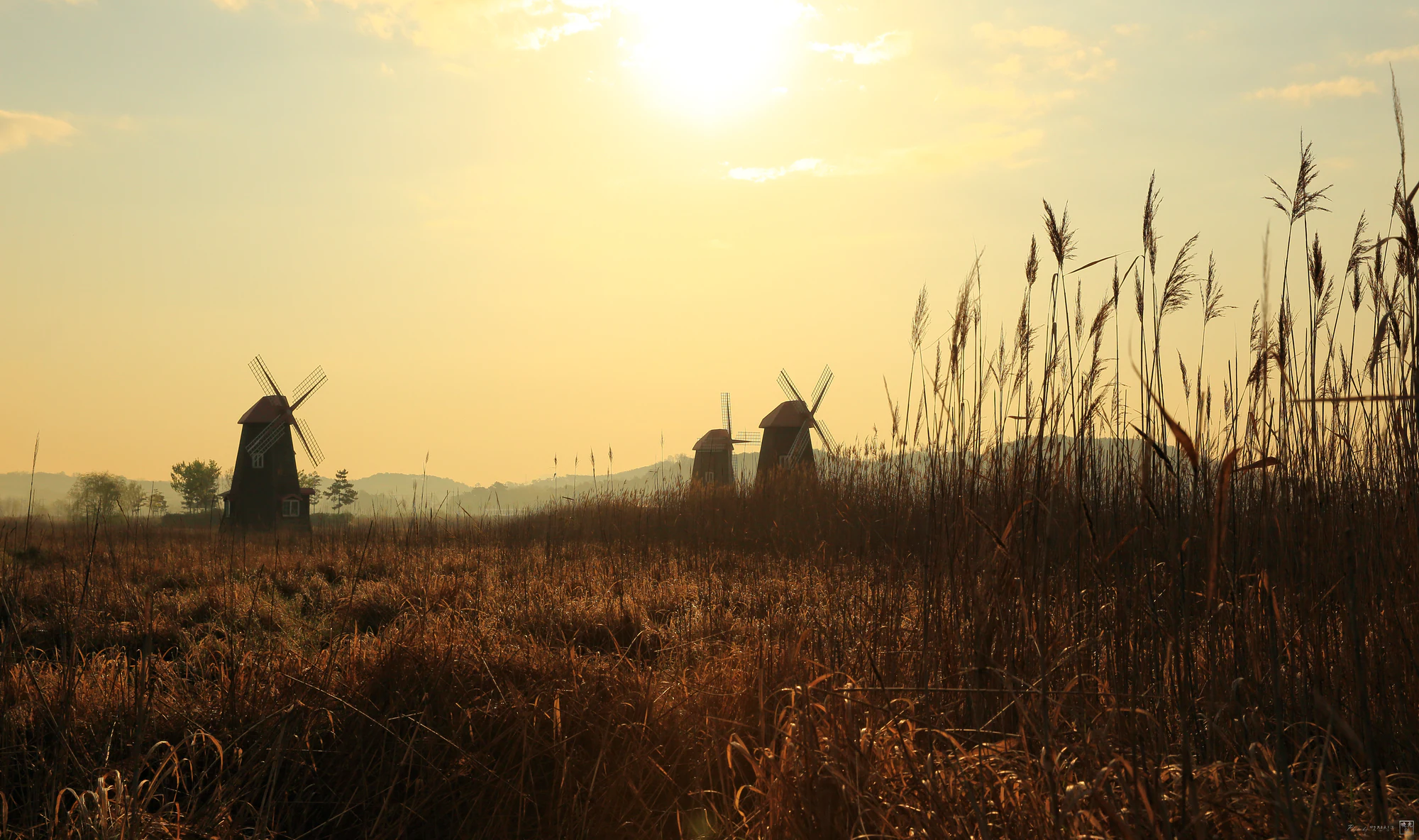
Windmills framed by reeds and open sky

2

Saltpans and the story of solar-evaporated sea salt

3

Wetland interpretation and elevated views at the exhibition hall

4

A quiet stop at a bird-observation point

Three windmills stand behind brown reeds beneath a bright golden sky, with tall reed heads filling the right foreground.

Windmills and reeds in golden light at Sorae Wetland Ecological Park. Historical photograph; capture date unknown.

[Sorae Wetland Ecological Park](https://www.flickr.com/photos/wonderfulfriends/24669101252/) by [jeong gon kim (kimjeonggon)](https://www.flickr.com/photos/wonderfulfriends/), [CC BY 2.0](https://creativecommons.org/licenses/by/2.0/deed.en). Unmodified. · Creative Commons 1 · Creative Commons 2

Walks and routes

Exhibition hall and saltpan paths

Start indoors, then use the park’s signed paths to explore the saltpan and salt-storage landscape. Choose a comfortable turning point and return by the same open paths if you are short of time. This is an easy-to-adapt visit sequence rather than a named or measured circuit.

Exhibition hall and saltpan paths

Reeds, windmills and observation points

Follow signed visitor paths toward the windmill landscape, using open observation decks for wetland views along the way. Pick a few places to stop rather than trying to make a fast circuit. A longer lens is useful when the composition you want lies beyond the path.

Reeds, windmills and observation points

Seochang 2 access deck

Visitors approaching from Seochang 2’s LH Humansia 12 apartment complex can use the connecting wooden deck announced open in December 2025. The city gives its length as 169 metres and width as 2.5 metres, with sloping sections, anti-slip treatment and a rest space.

Seochang 2 access deck

A relaxed half-day rhythm

Arrive with the exhibition opening in mind. Spend your first half-hour or so indoors, choose the saltpan walk next, then decide whether to add the windmills or a longer birdwatching stop. Keep the final part of the outing flexible: a seasonal footbath, a rest, or simply an earlier return. Save a separate allowance for getting to and from the station.

Things to try

Use the exhibition to read the landscape

The first-floor displays introduce saltmarsh habitat, tidal-flat life, restored saltpans and conservation. Upper levels add audiovisual interpretation and views, including a rooftop outlook. Spend more time on the saltmaking section if you want to understand the geometry outdoors; with children, let one interesting animal or object set the pace. Check which upper areas are open when you arrive.

Join a programme if one fits your day

The park links to ecological-education reservations. Check the dates, age range, group size and meeting instructions for the actual session you want. Do not build the whole outing around a hands-on activity until its place and operating conditions are confirmed. Check Sorae programmes.

When the weather changes

If the hall is open and it is safe to reach, spend more of the visit on its wetland and saltmaking displays. In sustained rain, strong wind or lightning, abandon the outdoor plan rather than trying to finish a circuit. A return visit in better weather is more rewarding than a hurried walk across slippery decks.

Wildlife and habitats

Common reed: the tall wetland backdrop

Common reed is a perennial grass of coastal wetlands and river margins, with hollow upright stems and branching flower heads. Its flowers develop in late summer and autumn. At Sorae, reedbeds were among the vegetation studied by the city’s environmental researchers in 2025. Look from the path for the contrast between tall stems and the much lower saltmarsh growth; there is no need to enter the vegetation.

Glasswort: small plants adapted to salt

Sorae’s 2025 vegetation study also recorded the plant known in Korean as tungtungmadi. The national coastal-plant guide describes it as an annual glasswort with fleshy, jointed stems that change from green to red in autumn. Look for low growth in the saltmarsh from the viewing edge. Leave it rooted, and do not taste or collect plants.

Watch the water as well as the reeds

The park is habitat for wild birds including black-faced spoonbills. Birds move between the wetland and neighbouring Sorae channels, so a quiet patch can change as they arrive or leave. Use binoculars to watch feeding or resting behaviour, keep voices low, and move back if birds become alert. The observation points are a good place to spend time even when no rare species appears.

Stories and discoveries

Wetland plants are doing work out of sight

Sorae’s reed and saltmarsh vegetation was the subject of a 2025 study of carbon uptake. It is a useful reminder that a reedbed is living habitat with ecological functions, even when it looks like a simple backdrop. Keep photographs and footsteps on the visitor side of the boundary. Read the city’s wetland research summary.

When to visit

Spring

Make the most of mild walking weather, but carry a layer for a breezy return. A hall-first visit works well when the morning starts cool. Check seasonal facilities independently of the outdoor park.

Summer

Prefer a shorter walk outside the hottest part of the day. Carry your own water, take shade breaks where available and leave exposed decks when thunderstorms or strong winds threaten. The footbath is not a guaranteed wet-weather alternative.

Autumn

Look for reed flower heads and red tones in glasswort. Colour and growth vary with conditions, so enjoy the mix you find rather than planning around a guaranteed peak date. Keep enough time for photographs without delaying your return into darkness.

Winter

Choose a bright, calmer day and a shorter outdoor circuit. Watch for slippery decks and allow time to warm up. The footbath closes for winter maintenance; check the hall’s shorter seasonal arrangements before leaving home.

Getting there and practical advice

Opening, admission and help

Park entry and the exhibition are free. The tourism listing gives outdoor hours as 04:00–23:00. The hall opens at 10:00; plan to enter before 17:00 and check that day’s closing time, particularly in winter. Monday and holiday-related closures apply to the hall. For practical arrangements or a group visit, the park lists 032-435-7076.

The seawater footbath

Beside the exhibition hall, the free footbath normally operates 10:00–17:00 from March to mid-November, with Monday and specified holiday closures. Rain, strong wind or a typhoon can stop operation. July and August use ambient-temperature water. It makes a pleasant optional pause when operating; check the posted instructions before sitting down.

Parking

The published parking tariff is ₩300 for the first 30 minutes, then ₩150 for each additional 15 minutes; the small-car all-day rate is ₩3,000 for stays of five hours or more. Confirm the displayed tariff and charging hours on arrival. Free park admission does not include parking.

Getting to the main visitor area

Use the destination 소래습지생태공원 at 77 Sorae-ro 154beon-gil, Namdong-gu, Incheon. Soraepogu Station is the rail approach named by the park. Check a live journey planner for the walking approach or onward connection from the station, and select the park entrance rather than the port as your destination. Drivers should follow the official parking signs rather than a pin dropped in the wetland.

Planning a visit with mobility needs

The tourism accessibility listing records designated parking, a ramp at the main entrance, a wheelchair-passable manual door, an elevator with space for one wheelchair and toilets inside the exhibition hall. Assistance dogs are listed as permitted. The outdoor deck connection from Seochang includes slopes, so flat scenery should not be taken as a promise of a fully level route.

Sources and useful links

Wildlife you might spot

2

Each card links to a full Explore page with photos, traits, and fun facts.

We are still adding species preview cards for this place.

Snap map for this place

Start with the big picture, then zoom in to explore individual wildlife observations around this place.

Loading map…

Good to know before you go

Bring binoculars if birdwatching is your priority; give feeding and resting birds plenty of space.

Use shoes with reliable grip on decks, especially after rain or frost.

Pack a hat, water and a windproof layer; choose the length of your walk around the weather.

Keep dogs leashed and bring waste bags; give wildlife-viewing areas a wide berth.

Treat salt harvesting and wetland activities as organised programmes, not permission to enter working pans or mudflats.

Frequently asked questions

Ordinary park admission is free. Organised education and hands-on activities have separate arrangements; groups should contact the park before visiting. Use the official booking page to check the current programme rather than assuming salt harvesting is available on arrival.
Stay on the designated visitor paths and decks. An exposed mudflat is not a walking route. Join a wetland activity only when the park is operating it and staff direct access.
No. It is a seasonal facility with its own opening days and weather restrictions. Bring a small towel if you hope to use it, and make it an optional extra.
No. Wild birds move between feeding and resting areas. Enjoy whatever is visible from the observation points without chasing a particular species or leaving the path.

Recent snaps at this place

Recent snaps will appear here as new observations are added.

View all ›

Take the discovery with you

Exploring Sorae Wetland Ecological Park?

Identify the wildlife you spot, learn as you go, and keep a collection of the adventure.

  1. 1Spot it
  2. 2Snap it
  3. 3Keep the discovery
