
Snappit logo
Snappit
Get App
Generic illustration, not a photograph of this venueIllustration
ParkKR

Yeouido Hangang Park

Yeouido works best when you leave a little room in the day.

About

Yeouido works best when you leave a little room in the day. Come for an hour between other plans, or bring a book and let an afternoon unfold around a short walk and a long sit. The central waterfront combines open public space with bike rentals and seasonal attractions, while the river gives the visit its sense of scale. For a relaxed first visit, choose one activity rather than trying to cover the entire sector. [Seoul’s visitor overview](https://english.visitseoul.net/nature/Yeouido%20Hangang%20Park%20/ENP012993) is a useful starting point. Enhance your adventure: download the Snappit app to identify the local species you encounter.

The landscape across the water tells a less obvious story of Seoul’s growth. Bamseom was partly blasted in 1968 to provide material for Yeouido’s development; sediment later accumulated around the remaining islets. It became a Ramsar wetland in 2012. The protected islands are a reminder that the river is both an urban public space and habitat. [Seoul’s Bamseom account](https://hangang.seoul.go.kr/www/contents/874.do?mid=868) explains that history.

What to do here

Begin with a gentle waterfront walk, then pick a lawn or seating area for a break. If you want a more active visit, rent a bike and leave time for the return process. Mulbit Square and the floating Mulbit Stage make worthwhile optional stops; check their own operating information before making either the purpose of your trip.

Seasonal info

Spring brings blossom-season crowds, summer calls for heat and flood awareness, and autumn suits a walk with a warm layer for later. Winter is better approached as a shorter riverside outing. Seasonal water facilities and event schedules change independently of general park access.

Accessibility

Seoul lists accessible paths, toilets and parking. The park’s directions page identifies an elevator near Yeouinaru Station exit 2. Confirm the working elevator, your chosen entrance and an accessible toilet before travelling, especially if a particular attraction is essential to your visit.

Don't miss

1

The Han River waterfront and room for an unhurried picnic

2

Yeouinaru as a convenient central meeting point

3

Mulbit Square’s seasonal fountain and the riverside Mulbit Stage

4

A mainland view toward protected Bamseom, without entering the islands

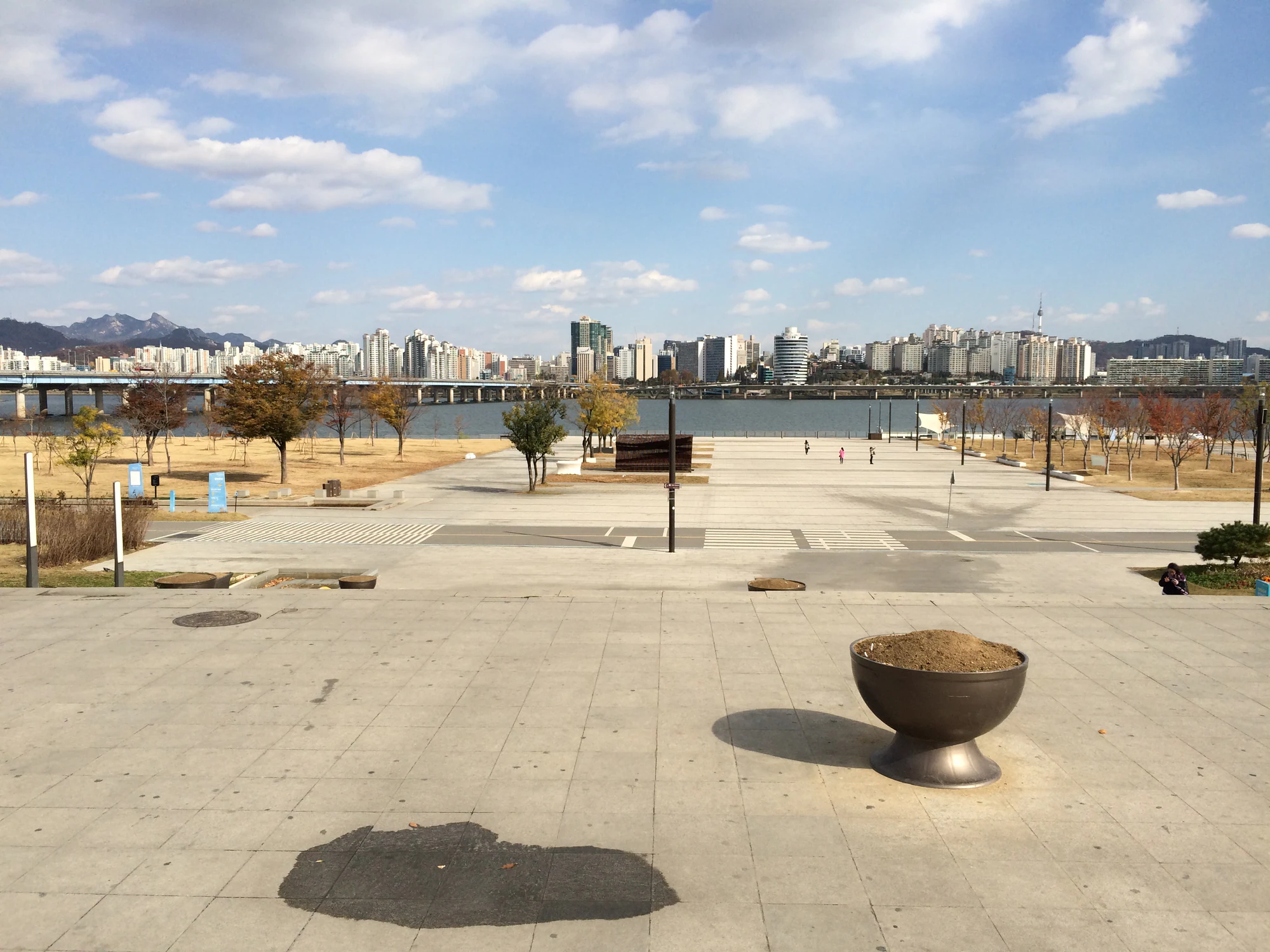
Broad paved steps and a plaza bordered by lawns and trees, with the Han River, a bridge and distant buildings beyond.

A wide riverside view of Yeouido Hangang Park, photographed on 12 November 2014. The historical scene illustrates the open waterfront setting, not today’s facilities or access.

“Yeouido Hangang Park” by Kars Alfrink (Kaeru), CC BY 2.0. Source: https://www.flickr.com/photos/kaeru/15793312965/ . Unmodified original photograph. · Creative Commons 1 · Creative Commons 2

Walks and routes

Find your bearings before choosing a walk

Use the official Yeouido facility map to locate your entrance, toilets and intended stopping place. The operator publishes an 8.4 km park length, which describes the sector, not a signed circular trail or a required walking distance. For a simple outing, follow an open pedestrian path for as long as suits your group, then retrace it. Keep enough time and energy for the return to your arrival point.

Choose the Mulbit area as an optional destination

Mulbit Square lies downstream of the southern end of Mapo Bridge. It is a useful landmark to look up before setting off from the central park, especially if seasonal water play interests you. Check the map rather than following a crowd, and use signed pedestrian crossings around bike routes. Leave enough time to return comfortably rather than extending the walk simply because the waterfront continues.

A compact visit: about one hour

Arrive at Yeouinaru, orient yourself at the park entrance, and choose a short out-and-back on an open pedestrian path. Leave part of the hour for sitting beside the river rather than spending all of it walking. Turn around early if crossings or crowds slow you down. This is the easiest plan when you have another appointment afterward.

An easy afternoon: two to three hours

Start with a short walk while everyone decides where to settle, then take a generous picnic break. Add one optional activity: a bike rental, a visit to the Mulbit area, or a scheduled program. Do not add all three by default. Pack the picnic before moving on, and allow a buffer for queues, returning equipment and finding your group again.

Things to try

Make the picnic the main event

A mat and a small, manageable meal are enough for a good visit. Pick a patch of open lawn away from the circulation routes, and leave the river edge and paths clear. A shade tent is a different matter: it belongs only in an authorized zone, during the permitted season and hours. A mat is the simpler choice if you want to arrive without working around tent rules. Pack up all food scraps as well as packaging.

Rent a bike without rushing the return

The park rental network lists locations at Yeouinaru, Mapo Bridge and Wonhyo Bridge. Ordinary rentals should go back to the same shop; do not assume a one-way return is available. Ask about the bike type, price and return deadline before paying, and retain the receipt. Check brakes and fit, wear a helmet, and use the cycle route rather than threading through people on the lawn. If the waterfront is packed, choose a walk instead. Rental rules and current hours.

Water play and a performance, when operating

Mulbit Square’s fountain is a seasonal facility, normally listed for April–October. The detailed schedule includes cleaning stoppages, and rain or strong wind can stop operation. Bring a change of clothes if water play is your aim, and follow the on-site instructions. Nearby Mulbit Stage is a floating performance venue with a water-drop-inspired form. A stage in view does not mean a show is scheduled: look at the event calendar before choosing your time.

Photograph the waterfront without blocking it

Try a wider composition that includes the river and space around it, then take a closer detail from a safe, stationary position. Avoid backing into a cycle lane while framing a shot. If the park is busy, a quieter moment is often more useful than trying to claim the most crowded viewpoint. Organized or commercial filming should check the city’s filming application page; drone flights require separate authorization checks.

When the riverfront is the wrong plan

For light rain, decide whether a shorter visit is worthwhile and use firm public paths rather than settling on wet grass. For heavy rain, thunder, high water or an official closure, postpone the park. Choose an indoor stop in the city instead of waiting beneath a bridge or trying another riverside entrance. Recheck the Hangang official notices before returning.

Wildlife and habitats

Watch Bamseom’s birds from the mainland

Bring binoculars if the view toward Bamseom is part of your plan. Seoul’s reserve account describes wintering cormorants and ducks, and herons using the islands in summer. Those records concern Bamseom, not a guaranteed sighting beside your picnic spot. Keep your distance, stay on public paths and do not try to reach the islands. The Ecology Experience Center provides another way to understand the habitat when it is open; check arrangements before adding it to a short walk.

Stories and discoveries

A building that moves with the river

Mulbit Stage is designed as a floating structure, rather than a conventional land-based theater. Its form was inspired by a drop of water. Looking at it from the bank is a small reminder that structures beside this river have to respond to changing water levels.

When to visit

Spring: blossoms need a separate crowd plan

The spring flower festival uses Yeouiseo-ro and adjoining riverside areas near the National Assembly. It is not simply a display beside every Yeouinaru entrance. Look up the current festival footprint and transport controls if blossoms are your main purpose, and avoid assuming a published festival date guarantees peak flowering. A quieter non-festival walk and a full blossom-day outing call for different expectations.

Summer: make heat and the river your first checks

Keep the walking portion short in hot weather and bring drinking water and sun protection. For thunderstorms, rising water or a flood restriction, leave the low riverside area and follow official directions; a bridge is not a substitute for a safe indoor plan. The swimming pool is a separate seasonal attraction. Its 2026 season ended on 30 August, so plan an autumn visit around the waterfront rather than swimming.

Autumn: leave time to sit

A walk and a picnic are a flexible base for an autumn visit. In 2026 the city’s outdoor-library program is scheduled at Multiplaza on Saturdays from 12 September to 31 October, with a Chuseok-week exception. Check the current program notice before making a special trip, and keep a simple picnic plan in reserve if a program changes.

Winter: shorten the walk and keep the extras optional

Choose a comfortable turnaround time before you set off, and favor a short outing if the wind makes sitting unpleasant. Bring gloves for binoculars or photography. Do not assume fountains, rental shops or a seasonal attraction follow their warm-weather schedule. A good winter visit can simply be a brief walk followed by a warm break elsewhere.

Getting there and practical advice

Toilets, supplies and water

The official facility map lists toilets, drinking fountains, convenience stores and delivery zones. Find the facilities near your chosen patch of riverfront rather than assuming every listed service is immediately beside you. Some stores are shown as only partly operating. Carry water to start with and agree where any food delivery will be collected; a designated delivery zone is more practical than an improvised landmark.

A shower after a run

The information center has a free shower facility with its own access procedure. The current notice requires Naver-app QR authentication and asks visitors to bring their own towel and toiletries. Check that you can use the access method before relying on it, particularly if you are travelling without a suitable account. Cleaning breaks interrupt the listed daily hours. Shower details and access instructions.

What costs extra

General park entry is free. Budget separately for parking, equipment rental, a cruise or a paid seasonal attraction. Compare the actual service you want rather than treating a general “free admission” listing as a promise about every activity. Book commercial river activities with the relevant operator and check cancellation and weather arrangements.

Arrive at Yeouinaru for the central waterfront

Take Seoul Subway Line 5 to Yeouinaru. The park operator identifies exits 2 and 3 for the central area, with an elevator near exit 2. Use the signed elevator route if you need it rather than assuming the numbered stair exit is accessible. Yeouido Station is a different stop and involves a longer approach. Check official directions and live transport information before leaving.

Leave the car for another day if you can

The operator warns of weekend, holiday and event congestion. If you drive, use the official parking page to choose the appropriate numbered car park and check current fees and hours. A park address alone can send you to the wrong access point for your intended stop. Avoid making a time-critical arrival depend on finding a space.

Make a different plan for major event days

For fireworks, festivals or another major event, check the event-specific transport plan before setting out. Crowd management can alter road access, bike use and station entry, including whether trains stop at Yeouinaru. Choose a clear meeting point and an alternative way home, and follow staff directions if the usual entrance is closed.

Plan around the entrance and toilet you will actually use

Before travel, ask the information center about your intended arrival point, working lifts, toilet location and any diversions. No gradient or path-width measurements are available here, so check the particular connection you need rather than relying on a park-wide accessibility label. For an easier first visit, keep the plan close to your confirmed entrance and leave optional attractions flexible. The park contact is +82-2-3780-0561.

Sources and useful links

Wildlife you might spot

0

Each card links to a full Explore page with photos, traits, and fun facts.

We are still adding species preview cards for this place.

Snap map for this place

Start with the big picture, then zoom in to explore individual wildlife observations around this place.

Loading map…

Good to know before you go

Save the exact park name, 여의도한강공원, in your map app before leaving.

Choose a meeting point by a named entrance or facility; “the river” is too vague for a group.

Bring a picnic mat, drinking water and a bag for your rubbish.

Keep pedestrian space and cycle lanes clear when stopping for photographs.

Keep dogs on a lead and clean up after them.

Pack a layer for a longer evening visit, even if you arrive in warm sunshine.

Frequently asked questions

No. This guide covers Yeouido Hangang Park on the Han River, with the park information center at 330 Yeouidong-ro. Inland Yeouido Park is a separate destination at 68 Yeouigongwon-ro. Check the full name when choosing directions.
Seoul’s tourism listing gives free admission and 24-hour, year-round general access. Rentals, parking, pools and other services have separate charges or hours. Flood controls and event restrictions can override normal access.
Ordinary park access does not include entry to Bamseom. View the protected islands from the mainland or consider the Bamseom Ecology Experience Center on Mapo Bridge after checking its opening arrangements.
Do not treat the riverbank as a swimming beach. Use only an officially operating designated swimming facility. Fishing is prohibited throughout Yeouido Hangang Park.
A simple visit to ordinary public lawn space is different from reserving an event area or installing a shade tent. Choose a spot that is open for public use, respect temporary barriers, and check the designated-zone rules before bringing a tent.

Recent snaps at this place

Recent snaps will appear here as new observations are added.

View all ›

Take the discovery with you

Exploring Yeouido Hangang Park?

Identify the wildlife you spot, learn as you go, and keep a collection of the adventure.

  1. 1Spot it
  2. 2Snap it
  3. 3Keep the discovery
