Snappit logo
Snappit
Get App
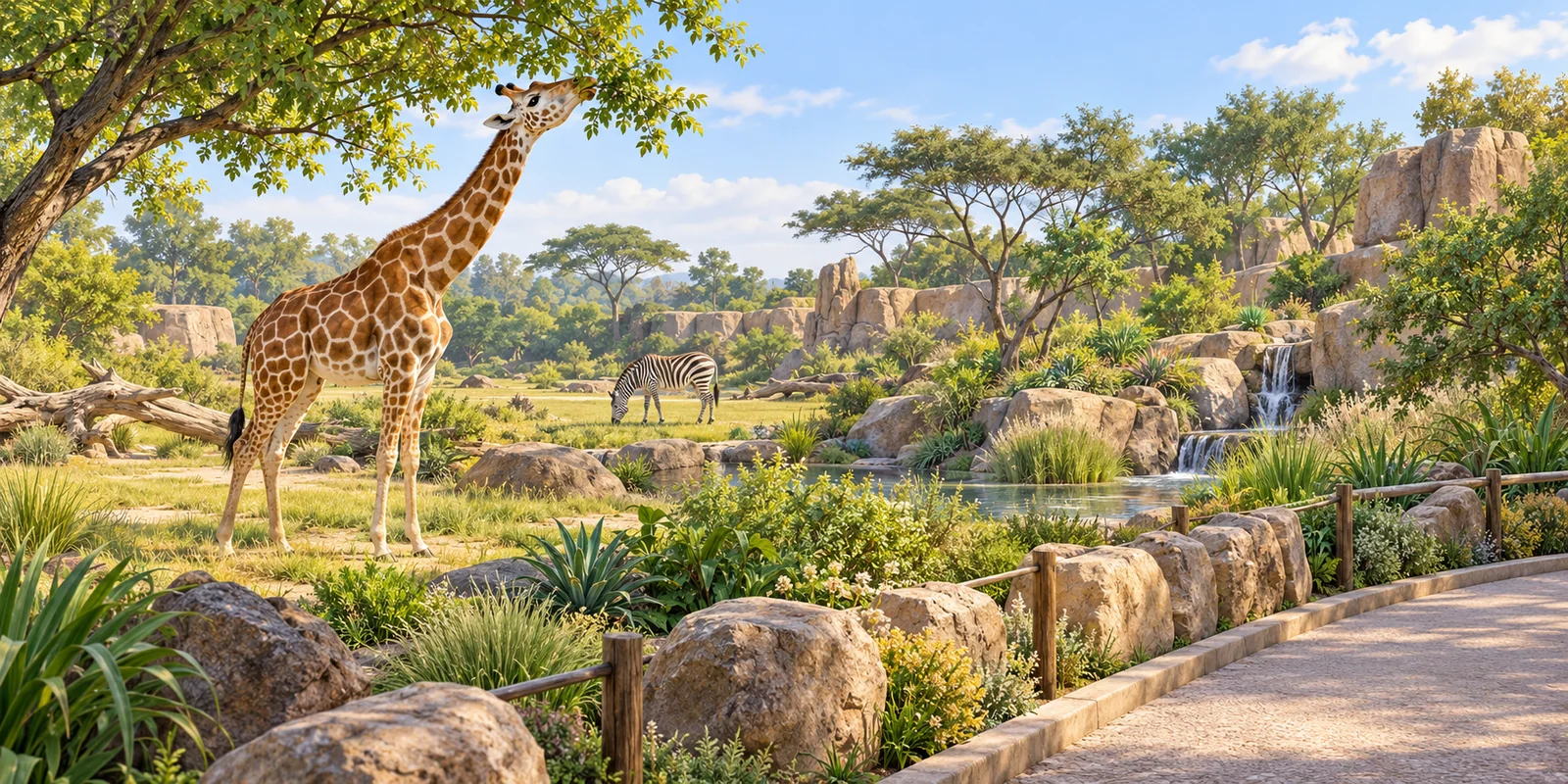
Generic illustration, not a photograph of this venueIllustration
ZooNordrhein-Westfalen, Germany

Zoo Krefeld

Visit Zoo Krefeld for close-up animal watching that ranges from a humid rainforest to a penguin pool with an underwater window.

About

Visit Zoo Krefeld for close-up animal watching that ranges from a humid rainforest to a penguin pool with an underwater window. The landscaped grounds invite a leisurely wander, but it helps to choose a few favourites first. Pick up the zoo plan and check the day’s notices, then start with the Regenwaldhaus and PinguinPool near the entrance side of the park, or head towards the apes if they are your priority.

The MenschenaffenWald is part of the developing ArtenschutzZentrum AffenPark. Here, chimpanzees Bally and Limbo have tall climbing spaces, planted outdoor areas and a purpose-built termite mound where they can use sticks to retrieve food. Give them time: an animal quietly choosing a perch can be as interesting as one climbing. Continue to the GorillaGarten, where a viewing platform overlooks the outdoor enclosure and large windows offer a view into the GorillaVilla.

Across the zoo, the AfrikaSavanne and neighbouring rhinoceros enclosures reward another patient stop. The ErdmännchenLodge lets you watch meerkats through large windows and look across towards the larger African animals from its terrace. In the Regenwaldhaus, follow the planting-lined path past leafcutter ants and through the rocky tunnel, then look up for sloths and white-faced sakis. These animals remain part of the captive collection even when they move freely around the house.

The KänguruOutback, opened in July 2026, adds a different landscape: red rocks, eucalyptus planting and a farmhouse-style animal building. Look for the grey kangaroos from the different viewing sides and the Friedemann View viewpoint. Emus and yellow-footed rock-wallabies are planned arrivals, so do not build your visit around seeing them. Don't forget to bring the Snappit nature identification app along to scan local species.

Recent additions explain much of the zoo’s shape: the Regenwaldhaus opened in 1998, the GorillaGarten in 2012 and the PinguinPool in 2014. After the devastating fire in the old ape house on New Year’s Eve 2019, the MenschenaffenWald opened in October 2025 as the first stage of the new AffenPark. Further stages, including an orangutan house, are still being developed.

What to do here

Choose one feeding as a meeting point for your day: gorillas are usually fed at about 14:30 and Humboldt penguins at about 15:15. Confirm the programme on arrival. Children can bring a printed zoo rally for ages 5–7 or 8–16, then take a playground break. If the Forscherhaus is open, look into its microscopy corner; it has separate afternoon opening hours. Leave time to revisit one enclosure rather than trying to see every animal once.

Seasonal info

The zoo normally opens at 09: 00. From March to October it closes at 19:00, but the animal houses and last admission finish at 17:30. From November to February the zoo closes at 17:00, with houses and last admission at 16:30. It is closed on 25 December; 24 and 31 December have earlier closing. The SchmetterlingsDschungel usually runs from late March to late October; check its exact season dates before travelling.

Accessibility

The outing combines outdoor paths, indoor houses and raised viewing places. If steps or gradients are a concern, ask the zoo to help plan a suitable circuit before your visit. Wheelchairs can be borrowed at the ticket office; check availability and bring cash for the deposit. The zoo plan marks accessible toilets at the entrance, by the sea-lion area, near the tree kangaroos and by the GorillaGarten. Bookable tours for blind and partially sighted visitors use tactile objects, scents and recorded animal sounds.

Don't miss

1

Apes and tropical houses

Give a 3–4-hour visit a few main stops, including MenschenaffenWald, GorillaGarten and the Regenwaldhaus, with time to watch quietly.

2

Penguins above and below water

Explore the walk-through PinguinPool and its underwater window; confirm the usual 15:15 feeding when you arrive.

3

Plan the indoor stops early enough

In March–October, animal houses close at 17:30 even though the outdoor zoo stays open until 19:00. The butterfly house is seasonal.

4

New Outback, changing collection

Grey kangaroos occupy the KänguruOutback. Emus, yellow-footed rock-wallabies and the future orangutan facilities are not current visit promises.

Walks and routes

A shorter rainforest and penguin visit

Start with the Regenwaldhaus, add the seasonal SchmetterlingsDschungel if open, then spend time at the PinguinPool. Finish with nearby animals or a Forscherhaus visit during its opening hours. This makes a manageable selection for a 1½–2-hour outing without crossing the whole park.

Ask staff for suitable connecting paths if you need step-free access.

A longer ape and savannah day

Make MenschenaffenWald and GorillaGarten your main destination, then use the map to work in the bird house, AfrikaSavanne and ErdmännchenLodge. Add the Outback and big cats if everyone still has energy. Allow 4–5 hours with breaks, keeping any chosen feeding time in mind.

Ask staff for suitable connecting paths if you need step-free access.

Things to try

Look at a life cycle

At the butterfly house, spend time at the breeding displays as well as following the flying adults. Ask children to spot stages they recognise, such as caterpillar, pupa and butterfly. Watch without touching, and let the displays rather than a checklist set the pace.

One enclosure, three details

Choose one animal and each notice a different detail: a way of moving, a resting place or how it takes food. Compare the observations before taking a photograph. The apes and the underwater penguin view offer particularly different ways to try this.

Try a quieter indoor stop

The Vogelhaus has benches among tropical planting and birds to listen for as well as look at. Give it a slower visit during a shower. The Outback’s farmhouse veranda also offers a view into the indoor animal area, though the walk there remains outdoors.

Wildlife and habitats

Look across the planted outdoor enclosure and into the GorillaVilla. Watch how individuals rest, eat or keep near one another. The gorillas here are western lowland gorillas; give a hidden or sleeping animal time rather than tapping the glass.

Look high into the climbing space as well as along the ground. Bally and Limbo can use sticks at the artificial termite mound, but there is no scheduled performance to expect. A quiet view of a hand gripping a branch can make a rewarding photograph.

Scan both the open ground and shaded resting places. Choose a viewing platform and watch without trying to get a reaction. The separate rhinoceros enclosures reflect the animals’ largely solitary lives; you need not see the animals together.

Take a moment to follow the stripe pattern over a shoulder, flank and leg rather than trying only for a full-body image. The zebra area is separate from the broad savannah viewing scene; use the current signs to find it.

Compare the views through the large windows and from the terrace, including the indoor enclosure. Watch for changes of activity across the group, from digging to resting. Keep reflections and other visitors in mind when choosing a camera angle.

Pause beside the visitor path and look among the branches. Sakis may change position quickly, so take time to find them again instead of chasing a photograph through the house. Keep the animals’ routes clear and never reach towards them.

After watching the penguins underwater, look up around the shared exhibit for the terns. A settled bird offers a chance to pick out its pale facial feathers. Stay within the visitor area even when a bird seems close.

Look through the whole enclosure, including sheltered resting spots, before moving on. If a cat is visible, give its tail, paws or face a closer look. Coming back later is better than making noise to wake it.

On a warm day, check the shaded parts of the enclosure and the water. The capybaras share this part of the zoo with other South American herbivores, so use the signs to identify what you can see before recording a photograph.

The tree kangaroos here are Goodfellow’s tree kangaroos, separate from the grey kangaroos in the Outback. Look patiently through their enclosure and compare the animals you see in the two areas. Resting and retreating are part of their day too.

Stories and discoveries

Tree kangaroos have a Krefeld connection

Krefeld coordinates the European conservation-breeding programme for Goodfellow’s tree kangaroo. Their wild home is New Guinea; the grey kangaroos in the Outback represent a different branch of the kangaroo family.

Getting there and practical advice

Make the breaks part of the plan

The map marks several playgrounds and a baby-changing room near the tree-kangaroo area. There are toilets around the grounds, so check the nearest one before a long animal-watching stop. The Forscherhaus is close to the entrance and has its own afternoon schedule.

Sources and useful links

Wildlife you might spot

10

Each card links to a full Explore page with photos, traits, and fun facts.

Snap map for this place

Start with the big picture, then zoom in to explore individual wildlife observations around this place.

Loading map…

Good to know before you go

Finding the entrance

For satnav, use Violstraße 93, 47800 Krefeld. Free parking is available at and around the zoo. The postal address is Uerdinger Straße 377.

By tram

From Krefeld Hauptbahnhof take 042 or 043 to Grotenburg/Zoo; from Uerdingen station use 043. Check the day’s connection before setting out.

Tickets and small children

Compare the family-ticket options; under-threes enter free. Bring any concession documents. Handcarts are hired at the ticket office, with a cash deposit.

Food and breaks

The Grotenburgschlösschen has a restaurant and terrace overlooking the flamingos. Other snack points and playgrounds give you places to pause; check which catering outlets are open.

Bringing a dog

Dogs need a ticket and a short lead. They cannot enter the animal houses, including the rainforest, bird and butterfly houses. Plan how your group will take turns.

Photographs

Turn off flash in the houses and at the GorillaVilla. Online photos must credit Zoo Krefeld; commercial use needs prior written permission.

Give animals space

Stay on visitor paths, do not feed or touch animals, and leave butterflies alone. Avoid tapping windows or trying to draw an animal out of its retreat.

Follow the current signs

Older plans still show the baboon enclosure and an unfinished Outback. Baboon keeping is ending following the October 2026 transfer announcement; the Outback is already open.

Frequently asked questions

The Regenwaldhaus, Vogelhaus and indoor ape viewing offer shelter, but you still walk outdoors between them. Bring waterproofs. The butterfly house is a seasonal extra, and dogs must stay outside the animal houses.
The orangutan facilities belong to a later phase of the AffenPark. Plan around the open MenschenaffenWald and GorillaGarten instead, and check the zoo’s project updates before a future visit.
The animals featured in this guide belong to the zoo collection. Free-moving rainforest animals, butterflies and birds in walk-through exhibits are still captive. Keep that distinction when recording your photographs.

Recent snaps at this place

Recent snaps will appear here as new observations are added.

View all ›

Take the discovery with you

Exploring Zoo Krefeld?

Identify the wildlife you spot, learn as you go, and keep a collection of the adventure.

  1. 1Spot it
  2. 2Snap it
  3. 3Keep the discovery