
Snappit logo
Snappit
Get App
Generic illustration, not a photograph of this venueIllustration
ParkChubu, Japan

Alps Azumino National Government Park

Start with one district and give it time.

About

Start with one district and give it time. Alps Azumino National Government Park has two separate locations: Horigane–Hotaka, with gardens and an agricultural landscape, and Omachi–Matsukawa, with forest recreation. This guide centres on Horigane–Hotaka. It is a national-government recreation park at the foot of the mountains; a visit here is a different outing from hiking in Chubusangaku National Park.

For a first visit, head to the Central Gate and the Den-en Culture Zone. Water steps down through a series of ponds, flower beds change with the season, and the terraces frame Mount Jōnen when the weather clears. There is enough variety to keep a slow walk interesting: let children choose a flower to photograph, pause by the water, then spread out a picnic rather than trying to cover every gate.

Azumino School gives the scenery a little more meaning. Its science displays introduce local nature, while the social-studies room recreates everyday life around the late 1950s and early 1960s. Crafts and food experiences add a hands-on element, but check the programme before building the day around one.

If rice terraces and rural landscapes are your main interest, choose the Satoyama Culture Zone for another part of the day or a return visit. Its restored fields and traditional features show how farming and wildlife habitat can share the same landscape. Omachi–Matsukawa is another district altogether, so arrange a separate transfer if you want its woodland activities too. Take the ultimate field guide with you: use the Snappit app to identify birds, plants, and animals on your trip.

The park first opened in July 2004. Its Horigane–Hotaka landscape was developed to conserve and recreate Azumino’s rural scenery, with space to learn about local nature and culture. The Satoyama Culture Zone was recognised as a Ministry of the Environment Nature Coexistence Site on 30 September 2025, reflecting continuing habitat work by the park and local groups.

What to do here

Combine the observation terrace, seasonal flower beds and pond paths with Azumino School. Add a picnic or an age-appropriate play stop, then decide whether you still have time and energy for the Satoyama Zone. Choose Omachi–Matsukawa on a separate outing if forest recreation is the priority.

Seasonal info

The Satoyama Culture Zone closes from 1 November to the end of February. Summer water play is limited to designated areas and announced dates; other ponds and channels are for looking at. Winter illumination has its own calendar and opening arrangements. Check the current notice before travelling.

Accessibility

The Horigane–Hotaka Guide Center lends wheelchairs, strollers, rollators and walking sticks, subject to availability. Ask staff for a route suited to your needs: the terraces and wider park have changes in level, and the availability of a wheelchair does not make every path suitable. Confirm toilet locations and access to the particular exhibits you want to use.

Don't miss

1

Mount Jōnen framed by water and gardens on a clear day

2

Azumino School’s mix of natural history, crafts and rural life

3

An unhurried picnic beside the seasonal garden landscape

4

Rice terraces and conservation stories in the Satoyama Culture Zone

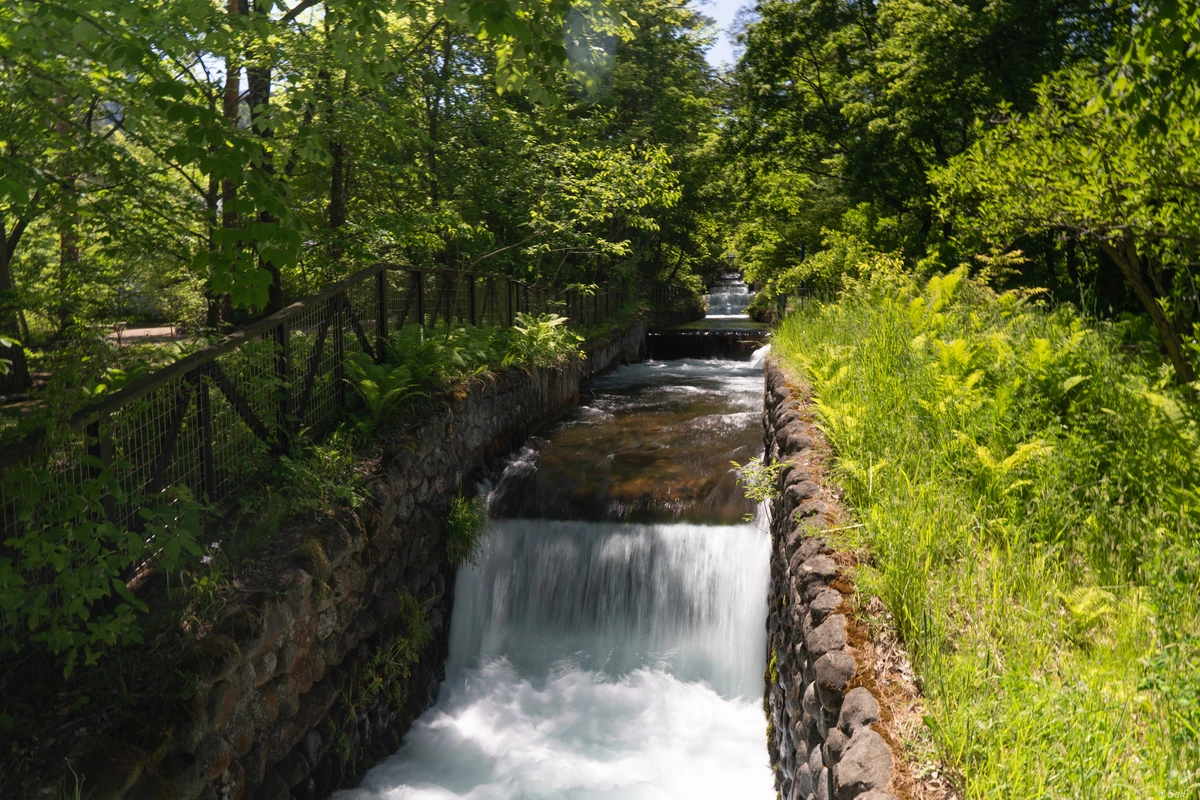
Water cascades over low steps in a stone-lined channel surrounded by green trees; a fence separates it from the path.

A stone-lined watercourse in the Horigane–Hotaka district of Alps Azumino National Government Park, photographed in May 2019.

Alps Azumino National Government Park 05 - May 25, 2019.jpg — Sei F, CC BY-SA 2.0 (https://creativecommons.org/licenses/by-sa/2.0/). Source: https://commons.wikimedia.org/wiki/File:Alps_Azumino_National_Government_Park_05_-_May_25,_2019.jpg. Proportional reduction to at most 1200 pixels wide without upscaling; encoded as WebP quality 92, method 6. No crop, retouching, added text or colour correction. EXIF omitted. · Creative Commons

Walks and routes

An easy-to-shorten garden and pond visit

Begin at the Central Gate Guide Center and pick up the district map. Make the observation terrace, the ponds and the current flower display your outdoor stops, then spend time in Azumino School before returning to the same gate. Choose the paths on the day with the help of signs and staff; you can skip the farther garden stops if little legs need a break.

Ask the Guide Center to mark suitable paths and level changes before setting out. Keep the visit close to the facilities if you need frequent rests.


An easy-to-shorten garden and pond visit

A relaxed half-day at Horigane–Hotaka

Start with the gardens and terrace while everyone is fresh. Follow with Azumino School, then lunch and one play stop. If you have booked a workshop, make its start time the fixed point and fit the walk around it. Save the second district for another day instead of spending this one in transfers.

Things to try

Make a tiny flower-photo collection

Choose three different colours or flower shapes from the paths. In autumn, compare the simple and fuller cosmos blooms rather than stepping into the beds for a closer picture.

Try a craft at Azumino School

Check the day’s programme for a natural-material craft. Some activities use timed tickets or advance booking, and school groups can reserve the art room. In October 2026, ordinary soba-making is not offered on 17–18 October because a separate galette programme takes its place.

Let the children choose a play stop

The Marshmallow Dome is for elementary-school children and younger, with separate areas for school-age children and preschoolers. Follow the posted age rules and staff instructions; weather can stop play even during the operating season.

Explore the rice-terrace landscape

In the Satoyama Culture Zone, rice terraces and a waterwheel give you a different subject from the formal flower displays. Ask about seasonal rural-life activities if you want to take part, and remember that this zone closes throughout November–February.

Spend more time in Azumino School

Use the science and social-history displays as the centre of a shorter visit, with a craft if there is space in the programme. Check room reservations and current exhibit notices before travelling; outdoor play can close in bad weather.

Wildlife and habitats

Garden cosmos

Compare the different flower shapes in the autumn beds from the path. These are cultivated displays; the season’s planting and peak change from year to year.

White clover

Look for the small pale flower heads and three-part leaves in grassy areas. Park staff have recorded it here alongside red clover; leave flowers in place and watch visiting insects instead.

Red clover

Compare its pink-purple flower heads with white clover when both are flowering. A small patch can be a more interesting watching spot than a whole flower bed if insects are visiting.

Small copper

Watch for a small orange butterfly during a quiet flower-side pause. The park has recorded small copper here; photograph from where you are rather than chasing it through the planting.

Take a closer look, gently

Flowers and insects change with the season, so treat these as things to notice rather than a checklist to complete. Stay on permitted paths, leave plants and animals untouched, and keep well back from wildlife.

Stories and discoveries

Two rivers helped shape two different districts

Horigane–Hotaka occupies a rural alluvial-fan landscape formed by the Karasugawa, while Omachi–Matsukawa occupies a wooded fan formed by the Chigawa. That contrast helps explain why the two districts feel so different.

A butterfly worth protecting

The park works to conserve the blue butterfly called ōruri-shijimi and its host plant, kurara. Habitat management and organised rearing-and-release activities both form part of that work. Learn about it through the park’s interpretation or a seasonal guided programme, and leave all butterflies and protected planting untouched.

When to visit

Spring

Use the latest flower report to time a tulip visit. The Satoyama Zone normally reopens in March, though outdoor play and individual activities can restart on different dates.

Summer

Bring sun protection and a change of clothes if a designated water-play area is open. Put indoor exhibits into the hottest or wettest part of the day, and follow any weather-related closures.

Autumn

Cosmos is a good reason to linger in the Den-en gardens. The 2026 display is advertised for late September to late October, but weather affects its condition. Bring a layer for a slower afternoon and check the restricted bus dates before setting off.

Winter

Keep plans in the open parts of the Den-en Culture Zone and check the day’s opening time. Satoyama is closed from November through February. An illumination visit needs the current event calendar, warm clothes and a planned journey home.

Getting there and practical advice

Central Gate Guide Center

Make this your first stop for the park map, current conditions and advice about a shorter walk. Wheelchairs and other mobility aids are lent here, and the baby rest room is inside the building.

Food and a proper pause

Bring a picnic if you want a flexible lunch stop. There is also a restaurant in the Den-en Culture Zone; check its hours on arrival before leaving lunch until late.

Check the school before your visit

The yamame fish display was suspended on 18 September 2026 because of high water temperatures, and the notice was still in place on 16 October. Check the latest update if that display is important to you. Art-room group bookings can also affect drop-in craft time.

By car

Aim for Horigane–Hotaka Central Gate. The park gives about 20 minutes from Azumino Interchange on the Nagano Expressway, depending on traffic. Parking is free; confirm the correct gate before setting your navigation.

By train and taxi

Toyoshina Station on the JR Ōito Line is a practical rail arrival point. Allow about 15 minutes by taxi from there to Horigane–Hotaka, depending on traffic. Arrange the return pickup as well, especially if you are travelling with children or mobility equipment.

The park bus has a much shorter season

For 2026, the park-serving Enjoy Bus Red Line from Hotaka Station runs only on 2–6 May, 25 July–23 August and 19–23 September. The wider Enjoy Bus season lasts until 25 October, but that does not mean the park route is running. Check the dated calendar and the return service before choosing the bus; for an October 2026 visit, plan another transfer.

Plan around your own mobility needs

Ask for a suitable route at the Guide Center and confirm the closest usable toilets, resting places and entrance to each building. Free wheelchair and stroller loans are useful, but check availability before relying on one. Ask staff which levels of the observation terrace you can reach comfortably.

Sources and useful links

Wildlife you might spot

4

Each card links to a full Explore page with photos, traits, and fun facts.

Snap map for this place

Start with the big picture, then zoom in to explore individual wildlife observations around this place.

Loading map…

Good to know before you go

Set your destination to Horigane–Hotaka Central Gate (中央口), not simply the park name: the two districts have different entrances and access routes.

Check the park-serving bus calendar separately from the overall Enjoy Bus season. Its Red Line does not run throughout that season.

Pack lunch if you want freedom to stop when the children are hungry; packed lunches are allowed.

Book food experiences ahead and check art-room group reservations before relying on a workshop.

Keep children close beside ponds and flowing channels. Enter water only where staff have opened a designated play area.

Leave plants and insects where they are, and never feed wildlife. Stay outside fenced conservation planting.

Check local bear information and gate notices before a wooded walk. Follow staff restrictions and carry out all food scraps.

If you leave and plan to return that day, collect a re-entry ticket at the gate.

Frequently asked questions

Yes. Horigane–Hotaka and Omachi–Matsukawa are two separate districts of the same park. Plan transport between them; they are not neighbouring sections of a single walking circuit.
As checked on 16 October 2026, a one-day ticket costs ¥450 for adults aged 15 and over and ¥210 for visitors aged 65 and over. Junior-high-school pupils and younger enter free. Parking is free. Check the official fee page for concessions, proof requirements and any changes.
Ordinary Horigane–Hotaka hours are 9:30–17:00 from March through October and 9:30–16:00 from November through February. Mondays are normally closed, with holiday and specified school-break exceptions; 31 December and 1 January are closed. Illumination periods can change the opening pattern, so check the calendar for your date.
Take the JR Ōito Line to the area, then arrange the final transfer. Toyoshina Station plus a taxi is a useful option. The park-serving Enjoy Bus from Hotaka Station runs on restricted dates, so do not assume that an autumn weekend has a park bus.
Only in the designated water-play area when it is officially open. Opening dates vary each summer, and other ponds, watercourses and the river should not be treated as paddling areas.
Yes, for exhibits and any available indoor programme. Check room bookings first. As of 16 October 2026, the yamame fish display remains suspended under the park’s 18 September notice; other exhibits may also change.

Recent snaps at this place

Recent snaps will appear here as new observations are added.

View all ›

Take the discovery with you

Exploring Alps Azumino National Government Park?

Identify the wildlife you spot, learn as you go, and keep a collection of the adventure.

  1. 1Spot it
  2. 2Snap it
  3. 3Keep the discovery




