
Snappit logo
Snappit
Get App
Generic illustration, not a photograph of this venueIllustration
ParkBR

Caverna do Diabo State Park

Caverna do Diabo offers a striking change of scale: an ordinary walk through green forest leads into halls where rock columns and hanging formations dominate the view.

About

Caverna do Diabo offers a striking change of scale: an ordinary walk through green forest leads into halls where rock columns and hanging formations dominate the view. The dramatic name means Devil’s Cave, but the usual visit is an interpreted show-cave outing, with a monitor leading the group along installed visitor infrastructure. It is a good choice if you want to understand a cave rather than tackle a technical expedition.

Also called Gruta da Tapagem, the cave is only the best-known feature of a much larger protected landscape. The state park covers about 40,220 hectares across Eldorado, Iporanga, Cajati and Barra do Turvo. Its visitor gateway is near Eldorado. Forest trails and watercourses deserve attention too, especially if you leave enough time to look around instead of rushing from the parking area to the cave and straight back out.

The crucial distinction is between the authorized traditional route and the cave system beyond it. The state visitor guide describes roughly 600 metres of public cave passage within a system more than six kilometres long. A ticket does not authorize wandering into the remaining galleries. Adventure outings, where available, have their own arrangements, equipment, limits and weather decisions; they are not optional detours from the family visit. Wondering what that bird or insect is? Find out on your visit using the Snappit nature app.

What to do here

Make the traditional monitored cave outing the anchor of your first visit. Afterwards, choose the short Araçá waterfall walk if open and suitable, or devote a separate block of time to the more demanding Mirante do Governador. Ask your monitor to explain how the underground river and the formations tell different parts of the cave’s story.

Seasonal info

The forest setting is humid, and the cave is not an all-weather guarantee. Think in terms of the forecast, river conditions and the outing you have booked, rather than a single universally best month. Holiday and school-vacation visits benefit from advance arrangements.

Accessibility

Visitor infrastructure does not make the cave step-free. The official park listing describes accessibility as partial. Discuss the actual stairs, walking surfaces, transfers and available assistance with the operator before committing to a trip.

Don't miss

1

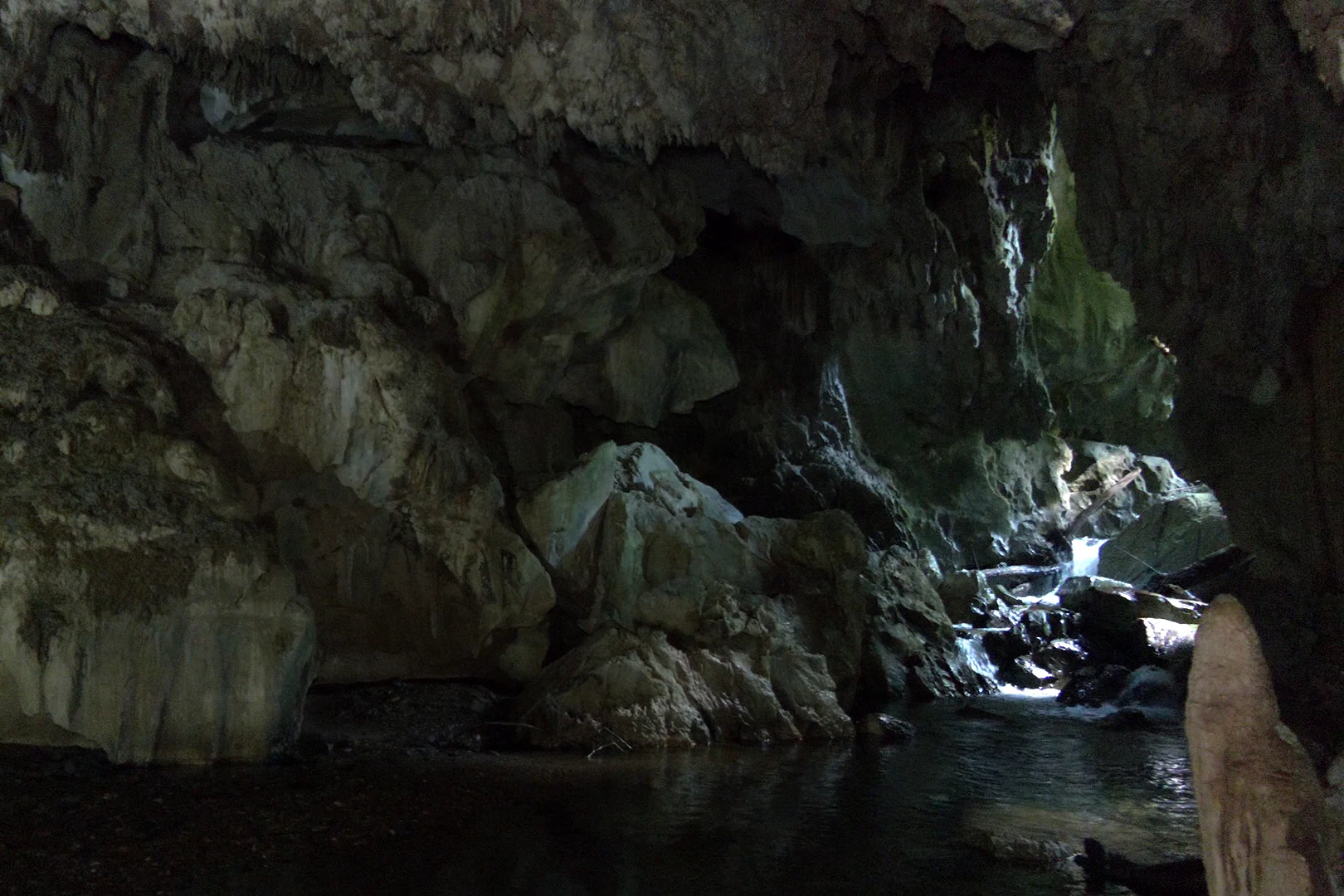
Large cave halls and calcitic formations on the monitored route.

2

An easy-rated forest walk towards the Araçá falls.

3

The contrast between enclosed cave scenery and an open Vale do Ribeira panorama.

Dark cave interior with textured rock walls and ceiling, water in the foreground and a brighter opening beyond rocks on the right.

Interior scenery at Caverna do Diabo, recorded by TV Alesp. Source-published archival still; exact capture date and chamber are unverified.

TV Alesp. Published 16 July 2026. Creative Commons Attribution 4.0 International. No local modifications. · Creative Commons

Walks and routes

Traditional cave visit: start here

The state trail page gives a typical 1–1½ hours and describes stairs, handrails, walkways and artificial lighting. AMAMEL describes the outing as 1.2 km return. That total should not be confused with the approximately 600 m public cave section or the cave’s much greater mapped length.


Araçá: a gentler outdoor contrast

Near the cave approach, this signed forest path reaches a sequence of three waterfalls. The official directory rates it easy and self-guided, with a distance of up to 1 km and a walking estimate of up to 30 minutes. Photo stops and rest time are extra.

Mirante do Governador: earn the wider view

This moderate-rated trail climbs through forest towards an elevated outlook. In clear weather, the attraction is the broad Vale do Ribeira landscape. The state page gives 1–2 km and 1½–2 hours; use those as published ranges, not an exact surveyed loop.

Things to try

A relaxed first-day plan

Arrive for your agreed departure with time for toilets and check-in. Enjoy the cave first, then take a break before deciding on Araçá. If the group is tired, a short outdoor look is a perfectly good finish. This suggested sequence is deliberately lighter than a checklist of every attraction.

A family observation game

Invite children to find three different shapes without touching anything: a hanging formation, an upright one and a joined column. Let everyone suggest what a silhouette resembles, then ask the monitor for its geological explanation. Keep the game visual and quiet; the cave is not a climbing playground.

Slow looking above ground

On an authorized forest path, pause to notice leaf shapes, changing light and bird sounds. The park’s native vegetation includes juçara palms. Historical state conservation material also lists jaguars, a reminder of the importance of protected forest, not a promise of seeing one near the visitor trail. Never bait or pursue wildlife.

Stories and discoveries

A river helped make the cave

Research summarized by São Paulo’s Instituto Geológico links the cave’s development to the Tapagem and Ostras drainage systems. Water chemistry, fractures and changing valley levels help explain this underground landscape. The water is part of the cave’s formation story, not just scenery beside the path.

Two names, one cave

Gruta da Tapagem is another name for Caverna do Diabo. Knowing both helps when reading geological material or speaking with guides. The theatrical tourist name need not turn a visit into a frightening experience: focus on the formations, the interpretation and your group’s comfort.

The park is younger than the protected landscape

The present state park was created in 2008 from the reorganization of the older Jacupiranga protected area. It belongs to the Jacupiranga mosaic. Older references to a much larger Jacupiranga park describe a different administrative arrangement, not the current cave park’s area.

Local guiding has community roots

AMAMEL says it was founded in 1999 through the initiative of neighboring traditional quilombola communities. A guided visit can therefore be an opportunity to ask about the living region as well as the rocks. Community visits themselves should be arranged with their hosts, not treated as open-access attractions.

Getting there and practical advice

Confirm the accessible toilet, parking-to-reception connection and outdoor-path conditions directly. A general listing of toilets or an easy trail grade does not establish accessible gradients, door widths or surfaces.

Only approach or enter water where staff permit it under current conditions. Keep children close and avoid slippery edges. The archival image in this guide is not evidence of today’s water level or safe access.

Sources and useful links

Wildlife you might spot

1

Each card links to a full Explore page with photos, traits, and fun facts.

Snap map for this place

Start with the big picture, then zoom in to explore individual wildlife observations around this place.

Loading map…

Good to know before you go

Wear closed shoes with a secure grip. Keep a hand free for rails and put your phone away while negotiating steps.

Bring drinking water, a light layer and rain protection for the approach. Pack insect repellent for outdoor time and keep valuables protected from dampness.

Book the experience by its exact name. A traditional visit, a night visit, an Erectus outing and a river adventure are not interchangeable products.

Save your booking and meeting instructions offline. Arrange the return journey before arrival rather than depending on a phone signal or a last-minute ride.

Frequently asked questions

Not inside the cave: monitoring is mandatory for the traditional visit. The state directory lists Araçá and Mirante do Governador as self-guided trails, but that does not override closures, local instructions or restrictions on the day.
The traditional route is promoted for families, but suitability depends on the child’s comfort with an underground setting, steps and staying with a group. Explain what to expect beforehand, supervise closely and do not assume that an adventure tour has the same age or mobility requirements.
At the 22 October 2026 check, the state listing advertised R$19 for Brazilian visitors. AMAMEL advertised a separate R$35 traditional-route monitoring charge, giving a posted baseline of R$54 for someone paying both full amounts. Confirm your nationality/category, discounts, payment method and final total before buying; other municipal information still shows a lower monitor fee.
Do not assume so. The state directory lists Tuesday–Sunday, while operator pages give inconsistent Monday information. Verify the exact date and your departure time. A published 17:00 park closing time is not a reliable promise of a 17:00 cave entry.
Official and local operator information lists toilets, parking and a restaurant around the visitor nucleus. Check food-service hours before relying on a meal there, especially with dietary needs. Take drinking water regardless; a listed natural spring is not a current water-quality test.
No. Caverna do Diabo State Park is a separate protected area. If combining it with PETAR, arrange the other park’s access, monitor, ticket and travel independently rather than treating both as sectors of one admission.

Recent snaps at this place

Recent snaps will appear here as new observations are added.

View all ›

Take the discovery with you

Exploring Caverna do Diabo State Park?

Identify the wildlife you spot, learn as you go, and keep a collection of the adventure.

  1. 1Spot it
  2. 2Snap it
  3. 3Keep the discovery




