
Snappit logo
Snappit
Get App
Generic illustration, not a photograph of this venueIllustration
ParkOccitanie, FR

Cévennes National Park

The Cévennes are a national park where working landscapes and wildlife share the same ground.

About

The Cévennes are a national park where working landscapes and wildlife share the same ground. Mont Lozère's granite uplands, the Aigoual's forests, the limestone Causses-Gorges, the Cévennes valleys and the foothills each have a different character. Trying to collect them all in a day means spending much of that day travelling. Choose one landscape and give it your attention.

For a first family outing, Mas de la Barque on eastern Mont Lozère is a useful starting point. The woodland here includes old beech forest as well as later plantings. Beyond the trees, grazing helps keep the mountain's open land open. Streams and peatlands add another layer: water is part of this landscape even when it is not gathered into a conspicuous lake.

The appeal of the forest is in its variety. A hollow trunk, a standing dead tree and a recently worked patch tell different stories. Across the park, nineteenth-century replanting helped address erosion after heavy use of woodland and pasture. Conservation today also values mature trees and the species that need them. On this visit, look for the differences between trees rather than searching only for the tallest or most photogenic one. Explore the grounds like a pro—download the Snappit app to instantly identify animals and plants.

The national park was created on 2 September 1970. Its history is closely tied to people who live and work within it, including its protected core. Farming, forestry, stone buildings and paths are therefore part of what you are visiting, rather than scenery left over from an entirely abandoned landscape.

What to do here

Choose the marked À la découverte de la forêt magique circuit, starting beside the station reception. Its eight interpretation stops follow the character Barque Page through a story of a forester's notebook pages scattered by the wind. The tale gives children a thread to follow while the forest supplies the details.

Seasonal info

Mont Lozère can be cold and windy even when the valleys feel comfortable. In winter, snow and ice change both the drive and the walk. Treat a snow visit as a separate outing planned with the station, rather than assuming the summer discovery circuit remains straightforward.

Accessibility

The biodiversity platform near the parking area is the clearest accessible visit. The park describes it as accessible to all disabilities and identifies some broad tracks nearby. That statement does not cover the complete forest loop, which includes a stream crossing and uneven woodland terrain.

Don't miss

1

Old beech woodland that rewards looking at bark, branches and cavities

2

A short named discovery loop with woodland and wetland interpretation

3

An accessible biodiversity platform for a smaller-scale visit

4

A base for understanding the mountain’s forests, water and pastoral life

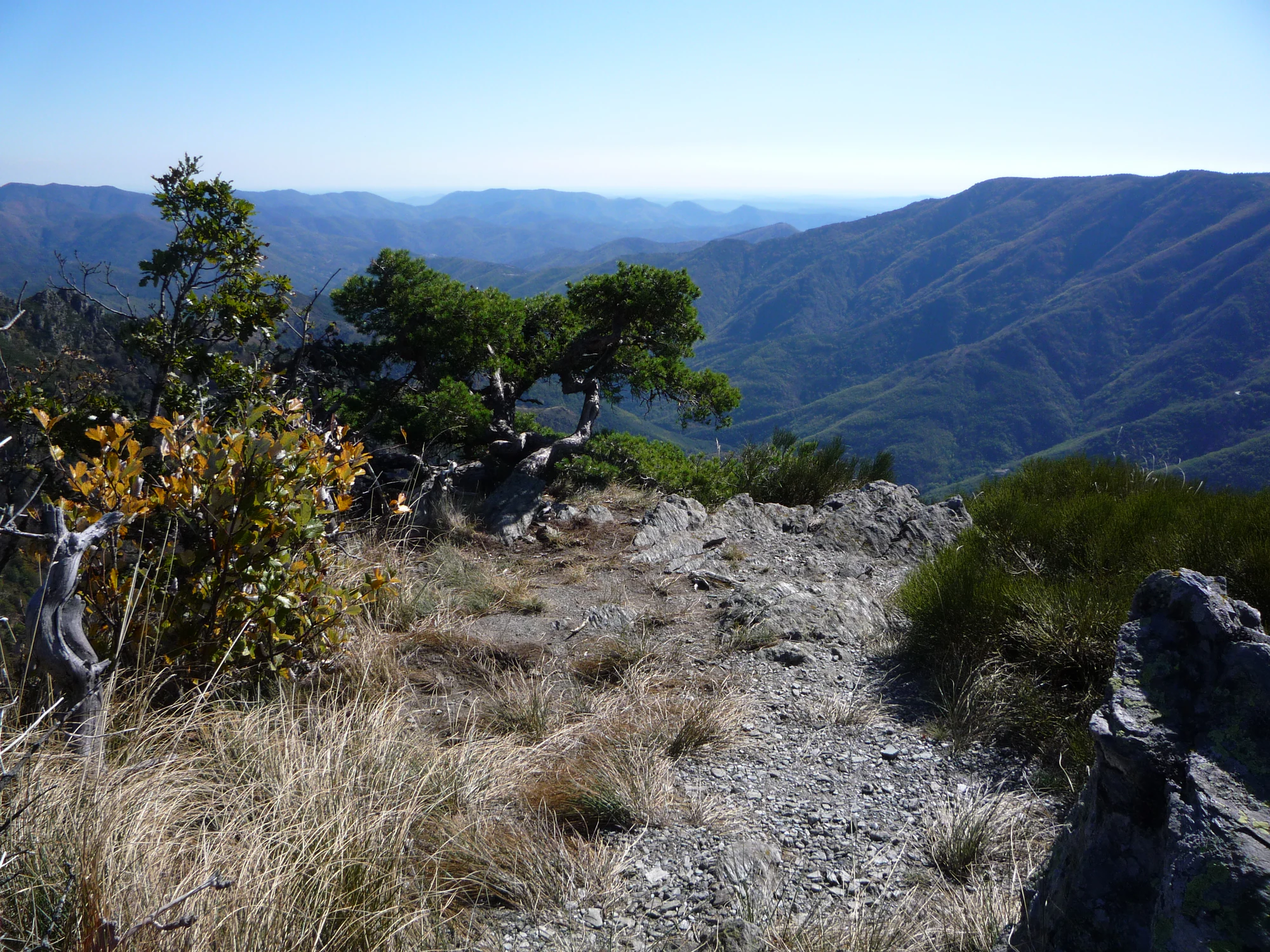
A gnarled green tree, dry grasses and rocky ground frame layers of wooded mountain ridges under a clear blue sky.

The wider park: a view from the Hort de Dieu arboretum area on the Aigoual, photographed on 14 October 2011. This is a different sector from the Mas de la Barque walk described here, and the photograph does not show current path conditions.

[“L’Arboretum de l’Hort de Dieu”](https://www.flickr.com/photos/mont_aigoual_causses_cevennes/6328017151/) · Office de Tourisme Mont Aigoual · [CC BY 2.0](https://creativecommons.org/licenses/by/2.0/). Original photograph, unchanged. · Creative Commons

Walks and routes

À la découverte de la forêt magique

The park lists this loop as very easy: 2.1 km with 38 m of ascent, returning to the station reception. It begins on a broad track, passes old beeches, crosses a small stream and reaches a worked forest section before returning near wet ground and the gîtes. Follow the official route sheet rather than using this outline for turn-by-turn navigation.

Broad tracks form only part of the outing. Ask reception about the stream crossing, mud and any work affecting the path, especially if balance, stamina or wheels influence your choice. The nearby platform is the shorter alternative.


À la découverte de la forêt magique

An unhurried half-day

Start at the biodiversity platform, then decide whether everyone wants the complete loop. Give children a simple challenge: choose a tree that would make an interesting character in Barque Page's story. During the walk, let the interpretation stops set the pace. Back at the station, take your meal break if you have brought food or booked the auberge. Ask everyone which stop they would include in their own forest notebook.

Things to try

Read the forest without disturbing it

A photograph series can be more revealing than a collection of souvenirs. Try one image of the canopy, one of a trunk and one of the ground, all taken from the path. Compare the amount of light and the shapes in each. You will have a small record of a forest habitat rather than a pocket full of things removed from it.

Add a night-sky visit only if you are staying nearby

The park lists a stargazing spot above the gîte village, reached on foot. Ask the station to point out the current access before darkness. Use a red headtorch, stay quiet and keep to paths. This is not a bivouac site; arrange lawful accommodation and your return before going out. Cloud, cold and wind may make another evening the better choice.

Light rain or a severe-weather warning?

In light rain, decide at the station whether a short platform visit or a meal is worthwhile, with opening confirmed first. Strong wind, thunderstorms and intense-rain warnings call for postponing the outdoor visit. Trees are not a storm shelter. During a severe rain episode, do not drive around looking for another valley walk or cross flooded roads; follow the authorities' advice.

Wildlife and habitats

European beech

Some of the trail's beeches have branches or trunks that have grown together: the interpretation calls attention to these unusual natural joins. Follow the lines upwards with your eyes and compare them with the shape of a neighbouring tree. Hollow and ageing trees offer another kind of interest, with spaces that other woodland life can use.

Black woodpecker

The black woodpecker is often easier to hear than to see. The park's atlas records it in both broadleaved and conifer woods, with a preference for mature stands; its calls become especially noticeable around early spring. Here, tree cavities help explain its place in the forest even when the bird stays hidden. Listen without playing recordings or approaching a nest.

Edible dormouse

This grey, bushy-tailed woodland mammal is mostly active at night. The park records it on Mont Lozère, and the discovery trail uses it to explain the importance of old-tree holes. A daytime walk is much more likely to teach you about its shelter than reveal the animal itself. Leave cavities and any resting animal undisturbed.

Round-leaved sundew

Round leaves arranged close to the ground carry sticky reddish hairs that trap small insects. These provide nutrients in the poor soils of peatlands. The park documents this sundew in Mont Lozère wetlands, but it is small and easily missed. Keep to the marked route and use the interpretation to explore its story; never step onto soft peat for a closer photograph.

Stories and discoveries

One mountain, two seas

The Tarn rises on Mont Lozère and flows towards the Atlantic, while other rivers from the massif flow towards the Mediterranean. That divide is a useful way to think about the little streams here: the beginning of a much larger journey, rather than just a feature to cross.

When to visit

Spring and summer

Wait for snow-free conditions if you want the ordinary walking version. Carry a warm layer alongside sun protection, and begin early enough to finish well before any forecast thunderstorms. The woods are an interesting destination in their own right; poor visibility on the open mountain is a reason to avoid adding a summit, not a challenge to overcome.

Autumn

Beech leaves and fungi make the forest rewarding, but shortened daylight calls for an earlier finish. Heavy Cévennes rain can affect both paths and access roads. Hunting also takes place under specific rules, including in the national-park core: check local notices and ask about any operation affecting your walk rather than assuming park status means no hunting.

Winter

Snowshoeing and cross-country skiing are among the station's advertised activities, subject to conditions and service availability. Ask about the appropriate current winter route and equipment instead of following a snow-covered summer trail. Ice, strong wind or a closed approach road can rule out the visit even when photographs make the snow look inviting.

Getting there and practical advice

Reception and essentials

The station operator currently lists reception, shop and equipment-hire hours as 09:00–12:30 and 13:30–17:00 daily. Confirm seasonal changes on 04 66 46 92 72. Bring drinking water with you and ask about toilets before starting. Maps and walking guides are sold at the station.

Auberge and supplies

The operator lists the auberge as closed on Mondays and Tuesdays outside school holidays, and open daily during school holidays. Check meal service and reserve on 04 66 46 97 22 rather than assuming a table will be available when you finish. The small station shop sells local products; buy a full picnic and other essentials in Villefort or Génolhac before the climb.

By road

The official approach is via the RD66 from Villefort or the RD362 from Génolhac, with parking at the station. Check both the forecast and departmental road information, particularly in freezing weather. Use the signposted car park and keep access clear for staff and emergency vehicles. A navigable-looking forest track is not necessarily open to public motor traffic.

Arriving without your own car

Villefort has a TER railway station. Confirm the complete outward and return journey, including prearranged onward transport to Mas de la Barque, before buying tickets. Do not count on a shuttle being available when you arrive or on walking the mountain road as a casual last leg.

Plan around the platform when the full loop is unsuitable

For wheelchair users, pushchairs or anyone wanting a shorter visit, ask about the route from your parking space to the biodiversity platform. Confirm surface condition, accessible toilets and any works before travelling. If a broad forest-track section is suitable, an out-and-back may be enough; ask staff where to turn around.

Give flocks and working dogs room

Grazing is part of Mont Lozère's living landscape. Ask about nearby herds before setting out. Keep your distance from livestock and do not try to stroke or feed a guardian dog. Walk calmly, avoid sudden movements and never throw stones or wave sticks at it. If you cannot leave enough space without entering sensitive ground, turn back rather than squeezing through.

Keep the core quiet

Keep dogs on leads, leave no litter, and do not feed or disturb wild animals. Do not light a fire for this day visit. Overnight vehicle stays and camping follow separate rules; the station car park is not permission to sleep in your vehicle. These practical limits help protect both wildlife and the people who live here.

Sources and useful links

Wildlife you might spot

4

Each card links to a full Explore page with photos, traits, and fun facts.

Snap map for this place

Start with the big picture, then zoom in to explore individual wildlife observations around this place.

Loading map…

Good to know before you go

Save the official route sheet before leaving your accommodation; keep your phone charged and carry a paper alternative if you rely on it for navigation.

Bring water, a snack, grippy footwear and a warm waterproof layer, even for the short circuit.

Take photographs from the path. Leave fungi, plants, stones and dead wood where you find them.

Check the mountain forecast and the road conditions for your approach before setting off, then read notices at the trailhead.

If the next section is unsuitable for your group, return by the way you came while that remains safe; completing the loop is optional.

Frequently asked questions

No. The suggested outing stays with the forest discovery loop at Mas de la Barque. Pic Cassini is a separate mountain walk. Choose it from its own official route information, with suitable weather, equipment and time, rather than adding it casually at the end.
Dogs must be kept on a lead in the park's core. That includes this outing. With your dog, avoid approaching grazing flocks even on a lead; if livestock blocks a comfortable passage, ask at reception for an alternative before walking on.
The official route is presented as a self-guided outdoor walk, with no booking requirement or admission price listed. Meals, accommodation, equipment and organised activities have separate arrangements. Check the station's current information before making any of those essential to your day.
Do not count on it for a 2026 visit. The park's June 2026 announcement places the reopening of the former Pont-de-Montvert ecomuseum, as the Maison du mont Lozère, in 2027. Confirm an actual opening before including it in a later trip.

Recent snaps at this place

Recent snaps will appear here as new observations are added.

View all ›

Take the discovery with you

Exploring Cévennes National Park?

Identify the wildlife you spot, learn as you go, and keep a collection of the adventure.

  1. 1Spot it
  2. 2Snap it
  3. 3Keep the discovery




