
Snappit logo
Snappit
Get App
Generic illustration, not a photograph of this venueIllustration
ParkSouth Brazil, BR

Iguaçu National Park

Iguaçu is not a waterfall you see once and move on from.

About

Iguaçu is not a waterfall you see once and move on from. From the Brazilian bank, the scene keeps rearranging itself: separate ribbons of water become a white curtain, forested islands break the current, and spray hides a feature that was clear a moment earlier. Put the camera away for a little while. The sound and scale are as much the attraction as the photograph.

The Falls Trail is the natural starting point, but this national park protects a much larger stretch of inland Atlantic Forest in western Paraná. Its wooded landscape connects with protected forest across the Argentine border. The view is famous; the living forest is the reason to slow down. A bird crossing the canyon or a change in the tree canopy can be a highlight without turning the day into a wildlife checklist.

Plan around the river rather than a fixed photograph. October 2026 flooding has restricted several visitor areas, including the river boardwalk. There is still a rewarding waterfall visit to make using the viewpoints that staff have cleared. Read the dated access note below before choosing tickets or extra activities. Turn your visit into a safari! Use the Snappit app to scan and log wildlife sightings here.

What to do here

Explore the open Falls Trail viewpoints, listen to the river and leave time for a quiet forest-observation pause.

Seasonal info

Spring brings fresh growth and wildlife activity; summer can be hot and winter can feel cold when wet. Flood closures can change the plan.

Accessibility

Use the internal bus and ask about the currently available Porto Canoas viewpoint/elevator route. The full Falls Trail has stairs.

Don't miss

1

Panoramic waterfall viewpoints

2

A protected Atlantic Forest landscape

3

Wild coatis and birds, observed at a distance

4

Conservation stories behind the scenery

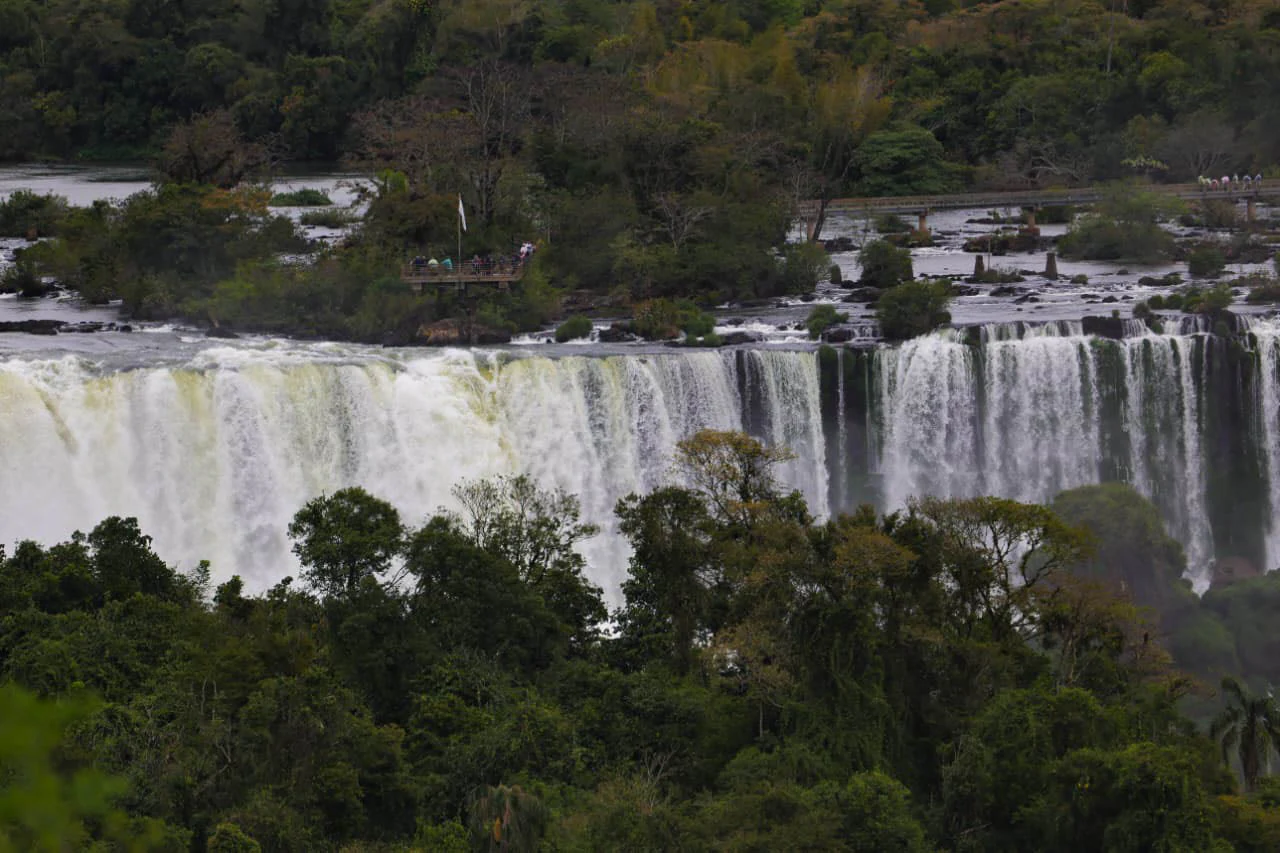
Broad white waterfalls below a forested riverbank, with trees in the foreground and distant viewing walkways.

Cataratas do Iguaçu, the waterfall landscape shared by Brazil and Argentina. Archival photograph used to illustrate Parque Nacional do Iguaçu; capture date unknown. It does not show current access conditions.

Jonathan Campos/AEN — CC0 1.0. Parque Nacional do Iguaçu. · Creative Commons

Walks and routes

A relaxed main-area visit: about three hours

Book your entry slot, use the Visitor Centre to confirm closures, and take the internal bus to the Falls Trail area. Walk only the cleared portions, allowing generous stops instead of chasing an exact finishing time. Finish with an available viewpoint near the trail’s end, a drink and the return bus. If stairs are unsuitable, use the alternative described in the accessibility section. This is an editorial visit sequence, not a surveyed route or promised duration.


A longer day, only after checking what is operating

Add lunch and one optional experience, not every item on the website. Macuco Safari combines forest travel with a boat excursion; its operator suggests roughly two hours and warns that boarding conditions can change. Ask about current navigation, personal suitability and the full separate cost first. For now, do not build an itinerary around the closed forest trails. A slower waterfall visit is a better fallback than improvising an unauthorized shortcut.

Things to try

A family waterfall comparison

At two safely accessible viewpoints, ask everyone to choose three words for the water: perhaps ribbon, curtain, drum or cloud. Compare what changed and what stayed the same. Younger children can point to a shape; older children can draw a quick outline from a place that does not block the path. Make the challenge about noticing, not approaching the edge or finding the wettest spot. This is a self-led idea, not an organized park activity.

A quiet minute for the forest

Away from the loudest water, stop somewhere safe and listen together for a minute. Count different sounds rather than trying to name every animal. Then look for three leaf shapes without picking anything. If wildlife appears, let the animal set the distance. Children often remember one patient observation better than a long species list. Return to ordinary conversation after the pause, keeping speakers and animal-call playback out of the experience.

Wildlife and habitats

Wild neighbors, not guaranteed encounters

South American coatis are wild mammals, even when they seem comfortable near visitors. Their interest in bags is not friendliness: keep food secured, leave room for them to move away and photograph without touching. ICMBio has studied these interactions because they affect both animal welfare and visitor safety.

Jaguars also belong to this landscape. The park’s conservation project uses camera traps and coordinated work with Argentina, alongside cooperation with surrounding communities. Appreciate that ecological story without expecting a big-cat sighting. Swifts may be visible around the canyon, while other birds and butterflies reward quiet attention along open paths. These are wild occurrences, not scheduled displays; none is promised on a particular visit.

Stories and discoveries

Let the viewpoints tell different stories

Begin with the broad scene rather than rushing toward the closest spray. At each open viewpoint, pick out one forested island or separate cascade and notice how its position changes as you walk. Tarobá/Exaporã and Naipi offer other perspectives when cleared for use. The boardwalk is normally the immersive finale, but it is not essential to appreciating the scale, and its current closure must be respected.

Look back into the Atlantic Forest

Give the trees some attention between river views. Notice the layered canopy, climbers and changes in light without leaving the marked path. This forest is not decorative landscaping around a waterfall: it is a substantial protected habitat connected to neighboring forest across the border. Keep an observation pause short and quiet, leaving the walking line clear. A pair of binoculars can help you enjoy distant movement without approaching animals.

A different park day at Rio Azul

The Rio Azul pole in Céu Azul gained renewed visitor facilities in October 2026, including signed walks, an inclusive playground and adapted toilets. Entry is reported free with entry control. It offers a forest-and-community perspective rather than waterfall panoramas. Consider it on a separate western-Paraná journey, not as a quick detour from the Falls Trail; check its own opening arrangements and the suitability of the particular walk.

Protection has a history before the postcard

André Rebouças advocated protection in the nineteenth century, and Santos Dumont’s 1916 visit helped press the case for public protection of the falls area. The national park was created on 10 January 1939, becoming Brazil’s second national park after Itatiaia. It gained UNESCO World Heritage recognition in 1986.

The forest is doing work you cannot see

Beyond scenery, the park helps protect habitats and water systems, including the Floriano River basin. Its size and connection with Argentine forest are important to animals that cannot survive within a narrow strip beside a viewing platform. Looking into the canopy helps put the spectacle of the falls in that larger setting.

A cultural landscape as well as a natural one

ICMBio records archaeological traces associated with Itararé and Guarani cultures, alongside later structures such as the São João power station and the historic falls road. These records remind us that the landscape has human histories beyond modern tourism. They do not mean that every archaeological or historical site is open for independent exploration.

When to visit

Spring: notice renewal, keep plans flexible

September to November can bring fresh leaves, flowering and increased bird and insect activity. Treat those as invitations to observe, not a timetable of guaranteed species or blooms. The October 2026 floods are a useful reminder that lively spring scenery and restricted paths can occur together. Check operational notices as carefully as the weather forecast.

Summer: protect time for water and rest

From December to February, plan for heat and humidity. Carry drinking water, choose breathable walking clothes and take breaks before children become exhausted. A spare dry top in a waterproof bag is useful after spray exposure. Do not assume that warmth makes all water activities safe: river conditions and the operator’s decision control access.

Autumn and winter: layers matter

For March to August visits, pack a layer that remains useful after getting wet, and check the actual forecast rather than expecting permanently mild weather. Winter cold spells can make spray uncomfortable. There is no need to select a month solely for a promised river level; the view changes with conditions, and safe, open viewpoints matter more than recreating a particular photograph.

Getting there and practical advice

Aim for the Visitor Centre, not the falls themselves

The main entrance is on BR-469 at kilometre 18 in Foz do Iguaçu. Municipal bus 120, Parque Nacional, links the central TTU terminal, the airport and the Visitor Centre; check Foztrans for current departures and the return journey. The published PDF still carries an older timetable date, so individual times and fares are not reproduced here. Taxis or a prearranged transfer are alternatives. Driving visitors should check the separate parking arrangements. Inside, the regular ticket includes the park’s return bus service to the waterfall area; allow for boarding as part of your day.

Hours, tickets and what the price means

Normal entry is listed as 09:00–16:00 Monday to Friday and 08:30–16:00 on weekends, with final park closure at 17:30. Special notices may change this. Book a date and time online and bring each visitor’s photo identification.

The published 2026 tariff is R$131 standard admission, or R$118 for the operator’s Brazil/Mercosur nationality category. A voluntary R$3 Fundo Iguaçu contribution produces the advertised totals of R$134 and R$121. Check eligibility and the final basket rather than assuming every South American nationality qualifies. Parking, meals, boat trips and special experiences are separate. The main admission includes internal transport and access to eligible visitor areas, subject to closures.

Use the accessible viewpoints, not a promise of an accessible trail

The operator documents accessible internal transport and main viewpoints, plus conventional wheelchairs available free on request at the Visitor Centre. For reduced mobility it recommends the Porto Canoas bus stop, where a viewpoint and panoramic elevator provide the usual alternative to walking the whole trail. The first viewpoint opposite the hotel is another possible stop before reboarding. The full Falls Trail is not recommended for wheelchair users because of stairs.

Ask staff which lifts, ramps and viewpoints are operating that day, particularly during flood restrictions. The closed river boardwalk must not be treated as an available step-free route. Detailed toilet specifications, equipment limits and continuous access to every facility were not verified.

Keep the practical pauses easy

Bring a refillable bottle: the operator lists free drinking-water points at the Visitor Centre, Tarobá, Naipi and Porto Canoas. Ask staff for the nearest open toilet before starting the walking section; baby-changing provision has not been verified. Paid food options include Canoas Mirim at Porto Canoas, with lunch normally listed from noon to 16:00. Confirm service on arrival and take food breaks in designated areas rather than along wildlife paths.

Enjoy the force of the water from the safe side

Use footwear with grip, keep children close near barriers and take wet steps slowly. Stay on signed routes, obey closures and never step over a barrier for a photograph. Do not enter the river from a viewpoint: being covered in spray is not permission to swim. Carry rain protection, sunscreen and insect repellent. Never feed or handle wildlife, and leave plants, stones and seeds where they belong. Take litter to the appropriate bins. Recreational drone flights are not permitted under the park’s visitor protocol; leave the aerial filming to authorized operations.

Visitor information

Access checked on 22 October 2026

The latest dated operator update found, from 19 October, says the park and Falls Trail are open but the river boardwalk remains closed for safety. It names the trail’s beginning, Tarobá/Exaporã and lower Naipi viewpoint among available viewing locations. An earlier 13 October notice closed São João, Espaço Usina, Poço Preto and Canafístula; no later reopening for those areas was verified. Bananeiras is separately marked closed for works. Check the official news and staff instructions before travel: this is a dated source check, not a live opening guarantee.

Sources and useful links

Wildlife you might spot

2

Each card links to a full Explore page with photos, traits, and fun facts.

Snap map for this place

Start with the big picture, then zoom in to explore individual wildlife observations around this place.

Loading map…

Good to know before you go

Bring a rain layer and protect your phone even if the sky is clear: waterfall spray is different from rainfall.

Choose a meeting point before entering a busy viewpoint, and pause photography where people can pass.

Keep food closed around coatis. A close approach is a reason to give them space, not to offer a snack.

Frequently asked questions

No. This guide covers Brazil’s Iguaçu National Park. Argentina’s Iguazú National Park is a separate destination with its own admission and access arrangements.
Yes, if the park confirms the remaining visitor areas are open. Its 19 October 2026 notice kept the Falls Trail and several viewpoints available. Do not assume that a purchased ticket guarantees every walkway.
The park lists free admission through age six with original photo identification. Check the category and documentation when booking; separate activities have their own child policies.
No. Macuco Safari is a separate purchase inside the park, and its own ticket does not include national-park admission. Confirm operation and suitability before buying, especially during high water.
Do not plan on it. Jaguars live in this protected landscape, but conservation monitoring is not a visitor sighting promise. Enjoy wildlife that appears naturally and never pursue an animal.
It is a separate neighboring attraction with its own ticket and aviaries. Birds seen in those managed enclosures are not evidence of a wild encounter inside the national park.

Recent snaps at this place

Recent snaps will appear here as new observations are added.

View all ›

Take the discovery with you

Exploring Iguaçu National Park?

Identify the wildlife you spot, learn as you go, and keep a collection of the adventure.

  1. 1Spot it
  2. 2Snap it
  3. 3Keep the discovery




