
Snappit logo
Snappit
Get App
Generic illustration, not a photograph of this venueIllustration
ParkNormandie, FR

Norman Seine Meanders Regional Nature Park

The Seine gives this inhabited landscape its shape.

About

The Seine gives this inhabited landscape its shape. Between the Rouen and Le Havre areas, its bends wrap around woods, farms and villages across Seine-Maritime and Eure. The Marais Vernier preserves a former river loop as an open wetland amphitheatre, while Brotonne offers the enclosed world of a large managed forest.

Start with the Chêne Cuve if your group wants a very short woodland visit. Choose the Panorama du Marais-Vernier for the bigger picture: fields, drainage lines and wooded slopes are easier to understand from above. Both can be satisfying stops in their own right. A longer marsh walk is a separate, seasonal choice, and a visit inside the national nature reserve needs its own arrangements. Planning to visit? Download the Snappit app to identify the wildlife you spot in real-time.

The park began in 1974 as the Parc naturel régional de Brotonne, intended to protect a green rural interval between the industrial and urban areas of Rouen and Le Havre. As its territory extended along the river, it adopted the Boucles de la Seine Normande name in 2001. Its interest has always included people and working landscapes: the farms, orchards and village buildings belong to the story alongside the woods and wetlands.

What to do here

Visit the Chêne Cuve from its designated car park, read the Marais-Vernier panorama’s landscape panels, or plan a birdwatching walk using the park’s official site guide. For a gentler introduction to local farming and orchards, add the Maison du Parc when its visitor reception is open.

Seasonal info

The tourist office’s 2026–27 map gives the Marais Vernier discovery walk a pedestrian-only season from early April to mid-September. Confirm the dates before travelling. Maison du Parc tourist reception has its own seasonal timetable.

Accessibility

For a wheelchair, walking aid or pushchair, ask about the Chêne Cuve’s approach before travelling. Its new protective deck does not guarantee a step-free route from the car park. The panorama and marsh walk have different access conditions.

Don't miss

1

The Chêne Cuve, a remarkable pedunculate oak with a root-protecting visitor deck

2

The Panorama du Marais-Vernier and its orientation table

3

Narrow wet-meadow plots called courtils, framed by wooded slopes

4

The Maison du Parc’s farm-and-orchard setting

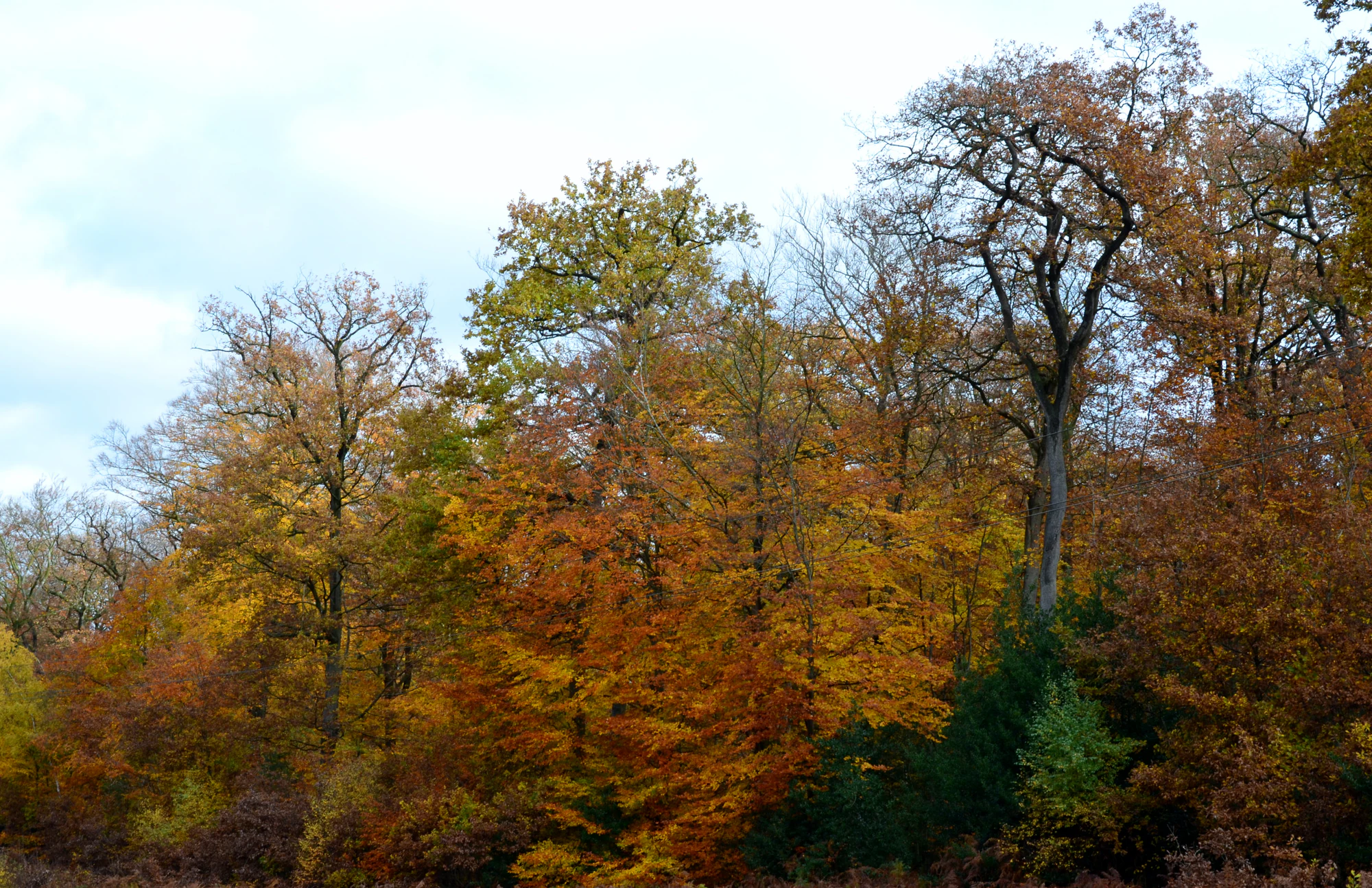
Yellow, orange and brown-leaved trees beneath a pale sky, crossed by thin overhead utility wires.

Autumn foliage in the Brotonne forest, photographed on 19 November 2017.

Photograph: isamiga76, “Fôret de Brotonne, F-76”, CC BY 2.0. Original unchanged. · Creative Commons

Walks and routes

Chêne Cuve: the short woodland option

Start at the designated Chêne Cuve car park beside the RD913, in the La Mailleraye-sur-Seine part of Arelaune-en-Seine. The official approach is 150 m one way. Follow the path to the tree, spend time on the protective deck and return the same way. The GR23 passes here, but this small visit needs no further walking.

Allow 30–45 minutes including observation. Expect an outdoor woodland path and check its condition after rain. Ask about the full approach if you use a mobility aid.


Chêne Cuve: the short woodland option

Panorama du Marais-Vernier: understand the old river bend

Pause at the Panorama du Marais-Vernier, with its orientation table and explanatory panels. Read the landscape before using binoculars: find the wooded rim, then the open marsh and its narrow plots. The Pont de Tancarville is a useful distant landmark when visibility permits.

Allow 20–40 minutes. Confirm the precise approach and parking with the local tourist office if access distance or steps matter.

Panorama du Marais-Vernier: understand the old river bend

Chemin de découverte du Marais Vernier: a seasonal longer walk

The tourist office’s 2026–27 map lists the yellow-marked Chemin de découverte du Marais as 5.7 km, with an official walking time of 1 hour 30 minutes. Start at the chemin du Roy car park below the church in Marais-Vernier. The route crosses communal marshland beside a small canal and along the Digue des Hollandais. Allow 2–3 hours if you want birdwatching stops, and follow the current official route sheet.

The route is pedestrian-only and includes unpaved ground. Even with its published zero elevation gain, muddy or flooded sections can make it unsuitable for a pushchair or mobility aid.

Chemin de découverte du Marais Vernier: a seasonal longer walk

A short family woodland visit

Give the Chêne Cuve 30–45 minutes, including the return to the car park. Let each person choose one feature to sketch or photograph, then finish while everyone still has energy. Bring a snack to enjoy at an appropriate stopping place afterwards.

A half-day in the marsh landscape

Begin with the Panorama du Marais-Vernier, then add a village stop or picnic. If your group wants more walking, make the 5.7 km discovery route the main activity during its confirmed opening season and in suitable ground conditions. Keep the panorama as the shorter alternative.

A full day with two contrasting settings

Combine a Brotonne woodland stop with the Marais-Vernier panorama, allowing for transport between them and a proper lunch break. If the Maison du Parc is open, it can replace a stop for anyone who prefers orchard and rural-history interpretation to another walk.

Things to try

Make the old oak the whole outing

Take a notebook and draw the Chêne Cuve’s silhouette from the visitor deck. Look at the space between its trunks and the way its crown spreads. Ask children to choose one detail they would use to recognize this tree again. Keep to the deck and approach path to protect the root zone.

Go birdwatching with a clear destination

Use the park’s birdwatching map to choose a permitted observation site for the season. Take turns with binoculars, start with larger shapes, and note behaviour before worrying about names. A guided marsh visit is a useful next step if you want help distinguishing distant waders or understanding the grazing regime.

Pair natural and built landscapes

Look at thatched cottages from public places and compare their timber, reeds and earth-based materials with the surrounding landscape. If cycling appeals, plan a suitable section of La Seine à Vélo, checking road conditions and traffic before choosing it for children.

When the ground or weather rules out a walk

In flooding, strong winds or thunderstorms, drop the outdoor plan. When open, the Maison du Parc’s apple exhibition offers an indoor alternative; check access before travelling. A damp day with calm weather may suit a shorter visit, provided the approach is sound.

Wildlife and habitats

A tree with an individual story

The Chêne Cuve is a pedunculate oak, also called English oak. Here you can connect the species to an individual old tree and its visible root-protection work. Observe from the deck; do not climb into the trunk cavity or drink its water.

Beech woodland

Brotonne is well known for its beech woodland. For visitors wanting a longer forest outing, ONF’s separate Boucle du Grand Maître is an 11 km marked route through this setting. Plan it as a full walk with its own map, equipment and hunting-calendar check.

White stork

The Marais Vernier is a documented white-stork area. Look across open wetland fields from permitted viewpoints and use binoculars for distant nests. A nest or large flying bird can be a rewarding observation without leaving a public route; sightings depend on season and conditions.

Eurasian curlew

The curlew is among the birds documented for the Marais Vernier’s wetland habitats. Its long curved bill is a useful clue, though distance can make identification difficult. A guided visit helps place such birds in their habitat without disturbing them.

Stories and discoveries

A river bend without the river

The Marais Vernier occupies an abandoned Seine meander. Its curved wooded edge and broad low floor preserve the outline of that older river course. The courtils are long, narrow land parcels: the patterns you see are both geographical and agricultural.

A deck built for the roots

The Chêne Cuve’s new deck is self-supporting and was installed without excavation around the tree. It reduces trampling of sensitive soil while keeping the oak visible: a practical example of designing a visit around a living tree’s needs.

Grazing as habitat management

Highland cattle and Camargue horses have been used in the Marais Vernier to maintain open wetland vegetation. These domestic conservation grazers help shape the habitat. Watch them from outside their enclosures and let them feed naturally.

Wetlands with international recognition

The Marais Vernier and maritime Risle valley received Ramsar recognition in 2015, highlighting their international wetland importance. This broad landscape contains several sites with different protection and visitor arrangements.

When to visit

Spring and summer

Book a guided reserve visit if you want a closer introduction to marsh wildlife. For independent walking, confirm the discovery route’s seasonal dates. In warm weather, early or late daylight can be more comfortable for observation. Give nesting birds plenty of space and avoid playback calls.

Autumn and winter

Brotonne’s changing leaves suit a short photographic visit, while leafless branches reveal tree shapes later in the year. Consult ONF’s Brotonne hunting calendar and its mapped sectors; do not enter an area marked “Chasse en cours”. After strong winds, avoid woodland until local safety guidance permits access.

Getting there and practical advice

Maison du Parc: a useful gateway

At Notre-Dame-de-Bliquetuit, the Maison du Parc occupies the former ferme de la Côte on a five-hectare estate. Its farm-and-orchard discovery trail, information desk and apple interpretation make it a useful introduction. Picnic areas and toilets are listed. Tourist reception is advertised for April–September; confirm the day’s hours on 02 35 37 23 16 before relying on indoor facilities.

Plan food and facilities around your chosen stop

Do not assume that the woodland car park or panorama has toilets, drinking water or a café. Pack what you need and arrange a comfort stop in advance. Bicycle hire is offered at the Maison du Parc during its opening period; reserve the right size and check current charges and return times.

By car or prearranged transfer

Navigate to the exact visitor site rather than the park name. Use the Chêne Cuve’s RD913 car park. When combining river sectors, check the actual bridge or ferry connection: a short distance across the river on a map may mean a longer journey by road.

Without a car

Use NOMAD’s journey planner for your travel date and precise destination, then check the last connection and the final approach. A service to a gateway town does not establish a safe walk to a forest car park or marsh viewpoint. Arrange onward transport before committing to a rural stop, especially on Sundays or outside the main visitor season.

Choose by the whole journey

Ask about the surface from the parking place, any kerb or barrier, the slope, resting opportunities and the return route. Describe the mobility aid you use so the local operator can give relevant advice. A short woodland approach may feel very different after prolonged rain.

With younger children

The oak stop offers the simplest defined walking commitment. At marsh sites, keep small children beside you near drainage ditches and grazing enclosures. For a pushchair visit, seek current surface advice and choose a shorter visit if the ground is soft.

Sources and useful links

Wildlife you might spot

4

Each card links to a full Explore page with photos, traits, and fun facts.

Snap map for this place

Start with the big picture, then zoom in to explore individual wildlife observations around this place.

Loading map…

Good to know before you go

Bring binoculars for the marsh; distant observation is more useful than trying to approach a bird.

Save the chosen parking location and official route information before setting off.

Use the Chêne Cuve car park, rather than stopping on the RD913 verge.

Pack waterproof footwear, a windproof layer and drinking water.

Keep children beside you near ditches, roads and open water.

Respect private orchard entrances and leave grazing animals undisturbed.

Leave fungi and plants in place; photographs make a useful record of what you found.

Read signs at the entrance even after checking online: local closures take precedence.

Frequently asked questions

No. This is a broad, inhabited regional nature park. Woodland sites, viewpoints, visitor buildings and protected reserves have separate access rules. The Maison du Parc’s reception hours do not determine access across the territory.
Plan an organized visit to the Réserve naturelle nationale du Marais Vernier. Its protected interior is distinct from the public discovery circuit and the panorama. Check the park’s guided-visit programme and booking conditions.
The official tourism listing advertises free access. Guided activities, bicycle hire and other attractions may charge separately; check the chosen activity before booking.
Check the rules for your exact stop. Keep dogs under close control on authorized paths, away from grazing animals and birds, and do not assume that a reserve visit accepts them. Ask the organizer before booking.

Recent snaps at this place

Recent snaps will appear here as new observations are added.

View all ›

Take the discovery with you

Exploring Norman Seine Meanders Regional Nature Park?

Identify the wildlife you spot, learn as you go, and keep a collection of the adventure.

  1. 1Spot it
  2. 2Snap it
  3. 3Keep the discovery





