Snappit logo
Snappit
Get App
Generic illustration, not a photograph of this venueIllustration
ParkComunidad de Madrid, Spain

Royal Botanical Garden of Madrid

The Real Jardín Botánico is a good place to let a small detail lead the way: a leaf shape, a familiar kitchen plant or a tree whose branches deserve a second look.

About

The Real Jardín Botánico is a good place to let a small detail lead the way: a leaf shape, a familiar kitchen plant or a tree whose branches deserve a second look. You do not need to be a botanist to enjoy it. Read a plant label, compare it with its neighbour and the collection starts to make sense.

The garden rises through terraces. In the lower Terraza de los Cuadros, plants are grouped by uses, including ornamental, aromatic and food plants. The Terraza de las Escuelas brings plant relationships into the picture; the Plano de la Flor has a more leisurely garden character. The bonsai collection occupies the upper terrace. Choose a portion that suits your energy rather than treating every terrace as compulsory.

Two very different kinds of scale are especially appealing here. The Árboles Singulares itinerary introduces substantial, long-established trees, while the bonsai display shows the skill involved in cultivating trees in small containers. The greenhouses add another comparison: plants adapted to climates unlike Madrid’s, including dry environments and humid tropical ones.

This is a scientific garden managed by CSIC, with research collections and a long history of botanical teaching behind the public displays. The plants described here are cultivated members of that living collection. Use their labels to learn where they come from, without assuming that they grow wild in central Madrid. Planning to visit? Download the Snappit app to identify the wildlife you spot in real-time.

Fernando VI founded the garden in 1755 at Huerta de Migas Calientes, beside the Manzanares. Carlos III later ordered its move to the Paseo del Prado, where it opened in 1781. The project involved Francesco Sabatini and Juan de Villanueva, and the terraced layout gave botanical teaching a clear physical structure. The institution supported expeditions and built up botanical drawings and herbarium collections alongside its living plants. It joined CSIC in 1939 and was declared an artistic garden in 1942. A major restoration closed the public garden in 1974; it reopened in 1981. The modern exhibition greenhouse opened in 1993, and the upper bonsai display opened in 2005. Those changes help explain why the visit combines eighteenth-century design with newer ways of showing plants.

What to do here

Begin at the Plaza de Murillo entrance and pick up or download a garden plan. Choose the lower collection beds for a short visit, follow part of the official Árboles Singulares itinerary for a tree-focused outing, or add the Santiago Castroviejo greenhouse when it is open. The sensory route is another good way to slow down and compare plants.

Seasonal info

Seasonal beds change, and bonsai specimens rotate through the display. Spring flowers, summer growth, autumn foliage and winter branch shapes offer different reasons to return. After rain, earth paths can become muddy or uneven; strong winds and other safety conditions can change access. Check notices and choose a shorter visit when conditions are uncomfortable.

Accessibility

Use the garden’s wheelchair-access map to plan between terraces. Ramps reach every terrace, but not every connection has one; paths can be narrow, earthy, muddy or uneven. Santiago Castroviejo has a ramp and handrail with no unavoidable interior steps. Graells is reached by stone stairs. The Villanueva Pavilion has a side ramp that staff must open on request. Ask at the entrance which route suits your chair or pushchair today.

Don't miss

1

Labelled living collections arranged across contrasting terraces

2

The official Árboles Singulares tree itinerary

3

Dry, subtropical and tropical plant displays in Santiago Castroviejo

4

A sensory route and a changing upper-terrace bonsai display

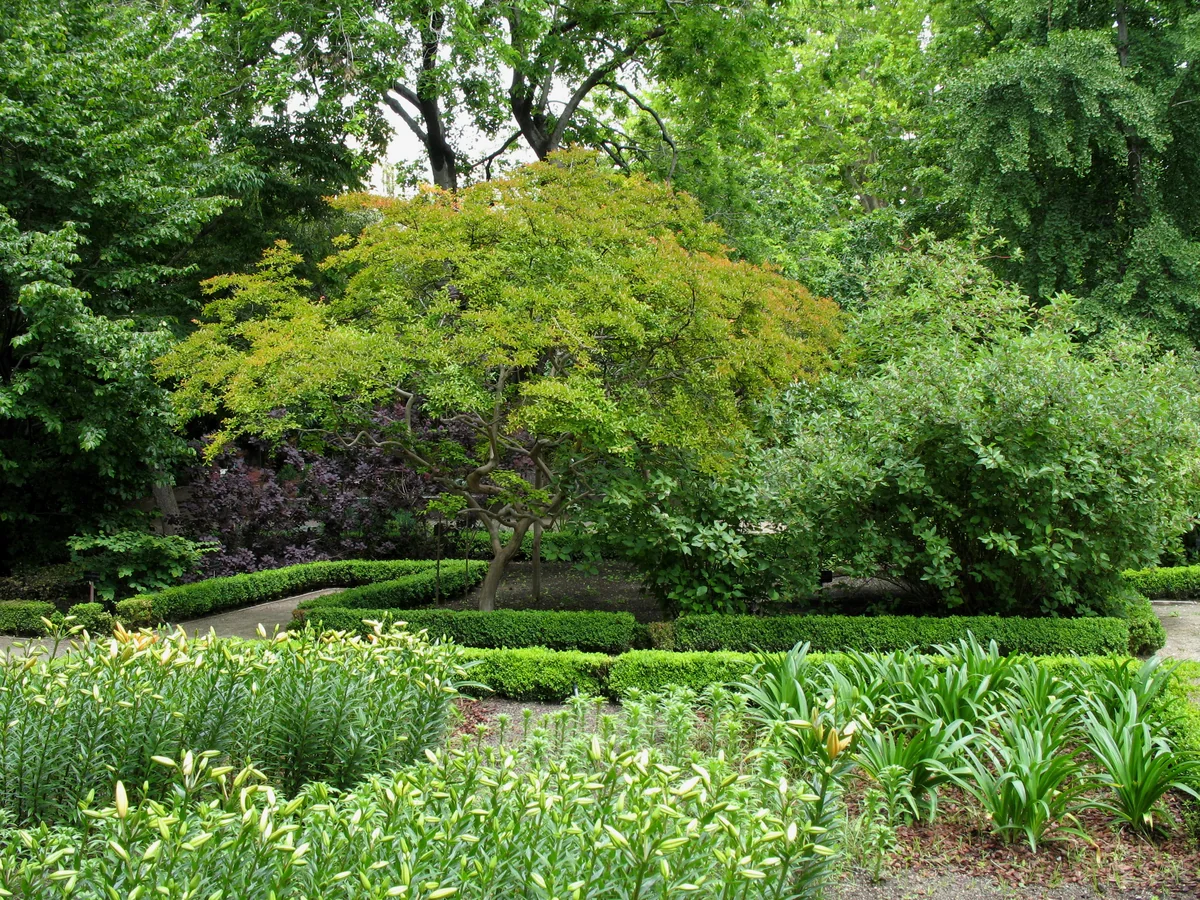
Layered green planting surrounds a spreading small tree, with clipped hedges, narrow paths and unopened flower buds in the foreground.

Trees, clipped hedges and planted beds in Madrid’s Real Jardín Botánico, photographed in May 2008.

Madrid Jardin Botanico R02.jpg — Marc Ryckaert (MJJR) / Wikimedia Commons / CC BY 3.0 Unported · Creative Commons 1 · Creative Commons 2

Walks and routes

Árboles Singulares: choose a few remarkable trees

The official itinerary identifies 15 trees for their age, form or connection with the garden’s history. Use its plan and panels to choose a small selection, such as the pomegranate, yew, deodar cedar and coast redwood. Compare tree form and labels without trying to complete the whole list.

The tree itinerary is not itself a promise of a continuous step-free route. Cross-check your chosen trees against the wheelchair-access map and ask about the connecting paths.


Árboles Singulares: choose a few remarkable trees

Recorrido sensorial: slow down with the senses

Seven themed zones invite close attention to aromatic plants, unusual scents, succulents, grasses, food plants, hairy leaves and shade-loving plants. Follow the specific touch-and-smell invitations and use the linked digital version for audio, easy-read text and signed material.

The route has braille and orientation features, with digital material in several formats. For physical access, still use the wheelchair map and check wet-weather path conditions.

Recorrido sensorial: slow down with the senses

Itinerario Andalusí: plants and cultural history

This self-guided itinerary uses 15 plants growing in the garden to explore the natural heritage of al-Andalus, including connections with food, fragrance and other uses. Choose it if you enjoy the stories behind plants, and use the official itinerary rather than inventing a shortcut through the beds.

Check the selected stops and terrace connections against the wheelchair-access map. The cultural itinerary does not establish that every direct connection is step-free.

Itinerario Andalusí: plants and cultural history

About an hour: a few good observations

Choose the lower Terraza de los Cuadros, using the plan to find ornamental, aromatic or food plants that catch your attention. Spend time on a label-and-leaf comparison, take a pause and return to the visitor exit. There is no need to add the upper terraces for this to feel like a complete visit.

Around two hours: trees plus one collection

Choose several stops on the official tree itinerary, then add either Santiago Castroviejo or the bonsai terrace according to opening and your mobility needs. Leave time for a seated break and the return to Murillo. If an exhibition matters more to you, give it the extra time instead.

A flexible family visit

Make the sensory route the focus and keep the rest optional. Let each person choose a leaf shape or scent to describe, follow the touch invitations, and finish while everyone still has energy. Bring snacks for before or after the visit, or use the café area: the beds and paths are not picnic spaces.

Things to try

Read one plant label properly

Find its scientific name, plant family, common name and geographical origin. Then compare it with a neighbouring label. In the greenhouses, label colours also indicate world regions. Let the labels guide an identification; a plant’s native range is different from its cultivated home here.

Make a three-leaf comparison

Without picking anything, find three contrasting leaves you can see from a path. Compare width, edge and texture, then draw their outlines. At the designated sensory plants, follow the signs if touch is invited; elsewhere, keep the exercise visual.

Compare the greenhouse climates

In Santiago Castroviejo, look for differences between the dry, subtropical and tropical departments. Compare water-storing growth forms with broad foliage, then read the labels before making a guess about a plant’s home. Confirm which departments are open on arrival.

Choose a booked activity when it fits

The garden offers guided visits and workshops, with programme-specific dates and age guidance. Check the current listing and language before booking. An old calendar or a general garden ticket is not a reservation for an activity.

Light rain: reduce the outdoor part

If the garden remains open, choose a short path section and check whether the greenhouse or an exhibition suits your plan. You still need to cross outdoor paths, Graells has stairs, and some exhibitions cost extra.

Storms or strong wind: change the plan

Follow staff directions and closed gates. A greenhouse is not a reason to enter a garden that is being cleared for safety. Choose a separately planned indoor museum visit instead, checking its opening and ticket arrangements. Read the garden’s cancellation terms before buying an activity.

Wildlife and habitats

Pomegranate

Look for the labelled small tree and compare its leaf shape with the larger trees nearby. The garden’s panel describes showy reddish flowers and fruit that ripens in early autumn. Leave all flowers and fruit where they are.

Common yew

Use the tree label to identify this evergreen, then compare its foliage with a broad-leaved tree. Yew is poisonous: keep the exercise to looking, and do not handle or taste its foliage or seeds.

Deodar cedar

Read the label for Cedrus deodara, then stand back to take in its overall form. Compare the way its branches and foliage fill the space with a neighbouring broad-leaved tree; a label is more reliable than a quick resemblance.

Coast redwood

Find the labelled Sequoia sempervirens on the official itinerary and compare its trunk and crown with the other conifers. Enjoy its scale from the path without pressing against bark or stepping into the planting bed.

Lamb’s ear

The sensory route lists this softly hairy-leaved plant. Look for its label and follow the local invitation if touching is allowed; compare it with a smoother leaf without pulling either plant. A seasonal display can change, so use the signs on the day.

These are documented cultivated plants in the garden, not a list of wild Madrid species. Use the current labels and itinerary panels; plant displays and access can change.

Stories and discoveries

The terraces are part of the teaching

The lower collection makes plant uses visible, while the Escuelas terrace introduces botanical relationships. The layout gives you more than a pretty background: it suggests different questions to ask of the plants.

Bonsai are a changing display

Only part of the bonsai collection is shown at once. Specimens move through the display as seasons and growing conditions change, so a photograph from another month is not a checklist of what will be in front of you.

The public garden is part of a research institution

Research, herbarium specimens, seeds, books and botanical drawings are part of the institution’s work. A garden ticket is a visit to the public spaces, not general access to laboratories or research collections.

When to visit

Spring: follow the flowers

Look for the changing ornamental beds and rose collection, then check the monthly flowering page for the day’s strongest display. Flowering depends on weather, so keep a specific tulip or rose visit flexible.

Summer: begin early and shorten the plan

Start at opening, carry water and use breaks. The aquatic-plant pond is a useful seasonal stop, but keep children close at the edge. Greenhouses can be warm and humid; choose them for the plants rather than as a place to cool down.

Autumn: compare foliage and fruit

Look at changes in deciduous trees and at fruit on labelled plants, leaving everything in place. The pomegranate panel identifies early autumn as its fruit-ripening season. Wet leaves and muddy paths deserve extra care.

Winter: use branches, bark and evergreens

A shorter visit can focus on evergreen trees, bare branch shapes and an open greenhouse. Dress for the outdoor links between buildings and remember the earlier winter clearance and gate-closing times.

Getting there and practical advice

Entrance and visitor information

The normal public entrance and ticket office are at Plaza de Murillo, 2. Ask here for the plan, the easy-read guide and help selecting suitable paths. Visitor information is available on +34 91 420 04 38 on working weekdays, 09:00–14:00, or at [email protected].

Toilets and access

The official wheelchair-route plan marks toilet access. Ask staff which facility is open and suitable for your requirements before starting a longer circuit; the plan does not supply all door, transfer-space or equipment measurements.

Café and shop

A café and shop are part of the visitor offer and require garden admission to reach. Their operation can differ from the outdoor collections; check on arrival if a café stop is important. Food and drink must stay in the café area.

Two greenhouse buildings, different access

Santiago Castroviejo displays plants from contrasting climates and has ramped access. Graells, also called the Estufa de las Palmas, is the historic greenhouse and has stone entrance stairs. Check daily availability; both greenhouse visits finish before final garden closure.

Upper bonsai terrace

The bonsai collection is on the upper terrace beside Calle Alfonso XII. The displayed selection changes. Use the ramp route if you need it and reach this area well before its 30-minute-earlier closing time.

Exhibition spaces

Check the programme, room and ticket requirement for each exhibition. The Villanueva Pavilion’s main approach has stairs, with a side ramp opened by staff on request. Do not assume an exhibition is included solely because it is inside the garden.

Arrive by public transport

Estación del Arte on Metro Line 1 and the Atocha rail area are useful nearby transport landmarks. Check your service and any step-free station access with the transport operator, then navigate to Plaza de Murillo rather than the research-building address.

Choose the visitor gate

Puerta de Murillo faces the Prado across Plaza de Murillo. The gate on Calle Claudio Moyano is for the research building; do not use it as a normal visitor shortcut.

Driving and parking

The garden has no public car park of its own. If driving, check current Madrid access restrictions and a nearby public parking option before setting out, including the final route to the visitor entrance.

Terraces, ramps and earth paths

There are ramp alternatives between all terraces, but not at every stair connection. Narrow earth paths can develop mud and small hollows after rain, and some kerbs require a different approach. Use the dedicated wheelchair-access plan, allow more time and ask staff about recent conditions.

Check the particular building

Santiago Castroviejo has a ramp, handrail and no unavoidable interior steps. Graells has stone stairs. The Villanueva Pavilion requires staff to open its side ramp. The Mª Teresa Tellería exhibition room is approached through a cobbled courtyard, and the auditorium entrance has a slight change in level.

Easy-read, sensory and signed resources

The garden offers easy-read guides and a cognitive-access map. The sensory route includes braille and accessible digital material, including audio and signed videos. Spanish Sign Language interpretation is offered for selected visits and can be requested for other activities; arrange it when booking rather than assuming a walk-in service.

Ask for support before you arrive

For an activity, tell the education team about any support you need so it can prepare suitable material. The garden describes priority ticket-office access for autistic visitors and a companion; ask the entrance staff. Confirm wheelchair-loan availability and your chosen toilet before relying on them.

Sources and useful links

Wildlife you might spot

5

Each card links to a full Explore page with photos, traits, and fun facts.

Snap map for this place

Start with the big picture, then zoom in to explore individual wildlife observations around this place.

Loading map…

Good to know before you go

Enter through Puerta de Murillo at Plaza de Murillo, 2, facing the Prado. The Claudio Moyano gate serves the research building and is not the normal visitor entrance.

Plan to finish your main stops at least 30 minutes before final gate closure. The greenhouses, bonsai terrace and exhibitions close then, and clearing the garden begins.

Buy through the official ticket site or at the gate. Some Villanueva Pavilion exhibitions have a separate supplement, and guided activities have their own booking conditions.

Bring water, sun protection and shoes with grip. Earth paths and terrace ramps can be awkward after rain; do not rely on the greenhouses as a cool summer refuge.

Stay on paths and leave flowers, seeds and fruit in place. Touch plants only where the sensory-route signs or staff invite you to; never taste the collection.

This is a living museum

picnics, balls, bicycles and skates are not allowed. Food and drink belong in the café area, and children under 14 must be accompanied.

Pets are not admitted; the published rules make an exception for guide dogs. If you use another assistance animal, confirm arrangements before travelling.

Photograph without blocking paths or damaging plants. Tripods are not permitted in greenhouses, and the published rules prohibit photography of Villanueva Pavilion exhibitions.

Frequently asked questions

No. This is the separately managed CSIC botanical garden beside the Prado, outside El Retiro. Both belong to the wider cultural landscape of the area, but access to one does not give access to the other.
The official practical guide lists €4 general admission and €1 for eligible students aged 18–25, adults from large families and visitors over 65, with proof. Under-18s enter free. Other free categories include eligible disabled visitors and a companion when essential; check the required documentation. Groups of at least 10 have a €2 garden rate and must book ahead.
Tuesday admission is free from 10:00 to 13:30, with the ticket obtained at the entrance rather than online. A paid exhibition supplement or a booked activity may still cost extra. Check the official page before choosing your day.
Opening is 10:00. Final gate closure is 18:00 from November to February, 19:00 in March and October, 20:00 in April and September, and 21:00 from May to August. Entry and ticket sales stop 30 minutes earlier; the bonsai terrace, greenhouses and exhibitions also close then, and visitors begin leaving. The garden is normally open daily except 1 January and 25 December. Check same-day notices.
The garden ticket includes the greenhouses when open. Some Villanueva Pavilion exhibitions require a €2–€5 supplement, so check the exhibition you want during purchase. Other exhibition spaces may be included. Tours, workshops and special events have their own tickets or reservations; do not assume ordinary admission covers them.
Yes, with a route chosen around ramps and current path conditions. Use the specific access notes and wheelchair map below: Graells has stairs, Santiago Castroviejo has ramped access, and the Pavilion’s side ramp needs staff assistance. Confirm an accessible toilet and any wheelchair loan before a visit that depends on them.
No. Labels, official itineraries and downloadable guides support an independent visit. If you want a guided activity, check the current programme, language, age guidance and booking conditions. Organised groups of 10 or more must reserve in advance.
Picnics are not allowed; refreshments must be taken in the café area. Pets are not admitted, with guide dogs excepted in the published rules. Keep children close around ponds and leave all plants and animals undisturbed.

Recent snaps at this place

Recent snaps will appear here as new observations are added.

View all ›

Take the discovery with you

Exploring Royal Botanical Garden of Madrid?

Identify the wildlife you spot, learn as you go, and keep a collection of the adventure.

  1. 1Spot it
  2. 2Snap it
  3. 3Keep the discovery