Snappit logo
Snappit
Get App
Generic illustration, not a photograph of this venueIllustration
ParkNorthern Spain, Spain

Señorío de Bertiz Natural Park

Bertiz makes it easy to build a day around curiosity rather than distance.

About

Bertiz makes it easy to build a day around curiosity rather than distance. Start at the Oieregi entrance, reached from Oronoz-Mugairi, and give the historic garden time to work its charm. Follow the winding paths between trees, pause beside a pond and look closely at the chapel’s decorative canopy. The garden brings together plants from different parts of the world; beyond it, the forest tells a more local story.

The nature interpretation centre in Tenientetxea helps connect those two experiences. It introduces the park’s woodland and the reasons for protecting it, so it is a useful first stop with children or anyone who enjoys knowing what they are looking at. Afterwards, choose how much walking the day needs: the short riverside Erreparatzea outing, a little time on a suitable lower forest path agreed with staff, or the longer Iturburua walk.

The whole natural park lies in Bertizarana and covers about 2,052 hectares. Its beech, oak and streamside woods stretch far beyond the entrance garden. Aizkolegi belongs to this bigger landscape, but the full ascent is a substantial walking day. For a first visit, the garden, interpretation centre and a modest walk make a much more flexible combination. Take the ultimate field guide with you: use the Snappit app to identify birds, plants, and animals on your trip.

Pedro Ciga and Dorotea Fernández bought the estate in 1898. They developed the garden and its ornamental buildings while pursuing the recovery and conservation of the forest. In 1949, Ciga left Bertiz to Navarra on the condition that its natural character be preserved. It became Navarra’s first natural park in 1984 and a Special Area of Conservation in 2008.

What to do here

Explore the historic garden, visit the nature interpretation centre and choose a short walk afterwards. Look for contrasts: a planted garden tree and a woodland tree, still pond water and flowing river water, decorative garden structures and the forest beyond.

Seasonal info

Garden and staffed-facility hours change through the year and often include a midday break. Autumn afternoons and winter days are shorter. Strong wind is a reason to change plans: the park discourages visits under a yellow weather warning and closes under orange or red warnings.

Accessibility

Visit Navarra describes an adapted interpretation centre and selected outdoor options with access facilities. Ask staff which paths suit your wheelchair, walking aid or pushchair that day. Wet surfaces, ramps and heavy doors can require assistance; the longer forest walks have different demands.

Don't miss

1

The historic garden’s ponds, small bridges and varied planted trees

2

The chapel canopy and other Art Nouveau details

3

Tenientetxea’s nature interpretation centre

4

A short riverside walk without committing to the high forest

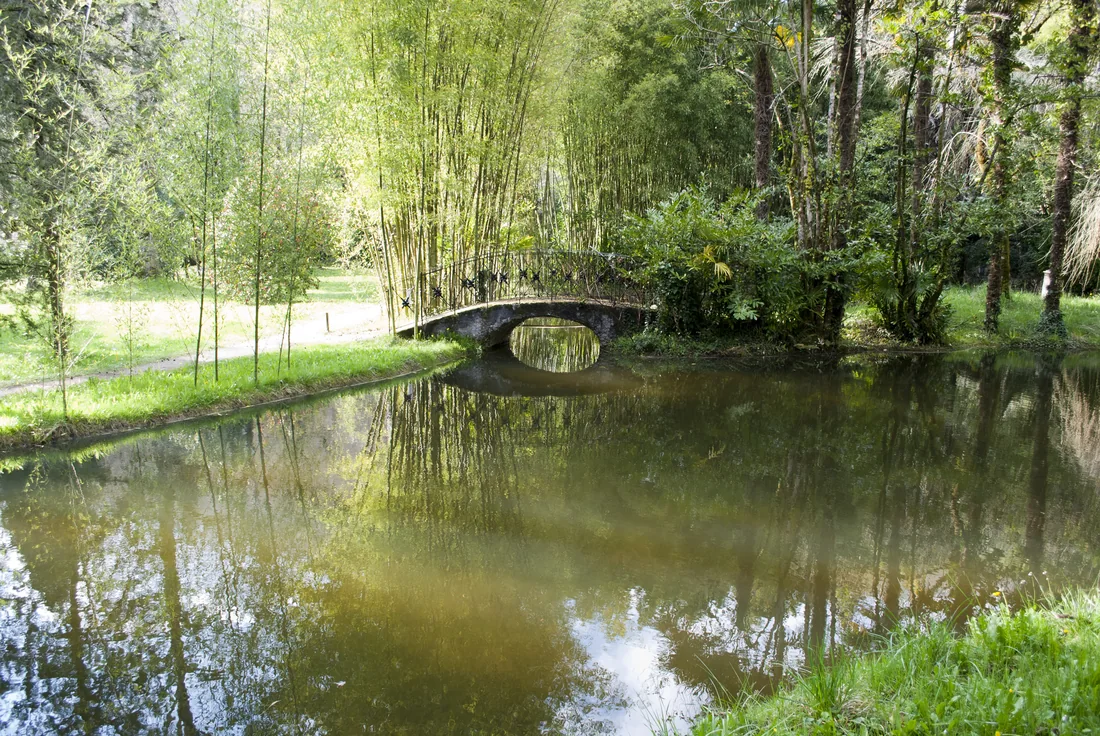
A low arched stone footbridge crosses the edge of a still pond, with bamboo, trees and their reflections in the historic garden at Bertiz.

A pond, arched footbridge and bamboo in the historic garden at Señorío de Bertiz, photographed in April 2015.

ParqueNacionalBertiz.jpg — Conxita clara / Wikimedia Commons / CC BY-SA 3.0 Spain · Creative Commons 1 · Creative Commons 2

Walks and routes

An unhurried garden visit

Give the historic garden about 45–75 minutes, longer if you like reading tree labels or sketching. Use its paths to connect the ponds, small bridges and chapel surroundings, then visit the interpretation centre. This is a flexible visit, so there is no fixed circuit to complete.

Ask reception to suggest the most suitable garden paths and identify the short botanical path described by Visit Navarra. Surface and access needs vary; do not assume every path or bridge is suitable.


An unhurried garden visit

Erreparatzea: the short riverside choice

The orange route follows the old approach beside the Bidasoa towards the bridge and palace of Reparacea. The operator gives about 1.5 km in total and 30 minutes. Return to the entrance at your own pace; stop to look from the path and keep clear of the river edge.

The operator describes flat terrain, and Visit Navarra lists access facilities. Confirm today’s surface and any barriers if using a wheelchair or pushchair, especially after rain.

Erreparatzea: the short riverside choice

Iturburua: a longer woodland option

The black-marked Iturburua route uses paths and forest tracks, linking with Suspiro and the main Aizkolegi track. Its published total is 6 km with 180 m of height difference and about two hours. Choose it when everyone wants a proper woodland walk, leaving extra time for breaks.

Expect forest terrain and climbing. This is not presented as a wheelchair or pushchair route; ask about mud, crossings and the condition of the paths.

Iturburua: a longer woodland option

Aizkolegi: save it for a walking day

The complete green route reaches the high part of the park and the former summer residence. The published return outing is about 22 km, with 680 m of height difference and 6–7 hours of walking. Plan daylight, food, water and the return before starting; the palace is not an indoor attraction to rely on.

A long uphill forest-track itinerary with substantial height gain. Selected facilities on the beginning of the main track do not extend to the full ascent.

Aizkolegi: save it for a walking day

A gentle half-day

Start with the garden while the admission desk and centre are open. Spend time in Tenientetxea, then decide whether to add Erreparatzea. Finish with a picnic outside the garden. Leave the rest of the day loose enough to stop early if the weather or children’s energy changes.

For a group that wants more forest

Make Iturburua the main walk and allow time beyond its two-hour walking estimate for breaks. Add the garden only if its timetable and your energy allow. Packing both into a short opening session is likely to feel rushed.

A shorter visit still counts

Stay with the garden and interpretation centre. Pick a few places to enjoy properly instead of trying to cover every path; this is a useful choice when your group has different walking limits.

Things to try

Make a tree portrait

Choose one labelled garden tree and draw its outline, leaf shape and bark pattern. Then look for a different tree in the woods and compare what you notice. Leave plant material where it is.

Follow the garden’s water

Look at how a pond, a bridge and surrounding planting frame one another. Try two photographs from the path: a wide view and one small detail, keeping everyone safely back from the water.

Bring one question into the centre

Ask why the forest contains different kinds of woodland, or what makes old trees useful to wildlife. Use the displays to find one thing to notice outside.

Consider a guided garden visit

A guided visit can add the stories behind the collection and the estate. Ask reception about the next available visit, its language, price and any booking requirement.

Light rain, with the park open

Spend more of the visit in the interpretation centre and limit the outdoor part to paths staff recommend. The covered picnic area may help with a shower, but it is not a reason to remain outdoors in dangerous weather.

Warnings or strong wind

Postpone the visit rather than sheltering beneath trees. Follow the park’s yellow, orange and red warning policy, and check fresh notices before trying again.

Wildlife and habitats

European beech

Look at the relationship between the leafy canopy and the ground below. A quiet pause helps reveal the woodland’s layers, from trunks to fallen leaves.

Pedunculate oak

The park’s lower slopes and valley woods include pedunculate oak. Compare the outline of leaves you can see from the path with the trees in the garden.

Black woodpecker

Pause to listen in the forest before looking for movement. Keep a respectful distance from trunks with holes; watching quietly matters more than obtaining a close photograph.

Sweetgum

In autumn, compare the colours of the labelled sweetgum with neighbouring trees. Its leaf outline also appears in the park’s emblem.

Common yew

Look at the shape and shade of the yews in the garden. Make a sketch from the path, leaving foliage and any fallen plant material untouched.

Wildlife encounters depend on luck, season and quiet observation. Stay on the paths, leave plants and dead wood in place, and enjoy the habitat even when animals remain hidden.

Stories and discoveries

One estate, two kinds of tree story

The garden brings native trees together with plants introduced from other parts of the world. Beyond it, the park protects Atlantic woodland. Compare the variety of a planted collection with the way trees grow together in the forest.

A leaf on the park’s emblem

The garden guide identifies the sweetgum leaf as the basis of Bertiz’s logo. Look for the labelled tree, then compare the outline with the emblem.

A river-facing entrance

The modern arrival crosses from Oronoz-Mugairi into the park at Oieregi. The Erreparatzea walk follows an older approach beside the river.

When to visit

Spring

Use garden flowers and new leaves as the theme for a slow visit. Keep a waterproof layer handy and check the dates of any guided activity rather than assuming a daily programme.

Summer

Enjoy the shade, but carry water and leave room for the garden’s midday closure. Check weather and fire advice before making a picnic plan.

Autumn

Compare changing colours in the planted garden with the deciduous woodland. Wet leaves can hide uneven footing, so shorten the walk if necessary and keep track of the earlier closing time.

Winter

Make the centre and a short garden visit your starting idea, subject to opening. Choose a calm forecast and enough daylight; a windy day is a reason to come back another time.

Getting there and practical advice

Reception and information

The kiosk by the historic garden sells admission tickets and provides park information. The wider-area tourist office is in Casa Etxeberria near the picnic area. Ask the kiosk about paths and the separate opening of the centre before setting off.

Opening hours to check

For October 2026, the published garden and staffed-service timetable is Tuesday–Sunday, 10:00–14:00 and 15:00–18:00 until 18 October; from 19–31 October the afternoon session ends at 17:00. Mondays are closed. Exhibition rooms generally close 30 minutes before the garden. For other dates and holiday exceptions, use the current timetable or phone +34 948 592 421.

Picnic and play

The entrance area has a covered picnic space with tables, benches and water, plus a children’s play area nearby. Bring your own food and a filled bottle. Eating is not permitted in the historic garden. Check current fire restrictions before using any barbecue facility.

Toilets

Visit Navarra identifies adapted toilet cubicles by the tourist office, with assistance potentially needed at the heavy doors and access ramp. Ask which facilities are open that day and which entrance is best for your needs.

Arrive through Oronoz-Mugairi

Follow the signed park approach from Oronoz-Mugairi and cross to the Oieregi entrance in Bertizarana. Use the designated parking rather than continuing onto forest tracks.

Without a car

Before relying on public transport, ask the Bertiz tourist office on +34 948 592 386 for current services, the stop to use and the onward walk. Confirm a return journey for your date; do not assume a village stop has a direct or step-free connection to the entrance.

Parking and buildings

The published information lists four reserved parking spaces and an adapted nature interpretation centre. Ask about the entire connection from your parking space to the entrance and the exhibitions, not only the building itself.

Choose a particular path

Visit Navarra describes a 300 m botanical path, plus access facilities on the beginning of the Aizkolegi track and on Erreparatzea. Ask staff to identify the right start and suitable extent. Rain can make the botanical surface irregular, and assistance may be needed. These descriptions do not promise independent access throughout the garden or forest.

Plan for practical assistance

Tell the park what equipment you use and whether someone can help with doors, ramps or rough surfaces. Confirm toilet access before travelling and choose a shorter plan if the weather has affected the paths.

Sources and useful links

Wildlife you might spot

5

Each card links to a full Explore page with photos, traits, and fun facts.

Snap map for this place

Start with the big picture, then zoom in to explore individual wildlife observations around this place.

Loading map…

Good to know before you go

Check the weather warning, park notices and the garden timetable before leaving. Orange or red weather warnings close the park; a yellow warning is a reason to postpone. In an emergency, call 112.

Bring shoes with grip, a waterproof layer, water and a snack. Wet leaves and uneven ground need care; keep children close beside ponds, rivers and bridges.

Visit the garden and centre within their opening session rather than arriving just before the midday break. Confirm the centre and exhibition rooms’ own closing times at reception.

Use the designated car park. Do not drive up forest tracks; visitor motor traffic is restricted beyond the parking approach.

Eat in the picnic area, outside the historic garden. Stay on garden paths and leave flowers, seeds, fruit and branches where they are.

Pets need a lead and are excluded from the historic garden, visitor buildings and the grassed area by the car park. The published rules exempt guide dogs; confirm other assistance-dog arrangements with the park before travelling.

Keep birdwatching quiet and unhurried. Do not play recordings, approach nest holes or disturb animals for a photograph.

Choose your walking distance before setting off. Iturburua is a 6 km outing; Aizkolegi is about 22 km return. Neither is a quick addition to a garden stroll.

Frequently asked questions

It is part of the same visit. The historic garden and interpretation centre sit at the entrance to the much larger forested park. The garden has an admission charge and timetable; check the centre’s opening at the kiosk.
The park advertises individual visits without an online reservation, with tickets sold at the entrance kiosk. Contact the park for guided activities, school visits and organised groups, and check arrangements again before travelling.
The published garden tariff checked on 16 October 2026 is €3 general admission and €1.50 for students, youth-card holders, retirees, pensioners and people over 65. Minors, unemployed visitors and visitors with disabilities qualify for free admission. Bring the required proof and check the current tariff; guided services can cost extra.
Erreparatzea is the short riverside option: the operator gives about 1.5 km in total and half an hour on flat terrain. Allow longer for pauses and ask about the surface after rain. You can also stay with the garden and centre.
A dog changes the plan: the historic garden and interpretation centre exclude pets. Use permitted outdoor areas with your dog on a lead, following the restrictions around the entrance lawns. Ask the park about assistance dogs.
The park authorises cycling only on the Plazazelai route. Bicycles and skates are not allowed in the historic garden. Do not assume another forest track or footpath is a cycle route.
You may hear or see one, but a short visit cannot promise a sighting. The woodland itself, its layers of leaves and the role of old trees are worth noticing whether the birds appear or not.

Recent snaps at this place

Recent snaps will appear here as new observations are added.

View all ›

Take the discovery with you

Exploring Señorío de Bertiz Natural Park?

Identify the wildlife you spot, learn as you go, and keep a collection of the adventure.

  1. 1Spot it
  2. 2Snap it
  3. 3Keep the discovery