Snappit logo
Snappit
Get App
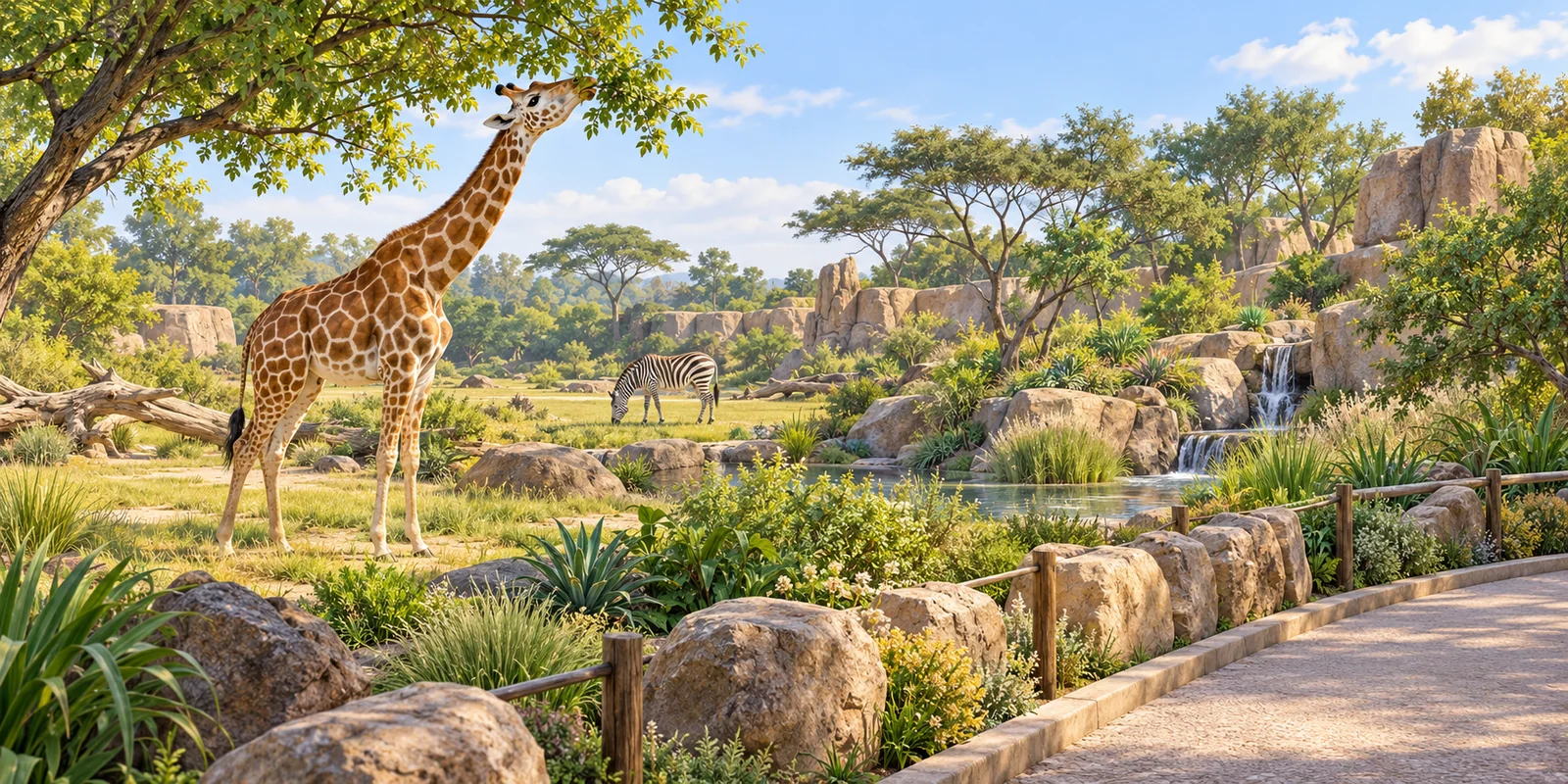
Generic illustration, not a photograph of this venueIllustration
ZooNordrhein-Westfalen, Germany

Aachener Tierpark Euregiozoo

Come to Aachener Tierpark Euregiozoo for an animal-filled half-day with plenty of room for children to play and investigate.

About

Come to Aachener Tierpark Euregiozoo for an animal-filled half-day with plenty of room for children to play and investigate. The Beverbach and its lake give this 8.9-hectare zoo much of its character: waterbirds share your attention with camels, monkeys, owls and the animals of the African paddock. Start at the entrance information board, choose a feeding to watch if one fits, and make the nearby African penguins your first proper stop.

There is enough variety here to reward a slow visit. You might spend longer watching a meerkat group than looking for the next enclosure, or let a playground decide where the next break happens. The children’s farm brings domestic animals into the picture, while the energy exhibits invite a different kind of looking: how can sunlight, wind or muscle power do useful work? Choose a few things your family really wants to see, then leave space for the unexpected pause. Planning to visit? Download the Snappit app to identify the wildlife you spot in real-time.

The present zoo opened in 1966 in the Drimborner Wäldchen. Its children’s farm followed in 1980 and remains a substantial part of the educational work: participants learn the everyday responsibility of caring for domestic animals. The zoo’s location close to Germany’s borders with Belgium and the Netherlands is reflected in the name Euregiozoo.

What to do here

For a shorter visit, pair the penguins with the children’s farm area, the dwarf-goat enclosure and a playground. For a fuller day, add the lake, red pandas and mongooses, then the Karawanserei camel area and African paddock. The zoo has about 3 km of paths altogether, so that figure describes the network rather than the distance you must walk. Use the visitor map to choose your turns.

At the enclosures, give children a small question instead of a checklist: which animal is resting, which is watching, and which is searching for food? The walk-through budgerigar enclosure offers another chance to pause among birds when open. Older children can bring one of the free German-language zoo quiz sheets, with versions ranging from kindergarten age to secondary school. A pencil and a few carefully chosen questions are often enough.

Seasonal info

The zoo opens year-round. Winter brings an earlier finish, and severe weather can change access or hours. The farm-area kiosk takes a winter break from late October and may close in very poor weather; bring your own refreshments when you cannot rely on it. Check the official visitor information before travelling.

Accessibility

Aachen’s tourist service lists the zoo as suitable for pushchairs. For a wheelchair visit, ask the zoo which paths best fit your needs, especially if gradients or surfaces are important. Accessible toilets and baby-changing rooms are available; collect a key at the ticket office or, in the main season, at the kiosk. Bookable tours include a wheelchair-suitable senior tour and tailored visits for blind or partially sighted visitors.

Don't miss

1

African penguins near the entrance

a good first stop, with a conservation connection to wild penguins in South Africa.

2

The African paddock and Karawanserei

compare zebras, ostriches and antelopes with the neighbouring camel area.

3

The Beverbach lake and bird enclosures

leave time for waterbirds, snowy owls and the walk-through budgerigar enclosure.

4

Playgrounds, domestic animals and energy exhibits

build pauses and small experiments into your animal walk.

Walks and routes

Penguins, farm and play

Begin with the entrance-side penguins, then choose the dwarf goats, farm-animal pavilion and a playground. Leave time for one return visit to the enclosure that most caught your child’s interest.

For mobility needs, agree a suitable short route with staff before setting out.

Lake and wider animal collection

After the penguins and farm area, use the lake as the next focus. Continue to the red-panda, meerkat and mongoose area, then choose the camels, African paddock and bird enclosures before returning towards the entrance.

Ask staff about the lake and western sections if your visit depends on particular surface or gradient requirements.

Things to try

Five minutes with one animal

Choose a meerkat, penguin or macaque and quietly note each change of activity. Children can draw symbols for moving, resting and looking around, then compare their notes. The aim is to notice more, rather than collect the most animals.

An energy question between enclosures

Pick an energy display and ask where its energy comes from, what changes it into useful work, and where you might use the same idea at home. The exhibits connect renewable energy with examples from animals and plants; some use models or hands-on demonstrations.

A few rally questions

Download the age-appropriate zoo quiz before leaving home. Let each child choose a handful of questions, then use the enclosure information to find answers together. It gives the walk a purpose without turning every stop into schoolwork.

Shorten the outdoor visit

If showers are brief, choose the penguins and farm area and keep the rest optional. Bring waterproof layers; do not depend on the seasonal kiosk as a wet-weather refuge. For a day of persistent rain, moving the zoo visit to a drier day gives children more freedom to enjoy the play areas.

Wildlife and habitats

Start with the penguins, then watch one bird for a while rather than trying to photograph the whole group. Compare how it moves in the water and on land.

At the red-panda enclosure, take time to look through the whole display before moving on. If your first visit is quiet, save another look for later in the walk.

Watch several meerkats at once and ask whether they are doing the same thing. A short sequence of photos can tell a more interesting story than one close-up.

Use the mongoose stop as a comparison with the meerkats nearby. Look for differences in body shape and in how the group occupies its enclosure.

At the Karawanserei, choose a view that includes the camel’s whole body. Ask children what they notice about the feet, coat and humps before reading the sign together.

Give the serval enclosure a patient look. If the animal is visible, try a portrait that keeps its ears in the frame; avoid calling or tapping to get its attention.

An owl that stays still can be a rewarding subject. Look quietly for small head movements, and let children sketch its outline instead of waiting for it to fly.

Pause at the ibis enclosure and use the signs to distinguish the species. See whether you can frame a bird side-on, then compare its profile with your sketch.

At the macaques, concentrate on interactions: who approaches whom, and which animals choose to sit together? Keep your own distance and leave them in control of the encounter.

Take a slow look across the lynx enclosure rather than expecting movement straight away. If it is out of view, continue your walk and decide whether to return later.

Stories and discoveries

A farm built around responsibility

Since 1980, the children’s farm has given young people a place to learn the daily work of caring for domestic animals. Feeding and cleaning are part of the experience, alongside learning and recreation.

A penguin link beyond Aachen

The zoo’s support for the Simon’s Town penguin project connects its captive African penguins with protection of a wild colony in South Africa. The two settings make a useful starting point for talking about what conservation involves.

Getting there and practical advice

Playgrounds and picnic-table symbols are marked on the visitor plan. A seasonal kiosk is near the children’s farm. Toilets, accessible WCs and baby-changing facilities are available; collect the relevant key before you need it.

The entrance is at Obere Drimbornstraße 44, 52066 Aachen. Use Tierpark or Zeppelinstraße when planning your bus journey. For parking, follow marked spaces at the zoo and along Adenauerallee. The zoo’s old Pinguin-Ticket link should no longer be used to plan fares.

For a personalised visit, contact the zoo before travel. Its education team offers a wheelchair-suitable senior tour and an individual programme for blind and partially sighted visitors, using sounds, smells and tactile materials. Discuss what your group needs when booking.

Sources and useful links

Wildlife you might spot

10

Each card links to a full Explore page with photos, traits, and fun facts.

Snap map for this place

Start with the big picture, then zoom in to explore individual wildlife observations around this place.

Loading map…

Good to know before you go

Head to Obere Drimbornstraße 44. Bus 16 serves the Tierpark stop; Zeppelinstraße is another option, with roughly a nine-minute walk. Check your journey in the current ASEAG timetable.

If driving, use marked parking areas; additional spaces are along Adenauerallee. Cycle racks are outside the main entrance, with free e-bike charging inside the entrance area.

Get the official visitor map and check the feeding board as you arrive. Keep the short visit around the penguins and farm; add the lake and western grounds when everyone has more walking energy.

Bring drinks and something to eat, particularly in winter or bad weather. The kiosk’s seasonal opening makes it an unreliable fallback for a hungry child.

Ask for the toilet or baby-changing key before it becomes urgent. If accessibility is central to your plans, discuss your route with the zoo in advance on +49 241 4757430.

The farm’s animal-care programme is for registered children aged 8–16. Joining requires a conversation with the educators; a normal day ticket does not enrol a child.

Leave pet dogs at home. Certified assistance dogs are the exception, with the certificate shown at the ticket office.

For animal photographs, stay on visitor paths and wait quietly for a clear view. Follow enclosure signs and staff instructions, and keep your own food away from the animals.

Frequently asked questions

A half-day works well. If time is short, choose the entrance-side penguins and farm area; if the children settle into the playgrounds or quizzes, leave the rest of your day flexible.
Arrange one with the education team at [email protected]. Family, conservation and animal-adaptation themes are available. Send your preferred date, group size and interests so the team can advise on a suitable visit.
Try the downloadable zoo rally, compare the animals’ body shapes, or explore the energy exhibits. The farm-animal information pavilion adds questions about domestic breeds and how people keep them.
Do not plan around it. ASEAG has withdrawn that ticket; use its current fare information for the bus journey and check zoo admission separately.
The penguins provide a concrete example. The zoo supports work around the wild African penguin colony in Simon’s Town, South Africa, where rangers help protect breeding areas and take injured birds or abandoned young to specialist care.

Recent snaps at this place

Recent snaps will appear here as new observations are added.

View all ›

Take the discovery with you

Exploring Aachener Tierpark Euregiozoo?

Identify the wildlife you spot, learn as you go, and keep a collection of the adventure.

  1. 1Spot it
  2. 2Snap it
  3. 3Keep the discovery