





Red Panda
Ailurus fulgens
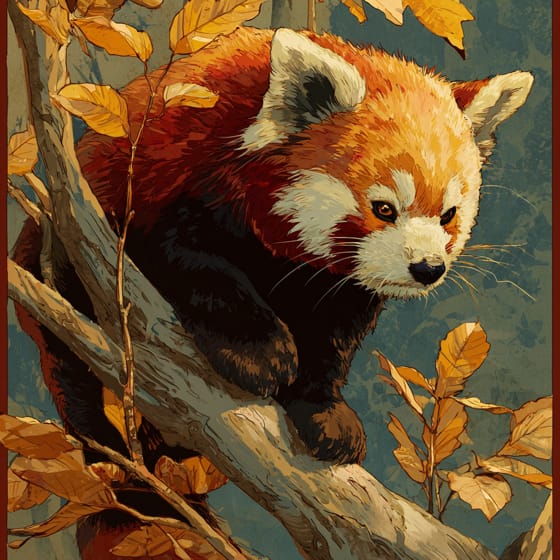
Red pandas are adorable animals with fluffy fur and a cute face! They love to climb trees and eat bamboo.
Habitat: Mountain forests in Asia
The Red Panda has thick reddish-brown fur, a long bushy tail with alternating dark and light rings, and striking white markings on its face and around its eyes. Its dark belly contrasts with its vibrant upper coat, making it look quite distinct.
Category
MammalsRarity
Common
Danger
1/5 · Very low
Snaps
Be the first to snap!
Red Pandas are not closely related to Giant Pandas, despite their shared name.
Red Pandas often sleep curled up with their tail covering their face like a blanket.
They are such clean animals; they spend hours grooming themselves just like cats!
They communicate using adorable squeaks, whistles, and even huffing sounds!
Red Panda can climb trees easily thanks to its sharp, semi-retractable claws that provide excellent grip.
Red Panda uses its long, bushy tail for balance while navigating high branches and for warmth while sleeping.
These agile animals are omnivores, munching mainly on bamboo, supplemented with fruits, roots, and small critters.
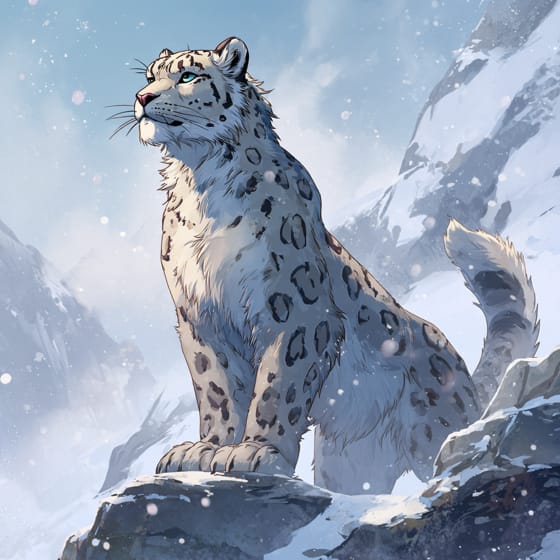
Panthera uncia
A top predator in their mountain forest habitat.
_cropped.jpg&width=800)
Cuon alpinus
Can prey on red pandas, especially cubs or weak individuals.
Fargesia robusta
Their primary food source, providing essential nutrients and shelter.
Lophophorus impejanus
Red Panda sometimes eats their eggs or chicks for protein.
Furry describes animals possessing a dense covering of soft hair or fur.
Arboreal animals live primarily in trees, utilizing them for shelter, food, and protection from predators.
This trait characterizes organisms whose diet consists entirely or primarily of plant material.
This habitat trait identifies species found in mountainous regions, characterized by high elevation, steep slopes, and varying climate zones.

This trait identifies organisms whose diet consists entirely or primarily of animal tissue.

Describes a species whose presence and role have a disproportionately large effect on its environment.

Threatened status denotes a species likely to become endangered in the foreseeable future without effective conservation interventions.

Nocturnal animals are primarily active during the nighttime hours, typically resting or sleeping during the day.
Danger
1/5 · Very low
Red pandas are friendly and not dangerous, but it's best to observe them from a safe distance at the zoo.
The easiest way to identify Red Panda is to use the Snappit nature identifier app.
79-120 cm
3-6 kg
8-10 years
24 km/h
These agile animals are omnivores, munching mainly on bamboo, supplemented with fruits, roots, and small critters.
Mountain forests in Asia
Foraging
Zoom in to split clusters and explore where this object has been snapped.
Recent snaps will appear here as new observations are added.
Ohio, US
You might spot African Lion, Tiger, and Snow Leopard.
View guide →
Alabama, US
You might spot African Elephant and Reticulated Giraffe.
View guide →

New York, US
You might spot Gorilla, Tiger, and Snow Leopard.
View guide →
New Jersey, US
You might spot African Lion, Snow Leopard, and Reticulated Giraffe.
View guide →
Tennessee, US
You might spot Red Panda, Snow Leopard, and Chimpanzee.
View guide →

England, UK
You might spot White Rhinoceros, Giraffes, and Ring-Tailed Lemur.
View guide →
Take the discovery with you
Snap it with Snappit to identify it, learn what makes it special, and add the discovery to your collection.




.jpg&width=800)



.JPG&width=800)


.jpg&width=800)
