Visitor center and an open out-and-back section
Start with staff advice and follow the open section they recommend. Choose a turnaround point that leaves energy for a comfortable return to the center.
 Illustration
Kushiroshitsugen rewards a change of pace.
Kushiroshitsugen rewards a change of pace. From a distant viewpoint, the wetland can look like a single stretch of grass; at Onnenai, you can begin to notice its different textures. Tall reeds, sedge tussocks and alder trees share the wet ground, while patches of sphagnum bog support a much smaller world of plants. Choose a few things to look for, then give yourself time to notice them.
For a manageable first visit, make Onnenai Visitor Center your base on the western side of the park. Start indoors, ask what is accessible that day, and choose an outing that suits your group. The center’s seasonal information and boardwalk field-guide links are useful companions when a plant catches your eye. The wider national park also includes rivers, lakes and hills; this guide concentrates on the Onnenai sector rather than trying to fit them all into one stop.
In normal conditions, the marked walking choices range from a 0.5 km short course to a 3.1 km outer circuit. Those totals include both wooden walkway and the path along the former Tsurui railway. They are modest distances on paper, but the interest is in stopping: compare the vegetation beside the path, listen for birds, and take a photograph that shows the landscape rather than only the subject.
Repairs currently restrict the walking network, so choose your walk with the visitor-center staff and check the closure notice before setting out.
This is a good place to make a small nature challenge of your own: spot three different plant shapes, compare the sounds at the woodland edge and in open marsh, or sketch one leaf without picking it. Children need close supervision because sections of walkway have no guardrails. Look from the permitted path and give wildlife plenty of space. Explore the grounds like a pro—download the Snappit app to instantly identify animals and plants.
Kushiro Wetland became Japan’s first Ramsar-listed wetland in June 1980. National-park designation followed in July 1987, and Onnenai Visitor Center opened in April 1992. These protections recognize a whole wetland landscape, not just its best-known bird: reed and sedge marsh, bog, woodland and water are all part of the story.
Begin with the visitor-center displays and the day’s access information. Ask staff which open section best shows the seasonal plants, then take a gentle out-and-back walk during the current works. On a fully reopened visit, choose a course according to energy and weather. Pause to compare reed-and-sedge marsh with the alder edge, use the field-guide QR links when helpful, and leave time to ask about anything you could not identify. Check the current program for guided activities, including the language used and any booking requirements.
Spring and early summer bring emerging leaves and flowers; summer also calls for insect repellent. Autumn is a good time to notice seed heads and woodland color. Snowshoeing and cross-country skiing are winter possibilities when conditions and access allow, so ask the center about equipment and usable areas first. For autumn and winter 2026–27, plan around the boardwalk works and confirm reopening before attempting a full loop. From 1 November 2026 the center closes at 16:00, and its October bulletin says the toilets will also be unavailable after that closing time.
The center lists barrier-free boardwalk access and free wheelchair loans, but the normal route from the public car park includes stairs. Visitors who need step-free arrival should contact the center beforehand about the designated parking behind the building. Ask staff to confirm a suitable route for your wheelchair or stroller all the way out and back, including temporary work areas and any snow or ice.
notice the difference between tall reed beds, sedge tussocks and the woodland edge.
seasonal information helps turn an expanse of green or gold into things to look for.
Sphagnum-bog habitat adds another texture to the wetland; ask staff which parts are accessible on your visit.
plants, birdsong and changing autumn textures without needing a long hike.
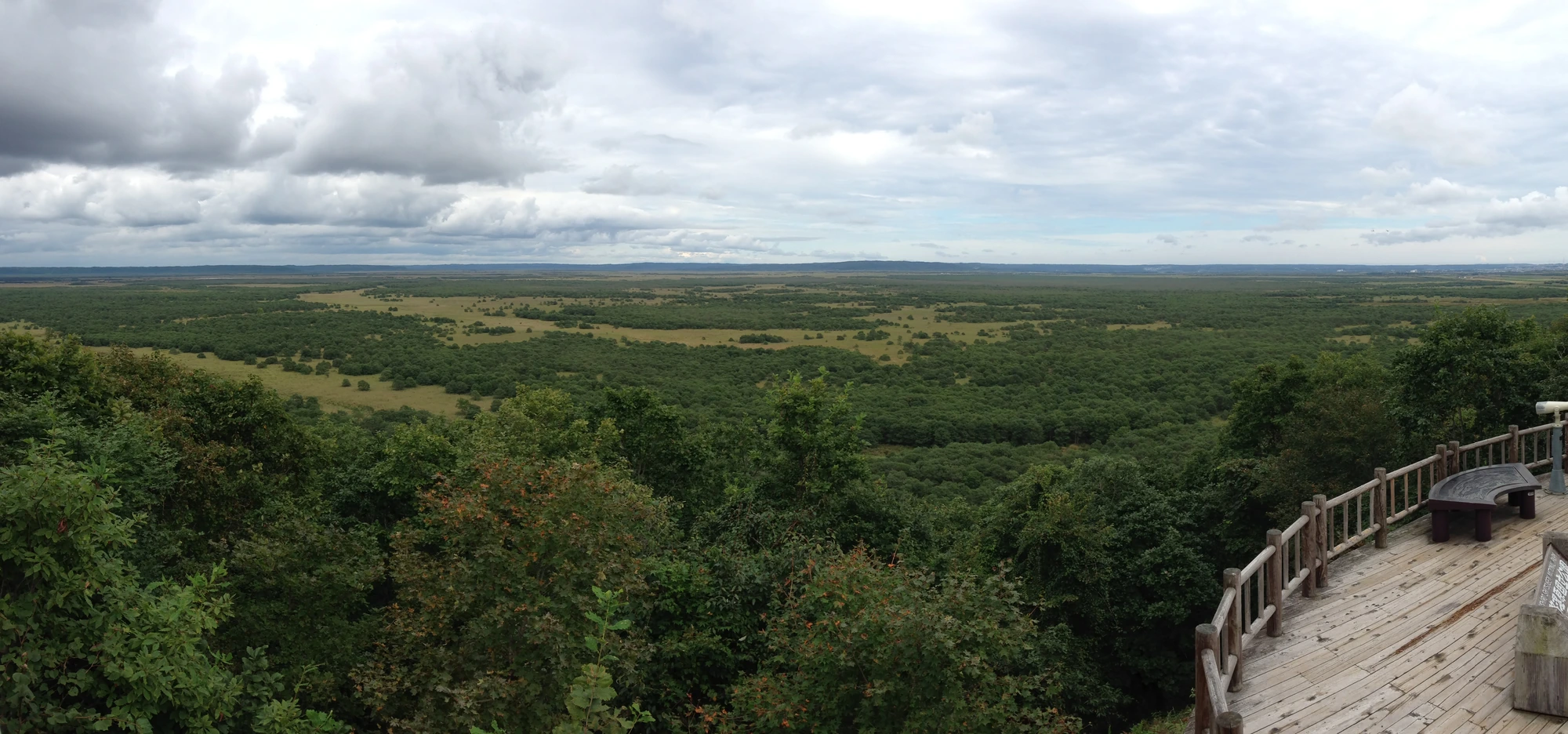
Kushiro Wetland’s open marsh and woodland mosaic seen from the Satellite Observatory in September 2014. This wider-park view is separate from the Onnenai boardwalk visit.
Kushiro Marsh Wetland Hokkaido Panorama 2014.png — Kzaral, CC BY 2.0 (https://creativecommons.org/licenses/by/2.0/). Source: https://commons.wikimedia.org/wiki/File:Kushiro_Marsh_Wetland_Hokkaido_Panorama_2014.png; original Flickr photograph: https://www.flickr.com/photos/kzaral/14963096953/. Resized and recompressed as WebP; no crop or retouching. · Creative Commons
Start with staff advice and follow the open section they recommend. Choose a turnaround point that leaves energy for a comfortable return to the center.
A compact taste of the wetland, with plenty of time left for the center. A useful choice for a group that prefers frequent pauses over a longer distance.
A longer walk among wetland habitats, with more time to compare plants and listen to birds. Keep your pace flexible and stop wherever something catches your eye.
The longest standard circuit, combining more boardwalk with a longer stretch of the former railway path. Allow plenty of time for observation stops rather than aiming to finish at a fixed pace.
Adjust these planning blocks to your group and the day’s open paths; staff can help you choose a suitable turnaround point.
Spend about 20–30 minutes in the center: check access and weather, look at the displays, use the toilet and choose one or two things to notice.
Use roughly 40–60 minutes for a staff-confirmed open walk, including the return. Turn around sooner if grip, wind or anyone’s energy changes.
Keep the remaining time for questions, a rest and getting back to your car or bus stop. Bus travelers should set this buffer from the return timetable first.
From an open walkway, choose a broad view and then a close detail. What changes where tall reeds give way to sedges or trees? You do not need to name everything to notice a pattern.
Pause with your group at a safe place that does not block the path. Compare the sounds in open marsh and at the wooded edge. Binoculars can help you watch without approaching; never search for nests or use food to draw birds closer.
Try to find a tall stem, a rounded clump and a low patch of plants, all from the permitted path. Let each child choose one favorite shape to sketch. Keep the goal small enough that turning back early still feels like a complete visit.
Check the visitor-center program for a guided seasonal outing or indoor session. Confirm the date, book where required and ask which language is used.
Use the visitor-center displays if it is open and safe to reach. When heavy rain, strong wind or poor footing makes the boardwalk unsuitable, make this a brief learning stop and save the outdoor visit for another day.
Look at the tall stems that help give the marsh its texture. The reed beds are part of the habitat, not scenery to push through; observe from the open walkway.
Notice the lower clumps among the taller vegetation. Carex includes many different sedges; start by comparing their shapes and use the center’s field guide for a closer identification.
The low moss layer helps distinguish bog habitat from taller reed marsh. Ask about current access to this part of the network; do not cross a repair barrier or step into the bog for a closer photograph.
A useful plant to ask about during a spring or early-summer visit. Let the center point out what is in season, and use a close-up photograph taken from the path rather than picking a specimen.
Give deer space and keep your group on the path. Watch carefully while driving around the wetland too, especially if animals are near the road.
Watch cranes from a distance if they appear. Stay on the walkway, let the birds move freely and leave nesting places undisturbed.
The sphagnum-rich raised-bog patches are a small, distinctive part of the wider marsh. The local learning guide explains that accumulated peat allows these areas to be supplied by rain and fog rather than river water.
Wetland protection also protects functions such as storing water and moderating floods. That is another reason to value the broad landscape as well as its individual plants and birds.
The standard circuits combine boardwalk with the former Tsurui railway path. A published 3.1 km circuit therefore does not mean 3.1 km of wooden decking.
Late May–July is the locally recommended first-visit window for plants and birdsong. Flower timing moves with the season; use the center’s current board rather than treating dates as promises.
Green marsh and plant observation are the focus. Carry insect repellent and adjust the walk to heat, wind and rain.
Look for changed leaf colors and seed heads. The current repair closure affects the 2026 autumn visit; stay with the open sections identified at the center.
Winter equipment can open a different kind of visit, but it needs a fresh plan. Ask the center about snowshoe or ski availability, current safe areas, works and the shorter opening day; do not take a summer route description as winter clearance.
Seasonal nature information, interpretation and a place to pause before or after walking.
Use the center facilities before walking. The October 2026 bulletin warns that from 1 November the toilets also become unavailable at the 16:00 closing. Confirm access on closed days; do not rely on round-the-clock toilets.
Free binocular loans were advertised in October 2026; free wheelchairs are listed by the center. Availability, suitability and any temporary restrictions need confirmation on the day.
Navigate to Onnenai Visitor Center, not to a generic national-park pin. The parking approach is off Prefectural Route 53; published driving estimates from Kushiro Station vary around 30–40 minutes and are not live traffic estimates. Allow longer in poor conditions.
Akan Bus’s Tsurui line serves the area from Kushiro. The operator’s all-stop timetable labels the stop 温根内 (Onnenai); the center page calls it Onnenai Visitor Center and describes about a five-minute approach. Check your exact stop, return service and day-specific symbols before leaving Kushiro. A bus arrival does not avoid the stair/accessibility issue.
A normal car-park arrival involves stairs. Contact the center in advance for the designated parking behind the building if you need step-free access.
Ask staff to confirm a suitable out-and-back path for your equipment, including its surface, turning space, temporary barriers and any snow or ice. The standard circuits combine wooden walkway and former railway path.
Checked 16 October 2026: parts of Onnenai’s boardwalk, including the outer section around the viewing terrace, are closed for repairs from 28 September 2026 to 12 February 2027 (planned). The center remains open on its regular schedule. Ask staff about an open out-and-back walk and suitable access for your group. The standard circuits below are normal-route information, not currently available loops. Stay outside barriers and confirm actual reopening even after the planned end date.
onnenai-works-2026-2027
Each card links to a full Explore page with photos, traits, and fun facts.
Start with the big picture, then zoom in to explore individual wildlife observations around this place.
Check the repair notice and ask the center which paths are open before setting out. Stay outside all barriers, including around the viewing terrace.
For a step-free arrival, call +81 154-65-2323 ahead of time about the parking behind the center; the usual car-park approach has stairs.
Wear shoes with good grip. Wet wood can be slippery, and unrailed sections need particular care with children.
Skip the exposed walk in heavy rain or strong wind. A shorter indoor visit is a better choice than trying to complete a circuit.
Follow local bear advice
check recent notices, walk with others, make your presence known and avoid dim-light outings. Turn back if you find bear signs.
Stay on the designated path, leave plants where they grow and take all food scraps and rubbish home. Never feed wildlife.
Bring a layer, rain protection, drinking water and summer insect repellent. Binoculars are worth asking about; the center advertised free loans in its October 2026 bulletin, subject to availability.
Plan the return journey before walking. Bus schedules vary by day, and the center closes on Tuesdays and 29 December–3 January; check toilet access as well.
Recent snaps will appear here as new observations are added.

Maryland, US
You might spot White-Tailed Deer and Eastern Gray Squirrel.
View guide →

District of Columbia, US
You might spot Eastern Gray Squirrel, Duck, and House Sparrow.
View guide →

Illinois, US
You might spot American Robin, Canada Goose, and House Sparrow.
View guide →

Virginia, US
You might spot Spotted Lanternfly and Northern Cardinal.
View guide →
Take the discovery with you
Identify the wildlife you spot, learn as you go, and keep a collection of the adventure.