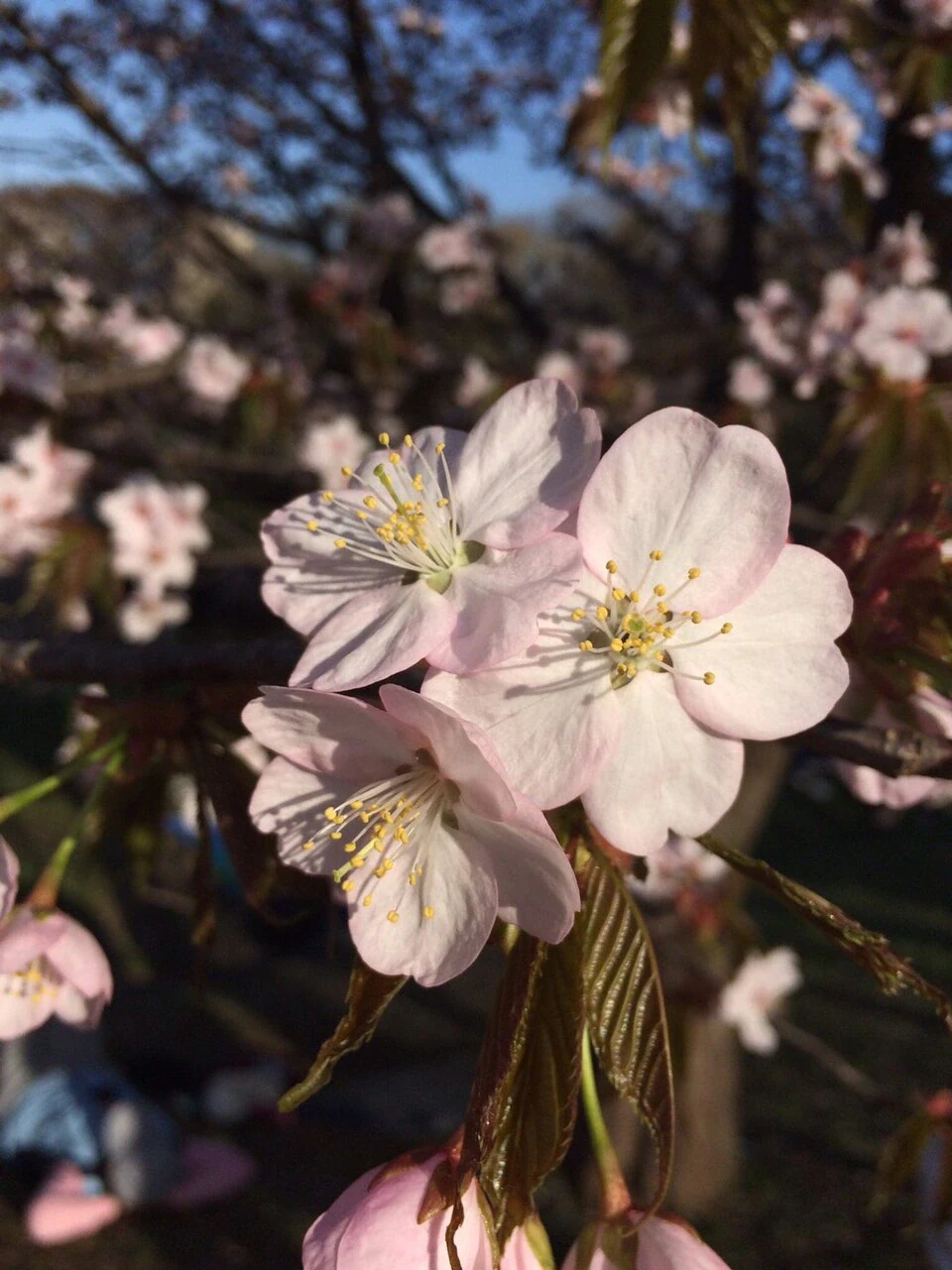
You can make a satisfying visit to Maruyama without climbing anything. Come out of the subway, walk into the park and give yourself time to look: a tree canopy above the path, flowers near the woodland edge, a bird moving around a trunk. The broad recreation area at the foot of Maruyama covers about 70 hectares, but a first visit works best as a smaller outing around the Park Center, open square and nearby woodland. It is an easy place to alternate a little nature-watching with a playground stop.
The trees tell two different stories. Maruyama’s protected forest preserves a natural landscape close to the city, while some park trees remain from a nursery used to test and raise trees for planting elsewhere in Hokkaido. Old katsura trees are part of the park’s character; planted larch and sugi (Japanese cedar) add a different texture. Comparing a broad leaf with a cluster of needles is a more rewarding starting point than trying to identify every tree at once. Stay on paths, look upward as well as down, and leave the plants where they grow.
In spring, the park’s cherry blossoms attract plenty of company. Make time for the smaller flowers too: the operator’s spring guide includes blue-to-purple ezoengosaku and the quieter flowers of enreisō, a trillium. Later in the year, full summer foliage changes the feel of the woodland, then autumn brings another reason to return. If the branches are bare, spend a few minutes watching how birds use the trunks rather than judging the visit by the number of flowers.
For a longer outing, the Hachijūhakkasho entrance leads to a separate mountain walk, passing a series of devotional statues on the way toward Maruyama’s summit. The hill is only about 225 metres above sea level, but the ascent still calls for proper walking shoes, a check of current alerts and enough time to come down comfortably. You do not need to add it to enjoy the lower park.
Maruyama Zoo and Hokkaido Jingu are nearby places to visit in their own right. The zoo has its own admission and opening calendar; the shrine is an active place of worship. Choose one as an optional extension if it interests you, rather than treating all three as stops to hurry through. The park walk described here does not require entry to either. Turn your visit into a safari! Use the Snappit app to scan and log wildlife sightings here.
A tree nursery was established here in 1880 to test species and supply planting stock. The operator traces surviving sugi and larch plantings to 1890. The Hachijūhakkasho mountain trail and its devotional tradition date to 1914, while Maruyama’s natural forest was designated a national Natural Monument on 3 March 1921. These histories sit alongside one another: planted parkland, a protected forest and a well-used place for recreation.