
Snappit logo
Snappit
Get App
Generic illustration, not a photograph of this venueIllustration
ParkShikoku, Japan

Ritsurin Garden

Ritsurin rewards a slow walk.

About

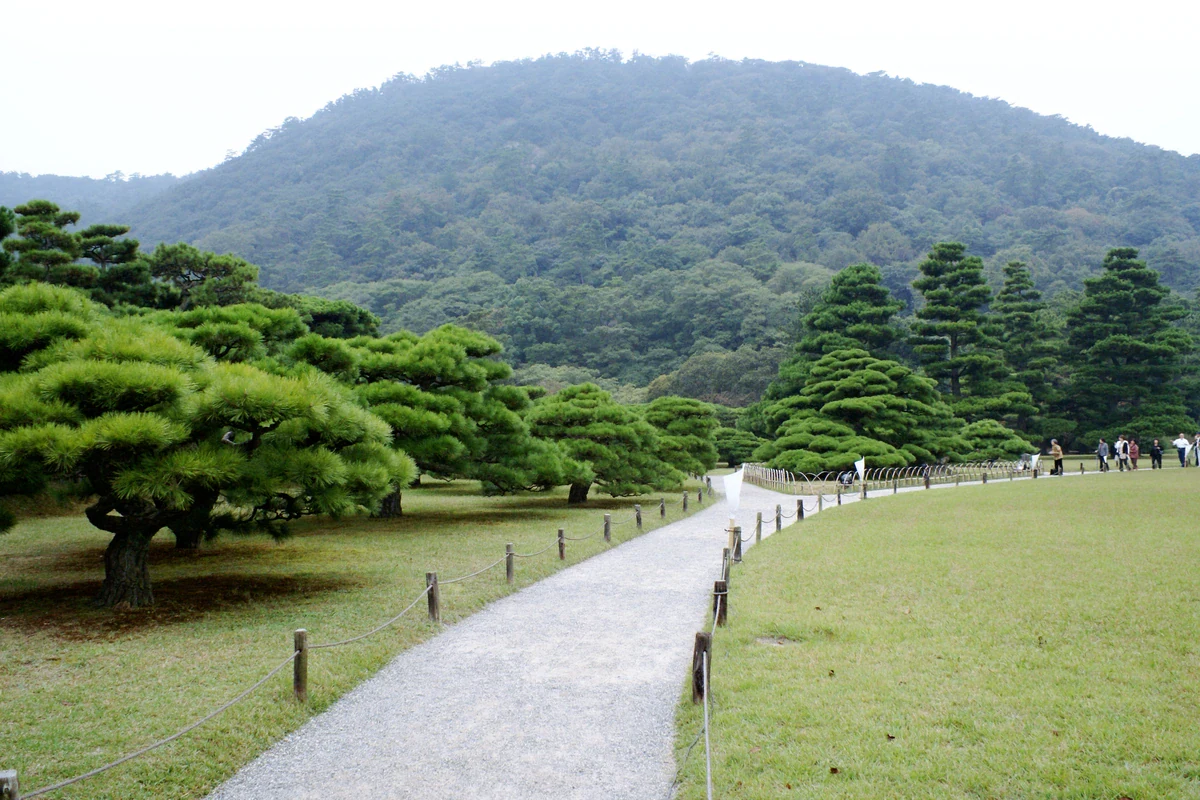
Ritsurin rewards a slow walk. A clipped pine fills the foreground, a bridge appears across the water, and the wooded slope of Mount Shiun ties the scene together. You do not need to know the names of the stones or trees to enjoy it. Stop, look back, then move a few steps and see what changes. This is a cultivated landscape shaped by generations of gardeners, with wild birds and seasonal flowers adding their own movement.

For a first visit, make the South Garden your main outing. Its pond circuit brings together the shaped pines, Kikugetsu-tei teahouse and views around Nanko, the South Pond. Hirai-hō is the small landscaped hill for the familiar view over the pond and Engetsu-kyō Bridge; it involves a climb, so it is an optional extra. The view from beside the water is a satisfying alternative. Leave room for either tea or a boat ride rather than rushing to fit in everything.

The North Garden gives the visit a different rhythm. Its more open layout, Fuyōshō lotus pond and Gun'ōchi pond make a useful extension for flowers and birds. The two gardens belong to one paid site, but they need not both be completed on a short visit. A small naming trap: Hokko, the North Pond, is actually in the South Garden. Follow the garden names and coloured circuits on the official map.

This is a historic garden in the city of Takamatsu, not a mountain-hiking park. The wider property includes the hillside setting; the normal visitor outing is through the designed gardens below it. With children, try choosing a favourite pine shape or noticing how a reflection changes as you walk. Keep little ones close beside ponds and on bridges, and let the visit be about looking rather than covering every path. Turn your visit into a safari! Use the Snappit app to scan and log wildlife sightings here.

The garden grew from an earlier local estate and was developed by the Ikoma and Matsudaira families during the Edo period. Successive Takamatsu lords shaped it over generations, with the principal garden completed in 1745. It opened to the public as a prefectural garden on March 16, 1875, and became a nationally designated Special Place of Scenic Beauty in 1953. The North Garden was substantially remodelled in the late Meiji and early Taishō periods, which helps explain its different feel.

What to do here

Follow the South Garden circuit for pines and pond views, pause for tea at Kikugetsu-tei, or add a guided wasen boat ride on Nanko. With more time, continue into the North Garden for a contrasting landscape and seasonal flowers. Bring binoculars if you enjoy watching birds quietly from the paths.

Seasonal info

Look for plum blossom in late winter, cherries in spring, irises and lotus in the warmer months, and maple colour in late autumn. Flowering changes each year; check the garden’s flower updates before making a special trip. Winter is also a good time to look for visiting ducks.

Accessibility

Use the dedicated wheelchair-and-stroller map and ask at the ticket office which paths suit your needs. Some hill paths, bridges and waterside sections are marked difficult. Wheelchairs, strollers and walking aids can be borrowed free, subject to availability. Do not assume the complete sightseeing circuits or boat boarding are step-free.

Don't miss

1

Sculpted pines

compare the box-like Hako-matsu and spreading Tsurukame-matsu with the looser hillside behind them.

2

Nanko views

choose the optional Hirai-hō climb or enjoy the pond from lower paths.

3

Kikugetsu-tei

tea and a sweet give you a reason to sit with the garden rather than simply pass through.

4

The North Garden

a more open second chapter, with lotus in season and ponds worth watching for birds.

A gravel path curves between low sculpted pines and a lawn, with taller shaped trees and a forested hillside behind.

Sculpted pines and a gravel path sit against a wooded hillside at Ritsurin Garden, photographed in October 2006.

© 663highland / Wikimedia Commons / CC BY 2.5. Ritsurin_park04s3200.jpg. Source: https://commons.wikimedia.org/wiki/File:Ritsurin_park04s3200.jpg. License: https://creativecommons.org/licenses/by/2.5/. Proportional downsampling to fit 1200 × 1200 pixels without enlargement; WebP quality 92, method 6. No crop, retouch, recoloring or added text. EXIF omitted. EXIF lists Adobe Photoshop CS2 Windows; modification date 2010-10-14. Source editing retained; no specific retouch declared. · Creative Commons

Walks and routes

South Garden: the first-visit circuit

From the East Gate, use the map’s red South Garden circuit to explore the signature pines, the western garden and Nanko, then return by Hokko. Choose Kikugetsu-tei for a seated pause. Add Hirai-hō only if the climb suits you; do not hurry a wet descent for a photograph. The official circuit is approximately 60 minutes before generous stops.

This circuit includes optional hill and bridge sections that are difficult for wheels. Follow the separate access map for suitable alternatives rather than following every red marker.


South Garden: the first-visit circuit

North Garden: ponds, flowers and a broader view

Use the blue North Garden circuit around Fuyōshō and Gun'ōchi, with the lawn and former duck-hunting features giving a different setting from the southern ponds. The iris garden and lotus pond add seasonal reasons to linger. This circuit is convenient from the North Gate; the official map gives about 40 minutes.

The North Garden is not uniformly step-free. Waterside side paths and some bridges are marked difficult on the access map; keep to the advised main route.

North Garden: ponds, flowers and a broader view

A relaxed first visit

Begin at the East Gate, choose the South Garden circuit and pause at the shaped pines. Make time for the Nanko views, then decide whether tea fits your remaining time. Leave the North Garden for another visit if stopping has been the best part of the morning.

Both gardens with a break

Give the South Garden the longer share of your visit, take a tea or café break, then continue through the North Garden. If arriving by JR at the north-gate station, you can reverse the order. A booked boat or long birdwatching stop will stretch this plan.

Things to try

Choose your tea stop

Kikugetsu-tei opens 09:00–16:30, with last entry at 16:00. Entry with matcha and a sweet costs ¥800 for adults or ¥500 for elementary/junior-high pupils; sencha and a sweet cost ¥600/¥400. Garden admission is extra. Higurashi-tei is a smaller alternative on Saturdays, Sundays and public holidays, 10:00–16:00, last entry 15:30; matcha with a sweet is ¥700. Do not confuse it with the separate historic Kyū Higurashi-tei building.

See Nanko from a wasen boat

The guided circuit takes about 30 minutes including boarding and costs ¥850 per adult or ¥420 for children through junior-high age, plus garden admission. Under-threes cannot board, and elementary-age children or younger need a guardian. The current map lists 09:00–16:15, shortened to 09:00–16:00 in November–January. Confirm the actual departures for your date. Advance bookings run from the first day of the preceding month until the day before; same-day tickets are sold at the boat counter from 08:30 until full. Reserved tickets must be paid for and collected at least 30 minutes before departure. Ask staff about boarding assistance and weather cancellations.

Try a two-viewpoint challenge

Pick one pine or pond scene, then walk a short distance along an open path and look again. Which branch, stone or reflection becomes more important? Children can describe an animal shape in the pines or sketch a favourite outline without touching the trees.

Shorten the walk when it rains

The garden publishes a suggested rainy-day walk. Choose a shorter outing and a teahouse or café stop rather than trying every hill and stone crossing. Wet footing deserves extra care. If a strong-wind or blizzard warning is issued for the Takamatsu area, the garden closes temporarily; check the opening notice before travelling.

Wildlife and habitats

Japanese black pine: a tree shaped by care

Compare the spreading outline of the cultivated Tsurukame-matsu with the geometric pine forms elsewhere. Look from the paths and avoid touching or leaning on the branches.

Lotus: a summer pond detail

In the warm season, include the lotus pond in your North Garden walk. The June and July 2026 flower reports document cultivated lotus here; check current updates for flowering on your own visit.

Common kingfisher: a reason to pause

The garden lists kingfishers among its year-round birds. Stop quietly at an open pond-side path and watch rather than chasing a bird along the water. Binoculars help you keep your distance.

Mallard: a winter visitor

In winter, spend a few quiet minutes watching the ducks on the ponds. The local guide lists mallards as seasonal visitors. Observe from the path without offering food; no particular group or location is guaranteed.

Look at garden plants as cultivated specimens and birds as free-living visitors. Watch from open paths, keep your distance and leave flowers and animals undisturbed. The suggested species give you something to look for, not a promise of a sighting.

Stories and discoveries

A living composition

The geometric pine shapes are maintained, not accidental. Look underneath the box-like crowns as well as at their outlines: the branching is part of the attraction.

One landscape, two histories

The northern grounds were once used for duck hunting and were later reshaped into a more open public-garden landscape. That history helps explain why the North and South gardens feel different even though they are visited together.

When to visit

Late winter and spring

The plum groves offer an early-flower visit, followed by the cherry season. Use the latest flower report to choose the day; a photograph or last year’s peak date is only a starting point.

Early summer and summer

The iris garden and lotus pond are worth adding to a flower-focused walk. The garden reported lotus beginning on June 16, 2026 and at its best on July 3. Treat those as that year’s observations. Start early when it is hot, and take regular shaded breaks.

Late autumn and winter

The usual autumn-colour window is mid-November to early December. Winter brings the pine silhouettes into focus and visiting ducks to watch on the ponds; shorter days also mean an earlier finish.

2026 autumn illumination

Scheduled for November 20–29, 2026, from 17:00 to 21:00, with last entry at 20:30. Night-boat reservations open November 1 at 13:00; these sailings are for elementary-school children and older, a stricter age rule than daytime boats. The September notice lists ¥850/¥420 plus garden admission. Check the final programme, booking rules and weather notices before setting out; further details were expected in late October.

Getting there and practical advice

Opening hours and admission

Open daily, except temporary closures such as severe-weather warnings. December–January: 07:00–17:00; February: 07:00–17:30; March: 06:30–18:00; April–May and September: 05:30–18:30; June–August: 05:30–19:00; October: 06:00–17:30; November: 06:30–17:00. Admission is ¥500 for adults and ¥170 for elementary/junior-high pupils; preschool children enter free. January 1 and March 16 are free-admission days. Prices and normal hours checked October 16, 2026.

Lockers, toilets and family facilities

Lockers are available at the East and North gates. The access map marks accessible toilets, changing facilities and nursing facilities; use it to choose a convenient stop before starting a circuit. Ask at the ticket office about equipment loans.

Food and a café break

Café de Ritsurin in Shōkō Shōreikan’s West Building lists 10:00–16:00 opening, closed Mondays or the following day after a Monday holiday. Other tea shops provide additional stopping places. Hanazono-tei’s morning rice porridge requires a reservation; arrange it in advance rather than assuming an early garden opening means breakfast will be available.

Pick the right gate for your train

JR Ritsurin-Kōen-Kitaguchi is about a 3-minute walk from the North Gate. Kotoden Ritsurin-Kōen is about 7 minutes on foot from the garden, useful for the East Gate; JR Ritsurin is farther away at about 15 minutes. These are the Japanese official site’s walking estimates; allow extra time with luggage or slower walkers.

Bus or car

Buses from Takamatsu Station serve Ritsurin-kōen-mae beside the East Gate. Check the route and current departure before boarding. Prefectural car parks are at the East and North gates; the listed passenger-car rate is ¥100 per 25 minutes. Spaces are limited, so public transport is convenient for a busy blossom or illumination day.

Plan a route around the barriers

Hirai-hō and Fuyō-hō are hill viewpoints, and the dedicated map flags difficult paths around bridges and parts of the ponds. Use the accessible toilets and rest points marked on that map, and ask staff for an alternative when a usual path is closed.

Ask about the smoother teahouse approach

Wheelchair users visiting Kikugetsu-tei or Fukiage-tei, with companions, may use a paved approach via the emergency gate from the prefectural East Gate car park. Arrange this with staff rather than treating it as a general entrance. Confirm the building’s seating and threshold arrangements separately.

Check path notices before exploring

On September 7, 2026, the prefecture reported a captured boar and said partial path closures and warnings would continue because another animal might remain. Ask staff which paths are open now and stay outside all barriers. If you encounter a boar, stay calm and move away slowly; do not approach for a photograph.

Sources and useful links

Wildlife you might spot

4

Each card links to a full Explore page with photos, traits, and fun facts.

Snap map for this place

Start with the big picture, then zoom in to explore individual wildlife observations around this place.

Loading map…

Good to know before you go

At the gate, ask about today’s closed paths. A September 2026 boar notice continued partial closures after one animal was caught; follow barriers and staff directions.

Use the correct station name

JR Ritsurin-Kōen-Kitaguchi, JR Ritsurin and Kotoden Ritsurin-Kōen are three different stations.

Choose tea or a boat as your main extra if you only have two hours. Both are charged separately from garden admission.

For a reserved daytime boat, pay and collect tickets at least 30 minutes before departure. Under-threes cannot ride; children of elementary-school age or younger need an accompanying guardian.

Wear shoes with grip. Gravel, wet stones, small bridges and short climbs can slow a visit more than the map suggests.

Bring water and sun protection in summer; the long opening day makes an early start possible.

Leave pets at home, except assistance dogs. Do not run, bring balls or fly drones, and do not collect plants or animals or bring feed into the garden.

Leave enough time to reach the gate before closing. Ordinary garden paths are not lit for an evening stroll; special illuminations have their own arrangements.

Frequently asked questions

Start with the South Garden. Give yourself around 90 minutes rather than treating the map’s one-hour circuit as a deadline. Add the North Garden when you have time to enjoy its different character.
No. Garden admission, teahouse entry with tea, and the boat ride are separate charges. You can enjoy a complete garden walk without either extra.
Yes, but choose your route using the dedicated access map and staff advice. Some paths and bridges are unsuitable; the hill viewpoints are optional. Ask separately about access into a teahouse or onto a boat.
Only plan an evening visit around an announced event. Normal opening hours change monthly, and ordinary paths are unlit. The 2026 autumn illumination is scheduled for November 20–29; check the current event notice for final arrangements.
The garden’s official nature guide lists kingfishers and seasonal ducks, but a quiet pause is more useful than a checklist. Enjoy what appears, keep your distance and do not lure birds with food.

Recent snaps at this place

Recent snaps will appear here as new observations are added.

View all ›

Take the discovery with you

Exploring Ritsurin Garden?

Identify the wildlife you spot, learn as you go, and keep a collection of the adventure.

  1. 1Spot it
  2. 2Snap it
  3. 3Keep the discovery





