Snappit logo
Snappit
Get App
Generic illustration, not a photograph of this venueIllustration
ParkKyushu, Japan

Sengan-en Garden

At Sengan-en, the view is part of the garden.

About

At Sengan-en, the view is part of the garden. The planting and buildings draw your eye across Kinko Bay to Sakurajima, so the volcano becomes the backdrop to a carefully arranged foreground. This is borrowed scenery on a grand scale. Begin with a quiet look from the garden in front of the House, then turn around and notice how much there is nearby: stone lanterns, old gates, water and the rooms of a former lord’s residence. You can enjoy that contrast without making a mountain walk part of the day.

The estate was established in 1658 by Shimazu Mitsuhisa, the nineteenth head of the family that ruled Satsuma. Later generations developed it as both a retreat and a place to receive guests. Walking through the House, or Goten, makes that history feel more domestic. There are reception rooms, a study, a bedroom and a bath, rather than a single grand hall to hurry through. Look for the small decorative nail covers between larger views of the garden. Take your time, remove your shoes and follow the room-by-room visitor signs.

Outside, the Main Gate and older Tin Gate tell their own story about status. The Tin Gate takes its name from its roof, and the lord and his heir once had the privilege of passing through it. Continue toward Bōgakurō Pavilion and look back toward the rock face bearing the huge Senjingan inscription. Farther into the grounds, the little stream in the Kyokusui Garden gives a gentler sense of scale. It was designed for poetry gatherings, and today it is a good place to pause rather than search for another major monument.

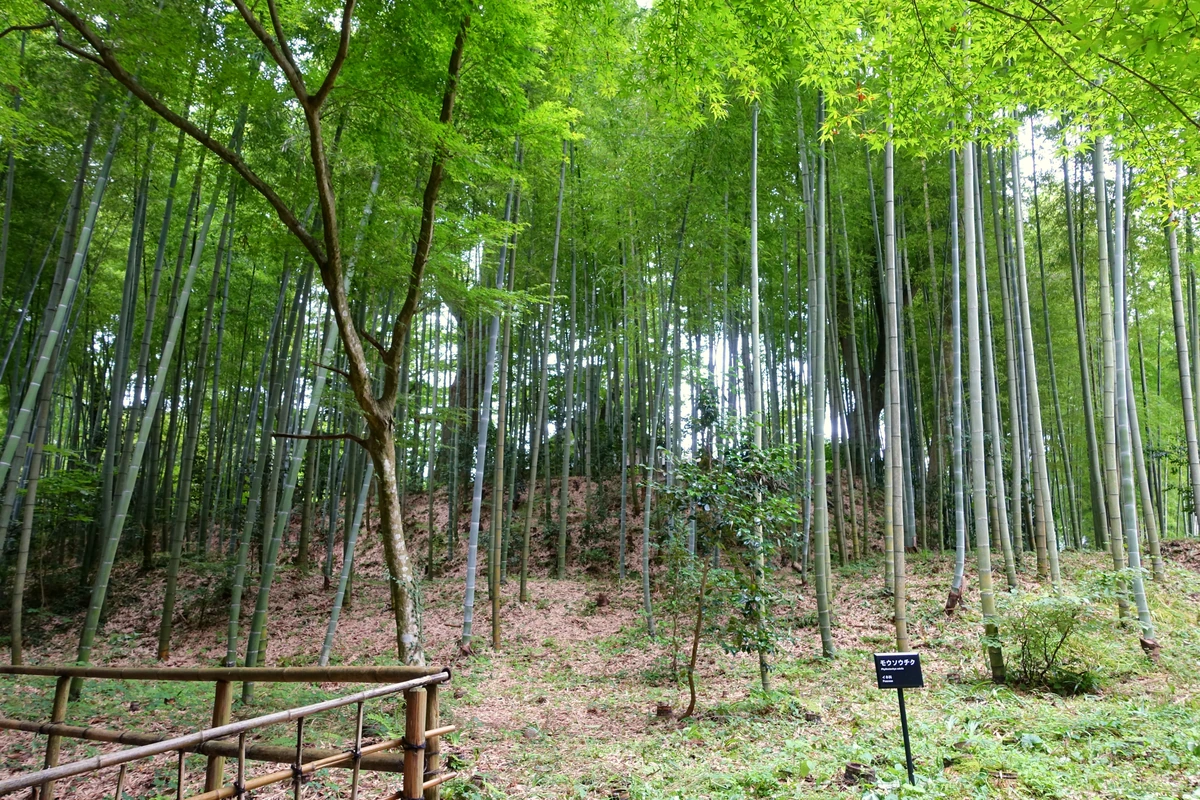
The Konan Bamboo Grove adds a different texture to the visit. Sengan-en’s interpretation links moso bamboo with Shimazu Yoshitaka, who is said to have brought it from China via the Ryukyu Islands and planted it here. Look at the repeated joints in the stems and the way the leaves filter the light. The bamboo photograph beside this passage was taken at Hakusan-jinja at Chūson-ji in Iwate. It is an offsite example of moso bamboo, not a view of Sengan-en’s grove.

There is also an unexpected industrial chapter. Near the entrance, the remains of a reverberatory furnace recall Shimazu Nariakira’s nineteenth-century modernisation programme. The Orientation Centre helps explain the machinery and the connection with the Shuseikan World Heritage component. For a first visit, combine a few of these historic stops with the House, the bay view and a seated break. Save the neighbouring Shōko Shūseikan Museum for extra time if everyone still wants more. Take the ultimate field guide with you: use the Snappit app to identify birds, plants, and animals on your trip.

Founded in 1658 by Shimazu Mitsuhisa, Sengan-en developed as a villa and reception setting for the Shimazu family. It later served for a time as their principal residence. Its designed landscape is nationally designated for scenic beauty. A separate strand of history began in 1851, when Shimazu Nariakira started constructing a reverberatory furnace on estate land as part of the Shuseikan industrial programme. The furnace remains belong to the Shuseikan component of the Sites of Japan’s Meiji Industrial Revolution World Heritage property. The garden’s scenic designation and that industrial World Heritage story describe different aspects of the same place.


What to do here

Use the official 90-minute garden-and-house course as a starting point: the furnace remains and Orientation Centre, Main Gate, Tin Gate, House, Bōgakurō Pavilion and Senjingan, then the Kyokusui Garden. Add the bamboo grove if paths and energy allow, and leave room for tea or a craft activity rather than trying to fit every stop into 90 minutes.

Seasonal info

Blossoms and temporary displays change with the weather. The published 2026 Chrysanthemum Festival runs from 1 to 30 November, with changes possible if weather or growing conditions intervene. In hot weather, shorten outdoor sections and take indoor breaks; check the garden’s notices before travelling during severe weather.

Accessibility

The grounds have gravel, slopes and steps, so use the barrier-free map and ask staff which paths suit your wheelchair or stroller. Wheelchairs and strollers cannot be used inside the House. The cultural-experience building has no lift; its upper floor is reached by stairs or an outside slope. A shorter garden visit can still include the main view and a café break.

Don't miss

1

The garden’s borrowed view of Kinko Bay and Sakurajima

2

The House’s lived-in rooms and small decorative details

3

The bamboo grove, Kyokusui stream and monumental Senjingan inscription

4

Furnace remains and the Orientation Centre’s industrial-history story

Tall, slender bamboo culms rise through a leafy green canopy on a wooded slope at Hakusan-jinja in Iwate, away from Sengan-en.

Moso bamboo (Phyllostachys edulis), photographed at Hakusan-jinja, Chūson-ji in Iwate in August 2017. This offsite example introduces the bamboo associated with Sengan-en’s history; it does not show Sengan-en.

Daderot / Wikimedia Commons / CC0 1.0. Phyllostachys_edulis_-_Hakusan-jinja_-_Chusonji,_Hiraizumi,_Iwate_-_DSC04949.jpg. Source: https://commons.wikimedia.org/wiki/File:Phyllostachys_edulis_-_Hakusan-jinja_-_Chusonji,_Hiraizumi,_Iwate_-_DSC04949.jpg. License: https://creativecommons.org/publicdomain/zero/1.0/. Proportional downsampling to fit 1200 × 1200 pixels without enlargement; WebP quality 92, method 6. No crop, retouch, recoloring or added text. EXIF omitted. Source metadata records Sony DSC-RX100M3; image title identifies the species and capture place. Camera clock is not independently authenticated. · Creative Commons

Walks and routes

The official garden-and-house course

Allow about 90 minutes for the published sequence: furnace remains and Orientation Centre, Main Gate, Tin Gate, House, Bōgakurō Pavilion and Senjingan, Kyokusui Garden, then the cultural-experience area. This gives the garden a clear story without a hill climb. Add time for any activity you decide to do.

This is a sightseeing course, not a step-free route. The House excludes wheelchairs and strollers; ask staff to adapt the garden sections for your needs.

The official garden-and-house course

A shorter garden visit

For roughly 45–60 minutes, choose the furnace remains, Main Gate, Tin Gate and the garden in front of the House. Give the bay view a proper pause, then return using the entrance map. Skip the House interior and neighbouring museum rather than rushing through both.

Ask staff which paths avoid steps; this shorter selection does not remove gravel or slope barriers.

A shorter garden visit

Two hours with room to pause

Start with the garden view and the House while everyone is fresh. Continue to the pavilion and Kyokusui Garden, adding the bamboo grove if it suits your route. Finish with a tea or mochi break and a look at the furnace story near the entrance. Adapt the order to staff advice and weather.

A half-day with history and a craft

Allow three to four hours for the garden, House and lunch, plus either a craft activity or the neighbouring Shōko Shūseikan Museum. The museum is included in the combined ticket but is a separate stop outside this garden-focused walk. Choose one addition if younger children are losing interest.

Things to try

Make a borrowed-view frame

With a phone put away, use your hands as a loose picture frame from a permitted stopping place. Choose one near detail, one middle-distance detail and the far horizon. Ask each person what changes when they move the frame, without stepping off the path or blocking other visitors.

Look for a small detail in a grand house

Inside the House, choose a decorative nail cover to remember, then compare it with another. It is a simple way to keep children interested between the larger rooms. Look without touching the pillars, screens or fittings.

Make something to take home

The cultural-experience centre offers craft activities such as glass-fragment decoration and scented sachets. Choose one that suits the group, then check the latest price, duration, booking requirement and age guidance. Ask about access before booking an upper-floor activity.

A rainy-day history visit

Concentrate on the House and Orientation Centre, with the neighbouring museum as an optional extra. Moving between them still involves outdoor walking. The House may close its storm shutters during bad weather, so the usual view is not assured. During a severe-weather warning, check opening notices before travelling.

Wildlife and habitats

Find the Konan Bamboo Grove on the official map. The garden’s moso-bamboo story is about plants travelling with people and trade, rather than an untouched native woodland.

During the autumn display, compare the different flower forms and the ways gardeners train and arrange the plants. These are cultivated exhibits, and their positions and condition vary from year to year.

These are planted garden features and seasonal displays. Ask what is looking good today, read the labels and observe from the paths without collecting or touching.

Stories and discoveries

A gate with a special privilege

The older Tin Gate has tin roof tiles. Its former use by the lord and his heir gives a small garden gateway a much larger social meaning.

A stream made for poetry

At a Kyokusui gathering, participants compose a poem before a sake cup floating down the stream reaches them. The garden still holds a spring re-creation, with the date announced separately each year.

Two skewers and a local sweet

Jambo mochi are small rice cakes served on two skewers. The traditional explanation links those paired skewers with the two swords worn by a samurai. They make a fitting food stop after exploring the estate.

When to visit

Spring: follow the blossoms

The garden’s calendar describes a succession of cherry varieties from early February to early April, alongside plum blossom. Check what is flowering during your visit rather than aiming for one universal peak. The first Sunday in March is a regular closure.

Early summer and summer: flowers with breaks

Look for the planned iris displays around May–June and morning glories around late July, checking the current event notice first. Morning-glory viewing is best early in the day. Make a shorter outdoor circuit when it is hot and take a cool indoor break.

Autumn: give the chrysanthemums time

The 2026 Chrysanthemum Festival is scheduled for 1–30 November and is covered by ordinary admission. Treat the flowers as a reason to slow down and compare forms. Weather and growing conditions may change the display or its dates.

Winter: the setting and the rooms

Build a winter visit around the House, garden structure and bay view, with a warm indoor stop. New Year decorations and events are announced on the garden calendar; bring a layer for time spent outdoors.

Getting there and practical advice

Food and a seated break

Choose the Sengan-en tea café for a lighter stop, Ohkatei for a meal or the Jambo Mochi Shop for a local sweet. Eat purchases in the designated areas. Check menus and opening times on the day; a meal needs more time than a quick garden circuit.

Toilets and baby care

The visitor maps mark toilets, accessible toilets and a nursing room. Ask at reception for the closest facilities that meet your needs before heading farther into the garden.

Luggage and rest

Lockers near the entrance help keep the walk lighter; larger items may be held at reception for a fee, subject to space. Benches are provided around the grounds. Leave bulky luggage before entering the historic House.

A useful first indoor stop

The Orientation Centre explains how the furnace worked and why an industrial complex developed beside the estate. Its model and view of the remains help turn a low stone foundation into something easier to imagine.

Train to Sengan-en Station

Use JR’s Nippō Main Line to Sengan-en Station, then follow signs to the garden on foot. Check that your chosen train stops there, including for the return journey. Do not rely on an old guide’s service frequency.

Kagoshima City View bus

The sightseeing bus serves the Sengan-en (Iso Teien) stop, convenient for the garden and museum. Check the current route and timetable before boarding; the tour circuit can take longer than a direct journey.

By car or taxi

Use the entrance at 9700-1 Yoshino-chō, Kagoshima City. The operator lists ordinary-car parking at ¥500 per day, checked 16 October 2026. Allow for traffic and arrange a return taxi if needed; taxis are not guaranteed to be waiting.

Discuss the garden route first

Use the official barrier-free map as a starting point, then ask about gravel, slopes, steps and any temporary changes. Wheelchair rental is listed at ¥500 and WHILL mobility-chair rental at ¥2,000 for the day, checked 16 October 2026; quantities are limited. Confirm suitability and availability directly.

Different buildings have different barriers

Wheelchairs and strollers cannot be used inside the House. The cultural-experience building has no lift, and reaching its upper floor means stairs or an outside slope. Ohkatei is upstairs in a different building and is served by a lift. Tell staff which parts you hope to visit so they can help you plan.

Opening hours and ticket

Checked 16 October 2026: the garden opens 09:00–17:00, with last admission at 16:30. Standard admission is ¥1,600 for the general category (age 15 and over, excluding junior- and senior-high-school students) and ¥800 for elementary-, junior- and senior-high-school pupils. The ticket includes the House and neighbouring Shōko Shūseikan Museum. Check the official page for younger children, discounts and any app offers.

The annual closure and temporary changes

The first Sunday of March is closed for the Kagoshima Marathon. Maintenance or severe weather can also affect the whole site or individual buildings. Check the latest notice before travelling.

Before photographing or sharing

Respect no-photo areas and other visitors’ privacy. The terms restrict visitor photographs and videos to private use. Commercial filming requires advance application at least two weeks ahead and permission; monetised social-media shooting or distribution and livestreaming are prohibited under the published guidelines. Read those rules before planning content for publication.

Sources and useful links

Wildlife you might spot

2

Each card links to a full Explore page with photos, traits, and fun facts.

Snap map for this place

Start with the big picture, then zoom in to explore individual wildlife observations around this place.

Loading map…

Good to know before you go

Check your return train before entering; some trains do not stop at Sengan-en Station.

Wear shoes with grip and slow down on wet stone, gravel and steps.

Ask about a suitable route at the entrance if anyone has limited mobility; the House excludes wheelchairs and strollers.

Plan to eat at the garden’s cafés or restaurant. Outside food and drink for consumption in the grounds are prohibited; ask ahead about essential dietary or infant-feeding needs.

Keep children beside you around water, stairs and historic interiors; leave plants and wildlife untouched.

Choose one paid activity in advance and check its age, booking and access requirements.

Follow no-photo signs. Visitor images are restricted to private use; commercial shoots need advance permission, and monetised social-media shooting or livestreaming is prohibited.

Check the first-Sunday-in-March closure and any weather-related notices before setting out.

Frequently asked questions

Yes. The current combined ticket includes Sengan-en, the House and the neighbouring Shōko Shūseikan Museum. You do not have to visit all three, but separate garden-only and museum-only tickets are not currently sold.
Parts of the garden can be enjoyed on a carefully chosen route, but gravel, slopes and steps create barriers. Wheelchairs and strollers are not permitted inside the House. Ask staff to help plan a comfortable visit before leaving the entrance.
No. The garden prohibits bringing in outside food and drink to consume. Use the onsite food outlets, and contact the garden beforehand if you need an exception for a dietary or infant-feeding requirement.
You see it across the bay from the garden when visibility allows. Visiting Sakurajima itself is a separate trip with its own transport and current safety advice.
Yes. Ordinary tickets are sold onsite as well as online. Some cultural experiences and special events need separate reservations.
Pets cannot enter. Guide, hearing and assistance dogs are excepted under the garden’s rules.

Recent snaps at this place

Recent snaps will appear here as new observations are added.

View all ›

Take the discovery with you

Exploring Sengan-en Garden?

Identify the wildlife you spot, learn as you go, and keep a collection of the adventure.

  1. 1Spot it
  2. 2Snap it
  3. 3Keep the discovery