Snappit logo
Snappit
Get App
Generic illustration, not a photograph of this venueIllustration
ParkHokkaido, Japan

Shikotsu-Toya National Park

For a first visit to Shikotsu-Toya National Park, give yourself one lake to get to know.

About

For a first visit to Shikotsu-Toya National Park, give yourself one lake to get to know. The small waterfront settlement at Shikotsuko Onsen makes a rewarding half-day: a nature center, a red railway bridge, clear water and a mountain skyline, with somewhere to stop for lunch. This is the Lake Shikotsu side of a much larger national park. Lake Toya, Mount Usu, Noboribetsu and the other districts deserve their own travel plans.

Start inside Lake Shikotsu Visitor Center. Its forest, mountain and lake displays turn the scenery outside into something you can read: a model reveals the hidden shape of the lake basin, fish swim in the himemasu aquarium, and recorded bird calls give you a few sounds to listen for later. A short film is available with English narration. Give children a simple mission before leaving: find one thing in the real landscape that they noticed in an exhibit.

Outside, follow the waterfront toward Yamasen Bridge at the Chitose River outlet. The red steelwork gives the blue-green water a striking frame. It also connects this apparently remote landscape with an industrial past: the bridge once carried the Oji paper company's light railway. Pause before deciding how much farther to walk. The bridge and nearby lakeshore are enough for a satisfying short outing; the rising ground beyond leads toward the Kyukamura grounds and the Wild Bird Forest.

The lake's clarity can make it look deceptively shallow. In fact, Shikotsu reaches roughly 360 meters deep, making it Japan's second-deepest lake. The surrounding mountains and lake basin tell a volcanic story, while the forest brings quieter details: different bark textures, changing leaves and occasional movement among the branches. Hokkaido squirrels live around the lake, and black woodpeckers leave feeding marks in its woods. Wildlife is a possibility rather than a promise, so let the landscape be the main event.

If the weather is settled and the seasonal service is running, add the sightseeing boat with underwater windows for a different view of the eastern lake. Otherwise, slow down over the exhibits, look through the little railway display near the center, or choose lunch in the settlement. A guided paddle or a mountain hike needs its own preparation; neither is necessary to make this visit worthwhile. Turn your visit into a safari! Use the Snappit app to scan and log wildlife sightings here.

Shikotsu-Toya became a national park on May 16, 1949. Around Lake Shikotsu, volcanic landforms sit alongside a more recent working landscape. Yamasen Bridge began service elsewhere in Hokkaido in 1899 before being moved here for the Oji paper company’s railway. The railway closed in 1951; restoration later gave the bridge a new life as a lakeside landmark. The nearby railway exhibition adds context to what is now a peaceful stroll.


What to do here

Begin with 30–45 minutes in the visitor center, then spend another 30–45 minutes on the nearby waterfront and at Yamasen Bridge. Look from the bank at the way the lake becomes the Chitose River, compare the mountain outlines with the center's model, and leave time for a warm drink or lunch.

With more time, choose one extra: the approximately 30-minute underwater-window cruise, the small Yamasen Kohan Station railway exhibition, or a longer walk toward the Kyukamura grounds if staff confirm the paths are open. The full walking circuit on the center's map includes stairs. Ask before adding the Wild Bird Forest, where damaged paths and repair work have affected access.

Seasonal info

The visitor center normally opens 09:00–17:30 from April to November and 09:30–16:30 from December to March. Winter Tuesdays are closed, or the next day when Tuesday is a public holiday; there are also year-end/New Year closures. The underwater sightseeing boat operated from April 24 in 2026 and is scheduled to finish on November 3; future seasons may differ. Snow, ice and road conditions can change winter plans, so check before setting out.

Accessibility

The visitor center has a multipurpose toilet suitable for wheelchair users and baby changing, and a limited number of loan wheelchairs that may also be used on park paths. Ask staff which outdoor approach and waterfront sections suit your wheelchair or stroller that day. The full mapped circuit has stairs, and the Wild Bird Forest includes unpaved, uneven ground. Ask the boat operator directly about boarding and access to the underwater viewing area.

Don't miss

1

Make sense of a deep volcanic lake through the visitor center’s models, fish aquarium and bird-call displays.

2

Pause at red Yamasen Bridge, where railway history meets the clear Chitose River outlet.

3

Take a seasonal sightseeing cruise with underwater windows when conditions allow.

4

Notice the forest as well as the view

bark, seasonal leaves and the sounds of woodland birds.

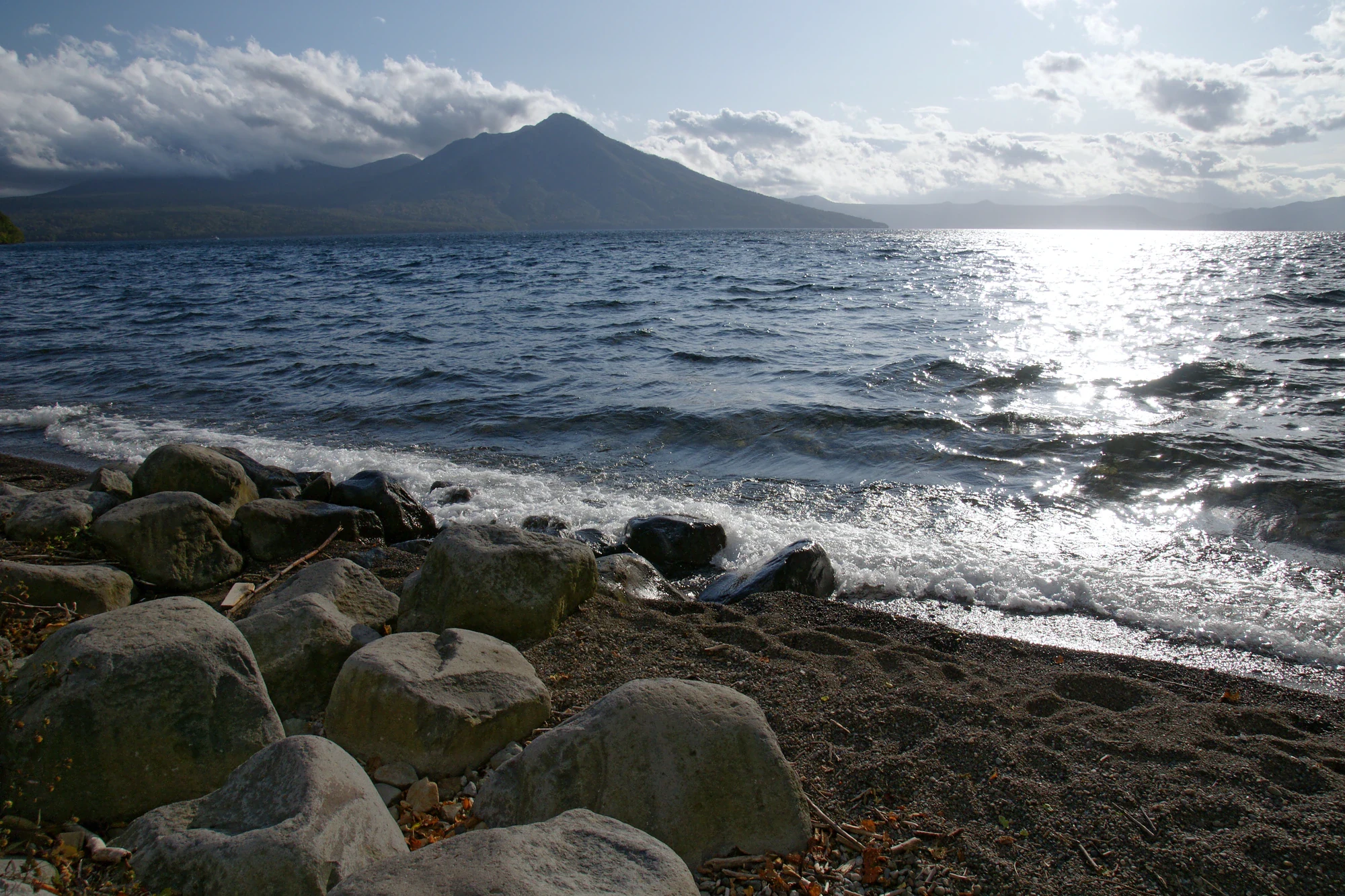
Waves break against dark shore pebbles and large rocks, with a forested mountain across Lake Shikotsu beneath scattered clouds and bright sunlight.

Mount Fuppushi rises across Lake Shikotsu beyond a rocky shore. Photographed on 10 October 2009.

Lake Shikotsu Mt Fuppushi01bs4272.jpg — 663highland, CC BY 2.5 (https://creativecommons.org/licenses/by/2.5/). Source: https://commons.wikimedia.org/wiki/File:Lake_Shikotsu_Mt_Fuppushi01bs4272.jpg. Resized and recompressed as WebP; no crop or retouching. · Creative Commons

Walks and routes

Visitor center, waterfront and Yamasen Bridge

From the visitor center, use the signed park paths to the nearby waterfront and Yamasen Bridge. Pause at the river outlet and return when you are ready. Let conditions and your group decide the distance; there is no need to climb toward the forest to enjoy the lake.

Ask at the center for the most suitable approach. Do not follow steps down to the shore or continue uphill simply to complete a circuit.

Visitor center, waterfront and Yamasen Bridge

The visitor-center map’s longer walking circuit

The center’s map links Yamasen Bridge, Shinsui Hiroba waterside square, the Kyukamura grounds and Kohan Bridge before returning. It is a more varied walk, with views, trees and a former railway-side path. Pick up the map and ask which sections are open before starting; the separate Wild Bird Forest is an optional addition only with current local advice.

The map marks several flights of stairs, including steep-looking stair approaches near the waterside square. Choose the short waterfront option if steps do not suit your group.

The visitor-center map’s longer walking circuit

A comfortable half-day by the lake

2–3 hours at Shikotsuko Onsen, plus transport

Start at the visitor center, check local conditions and choose a few exhibits rather than rushing every display.

Walk to the waterfront and Yamasen Bridge. Stop for the view and return before anyone gets cold or tired.

Choose lunch or a café stop. If the little railway exhibition is open, fit it around your meal and return bus.

Add one extra, not everything

3–4 hours at the lake, plus transport

Keep the visitor center and bridge as the core of the visit.

Choose the seasonal cruise if running, or allow longer for the open walking circuit with steps. Do not rely on being able to do both before a fixed bus departure.

Return to the settlement with time for the toilet and the walk to the bus stop or car.

Things to try

Turn the visitor center into a discovery game

Ask each person to choose one exhibit: the lake model, a bird call or a fish. Outside, look for the habitat or landform that connects with it. This gives a short visit a purpose without requiring a long walk.

Look below the surface on a cruise

The sightseeing boat circles part of the eastern lake in about 30 minutes. Its underwater windows may reveal submerged rock formations and fish, depending on visibility. Buy individual tickets on the day and allow extra time for waiting.

Follow the railway story

Combine the red bridge with Yamasen Kohan Station, the small railway-history exhibition near the visitor center. Imagine how supplies and timber once moved through the same lakeside setting.

Add a woodland stop

If staff direct you to an open path, spend a little time near the Kyukamura grounds looking at tree shapes and listening for birds. Stop quietly rather than chasing sounds into the woods, and give wildlife space.

Try a guided paddle

For a longer visit, arrange a local guided canoe, kayak or SUP session. Tell the operator the ages and abilities in your group, ask about cold-water clothing, and leave the decision about suitable wind and wave conditions to the guide.

Make lunch part of the lake visit

The settlement has restaurants and cafés close to the center. Himemasu, locally called chip, connects the menu with the fish you have just seen in the aquarium; ask what is available rather than expecting every restaurant to serve it year-round.

A slower indoor visit

Watch the film, spend time at the aquarium and use the lake model to pick out the mountains you can see through breaks in the weather. Add the railway exhibition if it is open; save the cruise and longer walk for suitable conditions.

Wildlife and habitats

Watch the branches and ground from an open park path. Keep still if a squirrel appears, and never use food to bring it closer.

Listen in the woods and look for conspicuous feeding marks from the path. A sighting is a bonus; do not seek out nest holes or follow birds off the trail.

Scan the lake with binoculars from a safe bank. The park authority notes that waterbirds are relatively sparse here, so enjoy whatever is present without feeding them.

Look closely at the himemasu aquarium in the visitor center. These are landlocked sockeye salmon; the lake population has an introduced and hatchery-managed history.

Stories and discoveries

A lake with a deep hidden basin

Shikotsu reaches about 360 meters below its surface. The visitor-center model is a useful way to understand a depth that you cannot judge from the shore.

The bridge had an earlier home

Yamasen Bridge first served a different railway crossing in Hokkaido in 1899. It was later brought to the lake for the Oji railway, which closed in 1951.

A famous fish with an introduced history

Himemasu are the landlocked form of sockeye salmon. Their introduction to Shikotsu began in 1894, and hatchery work has remained important to the lake’s fishery.

Clear water does not mean lots of ducks

The park authority notes that Lake Shikotsu supports comparatively few waterbird species and individuals because feeding habitat and food are limited. A quiet scan with binoculars is more useful than expecting a crowded duck pond.

Winter does not switch off every animal

Hokkaido squirrels remain active through winter rather than hibernating. Their appearance changes with the seasonal coat, so a summer photograph is not the only useful identification reference.

When to visit

Pair the center and lake walk with a seasonal cruise or guided activity. Carry a layer for the waterfront and allow space in the plan for wind-related changes.

Come for changing leaves and the lake-and-mountain view. Check earlier last departures: the published underwater-boat schedule for October 16–November 3, 2026 ends at 15:30.

Use the visitor center as the anchor for a shorter snow-season outing. Check winter closing days and roads, dress for cold and slippery ground, and stay off lake ice. If visiting for the ice festival, verify that year’s dates and arrangements separately.

Getting there and practical advice

Lake Shikotsu Visitor Center

Free nature exhibits, information counter and a short film with English narration. Toilets include a multipurpose room with baby-changing facilities.

April–November 09:00–17:30; December–March 09:30–16:30. Closed winter Tuesdays, the following day when Tuesday is a holiday, and over the year-end/New Year holiday period.

Shikotsuko Onsen settlement

Restaurants, cafés, toilets and the bus stop are shown around the visitor-center area on the official walking map. Shop hours vary.

Main Shikotsu parking

Managed by the Natural Parks Foundation. The listed ordinary passenger-car rate is JPY500; confirm seasonal arrangements. This is different from the No. 5 parking and waterside-use system.

By bus

Take Hokkaido Chuo Bus route 空4 to the Shikotsuko terminus from New Chitose Airport, Minami-Chitose or Chitose. The visitor center gives about 55 minutes from the airport and 44 minutes from Chitose. From Sapporo, connect by train through Chitose or Minami-Chitose.

By car

The visitor center gives roughly 40 minutes from New Chitose Airport and 70 minutes from central Sapporo in ordinary conditions. Use Shikotsuko Onsen as the destination for this visit.

Visitor center

Wheelchair loans are limited in number. The operator says they may be used inside and on park paths; ask about availability and the best approach before arrival if you depend on one.

Outdoor paths and boats

Tell staff whether stairs, slopes or unpaved surfaces are a problem. The full illustrated walking circuit has steps; the forest is a separate choice. Confirm boat boarding and viewing-deck access directly with the boat operator.

Sources and useful links

Wildlife you might spot

4

Each card links to a full Explore page with photos, traits, and fun facts.

Snap map for this place

Start with the big picture, then zoom in to explore individual wildlife observations around this place.

Loading map…

Good to know before you go

Check your return bus before you start exploring. Services are limited, and a missed departure can mean a long wait.

Bring a windproof layer and shoes with a good grip, even for the short waterfront visit. In winter, allow extra time for icy surfaces.

Keep children close beside the water. The bottom drops away quickly, the lake stays cold even in summer, and calm water at the edge can hide rougher conditions farther out.

For a canoe, kayak or SUP outing, use an experienced local operator, wear the supplied lifejacket and follow the local launch rules. Keep clear of sightseeing-boat routes.

Before entering woodland, check the visitor center and Chitose City’s bear information. Go together, make your presence known, turn back at fresh tracks or droppings, and never leave food or rubbish behind.

Use the main visitor parking for a simple center-and-waterfront visit. No. 5 parking and waterside-use charges are a separate arrangement for that area, not the general admission price.

Book a separate day for Lake Toya. Trying to add it to a gentle Shikotsu visit leaves much less time beside either lake.

Tarumae and Eniwa are volcanic mountains, not casual extensions of this lakeside walk. Check JMA information, local restrictions, weather and trail access before planning an ascent.

Frequently asked questions

No. Hokkaido Chuo Bus route 空4 connects New Chitose Airport, Minami-Chitose and Chitose with the Shikotsuko terminus. From Sapporo, take the train to Chitose or Minami-Chitose and change to the bus. Check both directions for your date before committing to the outing.
Yes, entry is free. Parking, boat trips, guided activities, meals and bathing are separate. The main parking operator currently lists JPY500 for an ordinary passenger car; check seasonal charging arrangements before travel.
Yes, if you keep the plan short: fish and bird calls inside, then the lake view and red bridge outside. Build in a toilet and food stop, and supervise closely at the water. Choose the route with staff if you have a stroller.
Do not assume the attractive shoreline is a safe swimming area or an unrestricted launch. The lake has cold water, sharp drop-offs and changeable waves. For paddling, arrange a guided session and follow the approved launch arrangements and lifejacket instructions.
Ask the visitor center before heading there. Parts of the paths have been closed, and repair work was announced for June–September 2026. The scheduled end of work is not enough to assume every path has reopened. The center, bridge and waterfront still make a complete short visit.
Spend longer with the lake model, aquarium and short film, then try the nearby railway exhibition if open. Save the exposed waterfront for a break in the weather. Boat operation depends on conditions on the day.
The famous himemasu, also called chip, are landlocked sockeye salmon. They were introduced to Lake Shikotsu beginning in 1894 and remain part of a managed fishery. The center’s aquarium offers a close look without needing to find fish in the lake.
It belongs to the same national park, but it is a different destination. Plan Toya and Mount Usu as a separate outing with their own transport, facilities and volcanic-access checks.

Recent snaps at this place

Recent snaps will appear here as new observations are added.

View all ›

Take the discovery with you

Exploring Shikotsu-Toya National Park?

Identify the wildlife you spot, learn as you go, and keep a collection of the adventure.

  1. 1Spot it
  2. 2Snap it
  3. 3Keep the discovery