
Snappit logo
Snappit
Get App
Generic illustration, not a photograph of this venueIllustration
ParkOkinawa, Japan

Sueyoshi Park

Sueyoshi Park is a good place to turn a city sightseeing day into an hour of looking and listening.

About

Sueyoshi Park is a good place to turn a city sightseeing day into an hour of looking and listening. Leave the busy road behind, take a woodland path, and let birdsong and the sound of water set the pace. The park combines surviving natural woodland with planted greenery, so the pleasure is in the changing textures: a close canopy, a bright clearing, flowers at the path edge. You do not need a long hike to appreciate it.

Choose the outing that suits your group. For a relaxed first visit, arrive from Shiritsubyoin-mae Station, explore a manageable stretch of the paths and return the same way. Bring a packed lunch if you want a longer pause. The official tourism guide mentions play equipment and open spaces, but the forest is the dependable focus of a family visit; check which facilities are usable when you arrive. Slopes and steps make this a different proposition from a flat urban promenade.

Higher in the park, Sueyoshi-gū connects the woodland to Ryukyu history. This is one of the eight shrines traditionally supported by the Ryukyu royal government, and the stone approach is part of its character. Treat the climb as optional. The tourism association's own guided walk stops below the shrine stairs because of the steep ascent and poor footing. A quiet look from the approach can be a satisfying destination in itself.

The seasons give you reasons to return. The park is associated with Naha's early cherry-blossom observations, while summer brings interest in the night-opening sagaribana flowers. Firefly habitat also survives here, and Mori no Ie Minmin, the municipal environmental-education centre, runs nature activities. For anything after dark, look for an organised outing and confirm its arrangements. Part of the park's lighting was switched off in a 2026 conservation trial, so an evening visit needs more planning than a daytime stroll. Be ready to snap and learn! Get the Snappit app to identify any nature species you find here.

Sueyoshi-gū’s foundation is traditionally placed around 1456, during the reign of King Shō Taikyū. Its links with Kumano worship and the former temple below it reflect the overlapping religious traditions of the Ryukyu Kingdom. The shrine suffered wartime destruction, while its stone stairway and approach remain important parts of the historic landscape. The Sueyoshi-gū site was designated a National Historic Site on 15 May 1972. Today the surrounding park also has an educational role, with Mori no Ie Minmin helping children and groups learn about the woodland.

What to do here

Walk slowly along the established woodland paths, stop to listen for birds and running water, and look closely at leaves and flowers without picking them. Add the shrine approach if the footing suits you, or book a nature activity with Mori no Ie Minmin for more help noticing the forest.

Seasonal info

Cherry timing varies: Naha recorded opening on 18 January and full bloom on 3 February in 2026. Those dates do not predict next year or flowering across the whole park. The tourism association highlights sagaribana around July and fireflies from spring into summer; check current local activities rather than expecting a display on every visit.

Accessibility

Expect slopes, steps and uneven footing, especially towards Sueyoshi-gū. A continuous wheelchair-accessible circuit and current accessible park toilets have not been confirmed. Ask Naha Park Management about a suitable entrance and short route before travelling; Shiritsubyoin-mae Station itself lists lifts and a multipurpose toilet.

Don't miss

1

Woodland sounds and a slower-paced break within Naha

2

Sueyoshi-gū’s historic stone approach, with the steep climb optional

3

Winter cherry interest and other seasonal flowers

4

Nature games and guided discovery through Mori no Ie Minmin

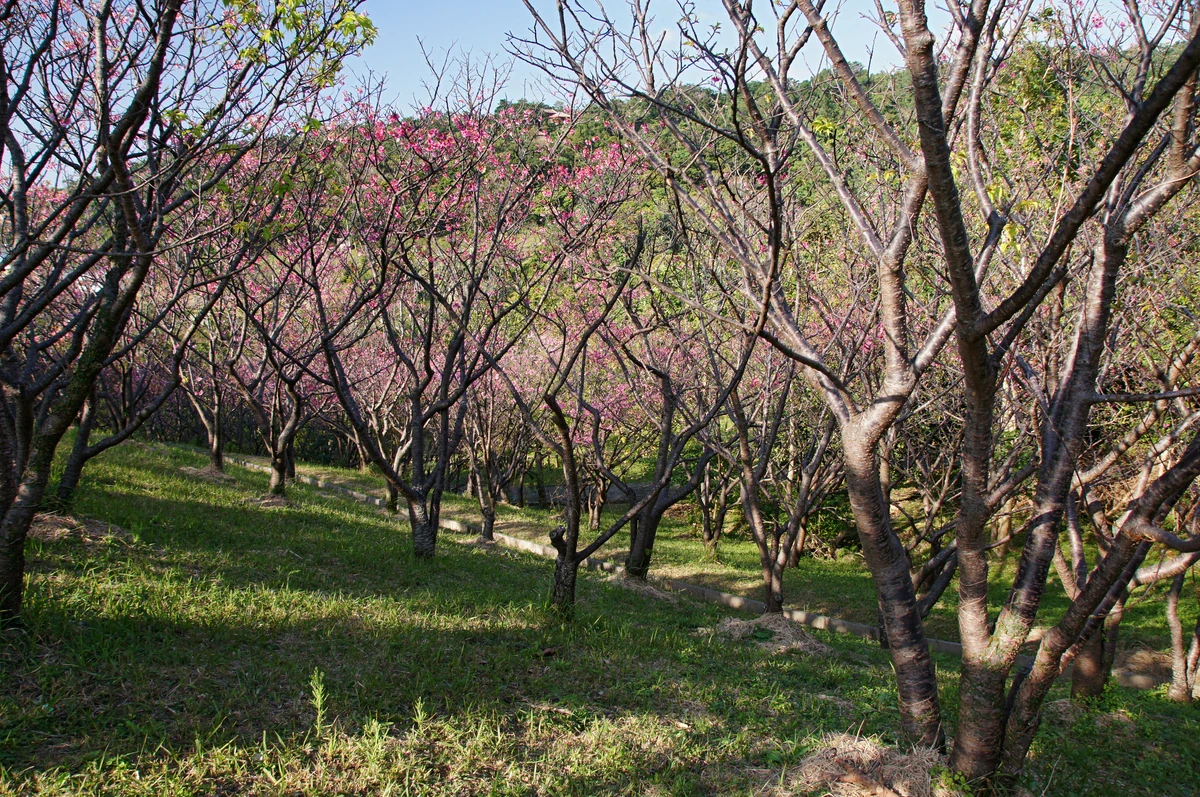
Pink-flowering trees cover a grassy slope, with a narrow stepped path winding through the trunks and green woodland behind.

Pink blossoms among the trees of Sueyoshi Park in Naha, photographed in February 2012.

© 663highland / Wikimedia Commons / CC BY 2.5. Sueyoshi_Park_Naha_Okinawa_Japan01s5.jpg. Source: https://commons.wikimedia.org/wiki/File:Sueyoshi_Park_Naha_Okinawa_Japan01s5.jpg. License: https://creativecommons.org/licenses/by/2.5/. Proportional downsampling to fit 1200 × 1200 pixels without enlargement; WebP quality 92, method 6. No crop, retouch, recoloring or added text. EXIF omitted. Source metadata records Sony SLT-A55V. Source exposure and color retained; no botanical species identification asserted. · Creative Commons

Walks and routes

A short woodland out-and-back

At the park entrance near Shiritsubyoin-mae Station, choose an open path that feels comfortable. Spend the first half of your visit walking and pausing, then retrace your route. This is a useful choice for a hot day, a short stop between sights, or a family whose enthusiasm may run out before the park does.

Short does not necessarily mean step-free. Turn around before unsuitable slopes or steps, and agree a usable entrance with Park Management if you need wheelchair or stroller access.


Woodland and the shrine approach

Combine a woodland walk with the approach to Sueyoshi-gū, leaving time to look at the stonework and the way the shrine sits above the trees. Stop below the stairs if you prefer. Only continue uphill if the route is open, dry and comfortably within your ability; retracing the route is an equally good finish.

The shrine approach has a steep ascent and poor footing. It is not a wheelchair route, and carrying a stroller up the stairs is not a sensible substitute.

Woodland and the shrine approach

If you have about an hour

Allow time for the walk from the station, then choose a short out-and-back inside the park. Make two or three observation stops, take a drink break and head back before you feel rushed. Keep the shrine climb for another day if it would squeeze your return journey.

A relaxed family visit of around two hours

Bring lunch and water, let the first walk be short, and stop for a picnic in an open area where local signs allow it. Add a listening or sketching game. If the children still have energy, extend along another suitable open path; treat play equipment as an optional extra and leave the steep shrine steps out.

Build the day around a booked activity

If you book with Mori no Ie Minmin, follow its meeting instructions rather than navigating to the general park address. Gibo Station is the operator’s suggested monorail approach to the centre. Leave spare time before the start, and choose any extra walking afterwards according to the weather and the group’s energy.

Things to try

A one-minute listening stop

Find a place where you can stand without blocking the path. Be still for a minute, then compare what you hear close by with sounds farther into the canopy. Children can describe a sound before anyone tries to name its maker. You can enjoy birds without chasing a particular species.

Sketch a small piece of the forest

Pick one view from the path: a branching trunk, the outline of a leaf or the contrast between light and shade. Sketch it or take a photograph, then move on without handling the plant. A few careful observations are more rewarding than rushing to collect a long checklist.

Let a local nature activity shape the visit

Mori no Ie Minmin advertises seasonal walks and nature games. Check its current calendar and contact the centre on 098-882-3195 to ask about booking, age suitability and language. Activities may have separate fees and weather arrangements; the centre is normally closed on Tuesdays.

Switch to the Okinawa Prefectural Museum & Art Museum

For sustained rain, consider the museum in Omoromachi as a separate outing. It offers an indoor way to explore Okinawa’s natural and cultural history. Check the current exhibition, admission and opening calendar: Mondays are generally closed, with holiday exceptions. Severe-weather closures can also affect the museum.

Wildlife and habitats

Look carefully, leave everything in place

Flowers and wildlife depend on season and conditions. Watch from the path, avoid flash and unnecessary light around nocturnal animals, and do not collect plants, insects or reptiles. A photograph or a note is enough.

Hibiscus in the park vegetation

The tourism association names hibiscus among the park’s plants. When you find flowers, compare their colours and shapes from the path. The available park description does not identify a particular species or cultivar, so treat the name as a broad plant group.

Winter cherry blossoms

Watch local blossom reports in January and February. The park’s observation tree helps give Naha’s season a reference point, but one tree reaching full bloom does not mean that every tree is flowering together. Notice buds and flowers without pulling branches closer.

Sagaribana and fireflies

Sagaribana flowers open at night and fall by morning; the tourism association highlights July. Firefly activity is another reason to ask about a seasonal guided outing. Choose a programme with clear meeting and safety arrangements, rather than wandering into unlit woodland.

An introduced lizard with a conservation story

Naha records green anoles at Sueyoshi Park in its fiscal 2022 capture work. These introduced lizards can affect native insects and lizards. If you think you see one, observe without handling it and ask park or nature-centre staff for advice. Never carry a lizard elsewhere, and do not interfere with monitoring traps.

Stories and discoveries

What an opening announcement means

For the cherry observation tree, the weather agency calls opening when five or six flowers have opened. Full bloom means about 80% of the flowers are open. Naha’s 2026 dates were 18 January and 3 February respectively: useful context for a winter visit, rather than a forecast.

A landscape with several layers of belief

Sueyoshi-gū is part of the Ryukyu Eight Shrines, and the heritage record also describes the former Buddhist temple and sacred places around the approach. Walk respectfully: the stonework and trees sit within a place of worship as well as a public park.

Darkness can be a conservation measure

In January 2026, Mori no Ie Minmin reported a trial extending the switch-off of some park lamps through the year. The aim was to reduce disturbance to living things. This is a good reason to favour daytime for a casual visit and organised guidance for night observation.

When to visit

Winter into early spring

Follow the cherry reports from January into February, with a flexible date if flowers are your main interest. On a cool, dry day you can spend longer listening, sketching or picnicking. The 2012 photograph in this guide shows a past flowering scene.

Spring and summer

Ask about firefly or flower activities, carry water and protect yourself from sun and insects. Sagaribana interest is often around July. In heavy rain or strong winds, choose an indoor plan and return when paths are safe.

Autumn and changeable weather

Let a daytime woodland walk be the main attraction and check what the nature centre has scheduled. Keep an eye on forecasts and any storm-related restrictions. Cooler-feeling days still call for water and care on shaded, damp surfaces.

Getting there and practical advice

Hours and current access

The published park guidance gives 09:00–21:00 and year-round opening, but those city-page details are dated January 2017. Confirm current gates and access with Naha Park Management on 098-951-3239, and plan a daylight walk. Building schedules, booked activities and parking arrangements are separate.

Toilets and changing

Shiritsubyoin-mae Station lists a multipurpose toilet with a baby-changing table and ostomate facilities. Ask station staff where it is and use facilities before your walk. If you need an accessible toilet inside the park, confirm its location and availability with Park Management before travelling.

Food, water and picnic plans

Bring the drinks and food you will need. The city recommends the park for picnics; choose an appropriate open spot and keep paths clear. Pack a bag for rubbish and take everything away when you leave. Do not plan your visit around finding a café or refill point inside the woodland.

Play areas

The official tourism description lists play equipment and open space, but does not give a current equipment inventory. Check signs and barriers before children play, and base the outing on a woodland walk and picnic so it still works if equipment is unavailable.

Mori no Ie Minmin

This municipal facility supports environmental education and group activities. Its public events can be useful for individual visitors, but room hire and overnight stays have separate eligibility and booking requirements. Contact it before planning to use the building.

By Yui Rail

For the general park, alight at Shiritsubyoin-mae (市立病院前). The rail operator gives about four minutes on foot to the park; allow longer for crossings and finding your preferred entrance. For Mori no Ie Minmin, use Gibo (儀保) and allow the operator’s roughly 15-minute walk to the centre. Check the latest service information before travelling.

By car

The city’s 15 September 2026 listing gives 30 spaces on the hospital side and 17 by Gibo Police Box. Both charge ordinary cars ¥100 per 60 minutes after an initial free 60 minutes, with a ¥600 maximum per 24 hours. Read the entrance signs for the latest rate, payment method and gate hours; a 24-hour price cap does not mean the gate is always open.

Choose the right destination

The general park address is 1-3-1 Shuri Sueyoshicho, Naha. Mori no Ie Minmin is at 4-79-8 Shuri Gibocho inside the park. Use the destination named by your activity organiser, especially if arriving with children or carrying equipment; the centre discourages the hospital-side forest approach when you have luggage.

Plan around the surfaces you can use

Tell Park Management whether you need step-free access, gentle gradients, a stroller-friendly surface, a rest stop or an accessible toilet. Ask for a specific entrance and current route. The presence of lifts at the monorail station does not establish an accessible journey across the park.

Keep the shrine climb optional

The official tourism walk’s decision to stop below the shrine stairs is a useful guide to the difficulty. Steep, irregular footing can be troublesome even without a mobility aid. Avoid the ascent when it is wet, and choose a shorter outing if balancing or descending stairs is difficult.

A sensible precaution around snakes

Naha’s advice is to stay out of long grass where habu may be hiding. Keep to the path, look where you step and give any snake a wide berth. Do not approach it for a photograph or try to catch it. If someone is bitten, call 119 and seek urgent medical help; keep them calm and avoid running.

If you join an evening activity

Confirm the organiser’s route, finishing time and equipment list. Take the light they recommend and follow instructions about using it safely without shining at animals. Do not assume park lamps will guide the way, and avoid exploring an unfamiliar side path after dark.

Visitor information

Parking changed in 2026. The city’s September listing now includes paid parking on both the hospital and Gibo-police-box sides. For a simple first visit, the monorail avoids the need to find a space. Check current access conditions before setting out, especially after storms.

Sources and useful links

Wildlife you might spot

2

Each card links to a full Explore page with photos, traits, and fun facts.

Snap map for this place

Start with the big picture, then zoom in to explore individual wildlife observations around this place.

Loading map…

Good to know before you go

Make daylight your default. Check the weather and turn back if rain makes the path slippery.

Wear grippy walking shoes; carry drinking water, sun protection and insect repellent.

Stay on established paths and out of long grass. Give snakes plenty of space; never try to catch one.

Skip the shrine stairs if anyone is uneasy with steep or irregular footing.

Check parking signs on arrival. Both lots now appear on the city’s paid-parking list.

Use station facilities before setting out, especially if a toilet or baby-changing stop is important.

Keep voices low around wildlife and worshippers, leave plants and animals in place, and carry your litter out.

For organised nature walks, confirm the meeting place, booking, language, clothing and weather arrangements directly.

Frequently asked questions

Shiritsubyoin-mae is convenient for a general park visit: Yui Rail lists about four minutes on foot to the park. Allow extra time for crossings and finding your entrance. For an activity at Mori no Ie Minmin, its operator recommends Gibo Station and allows about 15 minutes to the centre. These are different destinations.
Only the first hour is listed as free. The city’s 15 September 2026 information gives both lots ¥100 per 60 minutes after that, with a ¥600 maximum per 24 hours for ordinary cars. Check the entrance signs for current charges, payment and gate hours.
Speak to Park Management first about the entrance, surfaces and toilets you need. The wooded routes and shrine approach include changes in level; do not plan on reaching the shrine with wheels. A short visit near an agreed entrance may be more practical than trying to cross the park.
Start with the current nature-event calendar and ask about a guided visit. The park is a firefly habitat, but sightings vary and some lighting has been reduced for conservation. Do not assume a lit route or use a daytime walking estimate for a night outing.
It is a municipal nature-education and group-use facility. Its room and overnight use has eligibility and application rules. Individual visitors should look at its public activity programme rather than expecting walk-in accommodation or unrestricted use of the building.

Recent snaps at this place

Recent snaps will appear here as new observations are added.

View all ›

Take the discovery with you

Exploring Sueyoshi Park?

Identify the wildlife you spot, learn as you go, and keep a collection of the adventure.

  1. 1Spot it
  2. 2Snap it
  3. 3Keep the discovery








