
Snappit logo
Snappit
Get App
Generic illustration, not a photograph of this venueIllustration
ParkKyushu islands, Japan

Yakushima National Park

Yakushima rewards a slower look.

About

Yakushima rewards a slower look. Huge trunks draw your eye first, but the forest is just as interesting at ankle height: green cushions on fallen wood, roots finding a foothold on old stumps, and water moving through the trees. You do not need to make the long journey to Jōmon Sugi to enjoy this side of the island.

Start at the Yakushima World Heritage Conservation Center in the hills above Anbō. Its island models help turn a confusing collection of ports, mountains and forest names into a place you can picture. Look for the change from coastal evergreen woodland to higher forest and mountain vegetation, then explore how people protect these different environments. This is the Ministry of the Environment’s free center, close to but separate from the Yakusugi Museum. It is also a different place from the Environmental and Cultural Village Center near Miyanoura Port.

For time among the trees, Yakusugi Land is a separate mountain journey farther inland. Its shorter established courses use wooden and stone paths, with steps along the way. The usual 30-minute course is a good starting point for choosing a modest outing: leave time to stop at the old cedar trunks and notice young growth on the remains of earlier trees. The stumps also tell a human story, because this forest bears traces of historical logging. Current repairs change the usual exit, so let staff direct you around the open route.

The wider national park includes part of Yakushima, all of neighboring volcanic Kuchinoerabujima, and surrounding sea areas. The World Heritage property covers a smaller area than the national park, and neither designation covers every part of Yakushima. This visit uses Anbō as its gateway. Northern Shiratani Unsuikyo, the western coast and Kuchinoerabujima deserve separate trips. Explore the grounds like a pro—download the Snappit app to instantly identify animals and plants.

Yakushima first became part of Kirishima-Yaku National Park in 1964. Its World Heritage inscription followed in December 1993, and Yakushima became a separate national park on 16 March 2012. At Yakusugi Land, old cut stumps preserve a more personal history: people once worked this forest for timber, and new growth now rises from some of those remains.

What to do here

Explore the conservation center’s island and vegetation models, then choose a short Yakusugi Land walk if the mountain road, trail and weather are suitable. A rental car or prearranged taxi makes the two-stop plan much easier. With limited mobility, uncertain weather or awkward bus connections, keep the center as the main visit.

Seasonal info

Rain is part of Yakushima in every season. Heavy rain and typhoons can close mountain roads and trails; winter snow and ice can make an apparently short outing unsuitable. As checked on 16 October 2026, Yakusugi Land uses a temporary exit because Seiryō Bridge is damaged. Shiratani Unsuikyo is scheduled to reopen partly on 18 October, with some paths still closed. Recheck before traveling.

Accessibility

The conservation center has a wheelchair-compatible toilet on its main exhibition floor; ask staff about the entrance, parking-to-door access and your particular needs. Its upstairs photo gallery is reached by stairs. Yakusugi Land’s short course has steps and uneven, sometimes slippery surfaces, and the temporary exit is slippery. Treat it as a walking route, not a step-free wheelchair or stroller circuit.

Don't miss

1

The conservation center’s models showing how the island changes with height

2

A short forest outing among old cedars, moss and running water

3

New trees growing on old stumps alongside traces of past logging

4

A manageable Anbō-side introduction without committing to a full-day mountain trek

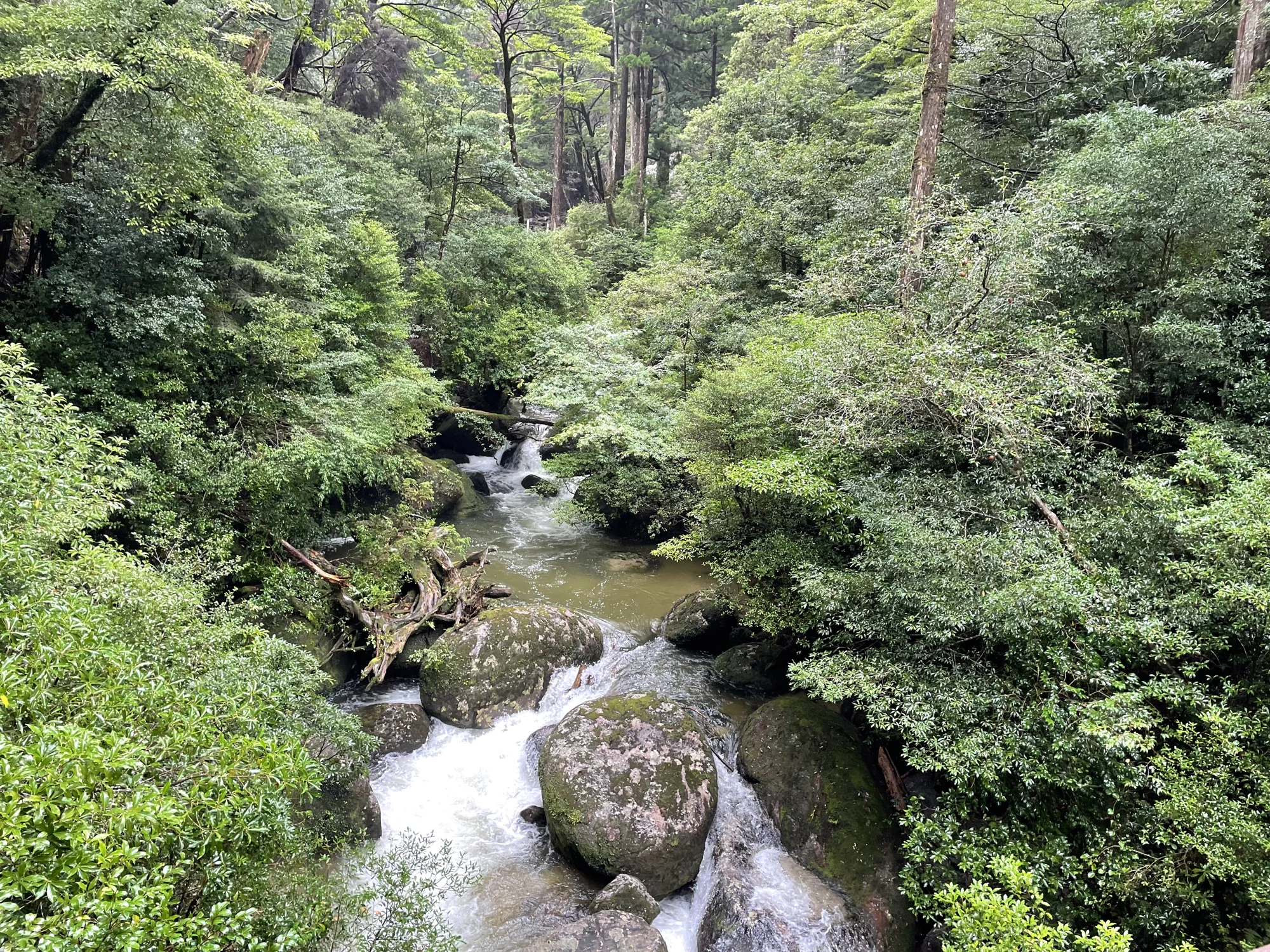
Dense green forest surrounds a stream flowing between large rounded boulders.

Forest surrounds a rocky stream in Yakusugi Land, photographed on 10 September 2024. This is a separate forest outing from the World Heritage Conservation Center.

Yakusugi Land 02.jpg — Higa4, CC0 1.0 (https://creativecommons.org/publicdomain/zero/1.0/). Source: https://commons.wikimedia.org/wiki/File:Yakusugi_Land_02.jpg. Resized and recompressed as WebP; no crop or retouching. · Creative Commons

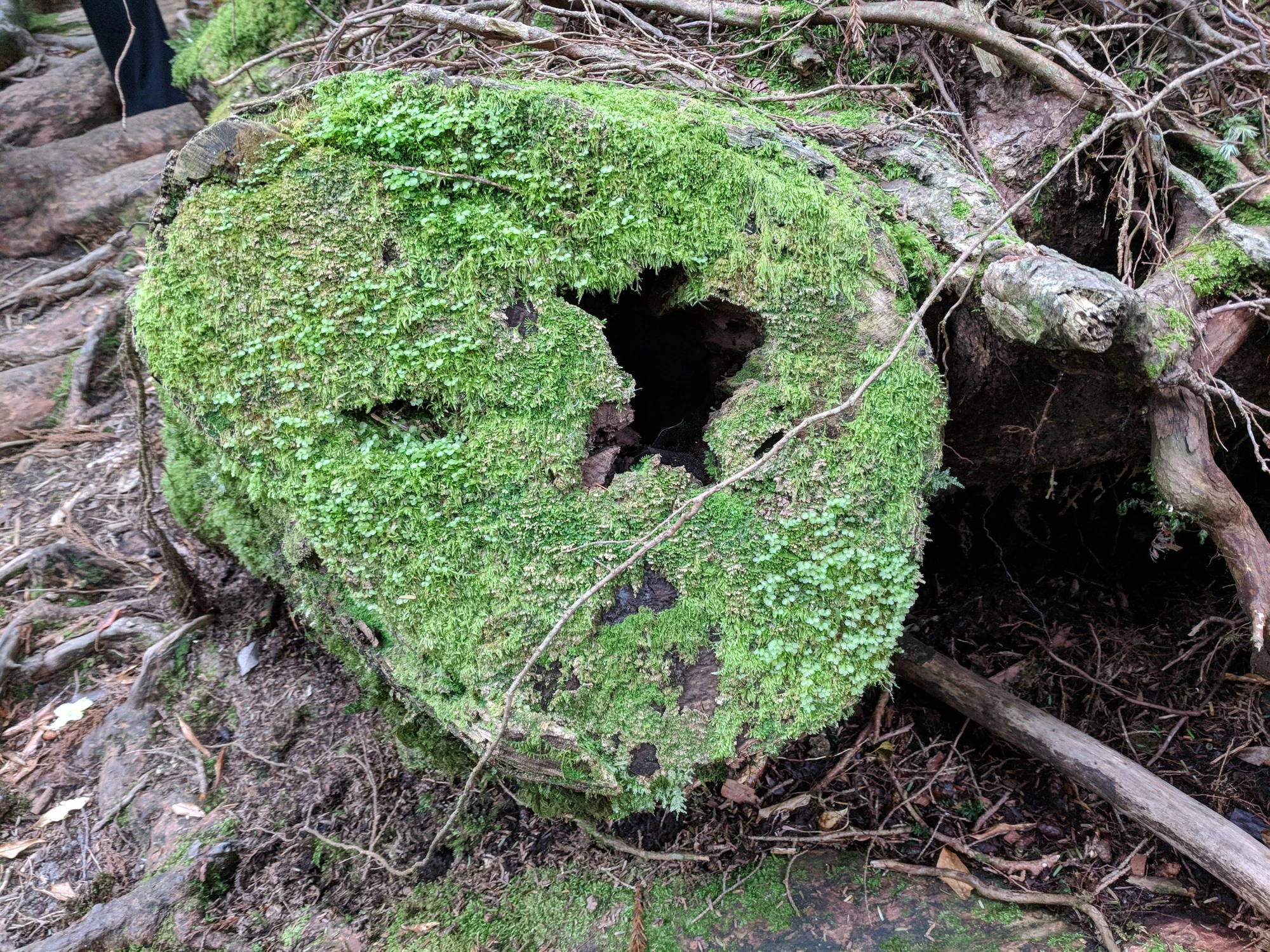
A hollow cut log covered with green moss and tiny leafy plants, surrounded by roots and twigs on the forest floor.

Moss carpets the end of a cut log in Yakusugi Land, photographed on 23 April 2018. The forest outing is separate from the World Heritage Conservation Center.

Moss covered log in Yakusugi Land.jpg — Grendelkhan, CC BY-SA 4.0 (https://creativecommons.org/licenses/by-sa/4.0/). Source: https://commons.wikimedia.org/wiki/File:Moss_covered_log_in_Yakusugi_Land.jpg. Resized and recompressed as WebP; no crop or retouching. · Creative Commons

Walks and routes

Yakusugi Land: the short forest course

Ask at the Yakusugi Land entrance which short course is open, then use the marked wood-and-stone paths to enjoy the old trees and stump regeneration. The usual 30-minute course is the starting point for this plan; allow 60–90 minutes for a slower visit. Stop rather than walking while using your phone or camera, and turn back if the footing or weather becomes uncomfortable.

There are stone and wooden steps. Wet surfaces and the temporary exit can be slippery. This route is unsuitable as a step-free wheelchair or stroller circuit.


Yakusugi Land: the short forest course

A flexible half-day with a car or booked taxi

Keep 4–5 hours free from Anbō and arrange a return journey before you leave. If the mountain forecast or road notice is poor, use the indoor plan instead.

Spend 45–60 minutes at the conservation center after it opens at 09:00. Use the models to orient yourself and ask about the latest forest conditions.

Travel separately up the mountain road to Yakusugi Land. Build in time for careful driving, parking and any traffic controls; do not try to walk there from the center.

Use the entrance toilets, check the short route with staff, and allow 60–90 minutes for the forest and temporary exit.

Return to Anbō with daylight and spare time. Keep longer trails for another visit rather than adding them because the first part felt easy.

A lighter visit or a wet-weather plan

Make the conservation center your main stop. Browse the models, photographs and nature information, then return to Anbō or continue only with an indoor visit whose hours you have checked. There is no need to salvage a forest outing when the weather has turned.

Confirm opening and your transport home, especially if arriving by bus.

Explore the main exhibition floor at your own pace and ask staff about any access needs.

If you want more forest history, consider the separate Yakusugi Museum nearby; check its own opening notice and admission first.

The longer bus option: forest first, center later

This is a full-day option of roughly eight hours, including 5 hours 8 minutes at Yakusugi Land. It suits visitors happy to spend a long time in the forest area, with food, warm layers and a settled forecast. Keep the short walk short if that suits you; the long wait is not a reason to attempt a harder trail. Check every bus before committing, especially the final one.

The timetable effective 1 October 2026 shows the Kigensugi-bound bus leaving Anbō at 09:28 and reaching Yakusugi Land at 10:07.

Take the unhurried short forest visit and allow for the remaining time on site. The later downhill bus departs at 15:15; bring your own lunch and do not count on a restaurant.

Get off at Yakusugi Museum at 15:48 and walk about two minutes to the conservation center. You can then spend 45–60 minutes inside before returning to the stop.

The listed 17:10 bus from Yakusugi Museum reaches Anbō at 17:16. This service runs March–November and is suspended when the Arakawa trekking bus is suspended. It does not call at Anbō Port. If that bus is not running, arrange a taxi before leaving for the forest or choose a different plan.

Things to try

Put the island together

At the conservation center, find the coast, the high mountains and Kuchinoerabujima on the models. Ask everyone to choose one change in vegetation they would like to look for outside. This makes the mountain drive part of the experience rather than just a transfer.

Look for an old tree and a new beginning

From the marked forest path, compare a standing trunk with a stump supporting fresh growth. Look for the different textures of bark, roots and moss without touching or collecting them. A photograph or a quick sketch is enough to take home.

Pause for the sound of water

Choose a safe place on the path where you are not blocking others, then pause quietly. Listen for water and compare the small plants on nearby trunks and fallen wood. Stay out of the stream and off the mossy banks.

Let the models do the climbing

Use the conservation center’s displays to explore the island from coast to summit indoors. Its photographs and library provide more to browse if you want a longer look. Ask about temporary closures before setting off in severe weather.

Wildlife and habitats

Japanese macaque

Japanese macaques are part of the island’s forest life; the local population is the Yakushima subspecies. If you meet a group, watch quietly from a distance and give it room to move.

Sika deer

The island’s deer are a local subspecies of sika deer. An encounter can be a welcome extra, but the trees and small forest details make a complete walk on their own.

Hemlock

Yakusugi Land’s forest also contains Japanese hemlock. Compare the overall form of different trees from the path, and use a local tree guide before giving a tree a species name.

Fir

Momi fir is another conifer listed for Yakusugi Land. Looking for more than one kind of evergreen is a good reminder that this is a mixed forest, not simply a collection of famous cedars.

Rhododendrons and azaleas

The forest’s plant list includes several rhododendrons and azaleas. Enjoy any flowers from the path, and leave flowering times to the season rather than planning on a guaranteed display.

Treat wildlife as a chance encounter. Stay on the trail, leave plants untouched and never use food to attract animals. The old cedars, varied conifers and small patches of moss reward attention even when no animal appears.

Stories and discoveries

One island, several forest worlds

Yakushima’s height creates a striking sequence of vegetation, from warm coastal evergreen woodland through mixed mountain forest to low plants near the exposed summits. The conservation center’s models show this change without requiring you to climb through every zone.

Yakusugi is an age story

The celebrated yakusugi are old Japanese cedar trees, Cryptomeria japonica. The local name is associated with trees more than a thousand years old; it does not mean a separate cedar species. Their forest also contains other kinds of trees, so every large trunk is not automatically a yakusugi.

When to visit

Spring and autumn

Use a fair forecast to choose your forest day, and leave the plan flexible enough to swap it with an indoor visit. Bring a warm layer for the mountain forest even when Anbō feels mild.

Summer and unsettled weather

Have rainwear ready and check for typhoon or heavy-rain disruption before taking the mountain road. Do not turn a wet forest photograph into a reason to keep walking when the weather or staff advice says otherwise.

Winter

Snow and ice can affect the high forest and its access road even when the coast is comfortable. Keep the conservation center as the easier option, remembering its 29 December–3 January closure.

Getting there and practical advice

Yakushima World Heritage Conservation Center

The Ministry of the Environment’s free conservation and national-park information center above Anbō. The main floor has island and vegetation models, nature displays, a library corner and a wheelchair-compatible toilet.

Yakusugi Land entrance and Shinsen rest house

Check the route at the entrance before walking. Toilets are in the Shinsen building across from the entrance. Bring your own food rather than relying on a forest meal stop.

Forest-maintenance contribution: ¥800 for high-school students and older, effective from 1 April 2026. The operator’s former ¥200 coupon for visiting both forest sites has ended.

Nearby places with similar names

The Yakusugi Museum near the conservation center is a separate paid museum. The Environmental and Cultural Learning Center is another nearby institution. The Environmental and Cultural Village Center is near Miyanoura Port, on a different part of the island. Check the full name when arranging transport.

Getting to the conservation center

The official access guide puts the center about 10 minutes by car from Anbō Port, 15 minutes from the airport and 30 minutes from Miyanoura Port. These are approximate driving times. Arrange taxis in advance; you cannot count on hailing one along the road.

The center’s bus stop

Use the Yakusugi Shizenkan / Yakusugi Museum stop (屋久杉自然館), then walk about two minutes to the conservation center. Check the complete trip in both directions: many coastal buses bypass this uphill stop.

Why the forest needs more planning

The timetable effective 1 October 2026 lists Kigensugi-bound buses from Yakusugi Museum at 09:34 and 13:44, reaching Yakusugi Land at 10:07 and 14:17. Downhill buses leave the forest at 11:05 and 15:15. That is only 58 minutes before the next return, including entry, toilets and the changed exit. For this slower short-walk plan, use private transport or allow a full day: the 10:07 arrival and 15:15 return leave 5 hours 8 minutes on site. The full-day itinerary explains the late center stop and conditional onward bus. Confirm service again before setting out.

Keep island sectors separate

Shiratani Unsuikyo is approached from the Miyanoura side, while this outing uses Anbō and the inland Yakusugi Land road. The western forest road has no scheduled bus service. Kuchinoerabujima requires its own boat journey and current volcanic-access checks. Do not add these places as quick extensions to this half-day.

Plan a center visit around your needs

Call 0997-46-2992 about the route from your vehicle or bus stop, the entrance and any wheelchair dimensions or assistance you need. A wheelchair-compatible toilet is shown on the main floor. Ask whether upstairs photograph displays can be enjoyed in another format if stairs are a barrier.

Short does not mean step-free

At Yakusugi Land, ask specifically about steps, wet stone, wooden walkways and the temporary exit. A short walking time does not remove those obstacles. Keep the forest optional for anyone who needs an even, step-free surface.

Visitor information

Check the temporary forest exit

Checked 16 October 2026: Yakusugi Land is open with a changed exit. Seiryō Bridge is closed after typhoon damage; use the signed temporary path beyond Kuguri-sugi toward the entrance side, following staff guidance. The tourism association warns that loosened ground, falling trees and collapses remain possible after the storm and strongly recommends guided trekking. If the detour or conditions do not suit your group, stay with the conservation center visit.

Sources and useful links

Wildlife you might spot

5

Each card links to a full Explore page with photos, traits, and fun facts.

Snap map for this place

Start with the big picture, then zoom in to explore individual wildlife observations around this place.

Loading map…

Good to know before you go

Check the forest operator’s current notices and the road conditions before setting out; staff instructions take priority over older maps.

Arrange the return journey before heading uphill. The current bus timetable leaves only 58 minutes between each Yakusugi Land arrival and the next downhill departure.

Bring proper rainwear, a warm layer, grippy walking footwear, drinking water and food. Do not rely on a meal being available at the forest entrance. Download directions in advance; mountain phone reception is unreliable.

Budget ¥800 per person of high-school age and older for Yakusugi Land’s forest-maintenance contribution, effective from 1 April 2026. The conservation center is free.

Use the toilets before starting the forest walk. Keep all litter with you and leave moss, plants and fallen wood where they belong.

Give monkeys and deer space and never feed them. Keep food packed away and stop for photographs only where you can do so safely.

Stay on the open path and keep children close on steps and near water. Skip the forest if heavy rain, strong wind or staff advice makes it unsafe.

Leave pets out of mountain-forest plans; the local guidance makes an exception for assistance dogs. Ask ahead about any assistance-dog access arrangements.

Frequently asked questions

It is a low-elevation gateway above Anbō, not the Yakusugi Land trailhead. The forest requires a separate mountain-road journey. The current bus takes 33 minutes between the Yakusugi Museum stop near the center and Yakusugi Land.
The timetable makes that awkward. Yakusugi Land arrivals at 10:07 and 14:17 are followed by downhill departures at 11:05 and 15:15. Fifty-eight minutes is too tight for the unhurried forest visit described here. Use a prearranged taxi or car for a half-day. A longer bus plan is possible: arriving at 10:07 and leaving at 15:15 means 5 hours 8 minutes at the forest, with a late center visit possible if the onward bus is running.
No. Yakusugi Land has old cedars on much shorter routes. Jōmon Sugi is a separate, strenuous full-day hike, commonly around 9–10 hours from Arakawa trailhead and sometimes longer, with its own transport and preparation.
The 16 October 2026 local notice lists Yakusugi Land’s courses as open with the damaged exit avoided. Follow the temporary exit toward the entrance side. Shiratani Unsuikyo is due to reopen partly at 08:00 on 18 October; that announcement does not reopen all its paths. Check the latest notice on the day.
The current listing is 09:00–17:00, with last entry at 16:30, and closure from 29 December to 3 January. Check for temporary closures before making a special trip. The nearby Yakusugi Museum has its own admission and closing days.
Do not plan on completing the short circuit with either. Its maintained paths still include steps, and the current detour adds a slippery section. For a lower-exertion visit, contact the conservation center about your access needs.

Recent snaps at this place

Recent snaps will appear here as new observations are added.

View all ›

Take the discovery with you

Exploring Yakushima National Park?

Identify the wildlife you spot, learn as you go, and keep a collection of the adventure.

  1. 1Spot it
  2. 2Snap it
  3. 3Keep the discovery




