Snappit logo
Snappit
Get App
Generic illustration, not a photograph of this venueIllustration
ParkKansai, Japan

Yoshino-Kumano National Park

Yoshino-Kumano National Park reaches across mountains, rivers and coastline in Mie, Nara and Wakayama.

About

Yoshino-Kumano National Park reaches across mountains, rivers and coastline in Mie, Nara and Wakayama. For one nature outing, choose the Odaigahara plateau near the Nara–Mie border. Its visitor center and eastern trails give you a focused introduction to the mountain forest. The Kumano shrines, pilgrimage paths and coast are other journeys; they are not stops on this walk.

Start inside Odaigahara Visitor Center. The leaf-identification displays, moss exhibits and animal-footprint stamps turn an unfamiliar forest into something you can begin to read. Spend a little time on the conservation displays, too. They explain why some open, grassy views here are evidence of a changing woodland. Before leaving, ask staff about the weather, trail surfaces and latest bear notice, and choose a return time that comfortably fits your transport.

For a first visit in suitable conditions, follow the signed eastern trail toward Mount Hidegatake, the plateau’s 1,695 m high point, then return the same way. This keeps the outing simpler than a full circuit and lets you turn back whenever your group needs to. The wooded approach is worth enjoying slowly: look at bark, leaves and damp fallen wood from the trail, and listen for birds between the sounds of other walkers. The final approach involves steps. On a clear day the outlook reaches across surrounding ranges toward the Kumano Sea; cloud can remove that view completely.

With more time and confident walkers, Masaki Pass offers another part of the story. Wooden paths lead through an open landscape of bamboo grass and weathered tree remains. Boardwalk renewal is underway in 2026: the section toward Masaki uses a signed temporary path with earth, exposed roots and steps, so follow the current diversion rather than expecting continuous boardwalk. Severe typhoons opened the forest canopy; grass spread, while deer browsing and bark damage made recovery harder. The protection fences are helping young trees survive. Rather than looking only for a dramatic photograph, compare the vegetation you can see inside and outside a fence, without entering it or leaving the boardwalk.

The famous Daijagura rock lookout belongs to a more demanding choice. Its exposed rock stands above a very deep drop, and the longer eastern circuit continues down toward Shiokara Valley before a strenuous climb back to the parking area. A chain barrier does not make a cliff suitable for every child or anyone uncomfortable with heights. Skip this spur in wet, windy or poor-visibility conditions, and do not add the valley loop just because it appears to return to your starting point.

There is plenty to notice without reaching every landmark. A Eurasian nuthatch may work its way down a trunk headfirst; a jay’s rough call can reveal a bird you never see. Stairstep moss makes miniature tiers as new growth rises from older stems. Sika deer belong to this landscape, but the more dependable discovery is their effect on the forest. Enjoy animals from a distance, leave moss and fallen leaves in place, and let an ordinary stretch of woodland be part of the day. Explore the grounds like a pro—download the Snappit app to instantly identify animals and plants.

Yoshino-Kumano National Park was designated on 1 February 1936. Its wider landscape includes mountain sacred sites and sections of pilgrimage routes, alongside river and coastal environments. Odaigahara tells a natural-history story of its own: high ground preserved cold-climate conifer forest as the climate warmed after the last glacial period. Large typhoons in 1959 and 1961 damaged the canopy, and interacting changes in vegetation and deer pressure contributed to later forest decline. Today, protective fencing and other restoration work help the next generation of trees establish.


What to do here

Begin with the visitor-center exhibits, then choose the Hidegatake out-and-back if the weather, steps and walking distance suit everyone. Use a few short pauses to compare leaf shapes, watch tree trunks for birds and look closely at moss without touching it. Masaki Pass is an optional extension for a group with spare time and energy. Treat Daijagura and the Shiokara Valley circuit as a separate, harder plan, and Nishi-Odai as a separately arranged permit-area visit.

Seasonal info

Normal visits depend on the seasonal mountain road. The center lists 09:00–17:00 opening hours during its open season; winter road closure also closes the parking area and center. Nara Kotsu’s published 2026 Sorakaze bus season is 25 April–23 November. Check the official closing and reopening dates when planning a visit near winter 2026–27. Spring and late autumn can be cold, and summer rain or typhoon conditions can close the access road. Bring waterproofs even when the lowland forecast looks promising.

Accessibility

This is a mountain outing with uneven surfaces, slopes and steps. The summit walk is not a step-free or stroller route; Daijagura adds exposed rock, while Shiokara Valley adds a long descent, suspension bridge and climb. For a center-focused visit, call +81 7468-3-0312 to discuss the entrance, parking-to-door route and a suitable toilet. Ask Nara Kotsu about the vehicle for your departure, wheelchair boarding and any transfer you would need to make. Confirm the arrangements before booking, and choose any outdoor walking with staff on arrival.

Don't miss

1

Leaf, moss and animal-footprint discoveries at Odaigahara Visitor Center

2

A return walk to Hidegatake for forest scenery and clear-weather mountain views

3

Masaki Pass’s boardwalk and visible clues to forest change and recovery

4

Woodland birdwatching and the miniature tiers of stairstep moss

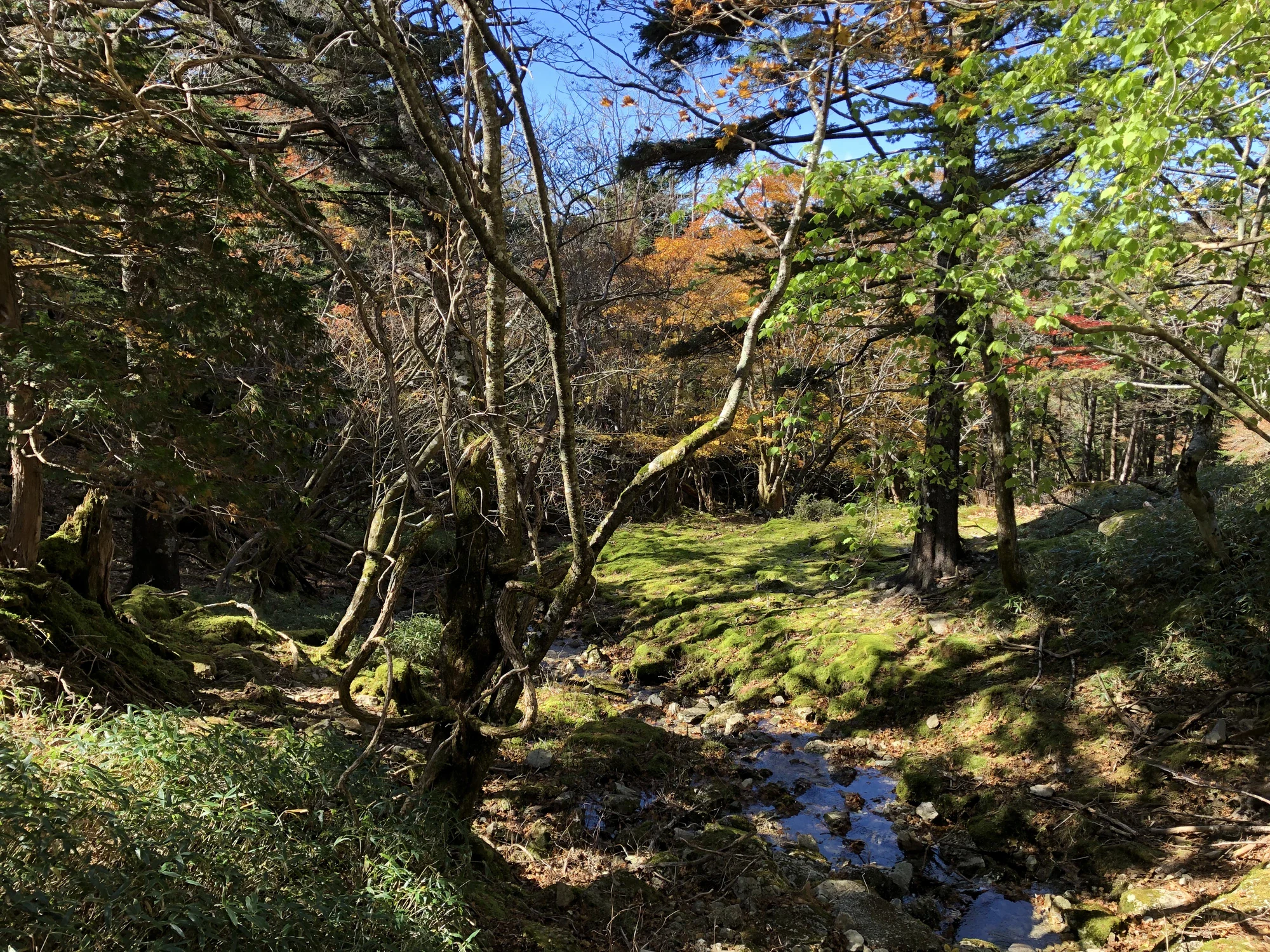
A shallow rocky stream runs through moss-covered woodland beneath green and golden leaves.

Autumn woodland at Odaigahara, photographed from the path between the parking area and Owase-tsuji on 26 October 2020. Enjoy the forest from the designated path.

Odaigahara 202010a.jpg — 8-hachiro, CC BY-SA 4.0 (https://creativecommons.org/licenses/by-sa/4.0/). Source: https://commons.wikimedia.org/wiki/File:Odaigahara_202010a.jpg. Resized and recompressed as WebP; no crop or retouching. · Creative Commons

Walks and routes

Visitor center to Hidegatake and back

Follow the marked Higashi-Odai approach to the summit and retrace it. This avoids committing to the cliff spur or the valley circuit. Turn back sooner if your pace, weather or return-bus time calls for it. Do not follow a descending traverse toward Osugidani.

Expect a mountain path and steps near the summit. Leave the stroller behind and choose a turnaround point that suits the least confident walker.

Visitor center to Hidegatake and back

Full Higashi-Odai B circuit

The longer circuit links Hidegatake, Masaki-area woodland and grassland, Ushigahara, Daijagura and Shiokara Valley before returning uphill to the parking area. Plan it as a dedicated hike, not an automatic extension of the shorter outing.

Expect cliff exposure at Daijagura, a suspension bridge and steep slopes down into and back out of Shiokara Valley. Choose this route only if everyone has the stamina and sure footing for it. Skip the cliff spur if anyone is uncomfortable with heights.

Full Higashi-Odai B circuit

Arrive, use the toilets and spend about 30 minutes in the center checking conditions and exploring the exhibits.

If everyone is equipped and comfortable with the path, take the Hidegatake out-and-back. Allow 2–3 hours with pauses, or shorten it well before reaching the summit if needed.

Eat, revisit an exhibit or make a final nature sketch near the center. Aim to be back in the center and parking area by about 15:15, leaving time to use the toilets and get ready for the 16:00 bus.

Explore the moss, leaves, tracks and forest-recovery exhibits.

Ask staff whether a brief return along the beginning of the eastern trail suits your group and the current conditions. You can also spend the whole visit enjoying the exhibits.

Things to try

Become footprint detectives

Try the animal-track stamps in the center and choose one shape to remember. Outside, discuss what a track might tell you without leaving the trail to search for animals.

Compare leaves before the walk

Use the center’s tree displays to notice differences in leaf shape. On the path, compare leaves still attached to trees; photographs and sketches make better souvenirs than collected leaves.

Read a recovering forest

At a safe viewpoint on an open designated path, look for protection fences, young trees and bamboo grass. Ask which seedlings have room to grow and how browsing might change their chances. Never open a fence or step inside for a closer look.

Listen before looking

Pause safely off the flow of walkers and listen briefly for a jay’s rough call or a woodpecker’s tapping. Watch trunks for nuthatches, but keep your group together and maintain the local bear precautions. Do not use playback, bait or a nest approach.

Look for miniature tiers

Learn the stairstep moss pattern from a display or field-guide image, then examine moss visible from the trail. Its stepped branching is a useful clue, but not enough to confidently name every green patch. Do not lift, peel or collect it.

Use the exhibits, or choose another day

If the road and bus are operating safely, the center’s exhibits can still give you a good introduction to the forest. Ask staff whether a short woodland walk suits the conditions. Postpone the mountain outing when heavy rain, thunder, dangerous wind or a closure affects your journey or walk.

Wildlife and habitats

Sika deer

They are part of the forest’s story even when none appears. Look for the restoration fences rather than following deer; feeding and approaching them can harm both wildlife and people.

Eurasian nuthatch

Watch tree trunks for a small bird moving downward headfirst or circling the bark.

Eurasian jay

A rough, carrying call may be your first clue. If a bird is visible, notice the bright blue wing patch without pursuing it through the trees.

Great spotted woodpecker

Listen for short calls or drumming and watch from the path. Drumming can be communication rather than feeding; do not approach a cavity or nest.

Stairstep moss

Look closely at safely visible moss for layered, fernlike branching. Confirm with the center’s resources rather than treating all forest-floor moss as this species.

These species live in the Odaigahara area, though what you notice will depend on the season, weather and luck. Watch from the paths, leave moss undisturbed and give all wildlife space.

Stories and discoveries

Rain starts with the sea

Moist air from the nearby Kumano Sea rises sharply over the mountains, cools and forms cloud. A distant typhoon can therefore bring serious rain here well before its center reaches the peninsula.

A forest carried over from colder times

As the climate warmed after the last glacial period, cold-adapted conifers retreated from lower country. Odaigahara’s high ground helped retain a remnant of that forest in the Kii mountains.

Open views can tell a story of forest loss

Storm damage, spreading bamboo grass and deer impacts interact. The open Masaki landscape is not simply an untouched grassland; fences and seedling protection are part of an active attempt to restore forest processes.

A plateau without a volcano

Odaigahara’s broad high surface is an uplifted, non-volcanic landform. Rivers have cut into its margins, creating the sharp contrast between gentler ground above and the deep cliffs and valleys beside it.

When to visit

Late spring to early summer

Fresh foliage and white shiroyashio flowers can be rewarding; the village places the flowers around early to mid-June. Dates vary and wet weather can be substantial.

Summer

Forest shade does not remove the need for water, rainwear and weather checks. Plan for both cool wet conditions and heat during exertion.

Autumn

Colored leaves attract visitors, especially in October. Expect cold and shorter days, and leave spare time for crowded transport or roads.

Winter closure

The mountain road, parking area and visitor center close for winter. Check the official closing and reopening notice for winter 2026–27 before arranging travel near either end of the season.

Getting there and practical advice

Odaigahara Visitor Center

Nature and conservation exhibits, local information and seasonal educational programs. Ask about today’s trail and bear information before walking.

Open 09:00–17:00 during the season; closed with the winter road closure.

Parking-area toilets

Use these before the hike. Higashi-Odai has no trail toilets. Ask the center about the current suitable toilet and access route if you have mobility needs.

Seasonal Sorakaze bus

For 2026: daily scheduled service 25 April–23 November, subject to road and weather disruption. Board at Yamato-Yagi south exit at 08:15 or Kashiharajingu-mae east exit at 08:30; Odaigahara arrival is 11:16 and departure is 16:00. Book both legs separately. Reservations open at 09:00 one month ahead and close at 16:00 the day before, subject to availability.

Odaigahara Driveway / Prefectural Route 40

Road access is seasonal and can close during heavy rain. Peak foliage and holiday dates can fill the parking area early. Check Nara’s road restrictions before departure and leave spare time for traffic.

Mountain paths

Hidegatake has steps; the longer circuit adds exposed rock, steep slopes and a suspension bridge. Choose a route and turnaround point to suit your group’s footing and stamina.

Center and transport

Call the center to discuss a lower-exertion visit, including the entrance, parking-to-door route and a suitable toilet. Before booking the bus, ask about wheelchair boarding, luggage space for mobility equipment and any transfer you would need to make.

Sources and useful links

Wildlife you might spot

5

Each card links to a full Explore page with photos, traits, and fun facts.

Snap map for this place

Start with the big picture, then zoom in to explore individual wildlife observations around this place.

Loading map…

Good to know before you go

Reserve both directions of the Sorakaze bus. For 2026 it arrives at Odaigahara at 11:16 and leaves at 16:00; there is no other public-transport service out. Check the operating status and return reservation before setting off.

Check road, trail, boardwalk-work and bear notices before traveling and again at the center. The 2026 Masaki-area diversion includes roots and steps. Heavy rain, strong wind, thunder or poor visibility are reasons to shorten the walk or postpone it.

Wear grippy walking footwear and bring a waterproof jacket and trousers, a warm layer, water, lunch and a map. Keep essential items dry. Wet wood and rock need particular care.

Use the parking-area toilets before entering Higashi-Odai: there are no toilets on its trails. Carry out all food scraps, wrappers and other rubbish.

Follow local bear precautions

walk in daylight, preferably with others, stay on the trail and make your presence known with conversation or a bear bell. Check the center’s latest reports and keep food and rubbish packed away.

If you meet a bear, do not approach for a photo, shout or run. Stay calm and back away slowly while keeping it in view. Give deer and birds space too; never feed wildlife.

Skip Daijagura if anyone is uneasy with heights or conditions are slippery. The return from Shiokara Valley is uphill and tiring; choose your route before descending.

Stay on marked paths, respect fences and leave plants, moss, stones and fallen natural material where they are. Pets, camping, fires and barbecues are not permitted in the Odaigahara visitor area; assistance dogs are excepted from the pet restriction.

Frequently asked questions

No. This guide covers Odaigahara Visitor Center and a manageable part of Higashi-Odai. Yoshino-Kumano spans three prefectures. Nachi Falls, the Kumano shrines and the coast require separate travel plans.
The normal Higashi-Odai trails do not use the Nishi-Odai entry-permit procedure. Nishi-Odai is a regulated area with daily limits, an entry certification process and a required pre-entry briefing. Arrange it separately with the official application operator; do not drift across the boundary while exploring.
Some children who are used to walking can enjoy the center and a carefully chosen length of the eastern trail. There is no single age that makes the summit or cliff route suitable. Judge stamina, footing, weather and comfort with heights; adults should keep children close and turn back before anyone is exhausted. Daijagura is not an essential family stop.
The Sorakaze departs Yamato-Yagi Station’s south exit at 08:15 or Kashiharajingu-mae Station’s east exit at 08:30, reaches Odaigahara at 11:16 and leaves at 16:00. Book outward and return seats separately, normally by 16:00 the preceding day. It does not serve Yamato-Kamiichi Station. Keep a generous buffer before the return bus; check current times again before traveling.
Do not assume so. Entry certification and the briefing must be arranged, and the listed morning briefings begin before the bus arrives. Contact the operator about a workable schedule before booking; a previous-night stay may be needed for the visit you want. Nishi-Odai is not an automatic wet-weather substitute.
Enjoy the center and, if staff and conditions support it, a shorter woodland out-and-back. You can learn a lot from leaves, moss and forest recovery without a panorama. In severe weather, postpone the mountain outing rather than counting on the center to solve a road or trail warning.
General admission is listed as free, with seasonal opening hours of 09:00–17:00. Bring your own food and drinking water for the walk. Nearby commercial services may have different opening periods; do not depend on an unconfirmed meal or supply stop.
The area supports wild sika deer and several woodland birds, but none is guaranteed on your route or date. Bear notices are safety information, not viewing suggestions. Stay on trails, avoid approaching wildlife and ask staff before proceeding through an area with a current warning.

Recent snaps at this place

Recent snaps will appear here as new observations are added.

View all ›

Take the discovery with you

Exploring Yoshino-Kumano National Park?

Identify the wildlife you spot, learn as you go, and keep a collection of the adventure.

  1. 1Spot it
  2. 2Snap it
  3. 3Keep the discovery