




Alfalfa
Medicago sativa
Alfalfa is a special plant that farmers grow to feed animals like cows and horses. It has tiny purple flowers and helps enrich the soil where it grows.
Habitat: Farms, Grasslands
The Alfalfa has slender, upright stems with trifoliate leaves, meaning each leaf stalk carries three oval leaflets. Its small, pea-like flowers are typically vibrant purple or blue, growing in dense, short clusters at the stem tips, resembling miniature grape clusters.
Category
PlantsRarity
Common
Danger
1/5 · Very low
Snaps
8
Alfalfa flowers are tiny, but they attract many busy bees and butterflies!
Ancient Greeks and Romans fed alfalfa to their horses for strength.
It's a cousin to peas and beans, all part of the special legume plant family.
Its name 'Alfalfa' comes from Arabic, meaning 'father of all foods'!
Alfalfa can pull nitrogen from the air and store it in the soil, acting like a natural fertilizer for other plants!
Alfalfa has incredibly deep roots that can reach water far underground, helping it survive long dry spells.
Alfalfa can quickly regrow after being cut, allowing farmers to harvest it multiple times throughout the year.
Apis mellifera
Bees gather nectar and pollen from its flowers.

Bos taurus
Cattle eat alfalfa as a highly nutritious forage.
Ensifer meliloti
Bacteria in its roots fix nitrogen from the air.
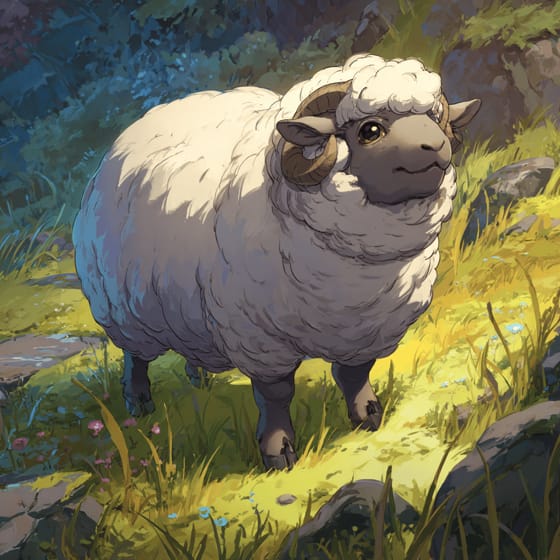
Ovis aries
Sheep often graze on alfalfa in pastures.
Describes organisms capable of converting atmospheric nitrogen into compounds usable by plants.
Medicinal plants possess chemical compounds that can be used for therapeutic purposes to treat illnesses or maintain health.
This human use trait describes species cultivated or domesticated by humans for agricultural purposes, including crops and livestock.
Grassland habitats are terrestrial biomes dominated by grasses and herbaceous plants, supporting a variety of grazing animals.

Rapid growing plants exhibit accelerated growth rates, quickly increasing in size and biomass within a short period.
Danger
1/5 · Very low
If you see alfalfa in the wild, it's best not to eat it unless an adult says it's safe.
The easiest way to identify Alfalfa is to use the Snappit nature identifier app.
30-90 cm
30-60 cm
0.5-1 cm
Spring to fall
Yes
None
Perennial
Zoom in to split clusters and explore where this object has been snapped.

Montana, US
You might spot Western Ponderosa Pine and Great Horned Owl.
View guide →

New Mexico, US
You might spot Duck, Greater Roadrunner, and American Robin.
View guide →

Michigan, US
You might spot Common Merganser, Tansy, and American Herring Gull.
View guide →

Nebraska, US
You might spot Rock Pigeon, Alfalfa, and House Sparrow.
View guide →

New Mexico, US
You might spot Rocky Mountain Beardtongue and Balkan Toadflax.
View guide →

Nebraska, US
You might spot Two-Spined Spur-Throat Grasshopper.
View guide →
Take the discovery with you
Snap it with Snappit to identify it, learn what makes it special, and add the discovery to your collection.









.jpg&width=800)



_001.jpg&width=800)




