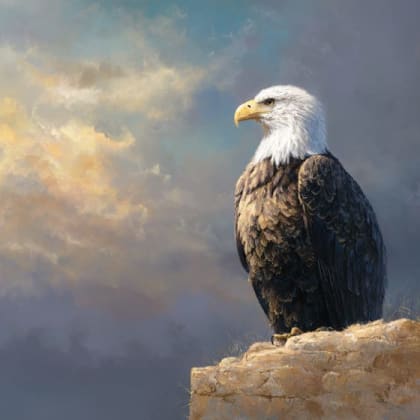





Bald Eagle

Assinins is a deeply historic site in Michigan's Upper Peninsula, preserving a vital Native American mission past.
Assinins is a deeply historic site in Michigan's Upper Peninsula, preserving a vital Native American mission past. This significant historic district, nestled near the serene Keweenaw Bay, offers a poignant journey back to the mid-19th century, revealing the intertwined histories of the Ojibwe people and early European missionaries. It stands as a testament to cultural exchange, resilience, and the enduring legacy of figures like Bishop Frederic Baraga and Chief Edward Assinins, whose visions shaped this unique community.
Visitors can explore the remnants of the Old St. Joseph Orphanage, once a prominent three-story structure that housed both Native American and European children, and reflect upon its complex role in local history. The active Most Holy Name of Jesus/St. Kateri Tekakwitha Church, overlooking the bay, continues to serve its community, featuring a newly constructed bell tower. The Father Baraga Historical Mission and Native Genealogy Center, housed in a restored school building, provides further insight into the site's rich heritage, including Bishop Baraga's groundbreaking work on the Ojibwe language.
Assinins provides a unique opportunity for quiet contemplation and historical discovery, inviting guests to connect with the past amidst the natural beauty of the Upper Peninsula. It’s a place where every crumbling wall and ancient gravestone tells a story, making it an essential stop for those seeking a deeper understanding of Michigan’s cultural tapestry and the enduring spirit of its Indigenous communities. The peaceful cemetery, where Chief Assinins and pioneering missionaries rest, adds to the reflective atmosphere of the site. Turn your visit into a safari! Use the Snappit app to scan and log wildlife sightings here.
Assinins was founded in 1843 by Bishop Frederic Baraga, often known as the "Snowshoe Priest," at the invitation of Chief Edward Assinins, who became the first person baptized at the site. It began as the Holy Name of Jesus Catholic mission, serving the Ojibwe (Chippewa) people. Over the years, the mission grew to include a church, a school, and the prominent St. Joseph Orphanage and School, constructed in 1860, which played a significant, albeit complex, role in the education and care of Native American and immigrant children. The site held immense importance, not only as one of the earliest Catholic missions in the Upper Peninsula but also as a center where Bishop Baraga facilitated self-governance for local tribes and produced foundational works like his Ojibwe grammar and dictionary. After the Civil War, Baraga transferred the land and buildings to Chief Assinins and the Keweenaw Band of the Chippewa. While some of the original structures, including the larger 1929 orphanage, have since been torn down, the area was designated a National Historic District in 1972, preserving the remaining architectural and cultural heritage.
Walk through the historic district, read the interpretive signs, visit the church, explore the cemetery, and take in the scenic views of Keweenaw Bay. Photography of the historic structures and the natural landscape is highly recommended.
Spring/Summer: Lush greenery, warmer temperatures, and clear views of the bay.
Fall: Vibrant autumn colors across the landscape, making for picturesque visits.
Winter: The area can be very cold and snowy, with some parts potentially less accessible. Check local conditions before visiting during winter months.
Information on specific accessibility features is not widely available. As a historic site with uneven terrain and older structures, visitors should anticipate varying levels of accessibility. Paths to the cemetery and around the ruins may be unpaved.
Explore the foundational ruins and imagine the lives that once filled its halls.
Pay respects at the graves of Chief Edward Assinins and the early missionaries.
Admire the historic active church and its new bell tower.
Reflect on the legacy of the mission's founder.
Each card links to a full Explore page with photos, traits, and fun facts.
Start with the big picture, then zoom in to explore individual wildlife observations around this place.
Wear comfortable shoes
The area includes uneven terrain, grass, and potentially unpaved paths, especially around the ruins and cemetery.
Bring a camera
The historic structures, scenic views of Keweenaw Bay, and peaceful surroundings offer excellent photographic opportunities.
Allow time for reflection
This is a site with deep and sometimes somber history; take time to read historical markers and absorb the atmosphere.
Check for local events
Occasionally, the church or historical center may host special events or services, which could enrich your visit.
Combine with other Baraga County attractions: Assinins is near other historical sites and natural attractions in Baraga County, making it easy to include in a broader itinerary.
Be respectful
As a historic site and an active church/cemetery, visitors should maintain a respectful demeanor and adhere to any posted guidelines.
May 25, 2026
May 4, 2026
Apr 26, 2026
Feb 8, 2026
Jan 24, 2026

Maryland, US
You might spot White-Tailed Deer and Eastern Gray Squirrel.
View guide →
.jpg)
District of Columbia, US
You might spot Eastern Gray Squirrel, Duck, and House Sparrow.
View guide →

Illinois, US
You might spot American Robin, Canada Goose, and House Sparrow.
View guide →

Virginia, US
You might spot Spotted Lanternfly and Northern Cardinal.
View guide →
Take the discovery with you
Identify the wildlife you spot, learn as you go, and keep a collection of the adventure.



















.jpg&width=800)


_1.JPG&width=800)





