.jpg&width=800)





Alfalfa Leafcutter Bee
megachile rotundata
The Alfalfa Leafcutter Bee is a small, fuzzy bee that loves to collect leaves for its nest. It plays an important role in helping flowers grow by pollinating them as it buzzes around!
Habitat: Alfalfa fields, gardens, and meadows where flowers bloom.
The Alfalfa Leafcutter Bee is a small, stout bee with a dark body covered in dense, yellowish-grey hairs, especially on its underside. Females have a distinct golden-bristled belly (scopa) for carrying pollen, differing from the leg-pollen baskets of honeybees. They are generally less fuzzy than bumblebees.
Category
InsectsRarity
Common
Danger
1/5 · Very low
Snaps
1
Each female bee builds individual nursery cells, laying one egg in each leafy compartment.
Their unique nests look like tiny burritos or cigars made from carefully cut leaf pieces!
These busy bees are so effective at their job, farmers actually buy them to pollinate crops!
Unlike honeybees, they carry pollen on their hairy tummies, not in baskets on their legs!
Alfalfa Leafcutter Bees can snip perfect circular leaf pieces using powerful jaws that helps them build cozy, tubular nest cells.
Alfalfa Leafcutter Bees have a special hairy abdomen (scopa) that helps them efficiently collect and transport pollen.
Alfalfa Leafcutter Bees rapidly and effectively pollinate many flowers, which helps increase crop yields for farmers.
They love to sip sweet nectar and collect protein-rich pollen from flowers to feed their young!

Medicago sativa
Essential for alfalfa seed production.
Sapyga pumila
Lays eggs in the leafcutter bee's nest cells.
Monodontomerus obsoletus
Parasitic wasp that attacks larvae.
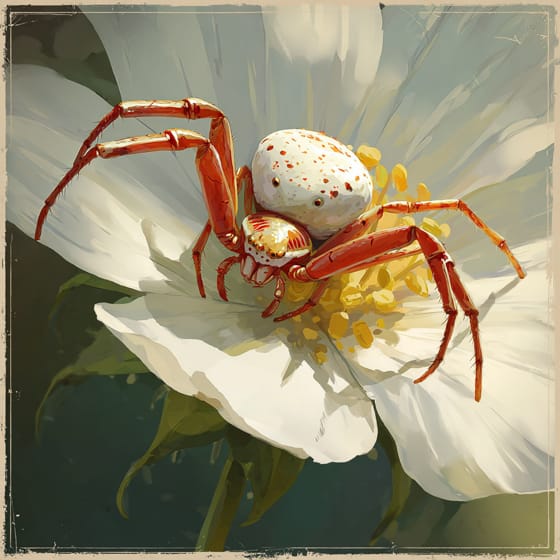
Misumena vatia
Hides on flowers, ambushing visiting bees.
Solitary animals live alone for most of their lives, only interacting with others for mating or parental care.
Colorful describes organisms or objects displaying a wide range of bright and distinct colors.
This trait characterizes organisms whose diet consists entirely or primarily of plant material.
Diurnal animals are primarily active during daylight hours, typically resting or sleeping at night.

Describes organisms that transfer pollen, enabling the fertilization and reproduction of plants.
Danger
1/5 · Very low
No special safety notes yet.
The easiest way to identify Alfalfa Leafcutter Bee is to use the Snappit nature identifier app.
12-20 mm
6-10 mm
28-42 days
15 km/h
They love to sip sweet nectar and collect protein-rich pollen from flowers to feed their young!
Alfalfa fields, gardens, and meadows where flowers bloom.
Foraging
Zoom in to split clusters and explore where this object has been snapped.
Take the discovery with you
Snap it with Snappit to identify it, learn what makes it special, and add the discovery to your collection.








.jpg&width=800)



