

American Mistletoe
phoradendron leucarpum
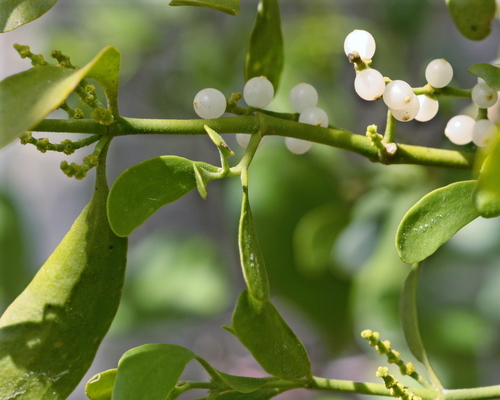
American Mistletoe (Phoradendron leucarpum) is a fascinating hemiparasitic plant native to the eastern and central United States. While it can produce its own energy via photosynthesis, it steals water and vital nutrients from its host trees (primarily hardwoods like oaks and red maples) using specialized root-like structures called haustoria. Famous in winter folklore, this evergreen plant forms distinct, rounded clumps high up in the naked branches of deciduous trees during the colder months, serving as an important ecological resource.
Habitat: Found growing high in the canopy of deciduous trees in temperate forests, woodlands, parks, and suburban areas.
This plant forms conspicuous, rounded woody clumps measuring between 30 and 100 centimeters in diameter, clinging tightly to tree branches. It features thick, leathery, oval-shaped green leaves that are opposite each other along smooth, jointed, bright-green stems. In late autumn and winter, female plants produce clusters of small, sticky, pearl-white berries that are highly attractive to birds.
Category
PlantsRarity
Common
Danger
1/5 · Very low
Snaps
1
Despite being a parasite, mistletoe is considered an ecological keystone species because it provides vital nesting cover and winter food for wildlife.
The berries contain a sticky substance called viscin, which is so strong it can survive a bird's digestive tract to glue seeds onto bark.
The name 'mistletoe' is derived from Anglo-Saxon words meaning 'dung-on-a-twig', referring to how birds leave seeds behind in their droppings.
Uses specialized root-like structures called haustoria to penetrate host tree bark and absorb water and minerals directly from the tree's xylem.
Produces seeds coated in viscin, an incredibly sticky substance that ensures the seeds adhere firmly to host tree branches after dispersal.
Maintains green leaves year-round, allowing it to photosynthesize even during the winter months when host trees are dormant.
As a hemiparasite, it obtains water and mineral nutrients from its host tree while producing its own carbohydrates via photosynthesis.
Age differences: Germinating seeds rely on stored energy until they successfully penetrate host tissue.
Quercus alba
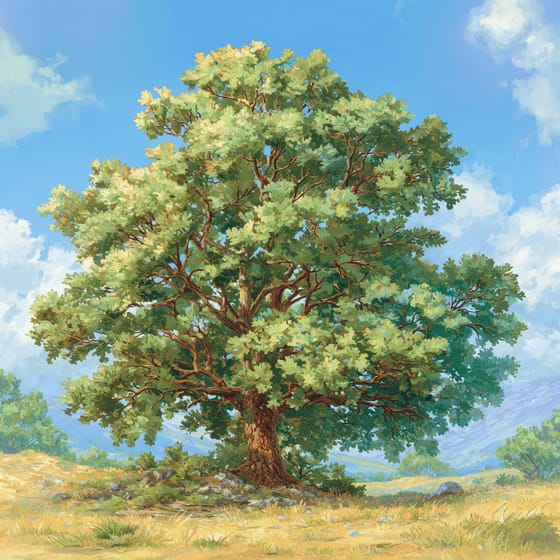
Acts as a hemiparasite, draining water and nutrients from the tree's branches.
Sialia sialis
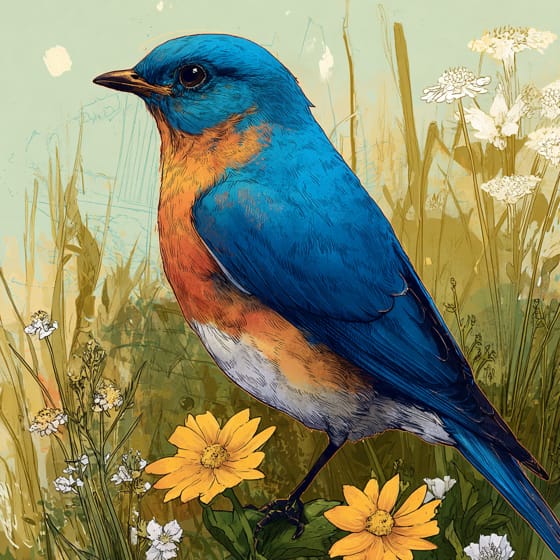
Consumes the sticky white berries and subsequently disperses seeds onto new branches.
Atlides halesus
Provides critical foliage that serves as the exclusive food source for this butterfly's larvae.
No trait badges are assigned for this object yet.
No aliases listed yet.
Collections for this object will appear here as more themes are added.
Danger
1/5 · Very low
No special safety notes yet.
The easiest way to identify American Mistletoe is to use the Snappit nature identifier app.
30-100 cm
0.1-3 kg
5-30 years
As a hemiparasite, it obtains water and mineral nutrients from its host tree while producing its own carbohydrates via photosynthesis.
Found growing high in the canopy of deciduous trees in temperate forests, woodlands, parks, and suburban areas.
Parasitic Absorption
Zoom in to split clusters and explore where this object has been snapped.

Georgia, US
You might spot Gulf Fritillary, Anole, and American Beautyberry.
View guide →

Alabama, US
You might spot Anole, Bee, and Bristle Thistle.
View guide →

Alabama, US
You might spot Anole, Bee, and Bristle Thistle.
View guide →

Illinois, US
You might spot Cliff Swallow, Baldcypress, and Indian Heliotrope.
View guide →
Illinois, US
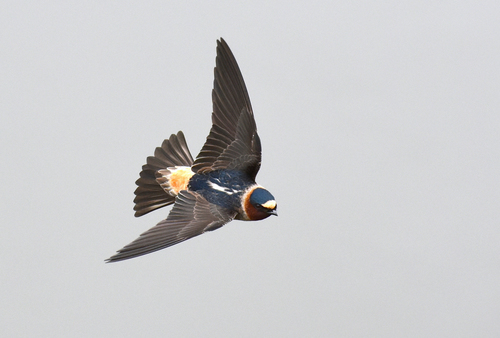
You might spot Cliff Swallow, Baldcypress, and Indian Heliotrope.
View guide →
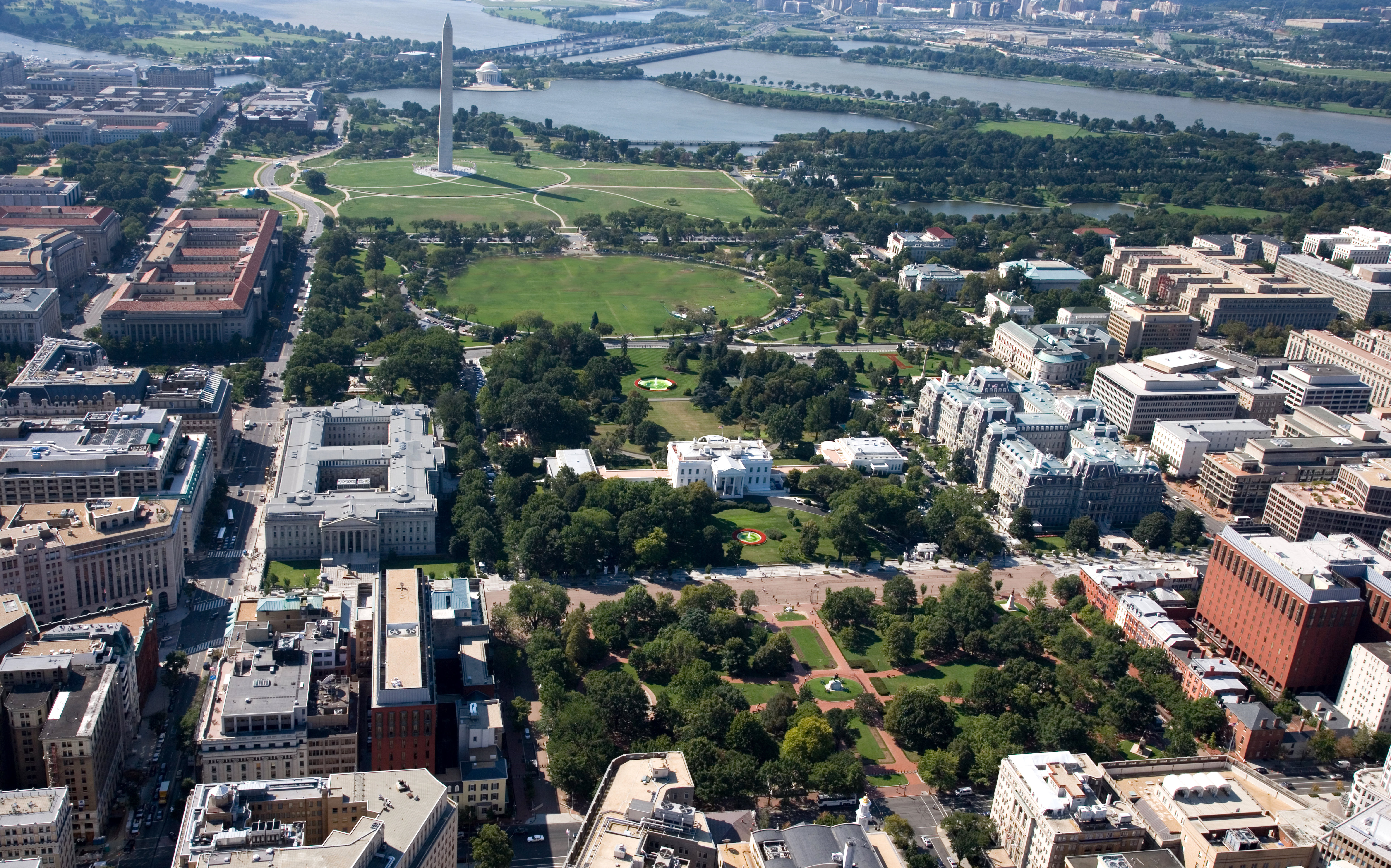
District of Columbia, US
You might spot Eastern Gray Squirrel, House Sparrow, and American Robin.
View guide →
Take the discovery with you
Snap it with Snappit to identify it, learn what makes it special, and add the discovery to your collection.










.jpg&width=800)



_001.jpg&width=800)




