





Apple Ermine
Yponomeuta malinellus
The Apple Ermine is a small, fluffy caterpillar that loves to munch on apple leaves. It turns into a beautiful white moth with black spots. You can often find it in gardens and orchards!
Habitat: Gardens and orchards
The Apple Ermine moth is small with pure white wings adorned with numerous tiny, evenly spaced black dots, making it look almost polka-dotted. Its body is slender and white. The caterpillar is yellowish-grey with a shiny black head and black spots on its segments.
Category
InsectsRarity
Common
Danger
1/5 · Very low
Snaps
Be the first to snap!
Female moths lay their tiny eggs inside a special protective 'shield' that hardens like glue!
Once, they made so many webs, they completely blanketed trees, looking like snow!
Their caterpillars can totally cover an apple tree in a giant, spooky-looking silk web!
These moths are called 'ermine' because their spotted wings remind people of fancy ermine fur coats!
Apple Ermine caterpillars can spin huge silken webs that protect their entire community from predators and harsh weather.
Apple Ermine caterpillars eat together in large groups, which helps them strip leaves from trees much faster than eating alone.
The adult moth has pure white wings with tiny black dots, providing camouflage that helps it blend in at night.
Apple Ermine caterpillars munch on apple leaves, while adult moths do not eat at all!
Age differences: Caterpillars are voracious leaf- eaters, but adult moths do not feed.
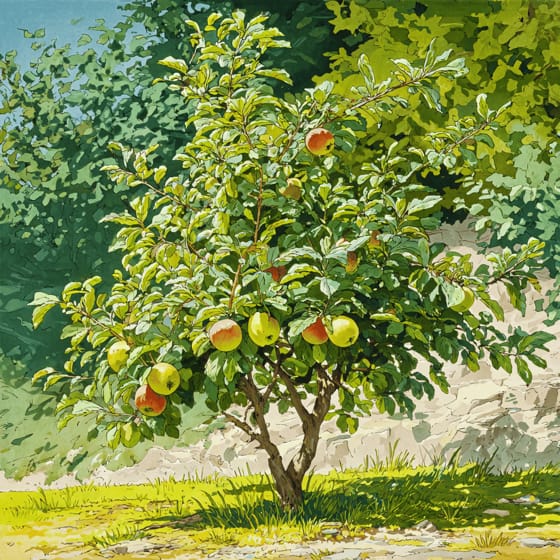
Malus domestica
Caterpillars feed on its leaves, causing defoliation.
Ageniaspis fuscicollis
This tiny wasp lays its eggs inside Apple Ermine caterpillars.
%2C_Parc_de_Woluw%C3%A9%2C_Brussels_(13042792905).jpg&width=800)
Parus major
Great Tits are common birds that prey on Apple Ermine caterpillars.
Furry describes animals possessing a dense covering of soft hair or fur.
Solitary animals live alone for most of their lives, only interacting with others for mating or parental care.
This trait characterizes organisms whose diet consists entirely or primarily of plant material.
Diurnal animals are primarily active during daylight hours, typically resting or sleeping at night.

This habitat trait indicates species that can coexist with humans in urban and suburban environments, utilizing man-made structures and green spaces.

Describes organisms that transfer pollen, enabling the fertilization and reproduction of plants.
No aliases listed yet.
Danger
1/5 · Very low
Always wash your hands after touching plants or insects.
The easiest way to identify Apple Ermine is to use the Snappit nature identifier app.
16-20 mm
8-10 mm
42-63 days
5-10 km/h
Apple Ermine caterpillars munch on apple leaves, while adult moths do not eat at all!
Gardens and orchards
Foraging
Zoom in to split clusters and explore where this object has been snapped.
Recent snaps will appear here as new observations are added.
Take the discovery with you
Snap it with Snappit to identify it, learn what makes it special, and add the discovery to your collection.






.jpg&width=800)




