





Bar-tailed Godwit
Limosa lapponica
The Bar-tailed Godwit is a long-legged bird known for its amazing long migrations. It has a beautiful, long bill and can be seen in coastal areas looking for food.
Habitat: Coastal areas
The Bar-tailed Godwit has a long, slightly upturned bill and long legs, perfect for wading. In breeding season, males show rich rufous-chestnut undersides, while females are duller. Its subtly barred tail is visible in flight.
Category
BirdsRarity
Common
Danger
1/5 · Very low
Snaps
1
Newly hatched Bar-tailed Godwit chicks can leave the nest and find food for themselves almost immediately.
Their scientific name, Limosa lapponica, fittingly means "muddy from Lapland," describing their favorite wet habitats.
These amazing birds can sense and respond to changes in barometric pressure, helping them avoid storms during migration.
They double their body weight, mostly fat, before their astonishing non-stop migratory flights!
Bar-tailed Godwit can fly over 11,000 km non-stop because they efficiently store massive amounts of fat, helping them cross vast oceans.
This bird can temporarily shrink its internal organs (like intestines) before migration, helping them lighten their load for epic journeys.
Bar-tailed Godwits have a long, flexible bill with sensitive tips that helps them locate and extract hidden prey from deep within the mud.
Bar-tailed Godwits possess an innate sense of direction, helping them navigate across hemispheres with incredible accuracy.
They slurp up yummy worms and shellfish hidden in the mud with their long bills.
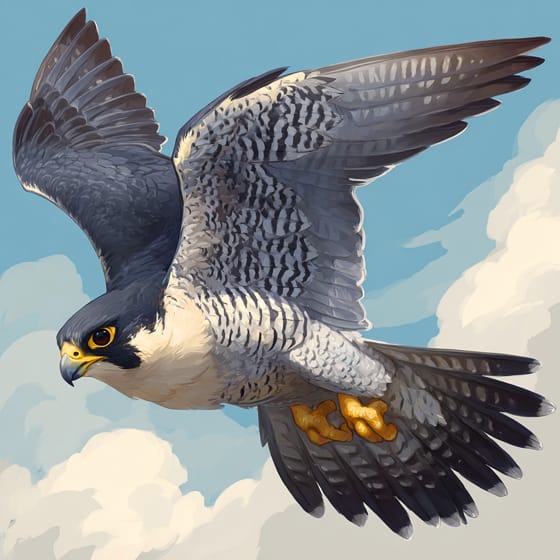
Falco peregrinus
A formidable predator, sometimes preying on adult godwits.

Vulpes vulpes
May prey on eggs and young chicks in their Arctic breeding grounds.
Arenicola marina
A primary food source, found burrowed in the mud of intertidal zones.
Macoma balthica
Common bivalve found in muddy sands, a favorite food for probing bills.
Feathered describes animals, primarily birds, possessing a covering of feathers.
Social animals live in organized groups, cooperating for survival benefits such as foraging, defense, and raising offspring.
Coastal habitats are dynamic environments located along the interface between land and sea, influenced by tides, waves, and saltwater.
This trait identifies organisms whose diet consists entirely or primarily of animal tissue.

Diurnal animals are primarily active during daylight hours, typically resting or sleeping at night.

Describes a species whose presence and role have a disproportionately large effect on its environment.

Aquatic habitats encompass environments where organisms live predominantly in water, including oceans, rivers, lakes, and wetlands.

Migratory animals undertake seasonal movements from one region to another, typically in response to changes in climate or food availability.
No aliases listed yet.
Danger
1/5 · Very low
Always watch birds from a distance and do not disturb their nests.
The easiest way to identify Bar-tailed Godwit is to use the Snappit nature identifier app.
37-41 cm
70-82 cm
0.19-0.63 kg
10-29 years
55 km/h
They slurp up yummy worms and shellfish hidden in the mud with their long bills.
Coastal areas
Zoom in to split clusters and explore where this object has been snapped.
Take the discovery with you
Snap it with Snappit to identify it, learn what makes it special, and add the discovery to your collection.





.jpg&width=800)







