




Beetles
coleoptera
Beetles, belonging to the order Coleoptera, represent the most diverse group of organisms on the planet, accounting for about 40% of all described insect species and 25% of all known animal life-forms. With over 400,000 species discovered so far, these incredible insects can be found in almost every major habitat on Earth, except for the oceans and extreme polar regions. Their extraordinary success is largely due to their hardened, shield-like forewings called elytra, which protect their delicate flight wings and bodies from predators, dehydration, and physical damage. Beetles play vital ecological roles as decomposers, pollinators, predators, and prey. From the tiny featherwing beetles to the massive Goliath and Hercules beetles, they display an astonishing variety of shapes, sizes, and brilliant coloration. Whether they are tunneling through leaf litter, flying through forest canopies, or swimming in freshwater ponds, beetles are indispensable contributors to healthy ecosystems globally.
Habitat: Found in almost every terrestrial and freshwater habitat worldwide, including forests, grasslands, deserts, wetlands, and even inside human homes.
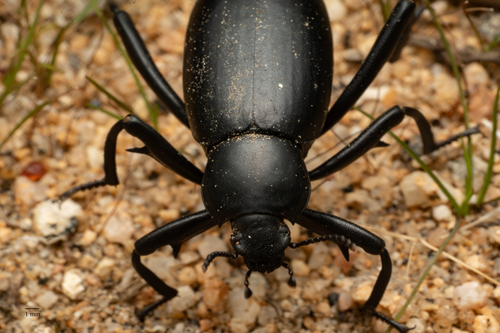
Beetles are easily recognized by their hardened, shell-like front wings called elytra, which meet in a straight, neat line down the middle of their back. Beneath this protective armor lies a second pair of membranous wings used for flight. They possess chewing mouthparts (mandibles), a distinct head, a thorax covered partly by a pronotal shield, and segmented antennae that vary wildly from simple threads to elaborate clubs or fans. Their colors range from dull black and brown to brilliant metallic greens, blues, and iridescent coppers, and their size spans an incredible range from less than a millimeter up to 17 centimeters in length.
Category
InsectsRarity
Common
Danger
1/5 · Very low
Snaps
Be the first to snap!
One out of every four animal species known to science is a beetle.
Some species of dung beetles navigate using the polarization patterns of moonlight and even the Milky Way galaxy.
The bombardier beetle can blast predators with a boiling-hot chemical spray reaching temperatures of 100 degrees Celsius.
The name 'Coleoptera' comes from the Greek words meaning 'sheathed wing', referring to their hardened elytra.
The hardened forewings protect the delicate flight wings and abdomen, allowing beetles to squeeze into tight spaces without injury.
Many species, such as bombardier beetles, can spray toxic or boiling-hot chemical mixtures to deter predators.
Some beetles can carry objects hundreds of times their own body weight, making them some of the strongest creatures on Earth relative to size.
As an incredibly diverse order, beetles consume a vast range of materials, including plants, fungi, decaying organic matter, other insects, and carrion.
Age differences: Many beetle larvae are specialized subterranean or wood-boring feeders, while adults may feed on nectar, leaves, or prey.

Sialia sialis
Adult beetles are a rich source of protein for nesting birds and their chicks.
Myzus persicae
Many predatory lady beetle species actively hunt and consume agricultural pests like aphids.
Calycanthus floridus
Beetles enter the flowers for food and shelter, pollinating them in the process.
Solitary animals live alone for most of their lives, only interacting with others for mating or parental care.
Scavengers consume dead organic matter, helping to decompose carcasses and other waste in the ecosystem.
Colorful describes organisms or objects displaying a wide range of bright and distinct colors.
Grassland habitats are terrestrial biomes dominated by grasses and herbaceous plants, supporting a variety of grazing animals.
This trait characterizes organisms whose diet consists entirely or primarily of plant material.
Describes organisms that break down dead organic material, recycling nutrients back into the ecosystem.
Forest habitats are terrestrial environments dominated by dense tree cover, supporting a high diversity of plant and animal life.
Armored describes animals protected by a hard, external covering or shell for defense.
Diurnal animals are primarily active during daylight hours, typically resting or sleeping at night.
Describes a species whose presence and role have a disproportionately large effect on its environment.
Describes organisms that transfer pollen, enabling the fertilization and reproduction of plants.
No aliases listed yet.
Collections for this object will appear here as more themes are added.
Danger
1/5 · Very low
No special safety notes yet.
Look for six legs, antennae, three body sections and the shape of the wings. Beetles have hardened front wings; flies have just one working pair. Tiny insects may need a close view before their group is clear. Insect Identifier: upload a photo and compare the visible details.
1-17 cm
1-25 cm
0.000001-0.1 kg
1-5 years
10 km/h
As an incredibly diverse order, beetles consume a vast range of materials, including plants, fungi, decaying organic matter, other insects, and carrion.
Found in almost every terrestrial and freshwater habitat worldwide, including forests, grasslands, deserts, wetlands, and even inside human homes.
Zoom in to split clusters and explore where this object has been snapped.
Recent snaps will appear here as new observations are added.

Louisiana, US
You might spot Brush-Footed Butterflies, Ant, and Hercules Beetle.
View guide →

Missouri, US
You might spot Blue Morpho Butterfly, Ruby, and Birdwing Butterfly.
View guide →

California, US
You might spot Field Bindweed, White Clover, and Lesser Goldfinch.
View guide →
Take the discovery with you
Snap it with Snappit to identify it, learn what makes it special, and add the discovery to your collection.