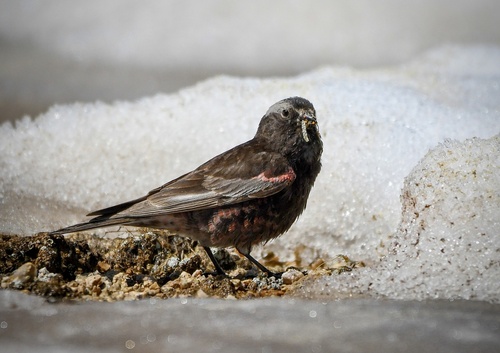


Black Rosy-Finch
leucosticte atrata
The Black Rosy-Finch is a resilient and captivating songbird that thrives where few other birds dare to venture: the wind-swept, high-altitude alpine zones of the western United States. Renowned for its extreme hardiness, this species nests in the crevices of sheer cliffs and rocky talus slopes, far above the treeline. During the brief alpine summer, they can be seen hopping across snowfields to harvest cold-stunned insects. As winter descends, these high-country specialists undergo an altitudinal migration, moving down into mountain valleys and basin shrublands, often forming swirling, highly active flocks with other rosy-finch species. Their survival in such unforgiving terrains makes them an exciting find for birdwatchers and a symbol of montane endurance.
Habitat: Typically found breeding on rocky alpine tundra, talus slopes, and cliffs above the treeline, shifting to lower elevation valleys and plains in winter.
This medium-sized finch measures about 14 to 17 centimeters in length and is easily distinguished by its striking, dark coloration. It features a body of deep charcoal-black that contrasts beautifully with bright pink or rosy washes on its wings, rump, and lower belly. A prominent, light gray band wraps around the back of its black crown, giving it a hooded appearance. Females and juveniles are overall more muted, with grayish-brown bodies, but they still retain subtle pink highlights on their wings and tail. Its stout, conical bill is black during the breeding season but turns a dull yellow with a dark tip in the winter.
Category
BirdsRarity
Common
Danger
1/5 · Very low
Snaps
5
During winter storms, they descend in large, synchronized flocks that can contain thousands of individual birds representing multiple rosy-finch species.
Their nests are typically built so deep within rock crevices that they are completely shielded from wind, rain, and most predators.
They are one of the highest-altitude nesting birds in North America, with nests documented well above 11,000 feet.
Possesses a specialized pouch under the tongue that allows it to store and transport seeds and insects over long distances to feed its young.
Utilizes stark alpine snowfields as natural traps, efficiently spotting and collecting wind-blown insects that become frozen and immobilized on the snow.
Adapted to low-oxygen environments with specialized cardiovascular systems, enabling active foraging and breeding at elevations exceeding 11,000 feet.
Mainly eats seeds and insects, heavily relying on wind-blown insects trapped on high-altitude snowfields during the breeding season, transitioning to seeds in winter.
Age differences: Chicks are fed a protein-rich mixture of insects and seeds transported in the parents' throat pouches, while adults eat a higher percentage of seeds in the winter months.
Falco mexicanus
Preys on adult rosy-finches, especially when they are foraging in open alpine areas.
Leucosticte tephrocotis
Forms mixed-species winter foraging flocks and competes for similar alpine seed resources.
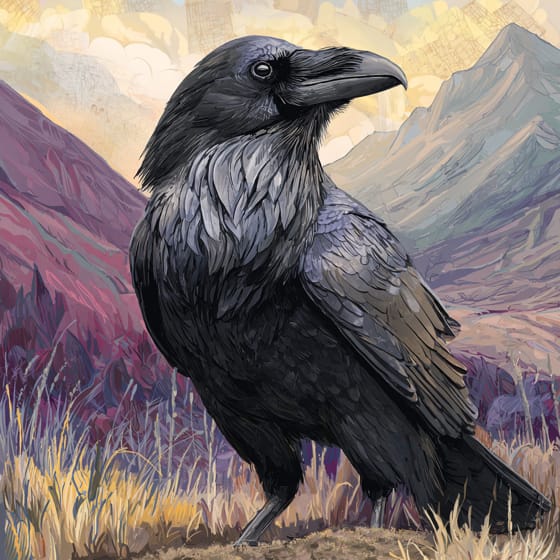
Corvus corax
Frequently raids the nests of high-altitude songbirds, consuming eggs and nestlings.
No trait badges are assigned for this object yet.
No aliases listed yet.
Collections for this object will appear here as more themes are added.
Danger
1/5 · Very low
No special safety notes yet.
The easiest way to identify Black Rosy-Finch is to use the Snappit nature identifier app.
14+ cm
30+ cm
0.022+ kg
5+ years
40 km/h
Mainly eats seeds and insects, heavily relying on wind-blown insects trapped on high-altitude snowfields during the breeding season, transitioning to seeds in winter.
Typically found breeding on rocky alpine tundra, talus slopes, and cliffs above the treeline, shifting to lower elevation valleys and plains in winter.
Zoom in to split clusters and explore where this object has been snapped.
Take the discovery with you
Snap it with Snappit to identify it, learn what makes it special, and add the discovery to your collection.








.jpg&width=800)









