





blackfoot daisy
Melampodium leucanthum
The blackfoot daisy is a cheerful flower with bright yellow petals and a dark center. It loves to grow in sunny places and can make any garden look happy and bright!
Habitat: Grasslands
The blackfoot daisy has numerous small, pure white daisy-like flowers with bright yellow centers, atop a mound of narrow, silvery-green leaves. Its dense, low-growing form creates a cheerful white carpet.
Category
PlantsRarity
Common
Danger
1/5 · Very low
Snaps
1
Blackfoot daisies are so tough, they can grow right out of cracks in sidewalks or driveways!
Even after its flowers fade, the plant’s tiny seeds are a tasty snack for small birds and insects.
Its scientific name, Melampodium, comes from Greek, meaning 'black foot'—likely for its dark seed bases!
Rubbing the leaves releases a distinct, slightly camphor-like aroma, helping it deter unwanted nibblers.
Blackfoot daisy can store water efficiently and reduce leaf moisture loss, helping it survive long dry periods.
Blackfoot daisy produces new flowers almost non-stop from spring through frost, attracting pollinators for months.
Blackfoot daisy has roots that can anchor and thrive in rocky, poor soils where other plants struggle.
Apis mellifera
Gathers nectar and pollen from its flowers.
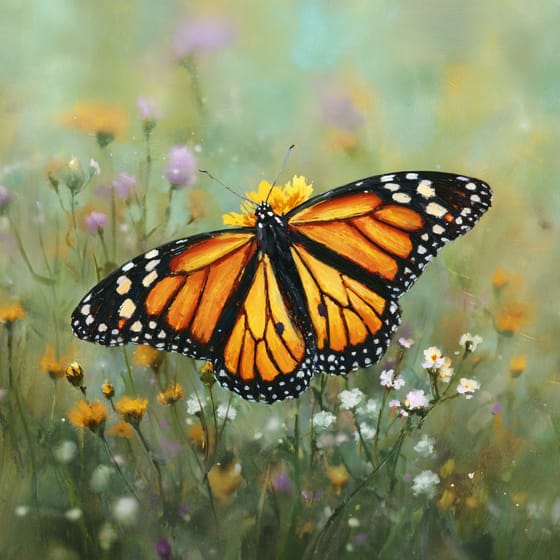
Danaus plexippus
Feeds on nectar, aiding in pollen transfer.

Sylvilagus audubonii
Might occasionally browse leaves, though not preferred.
Flowering plants are any plants that produce flowers as part of their reproductive cycle.
Summer blooming plants produce their flowers during the summer season, often providing vibrant color when many other plants have finished.
Everblooming plants produce flowers continuously or in repeated flushes over a long period.
Drought-tolerant plants can survive and flourish in conditions with limited water availability.

Colorful describes organisms or objects displaying a wide range of bright and distinct colors.

Grassland habitats are terrestrial biomes dominated by grasses and herbaceous plants, supporting a variety of grazing animals.

Describes plants that are particularly attractive and beneficial to a wide range of pollinating organisms.
No aliases listed yet.
Danger
1/5 · Very low
Always enjoy flowers from a distance and don't pick them without permission.
The easiest way to identify blackfoot daisy is to use the Snappit nature identifier app.
15-30 cm
30-45 cm
2-3 cm
Spring through fall, sometimes year-round in warm climates
No
None
Perennial
Zoom in to split clusters and explore where this object has been snapped.

Texas, US
You might spot Mexican Buckeye, Agarita, and Monarch.
View guide →
Texas, US
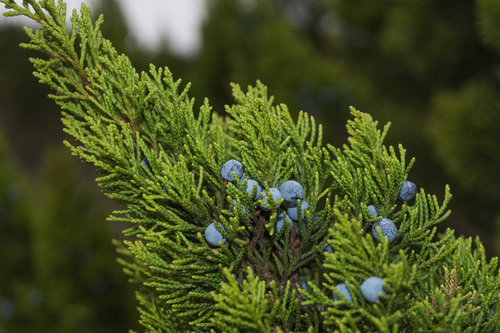
You might spot Ashe Juniper, Texas Bluebonnet, and Texas Live Oak.
View guide →

Texas, US
You might spot Evergreen Sumac, Lindheimer's Silktassel, and Ashe Juniper.
View guide →
Take the discovery with you
Snap it with Snappit to identify it, learn what makes it special, and add the discovery to your collection.








.jpg&width=800)



_001.jpg&width=800)




